Getting Started
2 A5E31842771, 02/2013
WARNING
Safe use of inverters
This equipment contains dangerous voltages and controls potentially dangerous rotating mechanical parts. Loss of life,
severe personal injury, or property damage could result if the instructions contained in this manual are not followed.
Only suitably qualified personnel should work on this equipment, and only after becoming familiar with all safety
instructions, installation, commissioning, operation, and maintenance procedures contained in this manual.
Any unauthorized modifications of the equipment are not allowed.
Protection in case of direct contact by means of voltages < 60 V (PELV = Protective Extra Low Voltage according to EN
61800-5-1) is only permissible in areas with equipotential bonding and in dry indoor rooms. If these conditions are not
fulfilled, other protective measures against electric shock must be applied, for example, protective insulation.
The inverter must always be grounded. If the inverter is not correctly grounded, this can lead to extremely hazardous
conditions which, under certain circumstances, can result in death.
The device must be disconnected from the electrical power supply before any connections with the device are established
or in any way altered.
Install the inverter on a metal mounting plate in a control cabinet. The mounting plate has to be unpainted and with a good
electrical conductivity.
It is strictly prohibited for any mains disconnection to be performed on the motor-side of the system, if the inverter is in
operation and the output current is not zero.
Take particular notice of the general and regional installation and safety regulations regarding work on dangerous voltage
installations (for example, 61800-5-1) as well as the relevant regulations regarding the correct use of tools and personal
protective equipment (PPE).
Only permanently-wired input power connections are allowed. The equipment must be earthed (IEC 536 Class 1, NEC and
other applicable standards).
Wherever faults occurring in the control equipment can lead to substantial material damage or even grievous bodily injury
(that is, potentially dangerous faults), additional external precautions must be taken to ensure or enforce safe operation,
even when a fault occurs (for example, independent limit switches, mechanical interlocks, and so on).
Commissioning
WARNING
High-voltage terminals
The following terminals can carry dangerous voltages even if the inverter is not operating:
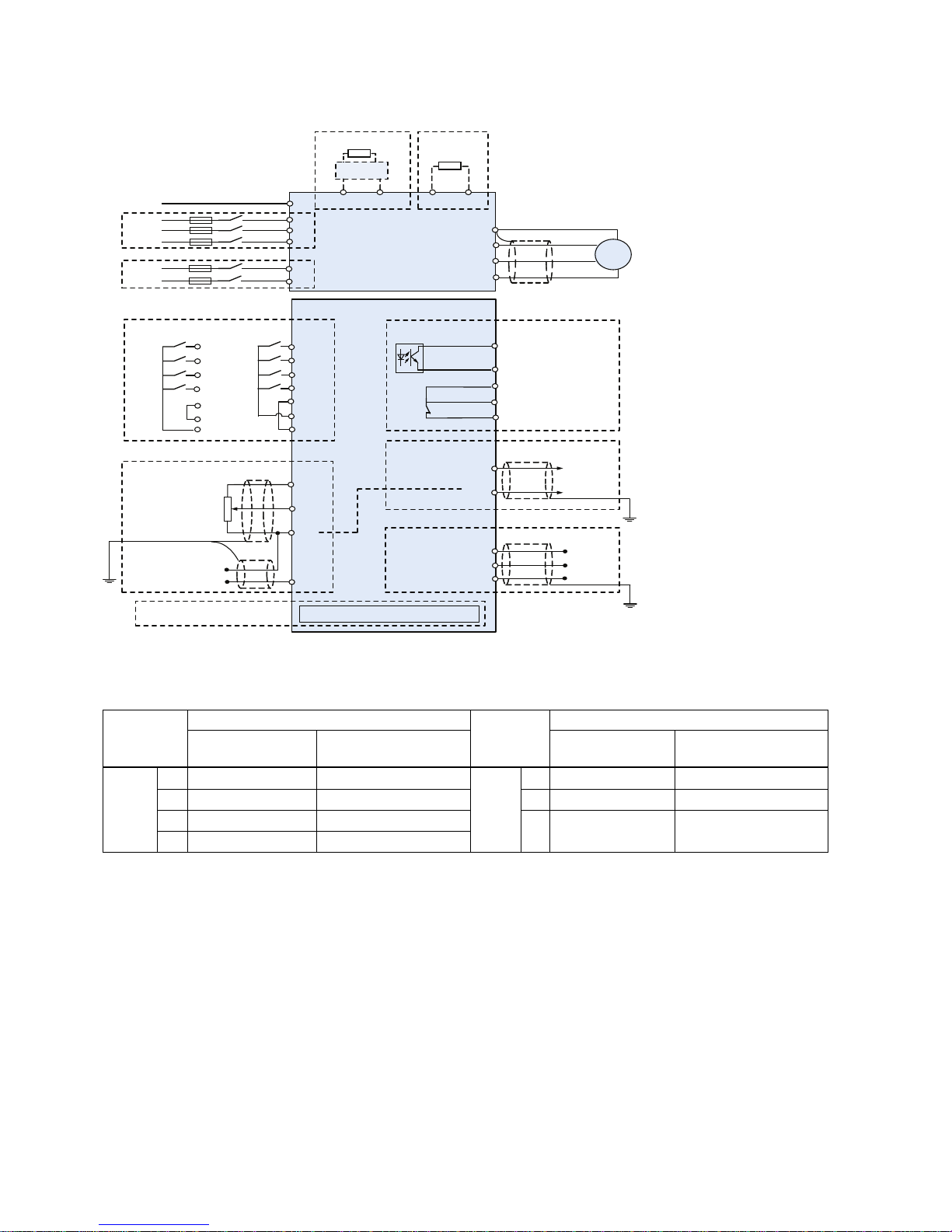
- The mains input terminals L1, L2, L3, and PE terminal
- The motor terminals U, V, W, and output earth terminal
- The DC link terminals DC+ and DC-
- The braking resistor terminals R1 and R2 (Frame size D only)
This equipment must not be used as an "emergency stop" mechanism (
see EN 60204, 9.2.5.4
).
It is not allowed to open, connect or disconnect the equipment during its operation.
Operation
WARNING
Risks with incorrect parameterization
Certain parameter settings (for example, P1210) may cause the inverter to restart automatically after an input power
failure, for example, the automatic restart function.
Motor parameters must be accurately configured for motor overload protection to operate correctly.
Use of braking resistor
If an unsuitable braking resistor is used, this could result in a fire and severe damage to people, property and equipment.
Use an appropriate braking resistor and install it correctly.
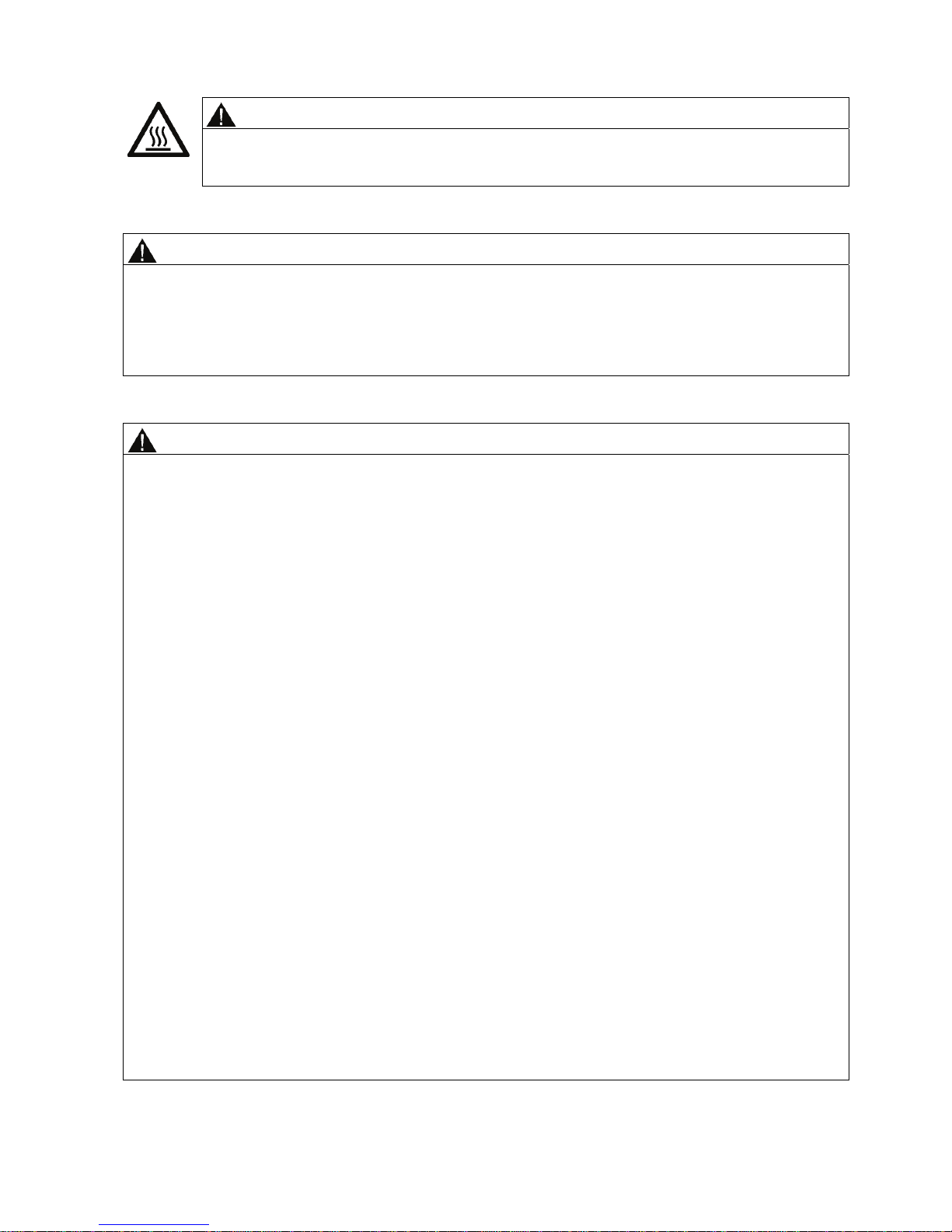
The temperature of a braking resistor increases significantly during operation. Avoid coming into direct contact with braking
resistors.