www.silverlinetools.com 9
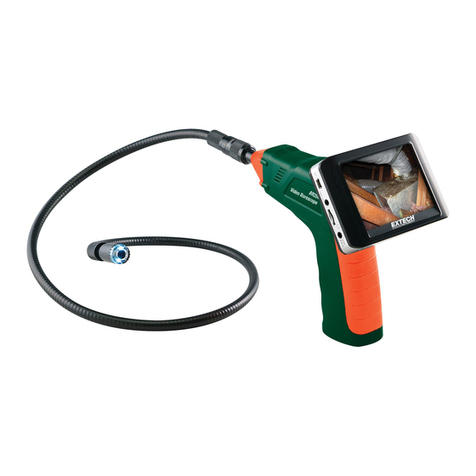
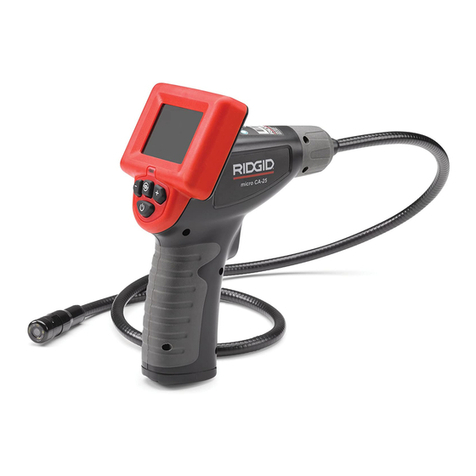
Video Inspection Camera913738
Video output
tThe Video Cable (21) enables video output to another screen
1.Open the Flexi-Cover (7) to access the Video Out Socket (10)
2.Insert the video cable jack into the video out socket
3.Insert the other end of the cable into the ‘video in’ socket of
any compatible TV or display device
Operation
Switching On/Off
1.To switch on, press and hold the On/Off Button (13)
for approx. 3 seconds. The Power Indicator Light (6) will
illuminate and the LCD screen will become viewable
2.To switch off, press and hold the on/off button until the
screen goes blank and the power indicator light is no longer
visible
Using the flexible cable
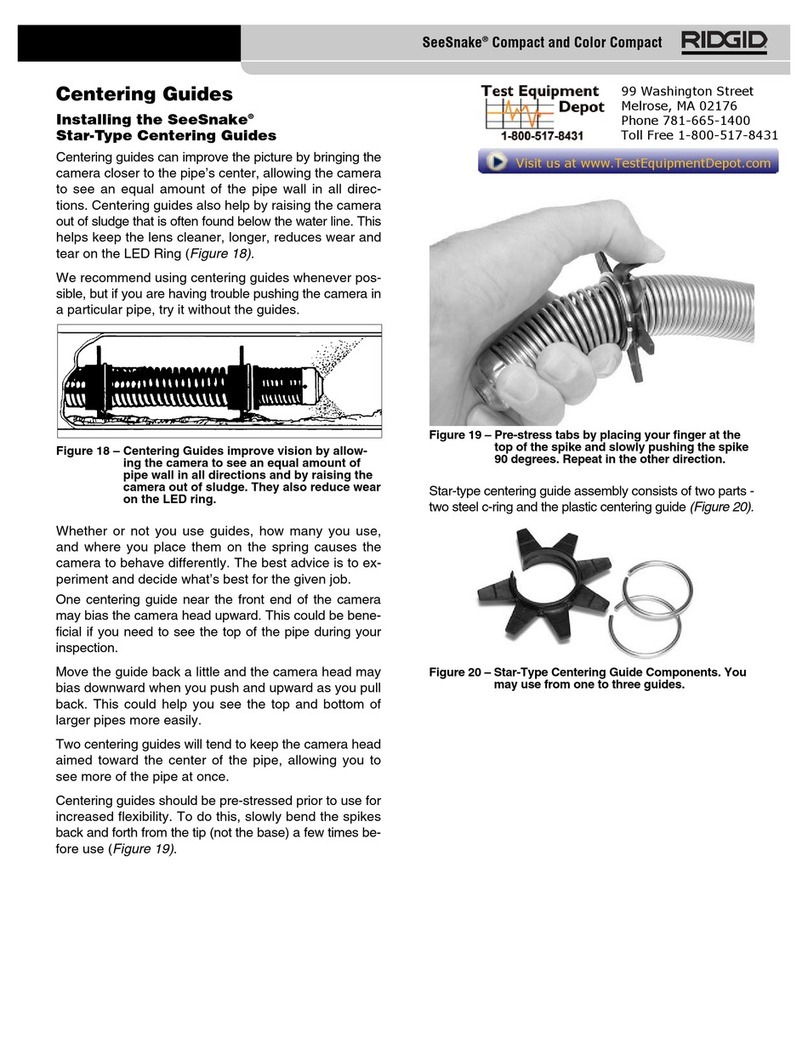
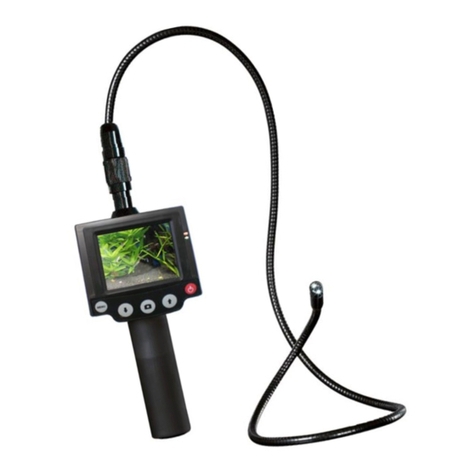
tThe flexible Camera Cable (2) can be bent into almost any
shape to circumvent obstacles and gain visual access to
confined areas
tManoeuvre the cable past obstacles; do not apply excessive
force
Real-Time Monitoring Mode
You can use the following features in real-time monitoring mode
Zoom
tPress the Button (14) to zoom in (1.0X, 1.5X, 2.0X,
3.0X). Each press of the button increases magnification until
the fourth press returns the display to 1.0X
tThe level of magnification is displayed on the right hand side
of the screen
LED Brightness control
tFour LEDs surround the camera lens to provide illumination in
dark areas. There are five levels of brightness
1.To increase brightness, press the Button (18)
2.To reduce brightness, press the Button (19)
tThe level of brightness is displayed on screen when any
adjustment is made
Recording video
tCheck the micro SD card icon is displayed on screen. If
not, see ‘Inserting an micro SD card’ above
1.Press the Button (16) to begin recording
2.Press the button again to stop recording
Note:
tThe video will be automatically saved as an individual file
every 30 minutes
tMEMORY FULL is displayed on screen when the micro SD
card is full
Taking photos
1.Press the Button (17) to take a photo
Note: You must have an micro SD card inserted to take a photo
Playback Video/Photos
Selecting the required folder for playback
1.In real-time monitoring mode, press the Button (15) to
display the list of video/photo folders
2.Use the and Buttons (18 & 19) to navigate to the
required folder and press the OK Button (11) to select
Note:
t next to a file name indicates video
t next to a file name indicates a photo
Video playback
1.Use the and Buttons (18 & 19) to navigate to the
required video and press the OK button to begin playback
PAUSE: Press the OK Button (11) to pause, press it again to
resume playback
FAST FORWARD: Press and hold the Button (18) until the
playback mode icon on screen changes to
REWIND: Press and hold the Button (19) until the playback
mode icon on screen changes to
STOP/EXIT: Press the MENU Button (12)
Viewing photos
1.Use the and Buttons (18 & 19) to navigate to the
required photo and press the OK or MENU button to view
2.Press the OK or MENU button again to exit
Deleting video/photos
1.In real-time monitoring mode, press the Button (15) to
display the list of video/photo folders
2.Use the and Buttons (18 & 19) to toggle to the
required folder and press the OK Button (11) to select
3.Use the and Buttons (18 & 19) to select the required
file, then press the (14) to delete
4.The confirm delete screen is displayed. Use the and
Buttons (18 & 19) to toggle between ‘Cancel’ and
‘Confirm’ and press the OK Button (11)
Deleting folders
Use the same method as above for deleting a single file, but use
the and Buttons (18 & 19) to toggle to the required folder
and press the Button (14) to delete.
System Setting Mode
tYou can change system preferences in SYSTEM SETTING
mode
tThere are four areas in system setting mode:
- System Setting
-Date and Time
- Recorder Setting
- Event Playback
Making selections
In all areas of System Setting Mode use the following method to
make selections
t6TFUIFand Buttons (18 & 19) to navigate between
options
t1SFTTUIFOK Button (11) to select an option
t1SFTTUIFMENU Button (12) to exit any screen
Entering system setting mode
t*OSFBMUJNFNPOJUPSJOHNPEFQSFTTUIFMENU Button (12) to
enter System Setting mode
t#ZEFGBVMUSYSTEM SETTING is highlighted
t1SFTTOK (11) to enter SYSTEM SETTING, or navigate to the
other options
System Setting
Language setting
tSelect then the flag of the language you require
Selecting video system
tSelect then the video system required, NTSC or PAL
Note: NTSC is generally used in the Americas and Japan, PAL in
Europe and the rest of the world
Formatting an Micro SD card
tSelect then confirm selection <YES> or <NO>
Note: formatting a card will erase all data on the card
913738_Z1MANPRO1.indd 9 27/07/2012 12:22