9
1.0 PRODUCT APPLICATION
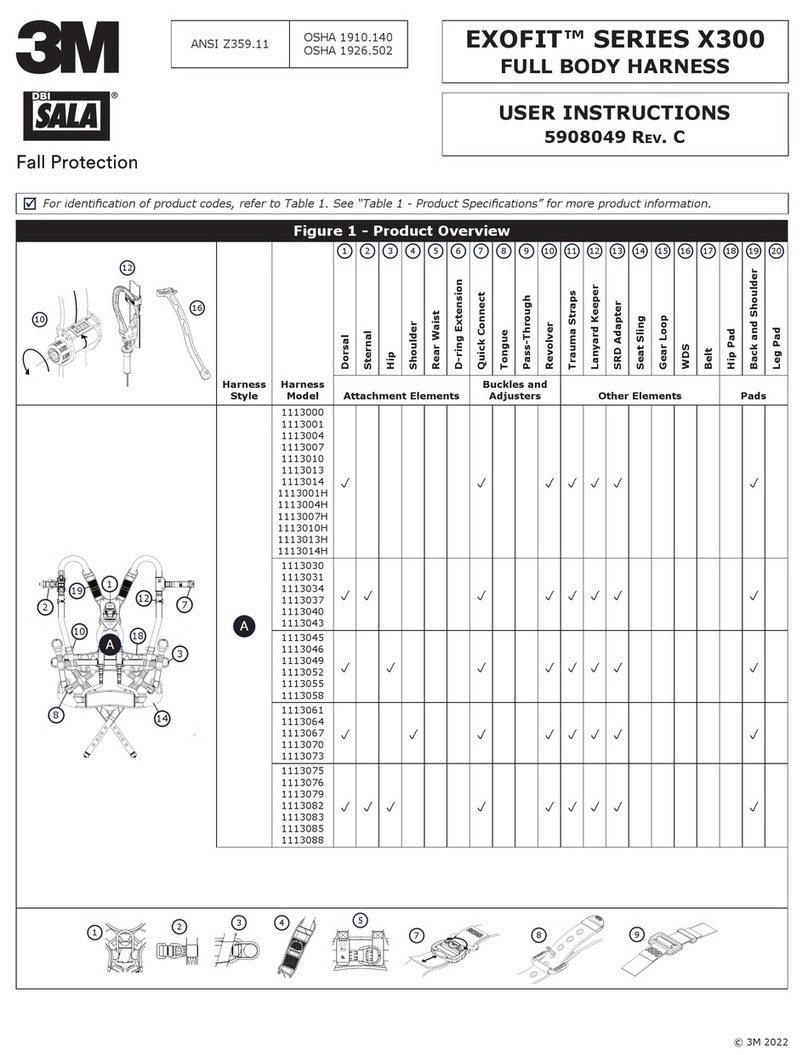
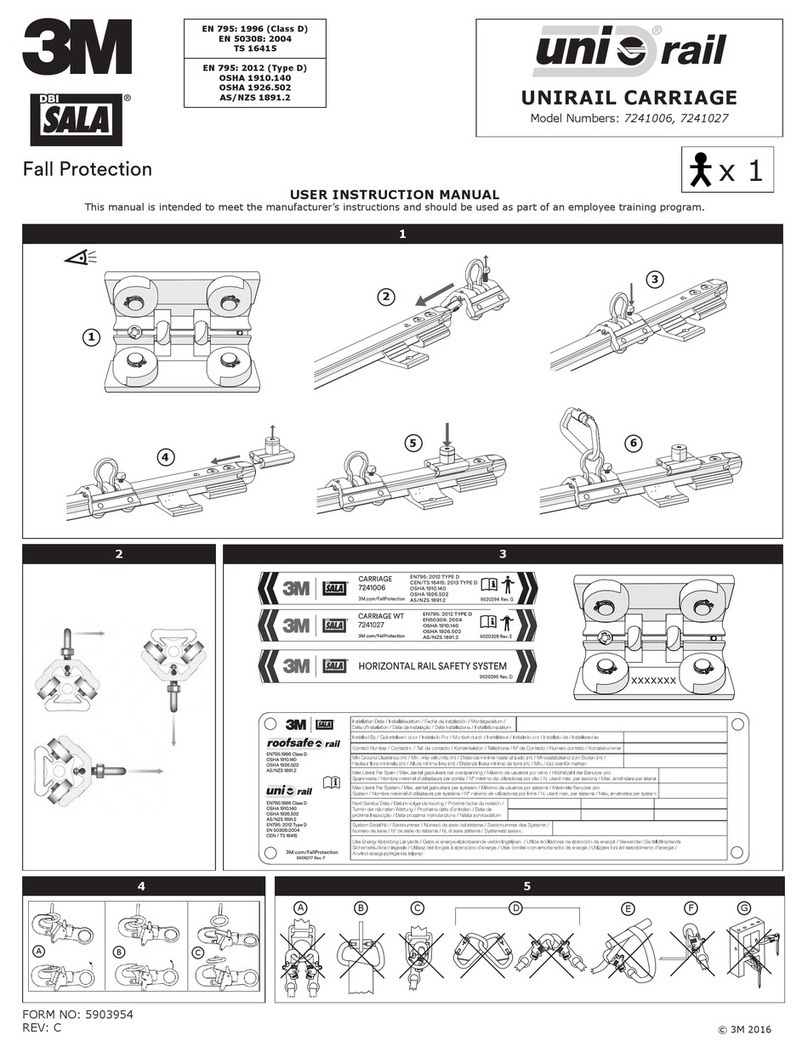
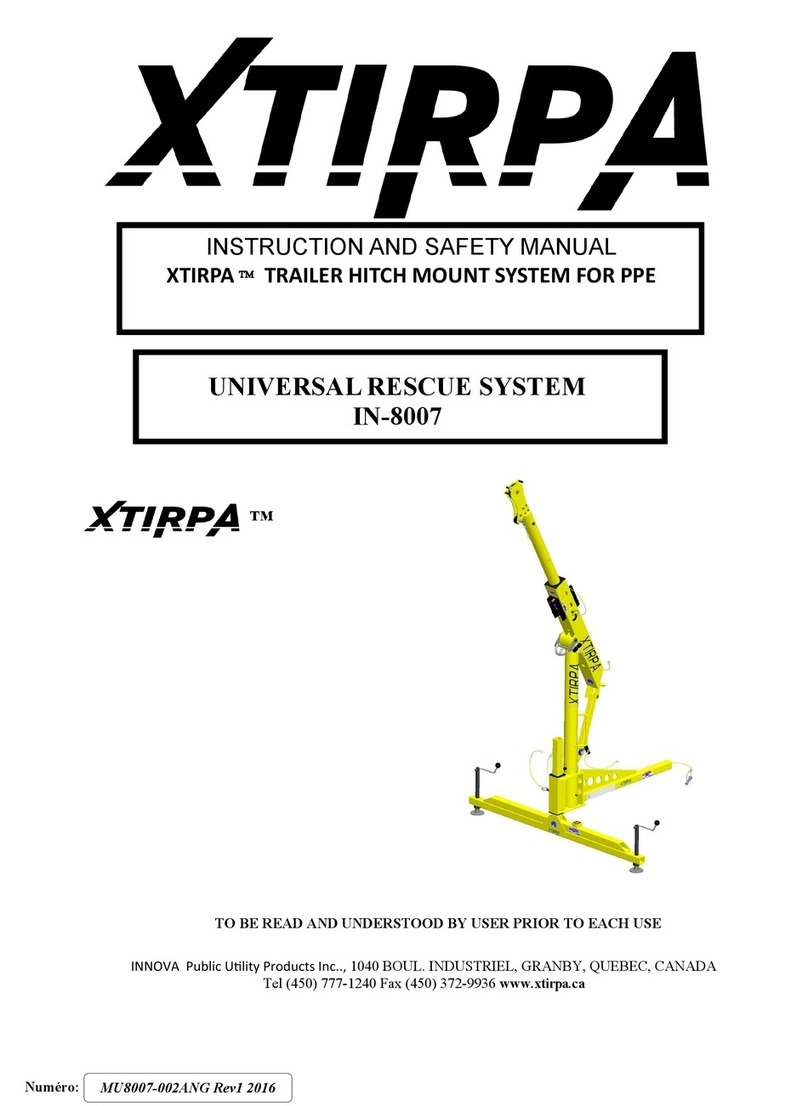
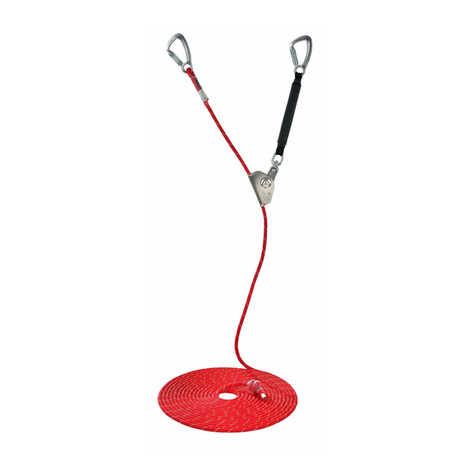
Portable Fall Arrest Posts are designed to provide anchorage connection points for Fall Arrest1or Rescue2
systems. Portable Fall Arrest Posts may also be used as end terminations for 3M-approved Horizontal Lifeline (HLL)
Systems.
;Fall Protection Only: This Portable Fall Arrest Post is for connection of Fall Protection equipment. Do not connect
lifting equipment to this Portable Fall Arrest Post.
Your Portable Fall Arrest Post conforms to the national or regional standard(s) identied on the front cover
of these instructions. If this product is resold outside the original country of destination, the re-seller must provide these
instructions in the language of the country in which the product will be used.
Use of this equipment must be supervised by a Competent Person3.
This equipment must be installed and used by persons trained in its correct application. This manual is to be
used as part of an employee training program as required by national, regional, or local regulations. It is the responsibility
of the users and installers of this equipment to ensure they are familiar with these instructions, are trained in the correct
care and use of this equipment, and are aware of the operating characteristics, application limitations, and consequences
of improper use of this equipment.
When using this equipment and connecting subsystem(s), the employer must have a rescue plan and
the means at hand to implement and communicate that plan to users, authorized persons4, and rescuers5. A trained,
on-site rescue team is recommended. Team members should be provided with the equipment and techniques to perform
a successful rescue. Training should be provided on a periodic basis to ensure rescuer prociency. Rescuers should be
provided with these instructions.
The Portable Fall Arrest Post shall be inspected by the user before each use and, additionally,
by a competent person other than the user at intervals of no longer than one year.
6
Inspection procedures are described in
the “Inspection and Maintenance Log”. Results of each Competent Person inspection should be recorded on copies of the
“Inspection and Maintenance Log”.
If the Portable Fall Arrest Post is subjected to fall arrest or impact force, remove the system from service
immediately. Clearly tag the system “DO NOT USE”. See Section 5 for more information.
2.0 SYSTEM REQUIREMENTS
Anchorage requirements vary with the fall protection application. Structure on which the
Portable Fall Arrest Post is placed or mounted must meet the Anchorage specications dened in Table 1.
Personal Fall Arrest Systems (PFAS) used with the system must meet applicable
Fall Protection standards, codes, and requirements. Refer to the instructions included with your connecting subsystem
for additional fall requirements. The PFAS must incorporate a Full Body Harness and limit Arresting Force to the values
specied in Table 1.
A clear path is required to assure positive locking of an SRD. Situations
which do not allow for an unobstructed fall path should be avoided. Working in confined or cramped spaces may not allow
the body to reach sufficient speed to cause the SRD to lock if a fall occurs. Working on slowly shifting material, such as
sand or grain, may not allow enough speed buildup to cause the SRD to lock.
Use of this equipment in areas with environmental hazards may require additional precautions to prevent
injury to the user or damage to the equipment. Hazards may include, but are not limited to: heat, chemicals, corrosive
environments, high voltage power lines, explosive or toxic gases, moving machinery, sharp edges, or overhead materials
that may fall and contact the user or Personal Fall Arrest System.
Figure 3 illustrates the components of a Fall Arrest. There must be sucient Fall Clearance (FC)
to arrest a fall before the user strikes the ground or other obstruction. Clearance is aected by a number of factors
including: Anchorage Location, (A) Lanyard Length, (B) Lanyard Deceleration Distance or SRD Maximum Arrest Distance,
(C) Harness Stretch and D-Ring/Connector Length and Settling. Refer to the instructions included with your Fall Arrest
subsystem for specics regarding Fall Clearance calculation.
Swing Falls occur when the anchorage point is not directly above the point where a fall occurs (see Figure
4). The force of striking an object in a swing fall may cause serious injury or death. Minimize swing falls by working as directly
below the anchorage point as possible. Do not permit a swing fall if injury could occur. Swing falls will signicantly increase the
clearance required when a Self-Retracting Device or other variable length connecting subsystem is used.
3M equipment is designed for use with 3M approved components and subsystems
only. Substitutions or replacements made with non-approved components or subsystems may jeopardize compatibility of
equipment and may aect the safety and reliability of the complete system.
1 Fall Arrest System: A collection of Fall Protection Equipment congured to arrest a free fall.
2 Rescue System: A collection of Fall Protection equipment congured to remove a person from hazards to a safe location. No free fall is
permitted.
3 Competent Person: One who is capable of identifying existing and predictable hazards in the surroundings or working conditions which are
unsanitary, hazardous, or dangerous to employees, and who has authorization to take prompt corrective measures to eliminate them.
4 Authorized Person: A person assigned by the employer to perform duties at a location where the person will be exposed to a fall hazard.
5 Rescuer: Person or persons other than the rescue subject acting to perform an assisted rescue by operation of a rescue system.
6 Inspection Frequency: Extreme working conditions (harsh environments, prolonged use, etc.) may require increasing the frequency of
competent person inspections.