manuals.online logo
Brands
  1. Home
  2. •
  3. Brands
  4. •
  5. Brother
  6. •
  7. Printer
  8. •
  9. Brother HL-2270DW User manual

Brother HL-2270DW User manual

Other manuals for HL-2270DW

4

Other Brother Printer manuals

Brother MPrint MW-140BT User manual

Brother

Brother MPrint MW-140BT User manual

Brother RJ-3150 User manual

Brother

Brother RJ-3150 User manual

Brother HL-3170CDW Manual

Brother

Brother HL-3170CDW Manual

Brother PocketJet 3 User manual

Brother

Brother PocketJet 3 User manual

Brother HL-1850 User manual

Brother

Brother HL-1850 User manual

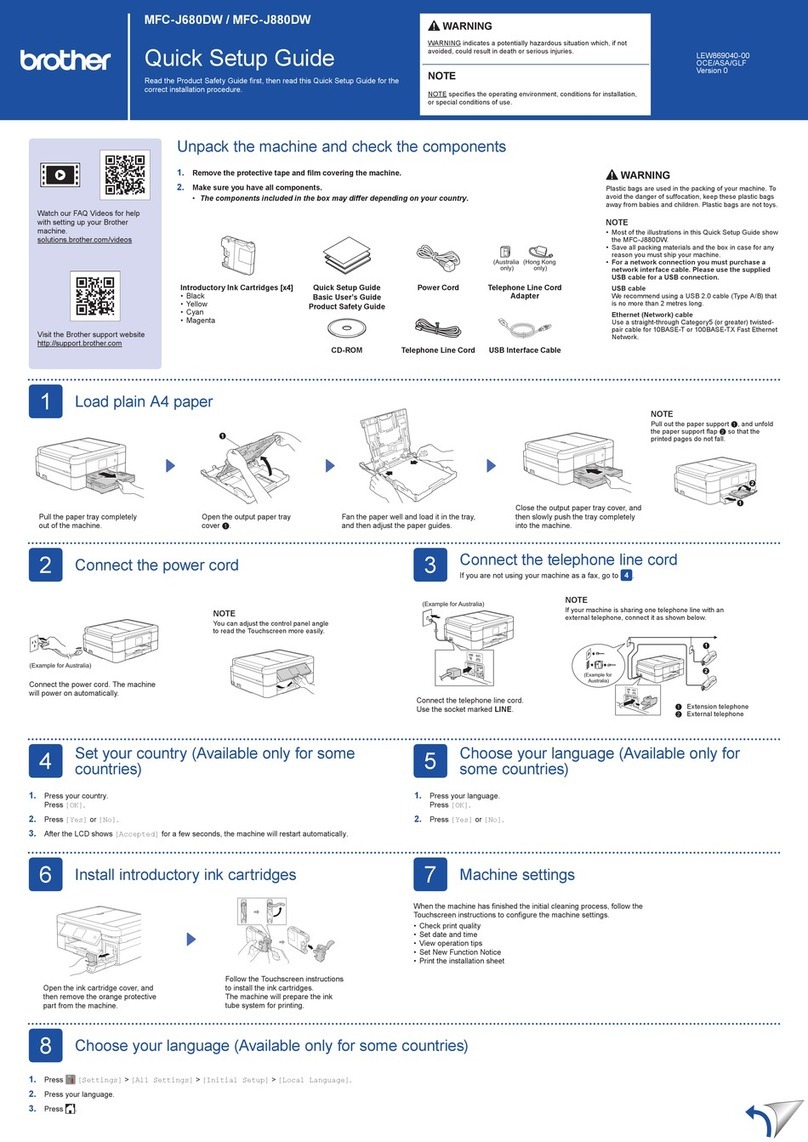
Brother MFC-J895DW User manual

Brother

Brother MFC-J895DW User manual

Brother Pocket Jet PJ-763MFi Operation instructions

Brother

Brother Pocket Jet PJ-763MFi Operation instructions

Brother HL-5450DN User manual

Brother

Brother HL-5450DN User manual

Brother HL-1660e Series User manual

Brother

Brother HL-1660e Series User manual

Brother DCP-1608 User manual

Brother

Brother DCP-1608 User manual

Brother DCP-L2552DN User manual

Brother

Brother DCP-L2552DN User manual

Brother Rugged Jet RJ-3150Ai User manual

Brother

Brother Rugged Jet RJ-3150Ai User manual

Brother DCP-9040CN User manual

Brother

Brother DCP-9040CN User manual

Brother MFC-L2750DWXL User manual

Brother

Brother MFC-L2750DWXL User manual

Brother HL-3260N User manual

Brother

Brother HL-3260N User manual

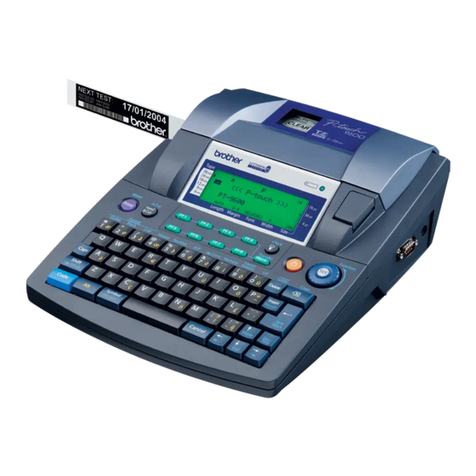
Brother P-Touch 1800 User manual

Brother

Brother P-Touch 1800 User manual

Brother GT-541 Specification sheet

Brother

Brother GT-541 Specification sheet

Brother HL-2400C Series User manual

Brother

Brother HL-2400C Series User manual

Brother HL-2595DW User manual

Brother

Brother HL-2595DW User manual

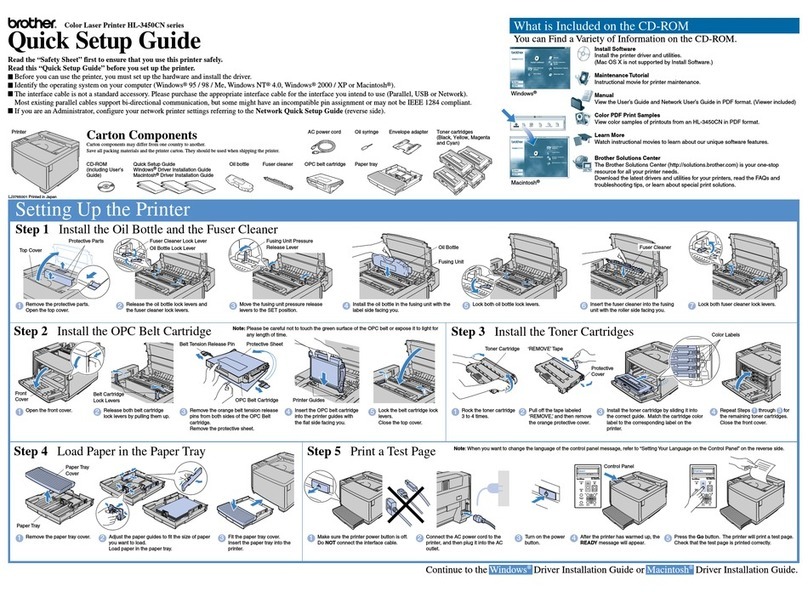
Brother HL-3450CN Series User manual

Brother

Brother HL-3450CN Series User manual

Brother MFC-J5845DW User manual

Brother

Brother MFC-J5845DW User manual

Brother DCP-T220 User manual

Brother

Brother DCP-T220 User manual

Brother m-PRINT MW-120 User manual

Brother

Brother m-PRINT MW-120 User manual

Brother Pocket Jet PJ-722 User manual

Brother

Brother Pocket Jet PJ-722 User manual

Popular Printer manuals by other brands

Evolis Elypso user guide

Evolis

Evolis Elypso user guide

Lexmark 522n - C Color Laser Printer Service manual

Lexmark

Lexmark 522n - C Color Laser Printer Service manual

Panduit COUGAR LS9Q Operator's manual

Panduit

Panduit COUGAR LS9Q Operator's manual

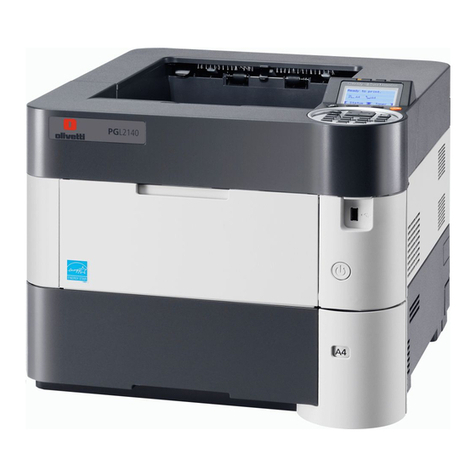
Olivetti PG L2140 Operation guide

Olivetti

Olivetti PG L2140 Operation guide

Samsung SL-M2820DW user manual

Samsung

Samsung SL-M2820DW user manual

Kyocera FS-9530DN specification

Kyocera

Kyocera FS-9530DN specification

Canon LASER SHOT LBP-1210 Specifications

Canon

Canon LASER SHOT LBP-1210 Specifications

Canon PIXMA PRO-1 Series Getting started

Canon

Canon PIXMA PRO-1 Series Getting started

Canon LBP113w Getting started

Canon

Canon LBP113w Getting started

Lexmark Infoprint 1332 user manual

Lexmark

Lexmark Infoprint 1332 user manual

Epson M1120 user guide

Epson

Epson M1120 user guide

TransAct POSJET 1500 Spare parts

TransAct

TransAct POSJET 1500 Spare parts

Telpar MTP-1500 user manual

Telpar

Telpar MTP-1500 user manual

Star DP8340 SERIES user manual

Star

Star DP8340 SERIES user manual

MGI JETVARNISH 3DS user manual

MGI

MGI JETVARNISH 3DS user manual

Kyocera TASKalfa PA4500ci Operation guide

Kyocera

Kyocera TASKalfa PA4500ci Operation guide

Emaar EP-360 user manual

Emaar

Emaar EP-360 user manual

Fujitsu DL7400 user manual

Fujitsu

Fujitsu DL7400 user manual

manuals.online logo
manuals.online logoBrands
  • About & Mission
  • Contact us
  • Privacy Policy
  • Terms and Conditions

Copyright 2025 Manuals.Online. All Rights Reserved.

How do I configure the wireless printer using Wi-Fi Protected Setup or AOSS and
install the printer driver in Windows?
1. Confirm your WLAN access point/router has the Wi-Fi
Protected Setup or AOSS™ symbol as shown below.
NOTE
If your WLAN access point/router supports Wi-Fi Protected
Setup (PIN Method) and you want to configure your machine
using the PIN (Personal Identification Number) Method, See
Using the PIN Method of Wi-Fi Protected Setup in the Network
User’s Guide.
2. Place the Brother machine within range of your Wi-Fi
Protected Setup or AOSS™ access point/router. The range
may differ depending on your environment. Refer to the
instructions provided with your access point/router.
STEP I: Configure the Wireless Network Card
1. Insert the Brother Driver and Utilities CD into your PC.
2. Select the HL-2270DW.
3. Select Language: English.
4. Click Install Printer Driver (U.S.A./Canada/Latin America).
5. Read the License Agreement: Click Yes if you agree.
6. Select Wireless Network Connection. Click Next.
7. Select Brother Peer-To-Peer Network Printer. Click Next.
8. Read the notice for Firewall/Antivirus Software users: Click
OK.
9. Choose Yes, my Access Point supports WPS or AOSS
and I want to use them and click Next.
10. Press the wireless setup button located at the back of the
machine for less than 2 seconds as shown in the illustration
below.
Note:
Use a pointy object such as a ballpoint pen to press the
button.
Do not press the button for 3 seconds or more, since the
machine will change to the PIN Method of the Wi-Fi
Protected Setup mode.
11. This feature will automatically detect which mode (Wi-Fi
Protected Setup or AOSS™) your access point/router uses to
configure your machine for 2 minutes.
12. Push the Wi-Fi Protected Setup or AOSS™ button on your
WLAN access point/router. See the user’s guide for your
WLAN access point/router for instructions.
13. The machine LED's will indicate the connection results.
See the following chart for LED indications.
14. A wireless LAN report will automatically be printed.
A WLAN report will automatically be printed. If the connection
failed, check the error on the printed report and refer to
Troubleshooting at the end of this solution.
15. Click Next.
16. Check the box after you confirm that you have
completed the wireless settings, and then click Next.
Wireless setup is now complete.
STEP II: Install The Printer Driver
22. Click Next to start the driver installation.
NOTE: If the following screen appears, click OK to search
again.
23. Select the printer from the list and click Next.
24. Users Guides: Click Next to continue.
25. Online Registration. Click Next to continue.
26. Click the checkbox next to Enable the Network Repair
Tool and click Finish.
27. Select the option you would prefer for receiving firmware
update notices and click OK.
The installation is now complete.
Troubleshooting WPS or AOSS Connection Error Indications
Press the GO button on the machine five times within four
seconds. The machine prints the WLAN report.
If the WLAN report that printed shows that the connection
failed, check the error code on the printed report and refer to
the following instructions.
TS-01
The wireless setting is not activated, turn the wireless setting to
ON.
If a LAN cable is connected to your machine, disconnect it
and turn the wireless setting of your machine to ON. Hold
down Go for 10 seconds. Release Go when the machine
prints a Network Configuration page that indicates the
current network settings.
TS-02
The WLAN access point/router cannot be detected.
1. Check the following 4 points.
Make sure that the WLAN access point/router is powered
on.
Move your machine to an obstruction-free area, or closer
to the WLAN access point/router.
Temporarily place your machine within about one meter
(3.3 feet) from the WLAN access point when you are
configuring the wireless settings.
If your WLAN access point/router is using MAC address
filtering, confirm the MAC address of the Brother machine
is allowed in the filter.
2. If you manually entered the SSID and security information
(SSID/authentication method/encryption method/Network Key)
the information may be incorrect. Reconfirm the SSID and
security information and reenter the correct information as
necessary.
TS-04
The Authentication/Encryption methods used by the selected
WLAN access point/router are not supported by your machine.
For infrastructure mode, change the authentication and
encryption methods of the WLAN access point/router. Your
machine supports the following authentication methods WPA,
WPA2, OPEN and Shared key. WPA supports TKIP or AES
encryption methods. WPA2 supports AES for the encryption
method. OPEN and Shared key correspond to WEP
encryption.
If your problem is not solved the SSID or network settings you
entered may be incorrect. Reconfirm the wireless network
settings.
Combined table of authentication and encryption methods
For ad-hoc mode, change the authentication and encryption
methods of your computer for the wireless setting.
Your machine supports OPEN authentication method only, with
optional WEP encryption.
TS-05
The security information (SSID/Network Key) is incorrect.
Reconfirm the SSID and security information (Network Key).
If your router uses WEP encryption, enter the key used as the
first WEP key. Your Brother machine supports the use of the
first WEP key only.
TS-06
The wireless security information (Authentication
method/Encryption method/Network Key) is incorrect.
Reconfirm the wireless security information (Authentication
method/Encryption method/Network Key) in the table of TS-04.
If your router uses WEP encryption, enter the key used as the
first WEP key. Your Brother machine supports the use of the
first WEP key only.
TS-07
The machine cannot detect a WLAN access point/router that
has WPS or AOSS™ enabled.
If you would like to configure your wireless settings using WPS
or AOSS™, you must operate both your machine and the
WLAN access point/router. Confirm your WLAN access
point/router supports WPS or AOSS™ and try starting again.
If you do not know how to operate your WLAN access
point/router using WPS or AOSS™, See the documentation
provided with your WLAN access point/router, ask the
manufacturer of your WLAN access point/router or ask your
network administrator.
TS-08
Two or more WLAN access points that have WPS or AOSS™
enabled are detected.
Confirm that only one WLAN access point/router within
range has the WPS or AOSS™ method active and try
again.
Try starting again after a few minutes in order to avoid
interference from other access points.