manuals.online logo
Brands
  1. Home
  2. •
  3. Brands
  4. •
  5. CAME
  6. •
  7. Garage Door Opener
  8. •
  9. CAME BK241 User manual

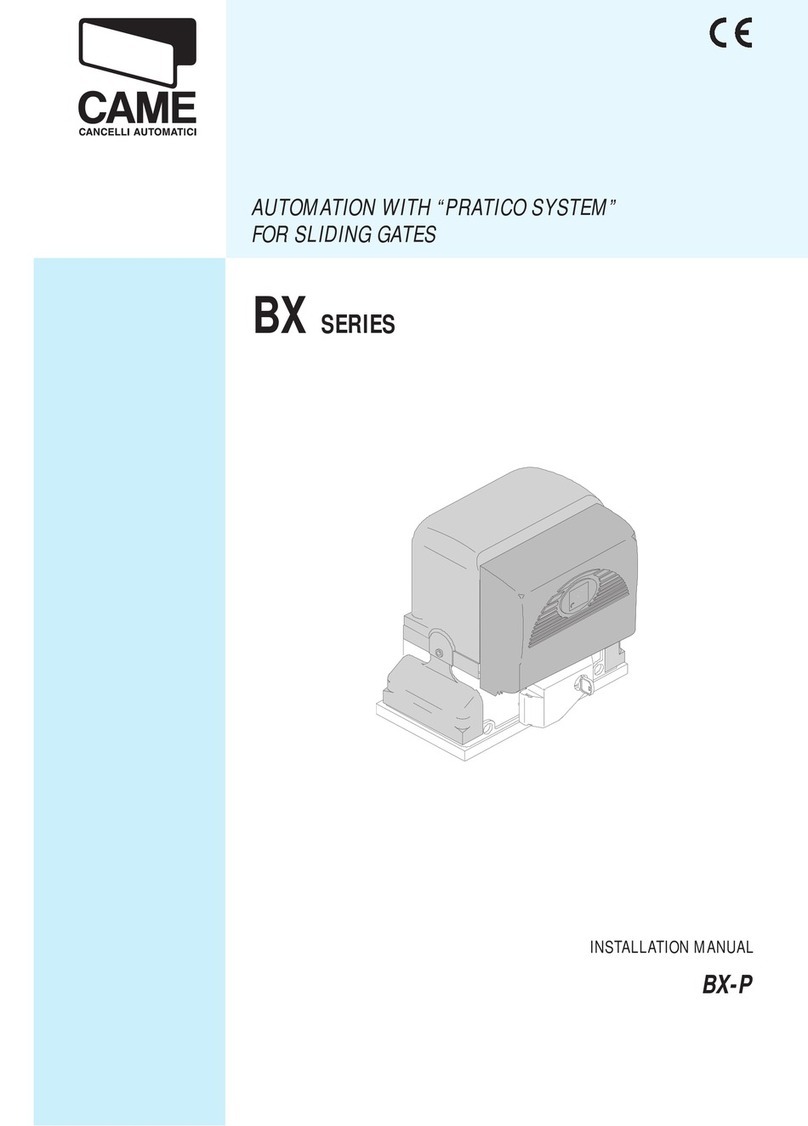
CAME BK241 User manual

Other CAME Garage Door Opener manuals

CAME RODEO User manual

CAME

CAME RODEO User manual

CAME VER-PLUS Series User manual

CAME

CAME VER-PLUS Series User manual

CAME 119BU50EN User manual

CAME

CAME 119BU50EN User manual

CAME 119BW41EN User manual

CAME

CAME 119BW41EN User manual

CAME FL-180 User manual

CAME

CAME FL-180 User manual

CAME G4040IZ User manual

CAME

CAME G4040IZ User manual

CAME BX-74 User manual

CAME

CAME BX-74 User manual

CAME MYTO ME User manual

CAME

CAME MYTO ME User manual

CAME EMEGA User manual

CAME

CAME EMEGA User manual

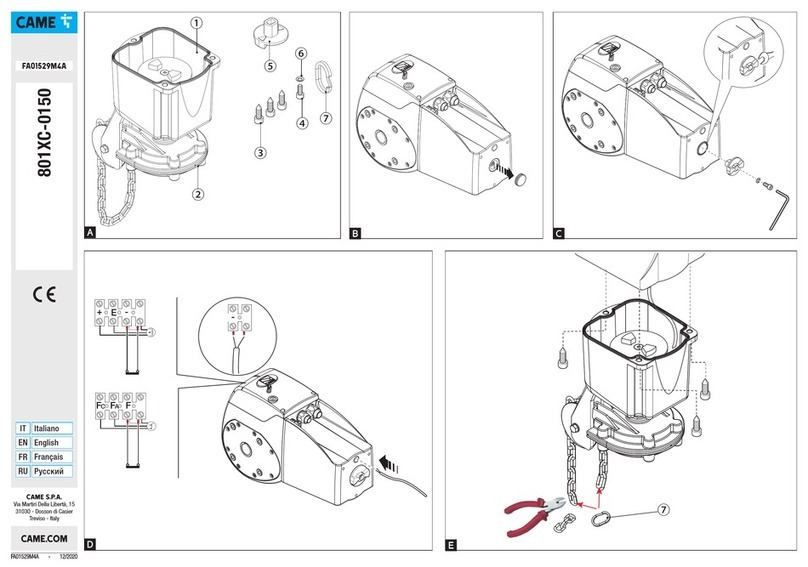
CAME 801XC-0150 User manual

CAME

CAME 801XC-0150 User manual

CAME FROG-CF User manual

CAME

CAME FROG-CF User manual

CAME BY-3500T User manual

CAME

CAME BY-3500T User manual

CAME BX-243V User manual

CAME

CAME BX-243V User manual

CAME FAST-S24 KIT User manual

CAME

CAME FAST-S24 KIT User manual

CAME PRATICO SYSTEM BX Series User manual

CAME

CAME PRATICO SYSTEM BX Series User manual

CAME KIARON User manual

CAME

CAME KIARON User manual

CAME VER Series User manual

CAME

CAME VER Series User manual

CAME 801XC-0120 User manual

CAME

CAME 801XC-0120 User manual

CAME BX704ALS User manual

CAME

CAME BX704ALS User manual

CAME C Series User manual

CAME

CAME C Series User manual

CAME E 881 User manual

CAME

CAME E 881 User manual

CAME FROG-PM4 User manual

CAME

CAME FROG-PM4 User manual

CAME A 3024 N User manual

CAME

CAME A 3024 N User manual

CAME RIOED8WS User manual

CAME

CAME RIOED8WS User manual

Popular Garage Door Opener manuals by other brands

ATA GDO-6 EasyRoller instruction manual

ATA

ATA GDO-6 EasyRoller instruction manual

Garaga SECURITY+ 3265GCM 1HP owner's manual

Garaga

Garaga SECURITY+ 3265GCM 1HP owner's manual

Chamberlain Whisper Drive SECURITY+ WD822K Series owner's manual

Chamberlain

Chamberlain Whisper Drive SECURITY+ WD822K Series owner's manual

Chase Doors DuraShield installation manual

Chase Doors

Chase Doors DuraShield installation manual

CSI Classic installation instructions

CSI

CSI Classic installation instructions

Chamberlain Elite 3575S owner's manual

Chamberlain

Chamberlain Elite 3575S owner's manual

Richmond GTR156 user manual

Richmond

Richmond GTR156 user manual

B&D Controll-A-Door 5 instruction manual

B&D

B&D Controll-A-Door 5 instruction manual

Chamberlain MyQ 940ESTD owner's manual

Chamberlain

Chamberlain MyQ 940ESTD owner's manual

Automatic Technology GDO-9V1 SecuraLift installation instructions

Automatic Technology

Automatic Technology GDO-9V1 SecuraLift installation instructions

Westfalia 19 36 07 instruction manual

Westfalia

Westfalia 19 36 07 instruction manual

Chamberlain HD520EVP manual

Chamberlain

Chamberlain HD520EVP manual

Cardin BL Series instruction manual

Cardin

Cardin BL Series instruction manual

Chamberlain 8355 - 1/2 hp installation instructions

Chamberlain

Chamberlain 8355 - 1/2 hp installation instructions

Bauer CROSS18 Application. Installation and Maintenance Manual

Bauer

Bauer CROSS18 Application. Installation and Maintenance Manual

Dorma ES 90 manual

Dorma

Dorma ES 90 manual

Wayne-Dalton 8124 Installation instructions and owner's manual

Wayne-Dalton

Wayne-Dalton 8124 Installation instructions and owner's manual

Chamberlain Merlin MS105MYQ Installation and operating instructions

Chamberlain

Chamberlain Merlin MS105MYQ Installation and operating instructions

manuals.online logo
manuals.online logoBrands
  • About & Mission
  • Contact us
  • Privacy Policy
  • Terms and Conditions

Copyright 2025 Manuals.Online. All Rights Reserved.

6
Documentazione
Tecnica
T68
rev. 0.1
08/2004
©
CAME
CANCELLI
AUTOMATICI
CANCELLI AUTOMATICI BK241
2 x 1 - TX
2 x 1
2 x 1.5
8
6
5
9
1
4
9
10
10
4 x 1 - RX
4 x 1 - RX
11
2 x 1 - TX
3 x 1
2 x 1.5
RG58
4
8
7
6
5
9
1
4
9
10
10
2 x 1 - TX
11
4 x 1 - RX
3
2
3
2
CAME
12
3 x 1.5 - 110/120V
4 x 1 - RX
SERIE BK241 | BK241 SERIES | SERIE BK241
ITALIANO / ENGLISH / ESPAÑOL
119BT68-1
1 - Gruppo BK241
2 - Quadro comando incorporato
3 - Ricevitore radio
4 - Alette necorsa
5 - Cremagliera
6 - Selettore a chiave
7 - Lampeggiatore di movimento
8 - Antenna di ricezione
9 - Fotocellule di sicurezza
10 - Colonnina per fotocellula
11 - Fermo anta
12 - Trasmettitore
1 - BK 241unit
2 - Control panel (incorporated)
3 - Radio receiver
4 - Limit switch tabs
5 - Rack
6 - Key-operated selector switch
7 - Flashing light indica-ting door move-
ment
8 - Antenna
9 - Safety photocells
10 - Photocell column
11 - Closure stop
12 - Transmitter
1 - Conjunto BK 241
2 - Cuadro de mando incorporado
3 - Radiorreceptor
4 - Aletas de tope
5 - Cremallera
6 - Selector mediante llave
7 - Lámpara intermitente de movi-
miento
8 - Antena receptora
9 - Fotocélulas de seguridad
10 - Columna para fotocélula
11 - Tope puerta
12 - Transmisor
Impianto tipo Instalación tipo
Standard installation
Automazioni per cancelli scorrevoli
Automation systems for sliding gates
Automatización para puertas correderas
2
6
.6 3
ITALIANO - ENGLISH - ESPAÑOL
CONTENUTO:
1.0 Descrizione delle parti Pag. 2
2.0 Caratteristiche generali " 4
2.1 Caratteristiche tecniche " 4
2.2 Misure d'ingombro " 4
3.0 Installazione " 4-6
4.0 Descrizione tecnica ZBK241 " 7-8-9
5.0 Scheda base (componenti principali) " 10
5.1 Selezioni funzioni " 11
5.2 Regolazione trimmer " 12
5.3 Test di funzionamento fotocellula " 12
5.4 Collegamenti elettrici " 13-14-15
5.5
Programmazione radiocomando
"
15-16-17-18
6.0 Collegamenti ne corsa - motore " 19
7.0 Anomalie e soluzioni " 19
8.0 Manutenzioni periodiche " 19
9.0 Note " 19
Dichiarazione del fabbricante " 20
1.0 DESCRIZIONE DELLE PARTI / DESCRIPTION OF PARTS / DESCRIPCIÓN DE LOS COMPONENTES
CODICE
CODE
CÓDIGO
DESCRIZIONE
DESCRIPTION
DESCRIPCIÓN
REF.
119RIBK001 base di fondazione
foundation base
base de cimentación
6C - 10 - 11 - 12
119RIBK002 pignone esterno
external pinion
piñón exterior
12C - 13 - 14C - 23 - 24
119RIBK004 albero lento
output shaft
eje lento
7C - 8C - 9C - 10C - 13 - 4 - 15 - 16 - 17 - 18 - 19 - 20
119RIBK005 cassa riduttore
reducer
caja del reductor
2C - 4C - 7 - 7C - 8 - 11C - 21 - 22
119RIBK032 spina elastica
adaptor sleeve
pasador elástico
12C - 13C -14C -23
119RIBK011 coperchio motoriduttore
motor gearbox cover
tapa motorreductor
19C - 30 - 31
119RIBK023 supporto quadro elettrico
electric board support
soporte del cuadro eléctrico
6 - 15C - 16C - 36
119RIBK024 tegolo per supporto quadro elettrico
electrical board support ap
elemento de soporte del cuadro eléctrico
37
119RIBK025 coperchio anteriore Q.E.
front electronic board (Q.E) cover
tapa delantera del cuadro eléctrico
31C - 32C - 39
119RIBX002 copripignone
pinion cover
cubre piñón
15C - 25
119RIBY014 gruppo necorsa
end-stop assembly
grupo n de carrera
16C - 17C - 18C - 26 - 27 - 28 - 29
119BS310 motore
motor
motor
33
119RIBK012 portello accesso sblocco
access panel for blocking/release
tapa de acceso al desbloqueo
1C - 2 - 3 - 3C - 4 - 5
119RIY021 vite senza ne
worm screw
tornillo sin n
20C - 32
119RIY038 aletta necorsa
limit switch tab
aleta n de carrera
5C - 9
3199ZBK-241 scheda di comando
control board
tarjeta de mando
29C - 30C - 38
ÍNDICE:
1.0 Descripción de los Componentes Pág. 2
2.0 Características generales “ 4
2.1 Características técnicas “ 4
2.2 Medidas “ 4
3.0 Instalación “ 4-6
4.0 Descripción técnica ZBK241 “ 7-8-9
5.0 Placa base (componentes principales) “ 10
5.1 Selecciones de las funciones “ 11
5.2 Regulación trimmer “ 12
5.3 Test de funcionamiento fotocélula “ 12
5.4 -Conexiones eléctricas “ 13-14-15
5.5 Programación del radiomando “
15-16-17-18
6.0 Conexiones n de carrera - motor “ 19
7.0 Desperfectos y soluciones “ 19
8.0 Mantenimiento periódico “ 19
9.0 Notas “ 19
Declaración del fabricante “ 20
CONTENTS:
1.0 Description of parts Page 2
2.0 General features “ 4
2.1 Technical features “ 4
2.2 Size measurements “ 4
3.0 Installation “ 4-6
4.0 Technical description ZBK241 “ 7-8-9
5.0 Motherboard (main components) “ 10
5.1 Function selections “ 11
5.2 Adjustment trimmer “ 12
5.3 Photoelectric cell function test “ 12
5.4 Electrical connections “ 13-14-15
5.5 Remote control programming “ 15-16-17-18
6.0 Motor end-stop connections “ 19
7.0 Anomalies and solutions “ 19
8.0 Periodic maintenance “ 19
9.0 Notes “ 19
Manufacturer’s declaration of conformity “ 20
2
6
.6 3
CAME
31
30
19c
15c
25
24 12c
11c
23
14c
23
13c
16c
22c
23c
28 26
22
33
26c
35
27c
28c 36
37
29c
15c
16c
30c
32c
21c
20c
32
18
19
20
8c
17
12
11
10
6c
5c
9
16
15
14
13
7
4c 2c
3c
4
5
3
1c
2
1c
8
9c
8c
7c
10c
21
27
17c
29
18c
38
39
6
7c
31c
40
1
ITALIANO - ENGLISH - ESPAÑOL
4
6
.6 5
170
105
106
255
CAME
360
325
142,5
182,5
15
22 max
(mm)
ITALIANO - ENGLISH - ESPAÑOL
3.0
INSTALLARE ... - BEFORE INSTALLING ... - ANTES DE INSTALAR EL AUTOMATISMO ...
DESCRIZIONE
Progettato e costruito interamente dal-
la CAME, risponde alle vigenti norme
di sicurezza, con grado di protezione
IP54.
Garantito 24 mesi salvo manomissioni.
MODELLI
BK241
Modulo pignone m4 portata max
800Kg
2.1 CARATTERISTICHE TECNICHE - TECHNICAL CHARACTERISTICS - CARACTERISTICAS TECNICAS
2.2 MISURE D'INGOMBRO - OVERALL DIMENSIONS - MEDIDAS
MOTORIDUTTORE
GEARMOTOR
MOTORREDUCTOR
PESO
WEIGHT
PESO
ALIMENTAZIONE
POWER SUPPLY
ALIMENTACION
ASSORBIMENTO
CURRENT
ABSORBENCIA
POTENZA
POWER
POTENCIA
INTERMITTENZA LAVORO
DUTY CICLE
INTERMITENCIA TRABAJO
COPPIA
MAX TORQUE
PAREJA (MOTOR)
RAPPORTO DI RIDUZIONE
REDUCTION RADIO
RELACION DE REDUCCION
SPINTA
PUSH
EMPUJE
VELOCITA’ MAX.
MAX. SPEED
VELOCIDAD MAX.
BK241 Kg 18 50÷60 Hz
230V a.c.
(24V)
10 A
300 W 50 % 23 Nm 1 / 31 800 N 10,5 m/mi
- Controllare che l'anta sia rigida e che le
ruote di scorrimento siano in buono stato
e adeguatamente ingrassate.
- La guida a terra dovrà essere ben ssata
al suolo, completamente in supercie in
tutta la sua lunghezza e priva di irregolarità
che possano ostacolare il movimento del
cancello.
- I pattini-guida superiori non devono
creare attriti.
- Prevedere una battuta d'arresto in aper-
tura e una in chiusura.
- Preparare il percorso dei cavi elettrici
come da impianto tipo.
2.0 CARATTERISTICHE GENERALI - GENERAL SPECIFICATIONS - CARACTERÍSTICAS GENERALES
- The gate must be sufciently rigid and solid;
the wheels on which the gate slide must be in
perfect condition and adequately lubricated.
- The wheel guide must be rmly attached to
the ground, completely exposed, and without
any irregular sections which might hinder the
movement of the gate.
- The upper guide must allow for the correct
amount of play in order to guarantee smooth
and silent movement of the gate.
- Aperture and closure stops must be in-
stalled.
- The wiring must be routed as specied by
the control and safety requirements.
- La hoja de la puerta debe estar suciente-
miente rigida y compacta; las ruedas de
deslizamiento deben estar perfecta y en-
grasadas adecuadamente.
- La guia de deslizamiento debe estar bien
jada en el suelo, sobresaliendo a lo largo
de su entera longitud, sin irregularidades
(que podrian obstaculizar el movimiento
de la puerta).
- La guia superior debe tener el justo juego
con la puerta metálica (para garantizar un
movimiento regular y silencioso).
- Disponer un tope para apertura y el
cierre.
- Disponer un conducto para los cables
eléctricos que cumpla con las disposi-
ciones de mando y seguridad.
DESCRIPCIÓN
Diseñado y fabricado completamente
por CAME, responde a las normas de
seguridad vigentes, con grado de pro-
tección IP54.
Garantía 24 meses salvo alteraciones.
MODELOS
BK241
Módulo piñón m4 capacidad máx
800Kg
DESCRIPTION
Designed and built entirely by CAME, it
complies with current safety standards,
with IP54 protection level.
Guaranteed two-year warranty unless
tampered with by unauthorized persons.
MODELS
BK241
Pinion module m4 max. load 800kg
4
6
.6 5
50 mm
84 mm
105 mm
(5÷10 mm.)
CAME
1÷1,5 mm
ITALIANO - ENGLISH - ESPAÑOL
FISSAGGIO BASE MOTORE
- Inserire le viti nella piastra di anco-
raggio bloccandole con un dado, ed
estrarre le zanche preformate verso
il basso.
- Predisporre, dimensionandola in base
alle misure del motoriduttore, una pia-
zzola in cemento (si consiglia di farla
sporgere dal terreno di circa 50 mm.)
con annegata la piastra di ancoraggio e
relative zanche sulla quale sara' ssato
il gruppo.
- La base di ssaggio dovra' risultare
perfettamente in bolla, pulita in tutte le
sue estremita', con il letto delle viti
completamente in superce.
N.B.: Dalla stessa dovranno emergere
i tubi essibili per il passaggio dei cavi
di collegamento elettrico.
POSA DEL GRUPPO
Nella fase preliminare di posa, i piedi-
ni dovranno sporgere di 5-10 mm. per
permettere allineamenti, ssaggio della
cremagliera e regolazioni successive.
L'accoppiamento esatto con la linea
di scorrimento del cancello è ottenibi-
le dal sistema di regolazione integrale
(brevettato) composto da:
- le asole che permettono la regolazione
orizzontale;
- i piedini lettati in acciaio che per-
mettono la regolazione verticale e la
messa in bolla;
- le piastrine e i dadi di ssaggio che
rendono solidale l'aggancio del gruppo
alla base.
MOTOR TO BASE ANCHORAGE
- Install the screws in the anchor plate
and fasten them with a nut, then bend the
preformed clamps downwards.
- Construct a cement foundation that is
large enough to accomodate the gear motor
(it is a good idea to protrude 50 mm. from
the ground). When pouring the foundation,
embed the gear motor anchor plate and
the relative clamps in the cement.
- The anchor bolts should be embedded
in the concrete in the positions indicated;
the drive unit is then attached to this bots.
The anchor plate must be perfectly level
and absolutly clean; the bolts threads must
be completly exposed.
N.B.: The exible tubes for the electrical
wiring must be embedded in the base
and protude in the correct position.
FIJACIÓN BASE MOTOR
- Introducir los tornillos en la placa de
anclaje, bloqueándolos con una tuer-
ca, y doblar las palancas preformadas
hacia abajo (bloqueando de esa forma
los tornillos).
- Preparar, dándole las dimensiones
adecuadas en función de las medidas
del motorreductor, una plataforma de
cemento (se aconseja dejarla sobresalir
del suelo aprox. 50 mm.) con la placa de
enclaje embedida y con las correspon-
dientes varillas, que permitrá la jación
del grupo.
- La base de jación debe estar perfec-
tamente nivelada, limpia en todos sus
extremos, con la rosca de los tornillos
totalmente in supercie.
N.B.: De ésta deben sobresilar los tubos
exibles para el paso de los cables para
las conexiones eléctricas.
Anta cancello
Gate wing
Puerta
Cremagliera
Rack-limit
Cremallera
Piastra di ancoraggio/Zanche
Fixing plate/ Anchor stays
Placa de jación/arras de jción
Cavo
Cable
Cables
Piazzola in cemento
Concrete base
Plataforma de cemento
Struttura ssa
Wall
Estructura ja
UNIT INSTALLATION
During the initial phase of installation, the
feet should protude by 5-10 mm. in order to
allow for alignment, anchorage of the rack
and further adjustments.
Perfect alignment with the guide rail is made
possible by the (paten-ted) built-in regulation
system, wich consists of:
- slots for horizontal adjustment;
- threaded steel feet for vertical adjustment
and levelling;
- plates and bolts for anchorage to the
base.
COLOCACIÓN DEL GRUPO
En la fase previa del emplazamiento,
los pies deben sobresalir 5-10 mm para
consentir la alineación, la jación de
la cremallera y las regulaciones su-
cesivas.
El acoplamiento exacto con la linea
de deslizamiento de la puerta metáli-
ca se obtiene mediante el sistema de
regulación integral (patentado) que
consta de:
- los agujeros ovalados que consienten
la regulación horizontal;
- los pies roscados de acero que
permiten la regulación vertical y la
nivelación;
- las placas y las tuercas de jación
que hacen solidario el enganche del
conjunto con la base.
Regolazione verticale - messa in bolla
Vertical adjustment and unit leveling
Regulación vertical y nivelación
Ingresso cavi
Cable entrances
Entrada cables
Regolazione orizzontale e ssaggio
Horizontal adjustment unit and achorage
Regulación horizontal y jación
6
6
.6 7
CAME
CAME
CAME
CAME
A
ITALIANO - ENGLISH - ESPAÑOL
FISSAGGIO FINECORSA
- Posizionare sulla cremagliera le alette
necorsa che determineranno, con la
loro posizione, la misura della corsa.
Nota: evitare che il cancello vada in
battuta contro il fermo meccanico,
sia in apertura che in chiusura.
ATTENZIONE:
l'apertura dello sportellino di sblocco
impedisce il funzionamento del motore.
FISSAGGIO CREMAGLIERA
Fissare la cremagliera sul cancello
come segue:
- appoggiare la cremagliera sul pignone
del motoriduttore e far scorrere ma-
nualmente il cancello ssando la cre-
magliera in tutta la sua lunghezza;
- ultimata l'operazione di ssaggio della
cremagliera, regolare i piedini (ser-
vendosi di un cacciavite) in modo da
ottenere il giusto giuoco tra pignone
e cremagliera 1-1,5 mm.
N.B.: Questo evitera' che il peso del
cancello vada a gravare sul gruppo.
Se la cremagliera é gia' fissata,
procedere direttamente alla regola-
zione dell'accoppiamento pignone/
cremagliera.
Eseguite tutte le regolazioni, ssare il
gruppo stringendo i dadi di ssaggio.
ATTACHING THE RACK/LIMIT
Attach the rack to the gate as described
below:
- position the rack on the pinion of the gear-
motor and slide the gate manually in order
to attach the rack along its entire lenght;
- when the rack is attached to the gate,
adjust the feet using a screwdriver until
the play between the pinion and the rack
is correct (1-1,5 mm.).
N.B. : This play ensures that the weight of
the gate does not rest on the until.
If the rack is already attached, proceed di-
rec-tly to the adjustment of the rack/pinion
coupling.
When the necessary adjustment have been
completed, fasten the unit in position by
tightening the two anchor bolts.
FIJACIÓN DE LA CREMALLERA
Fijar la cremallera en la puerta metálica
como se indica a continuación:
- Apoyar la cremallera en el piñón mo-
torreductor y deslizar manualmente la
puerta metálica jando la cremallera a
lo largo de su entera longitud;
- Finalizadas las operaciones para la
jacion de la cremallera, regular los
pies (por medio de un destornillador)
de modo que se obtenga el justo
juego entre el piñón y la cremallera
(1-1,5 mm).
N.B. Esto hace que el peso de la puerta
metálica no cargue bobre el conjunto.
Si la cremallera ya ha sido jada, hay
que regular el acoplamiento piñón/
cremallera.
Una vez realizados los ajuste, jar el
conjunto cerrando las dos tuercas de
jación.
ATTACHING THE SWITCH TABS
- Position the limit-switch tabs (whose posi-
tions determine the limits of gate travel)
on the rack.
Note: do not allow the gate to strike the
mechanical stops in the open or closed
positions.
FIJACIÓN DE LA ALETAS DE TOPE
- Colocar en la cremallera las aletas de
nal de carrera que determinan, con su
posición, la medida de la carrera.
Nota: evitar que la puerta choque contro
el tope mecánico, tanto en la apertura
como en el cierre.
ATTENTION:
the opening of the unblock panel arrests the
motor.
ATENCIÓN:
la apertura de la tapa de desbloqueo, impide
el funcionamiento del motor.
Blocco
Engage
Bloqueo
Sblocco
Release
Desbloqueo
SBLOCCO MOTORIDUTTORE
- Per aprire lo sportellino inserire la
chiave A, spingerla e ruotala in senso
orario.
Sbloccare quindi il motoriduttore
applicando la chiave B al perno trilobato
e ruotandola nella direzione indicata.
- Per ribloccare il motoriduttore, avvitare
nella direzione indicata la chiave B no
all'arresto della stessa e senza forzare:
il perno trilobato rientrerà nella sua
sede alla prima manovra.
GEAR RELEASE
- To open the access door, insert the key A,
push down and rotate clockwise.
Then release the ratio motor by using key
B on the threelobed pin and turning it in the
direction indicated.
- To re-lock the reduction gear, turn key B in
the direction indicated until it will move no
further, without forcing it: the three-sided pin
will settle into place at the rst movement.
DESBLOQUEO MOTORREDUCTOR
- Para abrir la portezuela introducir la
llave A, empujarla y girarla en sentido
horario.
Desbloqee el motorreductor aplicando
la llave B al perno trilobado y girándo
la manilla en la dirección indicada.
- Para bloquear de nuevo el motorre-
ductor, enrosque la llave B hacia la
dirección indicada hasta el tope y sin
forzar: el perno trilobulado entrará de
nuevo en su alojamiento en la primera
maniobra.

6
6
.6 7
ITALIANO - ENGLISH - ESPAÑOL
La scheda comando và alimentata sui morsetti L e N ed è
protetta in ingresso con fusibile 3,15A.
I dispositivi di comando sono a bassa tensione (24V), e sono
protetti con fusibile da 2A. La potenza complessiva degli ac-
cessori a 24V, non deve superare i 40W.
Il tempo lavoro è sso a 90”.
SICUREZZA
- Le fotocellule possono essere collegate e predisposte per:
Riapertura: in fase di chiusura (2-C1), le fotocellule rilevan-
do un ostacolo durante la fase di chiusura del cancello, pro-
vocano l’inversione di marcia no alla completa apertura;
Richiusura: in fase di apertura (2-C2), le fotocellule rilevando
un ostacolo durante la fase di apertura del cancello, provoca-
no l’inversione di marcia no alla completa chiusura;
Stop parziale: (2-C3), arresto del cancello se in movimento,
con conseguente predisposizione alla chiusura automatica
(se attivato il dip 1 in ON).
Stop totale: (1-2), arresto del cancello escludendo l’eventua-
le ciclo di chiusura automatica; per riprendere il movimento
bisogna agire sulla pulsantiera o sul radiocomando.
NOTA: se un contatto di sicurezza N.C. (2-C1, 2-C2, 2-C3, 1-
2) si apre, viene segnalato dal lampeggio del LED di segnala-
zione (vedi pag. 7 componente 11);
Rilevazione di presenza ostacolo:
A motore fermo (cancello chiuso, aperto o dopo un comando
di stop totale), impedisce qualsiasi movimento se i dispositivi
di sicurezza (es.fotocellule) rilevano un ostacolo.
Funzione del test di sicurezza:
Ad ogni comando di apertura e chiusura delle ante, la centra-
lina verica l’efcienza delle fotocellule.
Sensore amperometrico:
La scheda ZBK241, inoltre, integra e gestisce autonomamen-
te una funzione di sicurezza sensibile agli ostacoli che:
In apertura:
inverte il senso di marcia del cancello.
In chiusura:
inverte il senso di marcia del cancello no alla completa
apertura con conseguente predisposizione alla chiusura au-
tomatica (se attivato il dip 1 in ON).
ATTENZIONE!
Nel caso venga rilevato per due volte consecutive un ostacolo (
sia in fase di apertura che in quella di chiusura), l’ automazione
si blocca e viene attivata la sirena (collegata tra il morsetto 2 e
+AL).
La sirena segnala l’ allarme per 5 minuti, trascorsi i quali, si spegne
automaticamente.
Mediante l’ utilizzo del pulsante di stop nel periodo di funziona-
mento della sirena, questa viene esclusa.
In qualsiasi caso una volta che l’automatismo ha segnalato un
allarme per ripristinare il normale funzionamento dell’automazione,
occorre premere il pulsante manuale di apertura (o chiusura).
Prima del ripristino manuale è escluso ogni comando radio.
ALTRE FUNZIONI SELEZIONABILI
Chiusura automatica:
Il temporizzatore di chiusura automatica si autoalimenta a ne-
corsa in apertura. Il tempo pressato regolabile, é comunque
subordinato dall’intervento di eventuali accessori di sicurezza e
si esclude dopo un intervento di «stop» totale o in mancanza di
energia elettrica;
Funzione ad “azione mantenuta”:
Funzionamento del cancello mantenendo premuto il pulsante
(esclude il funzionamento del radiocomando);
Apertura parziale:
Apertura del cancello, viene attivata collegando i morsetti 2-3P
ed è regolabile mediante trimmer AP.PARZ..
Con questa funzione, la chiusura automatica varia nel seguente
modo:
1) DIP n°1 in ON “chiusura automatica attiva”:
Dopo un’ apertura parziale, il tempo di chiusura è di 8”.
2) DIP n°1 in OFF “chiusura automatica”.
Se il trimmer del TCA è regolato al minimo dopo un’ apertura
parziale non parte il conteggio di chiusura automatica.
Se il trimmer del TCA è regolato al massimo dopo un’apertura
parziale, il tempo di chiusura è ssato a 8”.
3) Se durante “l’apertura parziale”, interviene il dispositivo colle-
gato ai morsetti 2-C3, il tempo di chiusura automatica e di 8”.
Prelampeggio di 5”:
sia in apertura che in chiusura dell’anta;
ATTENZIONE:
- l’apertura dello sportellino di sblocco impedisce il funziona-
mento del motore.
- prima di intervenire all’interno dell’apparecchiatura, togliere
la tensione di linea e scollegare le batterie (se inserite).
4.0 DESCRIZIONE TECNICA ZBK241
FUNZIONI DEI LED
ALIM. verde sempre acceso indica tensione presente
PROG.
rosso
- lampeggia durante il conteggio della chiusura automatica,
- indica fallito test fotocellula;
- lampeggia quando si apre un contatto di sicurezza N.C.
- lampeggia nella prog. codice radio;
- lampeggia quando la scheda entra in allarme
C1 giallo si accende quando si apre il contatto 2-C1
C2 giallo si accende quando si apre il contatto 2-C2
C3 giallo si accende quando si apre il contatto 2-C3
STOP giallo si accende quando si apre il contatto 1-2
8
6
.6 9
ITALIANO - ENGLISH - ESPAÑOL
The control board should be powered on the L and N terminals
and it is protected with a 3.15A fuse.
The control devices are low-voltage type (24V) and protected
with a 2A fuse. Total power consumption of the 24V accessories
must not exceed 40 W.
The operating time is set at 90”.
SAFETY
- The photoelectric cells can be connected and prepared for:
Reopening: during closure (2-C1), the photoelectric cells de-
tect an obstacle during gate closing and cause movement direc-
tion to reverse until reaching fully-open position;
Re-closing: during opening (2-C2), the photoelectric cells de-
tect an obstacle during the gate’s opening phase and cause mo-
vement direction to reverse until reaching fully-closed position;
Partial stop: (2-C3), the gate stops if moving, with consequent
readying for automatic closure (if dipswitch 1 is set to ON).
Total stop: (1-2), the gate stops, preventing any automatic
closure cycle; to resume movement, the pushbutton or remote
control must be used.
NOTE: if a safety device N.C (2-C1, 2-C2, 2-C3,1-2) opens, this
is indicated by the ashing LED (see p. 7 component 11);
Obstacle presence detection:
With the motor off (gate closed, open or after a total stop com-
mand), if the safety devices (e.g. photoelectric cells) detect an
obstacle, all movement is prevented.
Safety test function:
Each time the open/close command is given to the wings, the
control unit checks for photoelectric cell efciency.
Amperometric sensor:
The ZBK241 board also integrates and independently manages
an object-sensitive safety function, which:
During opening:
reverses the gate’s movement direction
During closing:
reverses the gate’s movement direction until it is fully open; it
then readies it for automatic closure (if dipswitch 1 is set to ON ).
CAUTION!
If an obstacle is detected, twice consecutively (during both ope-
ning and closing), the automation stops and the siren is activa-
ted (connected between terminal 2 e +AL).
LED FUNCTIONS
ALIM. green a lit LED indicates there is power
PROG. red
- ashes during automatic closure count,
- indicates failure of photoelectric cell test;
- ashes when a safety device opens N.C.
- ashes during radio code programming;
- ashes when the board goes into alarm mode
C1 yellow switches on when device 2-C1 opens
C2 yellow switches on when device 2-C2 opens
C3 yellow switches on when device 2-C3 opens
STOP yellow switches on when device1-2 opens
4.0 TECHNICAL DESCRIPTION ZBK241
The siren sounds for 5 minutes, after which it automatically
silences.
You can silence the siren during this time by pressing the stop
pushbutton.
Whenever the automation triggers the alarm, to reset normal
functioning, you must press the manual opening (or closing)
pushbutton.
Before manual reset, all remote control functions are exclu-
ded.
OTHER SELECTABLE FUNCTIONS
Automatic closure:
The automatic-close timer self-powers when reaching the
fully-open end-stop. The programmable preset time however
depends on the intervention of any safety accessories system
and is cancelled after a total “stop” or power failure;
“Maintained action” function:
Gate operation, by keeping the pushbutton pressed (excludes
the remote-control function);
Partial opening:
Gate opening is activated by connecting the 2-3P terminals
and is adjustable by the P.OPENING trimmer
With this function, automatic closure can vary in the following
way:
1) DIP SWITCH no.1 ON “automatic closure active”:
After a partial opening, the closure time is 8”.
2) DIP SWITCH no.1 OFF “automatic closure”.
If the ACT (Automatic Closing Time) trimmer is set to the mini-
mum after a partial opening, the automatic closure count does
not start.
If the ACT trimmer is set to the maximum after a partial opening,
the closure time is set to 8”.
3) If during “partial opening”, the device connected to termi-
nals 2-C3 intervenes, the automatic closure time is 8”.
Pre-ashing for 5”:
during both gate opening and closing;
CAUTION:
- the small access panel for blocking/release prevents the
motor’s operation.
- before intervening with the equipment, switch off the
mains power and remove the batteries (if inserted).
8
6
.6 9
ITALIANO - ENGLISH - ESPAÑOL
La tarjeta de mando se alimenta en los bornes L y N y está
protegida en la entrada con un fusible de 3,15A.
Los dispositivos de mando son de baja tensión (24V) y están
protegidos con un fusible de 2A. La potencia total de los acce-
sorios a 24V no debe superar los 40 W.
El tiempo de trabajo está jado en 90”.
SEGURIDAD
- Las fotocélulas pueden estar conectadas y preparadas para:
Reapertura: durante el cierre (2-C1), las fotocélulas detectan un
obstáculo durante el cierre de la puerta y provocan la inversión
de marcha hasta la apertura completa;
Cierre: durante la apertura (2-C2), las fotocélulas detectan un ob-
stáculo durante la apertura de la puerta y provocan la inversión de
marcha hasta el cierre completo;
Parada parcial: (2-C3), parada de la puerta si está en movimiento,
con una preparación consiguiente para el cierre automático (si el dip
1 está colocado en ON).
Parada total: (1-2) parada de la puerta excluyendo el ciclo de
cierre automático; para reanudar el movimiento, utilice el teclado o
el radiomando.
Nota: si un contacto de seguridad N.C. (2-C1, 2-C2, 2-C3, 1-2)
se abre, esto es señalado por el destello del LED de señaliza-
ción (véase pág. 7 componente 11);
Detección de presencia de obstáculo:
Con el motor detenido (puerta cerrada, abierta o después de
un mando de parada total), impide cualquier movimiento si
los dispositivos de seguridad (por. ej. fotocélulas) detectan un
obstáculo.
Función del test de seguridad:
Cada vez que se acciona la apertura o cierre de las puertas, la
central comprueba la eciencia de las fotocélulas.
Sensor amperimétrico:
La tarjeta ZBK241, también integra y controla automáticamente
una función de seguridad sensible a los obstáculos que:
Durante la apertura:
invierte la dirección de marcha de la puerta.
Durante el cierre:
invierte la dirección de marcha de la puerta hasta la apertura
completa con una preparación consiguiente para el cierre au-
tomático (si el dip 1 está colocado en ON).
4.0 DESCRIPCIÓN TÉCNICA ZBK241
¡Atención!
Si se detecta durante dos veces consecutivas un obstáculo (tanto
durante la apertura como durante el cierre), la automatización se
bloquea y se activa la sirena (conectada entre el borne 2 y +AL).
La sirena señala la alarma durante 5 minutos , transcurrido dicho
tiempo, se apaga automáticamente.
La sirena se desconecta utilizando el botón de parada durante el
período de funcionamiento de la misma
De todas maneras, una vez que la automatización ha señalado
una alarma para restablecer el funcionamiento normal de la au-
tomatización, hay que presionar el botón manual de apertura (o
cierre).
Antes del rearme manual, queda deshabilitado cualquier mando
por radio.
OTRAS FUNCIONES SELECCIONABLES
Cierre automático:
El temporizador de cierre automático se alimenta automáticamente
en el nal de carrera de apertura. El tiempo predeterminado regu-
lable depende del accionamiento de los accesorios de seguridad
y se desactiva después de un accionamiento de “parada” total o
ante el fallo de la alimentación eléctrica;
Función con “accionamiento continuo”:
Funcionamiento de la puerta manteniendo presionado el botón
(deshabilita el funcionamiento del radiomando);
Apertura parcial:
Apertura de la puerta, se activa conectando los bornes 2-3P y se
regula mediante el trimmer AP.PARC.
Con esta función, el cierre automático varía de la siguiente ma-
nera:
1) DIP n°1 en ON “cierre automático activo”:
Después de una apertura parcial, el tiempo de cierre es de 8”.
2) DIP n°1 en OFF “cierre automático”.
Si el trimmer del TCA se regula al mínimo, después de una apertura
parcial no comienza el conteo de cierre automático.
Si el trimmer del TCA se regula al máximo, después de una aper-
tura parcial el tiempo de cierre está jado en 8”.
3) Si durante “la apertura parcial”, interviene el dispositivo conecta-
do a los bornes 2-C3, el tiempo de cierre automático es de 8”.
Predestello de 5”:
tanto durante la apertura como durante el cierre de la puerta;
ATENCIÓN:
- la apertura de la tapa del desbloqueo impide el funcionamiento
del motor.
- antes de trabajar en el interior del equipo, corte la tensión de
línea y desconecte las baterías (en su caso).
FUNCIONES DE LOS LEDS
ALIM. verde siempre encendido indica la llegada de tensión
PROG.
rojo
- parpadea durante el conteo del cierre automático,
- indica que el test fotocélula ha fallido,
- parpadea cuando se abre un contacto de seguridad N.C.
- parpadea en la prog. del código radio;
- parpadea cuando se produce una alarma relativa a la tarjeta
C1 amarillo se enciende cuando se abre el contacto 2-C1
C2 amarillo se enciende cuando se abre el contacto 2-C2
C3 amarillo se enciende cuando se abre el contacto 2-C3
STOP amarillo se enciende cuando se abre el contacto 1-2
10
6
.6 11
G Ps
L2T
L1T
0 0 0 0 0 1Ref.Des.
00000
1 2 3 4 5 6 7 8
000001 2
000001 2
0V 12V 24V
2
1 3 4 5 6 7 8 9 10
ON
FAFC
FA FC F
FC
FA F
MN
1 2 3 4 5 6 7 8 9 10 11 12 03 04 05 06 07 V1 V2 V3 V4 V5
+ SENS.- + T.A.C.- + T.P.A.-
LINE FUSE 3A
120V =3A
230V=3,15A
PROGRAM.
ZBK241
CH2CH1
MOTOR FUSE 10A
ACCESSORIES
FUSE 2A
CONTROL BOARD
FUSE 630mA
AF
CONTROL BOARD
ALIM. PROG. STOPC2C1 C3
CAME
R20
G Ps
L N
10 11 E1 TS 13
47C3
C2
C12
53P2 B1 B2
+AL
-BATT+
G Ps
0V 12V 24V
TO BATTERY CHARGER
G Ps
0 12 24
FROM BATTERY CHARGER
G Ps
0
17 R
24 V
0
230
230 VA
120 V
C E
+BATT-
7
9
11
8
4
10
12 13
3
1
1
2
2
5
6
ZBK241
N
L
230V a.c.
50/60 Hz
ITALIANO - ENGLISH - ESPAÑOL
COMPONENTI PRINCIPALI
1 Morsettiere di collegamento
2 Morsetti di collegamento, carica
batteria e batterie
3 Fusibile accessori 2A
4 Fusibile 3,15A di linea
5 Fusibile motore 10A
6
Fusibile di scheda elettronica 630 mA
7 Innesto scheda radiofrequenza AF
(vedi 5.5)
8 Pulsanti memorizzazione codice
radio
9 Dip-switch "selezione funzioni"
10 Trimmer AP.PARZ.: regolazione
apertura parziale
11 Trimmer TCA: regolazione tempo di
chiusura automatica
12 Trimmer SENS.:regolazione della
sensibilità amperometrica
13 LED di segnalazione.
5.0 SCHEDA BASE - MOTHERBOARD - TARJETA BASE
ATTENZIONE!
Prima di ogni operazione di connessione
o sconnessione delle schede, togliere la
tensione di linea all’impianto.
Alimentazione
Power
Alimentación
630 MA 250V fusibile di scheda
elettronica
2A 250V fusibile accessori
3,15A 250V fusibile linea
10A 250V fusibile motore
630 MA 250V electronic board fuse
2A 250V fuse ttings
3.15A 250V line fuse
10A 250V motor fuse
630 MA 250 V Fusible de la tarjeta
electrónica
2A 250V fusible accesorios
3,15A fusible de línea
10A 250V fusible motor
ATTENZIONE!
Nel caso di sostituzioni
utilizzare fusibili dello
stesso tipo.
CAUTION!
For any replacements, use the
same type of amp.
¡ATENCIÓN!
Para las sustituciones utilice
fusibles del mismo tipo.
Caution!
Before doing any connection or disconnec-
tion work on the board, the system must be
disconnected from the power supply.
Atencion!
Antes de cualquier operación de conexión
o desconexión de las tarjetas hay que
quitar la tensión de línea a la instalación.
bianco/white/blanco
rosso/red/rojo
marrone/brown/marrón
nero/black/negro
viola/violet/morado
COMPONENTES PRINCIPALES
1 Regletas de conexión
2 Bornes de conexión, cargador de
batería y baterías
3 Fusible accesorios 2A
4 Fusible de línea 3,15A
5 Fusible motor 10A
6
Fusible de la tarjeta electrónica 630 mA
7 Conector tarjeta radiofrecuencia
AF (véase 5.5)
8 Botones de memorización del
código radio
9 Dip-switch “selección funciones”
10 Trimmer AP.PARC.: regulación
apertura parcial
11 Trimmer TCA: regulación del
tiempo de cierre automático
12 Trimmer SENS.:regulación de la
sensibilidad amperimétrica
13 LED de señalización.
MAIN COMPONENTS
1 Connecting terminal board
2 Connecting terminals, battery charger
and batteries
3 2A ttings fuse
4 3.15A line fuse
5 10A motor fuse
6 630 mA electronic board fuse
7 HF(High Frequency)-card connector
(see 5.5)
8 Code memory buttons
9 “Functions selection” dip switch
10 PARTIAL OPENING Trimmer: partial
opening adjustment
11 ACT Trimmer: automatic closure time
adjustment
12 SENS Trimmer: amperometric-sensiti-
vity adjustment
13 Fashing LED