GFA 51171735 00002 User manual

Fault guide for door controls
Fault correction guide for door controls
Model: 51171735_00002
0000000 0000 51171735 00002
– en
–
Version: d / 01.2023

2
Introduction
The fault guide supports you when troubleshooting door systems if your TS door control displays a fault
indication.
For each fault indication, you will find a description, possible causes and remedies on how to correct the fault.
The fault guide helps with all TS door controls.
Safety information
The fault guide is intended for competent personnel with experience in handling doors. Only qualified
electricians are allowed to work on electrical systems. Qualified electricians can recognise sources of electrical
danger and take suitable safety measures.
WARNING
Warning - Danger to life from incorrect installation!
Work carried out improperly may result indeath or severe injury from electrical current or falling parts.
Allow only competent people to carry out the work.
Disconnect all cables from the power supply.
Observe valid regulations and standards.
Use suitabletools.
WARNING
Warning – Danger of the door dropping!
SI-ELEKTROMATEN: In the case of gearbox damage, the internal safety brake istriggered to prevent the
door from dropping. The gearbox stalls. Releasing the stalling may cause the door to drop.
Block the door for pedestrians and vehicles.
Do not release the stalling. Do not use the emergency manualoperation.
Secure the door against dropping. Please observe thespecifications of the door manufacturer.
The drive unit needs replacement. Please observe thespecifications of the door manufacturer.
GfA Stick
You can use the GfA Stick and the GfA+ App to read the memory of your TS 959, TS 970 or TS 971. All settings
are transferred to the GfA Cloud and you can retrieve the data in the GfA Portal. The GfA Stick fits into the limit
switch connection of your TS door control. After plugging in, you only need to set the menu item 9.5 to 0 - and
the Stick is ready for use.
The following data is read out:
The current programming
The last 6 faults
The last 128 events
The last programming setting
Serial number, software version, hardware version and board temperature
Our Service team can view the data in the GfA Portal and help you with fault correction on site.

3
Service Case
The GfA Service Case allows you to analyse faults efficiently and cost-effectively on site. In the event of a fault
on the drive unit or door control, you can use the Service Case to identify and rectify the faults in a structured
manner.
The following are included:
GfA Stick
Reference control TS 971,
Limit switch
WSD module
OSE set
and more. Comprehensive documentation is also included in the scope of delivery.
Table of contents
F. 0.0 ................................................................................................................................................................... 5
F. 1.2 ................................................................................................................................................................... 6
F. 1.3 ................................................................................................................................................................... 7
F. 1.4 ................................................................................................................................................................... 9
F. 1.5 ................................................................................................................................................................... 9
F. 1.6 ................................................................................................................................................................. 10
F. 1.7 ................................................................................................................................................................. 11
F. 1.8 ................................................................................................................................................................. 12
F. 1.9 ................................................................................................................................................................. 12
F. 2.0 ................................................................................................................................................................. 13
F. 2.1 ................................................................................................................................................................. 14
F. 2.2 ................................................................................................................................................................. 15
F. 2.4 ................................................................................................................................................................. 16
F. 2.5 ................................................................................................................................................................. 16
F. 2.6 ................................................................................................................................................................. 17
F. 2.7 ................................................................................................................................................................. 17
F. 2.8 ................................................................................................................................................................. 18
F. 2.9 ................................................................................................................................................................. 19
F. 3.0 ................................................................................................................................................................. 19
F. 3.1 ................................................................................................................................................................. 20
F. 3.2 ................................................................................................................................................................. 23
F. 3.4 ................................................................................................................................................................. 23
F. 3.5 ................................................................................................................................................................. 24
F. 3.6 ................................................................................................................................................................. 25
F. 3.7 ................................................................................................................................................................. 25
F. 3.8 ................................................................................................................................................................. 26
F. 4.1 ................................................................................................................................................................. 27
F. 4.2 ................................................................................................................................................................. 28
F. 4.3 ................................................................................................................................................................. 29
F. 4.5 ................................................................................................................................................................. 29
F. 4.6 ................................................................................................................................................................. 30

4
F. 4.7 ................................................................................................................................................................. 30
F. 4.8 ................................................................................................................................................................. 31
F. 5.0 ................................................................................................................................................................. 31
F. 5.1 ................................................................................................................................................................. 31
F. 5.2 ................................................................................................................................................................. 32
F. 5.3 ................................................................................................................................................................. 32
F. 5.4 ................................................................................................................................................................. 32
F. 5.5 ................................................................................................................................................................. 33
F. 5.6 ................................................................................................................................................................. 34
F. 5.7 ................................................................................................................................................................. 35
F. 5.8 ................................................................................................................................................................. 36
F. 5.9 ................................................................................................................................................................. 37
F. 6.1 ................................................................................................................................................................. 38
F. 6.2 ................................................................................................................................................................. 39
F. 6.3 ................................................................................................................................................................. 40
F. 6.4 ................................................................................................................................................................. 41
F. 6.5 ................................................................................................................................................................. 41
F. 6.6 ................................................................................................................................................................. 42
F. 6.7 ................................................................................................................................................................. 43
F. 6.9 ................................................................................................................................................................. 44
F. 8.1 ................................................................................................................................................................. 44

5
Fault with
description
Possible causes Fault finding and
correction
F. 0.0
Display is dark / no dot
lights up.
Description:
The door control has
no function.
The control voltage of
24 V experiences
overload.
Check whether too many electrical loads are connected
to the control circuit (24 V).
De-energise the door control and disconnect all
electrical loads. Measure the current consumption of
the electrical loads and compare them with the
technical data of the door control. If necessary, use a
door control with higher load capacity.
The control voltage of
24 V experiences a
short-circuit.
Check whether a faulty device is connected to the
control circuit (24 V).
Disconnect all external devices of 24 V and check
whether you can switch on the door control. Replace
faulty devices.
Existing damage due to
water ingress.
Check if water has entered the control box.
Replace the door control. Use a new door control
with improved water protection (e.g. TS in housing
XL).
No input voltage is
present.
Measure the input voltage.
Establish a correct mains supply according to the
technical data of the drive unit.
The door control is
faulty.
Disconnect all cables (delivery condition).
Replace the door control if the display stays dark.

6
Fault with
description
Possible causes Fault finding and
correction
F. 1.2
F
.
1
.
2
Slack-rope switch /
pass-door contact is
open.
Description:
The safety circuit of
the door leaf is open.
The connection is
established with a
spiral cable or by radio
transmission (WSD).
The pass-door is open. Check whether the pass-door closes flush.
Check and realign the hinges of the pass-door. Adjust
the NO contact of the upper door.
Pass-door / slack-rope
switch contact is faulty.
Measure the pass-door / slack-rope switch contact.
Replace pass-door / slack-rope switch contact when
damaged or faulty.
The slack-rope switch
contact is triggered.
Check if the ropes are taut.
If necessary, retighten the ropes. Check and correct
the final limit position CLOSE afterwards.
Check whether a rope is torn.
Replace ropes if necessary.
The wire in the spiral
cable is torn.
Check the spiral cable for mechanical damage and
measure electrically.
Replace the spiral cable when damaged or faulty.
The spiral cable is
connected incorrectly.
Check the connections at terminals X2.1 - X2.2.
Connect the spiral cable according to the wiring
diagram.
Check the connections at terminals X1 - X4 in the door
junction box.
Correct the wiring in the door junction box if
necessary.
The DIP switches in the
door junction box or
WSD door-module are
set incorrectly.
Check the positions of all DIP switches. Follow the
instructions.
Change the positions of the DIP switches if
necessary. Follow the instructions.
The Jumper ST2 in the
door juction box or
WSD is missing.
System 1 only: Check whether the jumper ST2 is
inserted.
Insert the jumper ST2.
The connecting cable
between the door
junction boxes is
damaged or not
inserted correctly.
Open the door junction box and check all plug
connections for firm seating. Check the connection cable
for continuity.
Replace the connection cable between door junction
boxes when damaged or faulty.
The menu item 0.3
(selection of safety
device) was set to .3
(parallel operation of
WSD and light curtain),
but only one of the two
is active.
If sub-item 0.3 is selected, the fault indication is
displayed by default after rapid adjustment of the final
limit positions.
• Teach in the WSD by using menu item 2.0.
• Connect the light curtain to terminal X6.
If one of the devices is missing:
• Perform a reset of the door control
• Change menu item 0.3 to .1 or .2.
The WSD is connected
incorrectly.
Check the connections of terminals X1 - X2 in the WSD.
Correct the wiring in the WSD if necessary.
The input X2 on the
door control is faulty.
Insert a wire link between terminals X2.1 and X2.2.
If the fault persists, a replacement of the door control
is necessary.

7
Fault with
description
Possible causes Fault finding and
correction
F. 1.3
F
.
1
.
3
Safety circuit is open.
Description:
The door control
detects an open safety
circuit in the drive unit.
Door movement is not
possible.
The contact of the
emergency manual
operation is open or
faulty.
Check if the emergency hand crank is inserted.
Remove the emergency hand crank.
Check whether the red handle of the emergency manual
operation has been pulled.
Pull the green handle.
Check whether the contact of the emergency manual
operation is experiencing an electrical fault.
Replace the emergency manual operating set when
damaged or faulty.
The thermal contact is
triggered or faulty
(terminals 21- 22
thermal protection).
The drive unit experiences an overload. Check the
condition of the door (damage, spring fracture, etc.).
Warning! Danger of the door dropping!
Stalling can indicate a triggered safety brake.
Take appropriate measures.
Repair the door mechanism. If necessary, retighten
the springs of a spring balanced door. Follow the
instructions of the door manufacturer.
Check whether the door is frequented more often than
permitted. Check the permitted cycles of the drive unit
and compare them with the actual door cycles.
Allow the motor to cool down. Contact the door
manufacturer if the fault occurs repeatedly.
Even after the motor has cooled down, the safety circuit
does not have continuity. The thermal contact is
probably faulty.
Contact the door manufacturer.
A
contact problem
exists at the plugs of
the connection cable.
Check the connection cable and the plugs for firm
seating.
If necessary, reinsert the individual wires on both
sides. Replace the connection cable when damaged
or faulty.

8
Fault with
description
Possible causes Fault finding and
correction
F
.
1
.
3
Safety circuit is open.
Description:
The door control
detects an open safety
circuit in the drive unit.
Door movement is not
possible.
The separate safety
brake is triggered.
Measure the continuity at the terminals of the safety
brake.
If you cannot detect continuity, repair the safety
brake. Replace the safety brake when damaged or
faulty.
Check the safety brake.
Follow the Installation instructions of the separate
safety brake. Repair the safety brake if necessary.
Replace the safety brake when damaged or faulty.
Only SI-
ELEKTROMATEN with
re-start protection
(WES) and digital limit
switch (DES): The WES
has tripped and opened
the safety circuit.
Warning! Danger of the door dropping!
In case of catching, the safety brake stalls the gearbox.
Releasing the stalling may cause the door to drop.
Do not release the stalling.
Take appropriate measures. Please observe the
operating and installation instructions for the door,
door drive unit and door control.
Measure the voltage at the terminals of the restart
protection.
If you cannot detect continuity, check the safety brake.
If the safety brake is working properly, there is a problem
with the connection cable or the limit switch.
Continue with correcting the other faults.
If the safety brake is damaged or activated, you need to
replace the drive unit.
Lock the door area.
Secure the door against dropping.
Replace the drive unit. Observe the operating manual
for the door.

9
Fault with
description
Possible causes Fault finding and
correction
F. 1.4
F
.
1
.
4
Emergency STOP
switch was actuated
(terminal X3.1 - X3.2
opened).
Description:
The door control
detects the open
emergency circuit.
Door movement is not
possible.
The emergency STOP
switch was actuated
and terminal X3 is
open.
Check whether the emergency STOP switch has been
actuated.
Unlock the emergency STOP switch.
A
dditional external
devices are connected
to X3.
Disconnect the wires from X3.1 - X3.2 and check the
circuit for continuity.
Correct the cause of the interrupted circuit.
The input for the
emergency STOP
switch in the door
control is faulty.
Insert a wire link between terminals X3.1 and X3.2.
Replace the door control if the fault persists.
Fault with
description
Possible causes Fault finding and
correction
F. 1.5
F
.
1
.
5
Fault in the air-lock
configuration.
Description:
The communication
between two TS 981
with connected air-lock
function modules is
incorrect.
The second TS 981 is
not turned on.
Check whether both door controls are turned on.
Turn on both door controls.
The door control has
not been programmed
for air-lock function.
Check whether the air-lock function is activated in both
door controls (set menu item 7.1 to .1).
Activate the air-lock function in both door controls.
The wiring between the
two air-lock modules is
faulty.
Check whether the wiring of the air-lock module is
according to instructions.
Follow the installation instructions of the air-lock
module. Establish the correct wiring.

10
Fault with
description
Possible causes Fault finding and
correction
F. 1.6
F
.
1
.
6
The radio transmission
of WSD door-module
is not working.
Description:
The door control
cannot establish an
undisturbed
connection to the
WSD. Door movement
is only possible in
EMERGENCY mode.
A
n obstacle exists
between the TS 971
door control and the
WSD door module.
Check whether any obstacles exist between the WSD
and the TS 971 (e. g. shelves, walls, steel beams). An
unobstructed radio link must exist in all door positions.
Remove any obstacles. If necessary, move the door
control to a location without obstacles in the radio
link. Use a spiral cable as an alternative to the WSD.
Several WSD door
modules are occupying
the same radio channel.
In the case of several adjacent doors, check whether
radio channels have been assigned twice. The set radio
channel is shown in menu item 9.6.
Follow the Installation instructions of the WSD door
module. Reassign double-occupied radio channels
under menu item 2.0 of the door control.
The distance between
the door control TS 971
and the WSD door
module is too large.
Check whether the WSD is mounted on the same side
as the door control of the door.
Mount the WSD on the same side as the door control
of the door.
In the surrounding area
are powerful radio
networks of 2.4 GHz
that interfere with the
radio signal.
Check whether other radio systems are operated in the
surrounding area (e.g. crane runway with radio control).
If necessary, ask the operator / owner.
Use a spiral cable as an alternative to the WSD.
The battery of the WSD
door module is
passivated, faulty or
discharged.
Measure the battery voltage under load. Press switch P1
once before measuring.
Replace the battery if the voltage is < 3.2 V.
The aerial of the WSD
door module is bent or
covered with cables.
Open the WSD door module and check if the aerial is
bent or obscured.
Straighten the aerial. Change the position of cables
so that the aerial is no longer obscured.
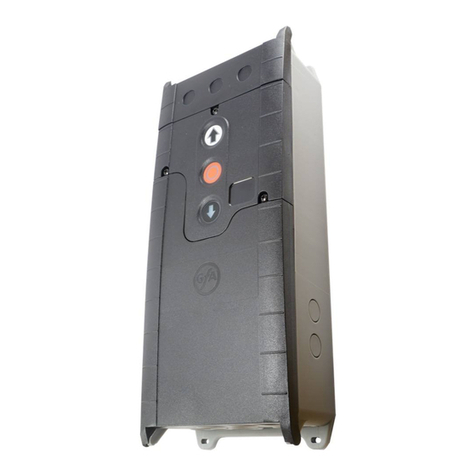
Other GFA Controllers manuals
Popular Controllers manuals by other brands
Digiplex
Digiplex DGP-848 Programming guide
YASKAWA
YASKAWA SGM series user manual

Sinope
Sinope Calypso RM3500ZB installation guide
Isimet
Isimet DLA Series Style 2 Installation, Operations, Start-up and Maintenance Instructions
LSIS
LSIS sv-ip5a user manual
Rockwell Automation
Rockwell Automation 1769-L31 installation instructions