8
2024 Series Tooling Alcoa Fastening Systems
P
PREPARATION
REPARATION
FOR
FOR U
USE
SE
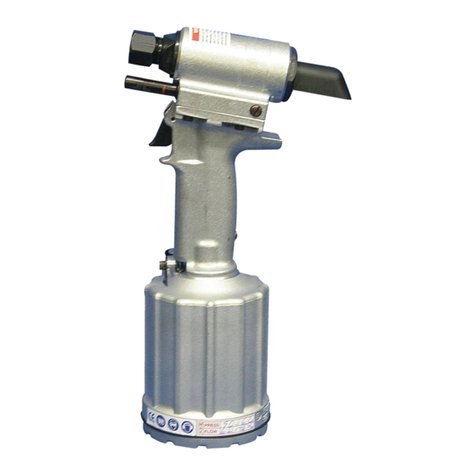
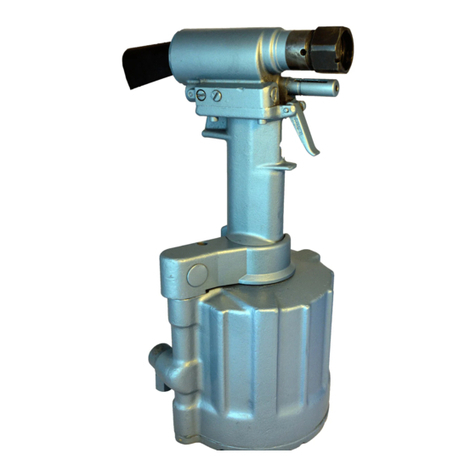
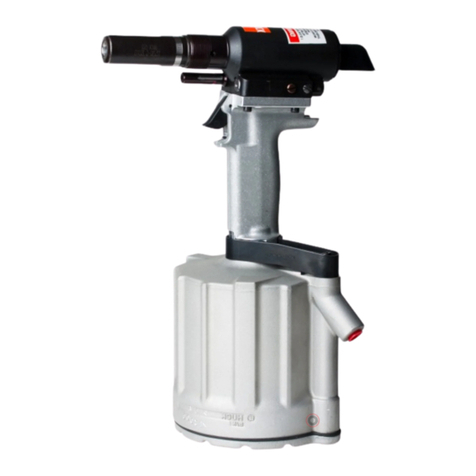
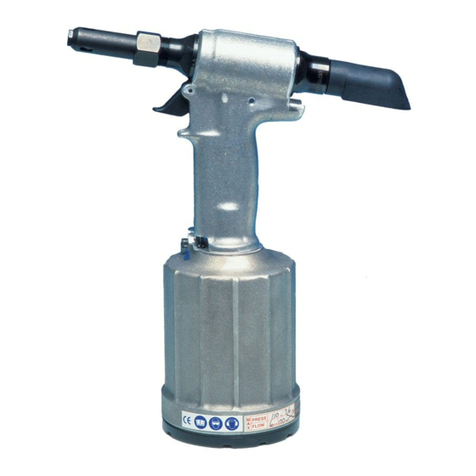
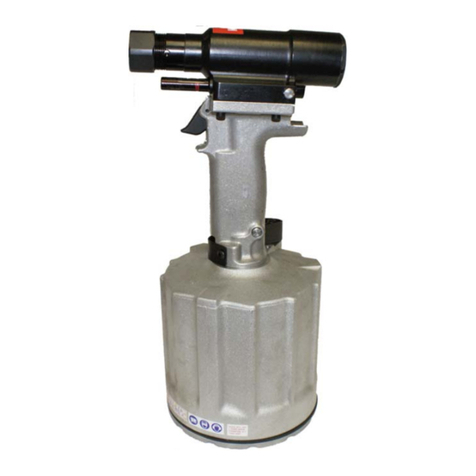
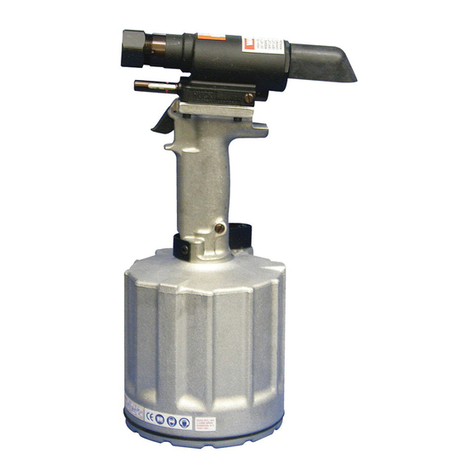
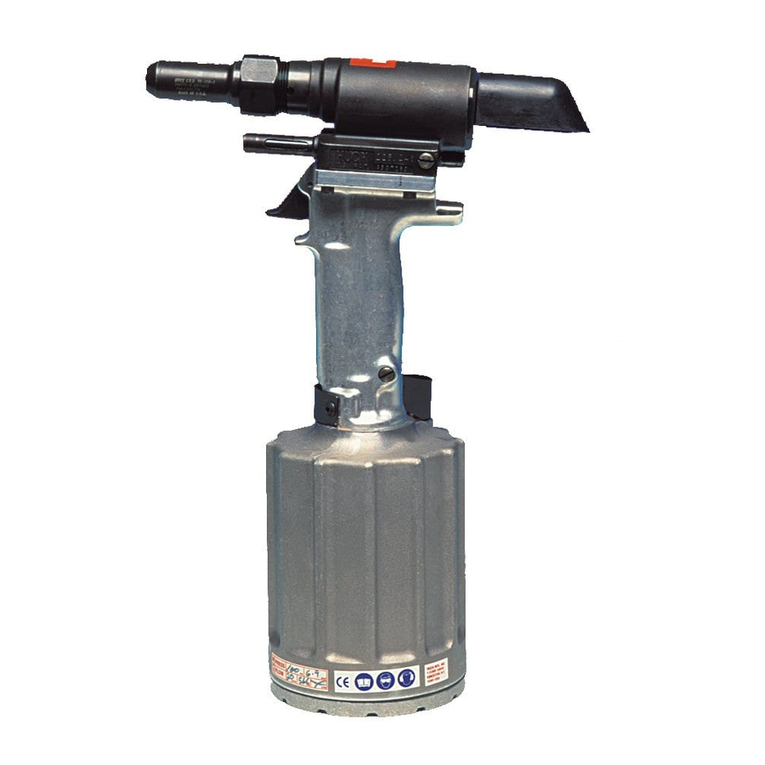
The Model 2024 Installation Tool is shipped with a plastic
plug in the air inlet connector. The connector has 1/4-18
female pipe threads to accept the air hose fitting. Quick
disconnect fittings and 1/4” inside diameter air hose are
recommended. An air supply of 90 - 100 psi capable of
20 CFM must be available. Air supply should be
equipped with a filter-regulator-lubricator unit.
1. Remove plastic shipping plug from Air Inlet
Connector and put in a few drops of Automatic
Transmission Fluid, DEXRON III, or equivalent.
2. Screw quick disconnect fitting into Air Inlet
Connector.
CAUTION: Do not use TEFLON tape on threads - -
use TEFLON in stick form only. (Huck P/N 503237)
3. Set air pressure on regulator to 90-100 psi.
4. Connect air hose to tool.
5. Cycle tool a few times by depressing and releasing
trigger.
6. Disconnect air hose from tool.
7. Remove Retaining Nut.
8. Select proper Nose Assembly from NOSE
ASSEMBLY SELECTION CHART for fastener to be
installed.
9. Screw Collet Assembly (including lock collar and
shim if applicable) onto Spindle. (Wrench Tight)
10. Slide Anvil over Collet Assembly and into
counterbore.
11. Slide Retaining Nut over Anvil and screw Nut onto
Head.
12. Connect air hose to tool and install fastener(s) in test
plate of proper thickness with proper size holes.
Inspect fastener(s).
NOTES:
1 Air quick disconnect fittings and air hoses are not
available from Huck International, Inc.
2 On old style nose assemblies with lock collars,
VIBRA-TITE should be used on collect threads,
since there is no staking hole provided on the 2024
pull piston. Refer to nose assembly data sheets.
S
SERVICING
ERVICING
THE
THE
TOOL
TOOL
GENERAL
1. The efficiency and life of any tool depends upon
proper maintenance. Regular inspection and
correction of minor problems will keep tool
operating efficiently and prevent downtime. The
tool should be serviced by personnel who are
thoroughly familiar with how it operates.
2. A clean, well-lighted area should be available for
servicing the tool. Special care must be taken to
prevent contamination of pneumatic and hydraulic
systems.
3. Proper hand tools, both standard and special, must
be available.
4. All parts must be handled carefully and examined
for damage or wear. Always replace Seals, when
tool is disassembled for any reason. Components
should be disassembled and assembled in a
straight line without bending, cocking, or undue
force. Disassembly and assembly procedures
outlined in this manual should be followed.
5. Service Parts Kit 2024KIT includes consumable parts
and should be available at all times. Other components,
as experiece dictates, should also be available.
DAILY
1. If a Filter-Regulator-Lubricator unit is not being
used, uncouple air disconnects and put a few drops
of Automatic Transmission Fluid or light oil into the
air inlet of the tool. If the tool is in continuous use,
put a few drops of oil in every two to three hours.
2. Bleed the air line to clear it of accumulated dirt or
water before connecting air hose to the tool.
3. Check all hoses and couplings for damage or air
leaks, tighten or replace if necessary.
4. Check the tool for damage or air/hydraulic leaks,
tighten or replace if necessary.
5. Check the nose assembly for tightness or damage,
tighten or replace if necessary.
6. Check stroke periodically, if stroke is short add oil.
WEEKLY
1. Disassemble, clean, and reassemble nose
assemblies per applicable nose assembly
instructions.
2. Check the tool and all connecting parts for damage
or oil/air leaks, tighten or replace if necessary.