manuals.online logo
Brands
  1. Home

  2. •
  3. Brands
  4. •
  5. IBM
  6. •
  7. Switch
  8. •
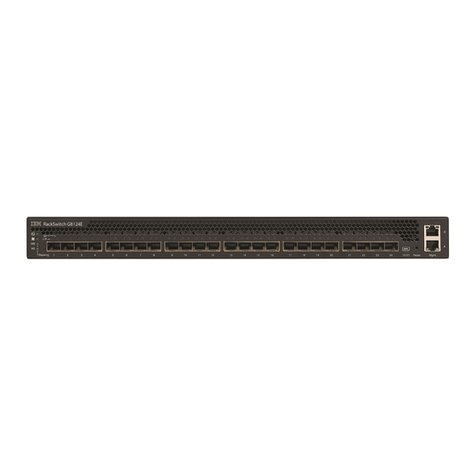
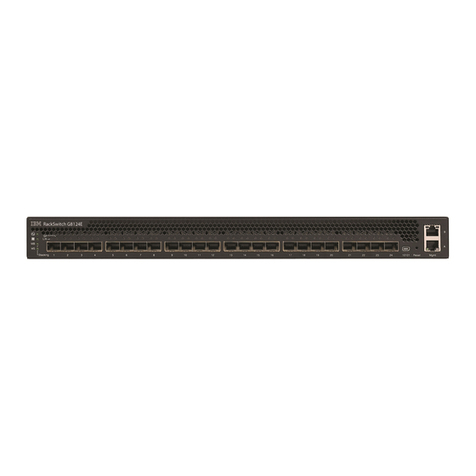
  9. IBM J48E User manual

IBM J48E User manual

Other IBM Switch manuals

IBM Flex System EN4023 User manual

IBM

IBM Flex System EN4023 User manual

IBM pSeries Quick start guide

IBM

IBM pSeries Quick start guide

IBM F12 User manual

IBM

IBM F12 User manual

IBM 3454-A3C User manual

IBM

IBM 3454-A3C User manual

IBM 8275 User manual

IBM

IBM 8275 User manual

IBM RackSwitch G8264T User manual

IBM

IBM RackSwitch G8264T User manual

IBM T860 User manual

IBM

IBM T860 User manual

IBM SAN48C-6 Manual

IBM

IBM SAN48C-6 Manual

IBM 8265 Nways ATM Switch User manual

IBM

IBM 8265 Nways ATM Switch User manual

IBM SAN32M1 Manual

IBM

IBM SAN32M1 Manual

IBM 2498B24 - System Storage SAN24B-4 Switch Manual

IBM

IBM 2498B24 - System Storage SAN24B-4 Switch Manual

IBM Flex System EN2092 User manual

IBM

IBM Flex System EN2092 User manual

IBM SAN40B-4 - System Storage Switch User manual

IBM

IBM SAN40B-4 - System Storage Switch User manual

IBM System Storage SAN80B-4 User manual

IBM

IBM System Storage SAN80B-4 User manual

IBM Nways 8271 F12 User manual

IBM

IBM Nways 8271 F12 User manual

IBM 8265 User manual

IBM

IBM 8265 User manual

IBM BNT RackSwitch G8124 User manual

IBM

IBM BNT RackSwitch G8124 User manual

IBM 1735R16 User guide

IBM

IBM 1735R16 User guide

IBM 8270 Installation and maintenance instructions

IBM

IBM 8270 Installation and maintenance instructions

IBM 2109 - SAN Fibre Channel Switch Model S16 User manual

IBM

IBM 2109 - SAN Fibre Channel Switch Model S16 User manual

IBM SAN48B-5 Manual

IBM

IBM SAN48B-5 Manual

IBM RackSwitch G8000 User manual

IBM

IBM RackSwitch G8000 User manual

IBM RackSwitch G8000 User manual

IBM

IBM RackSwitch G8000 User manual

IBM 360 User manual

IBM

IBM 360 User manual

Popular Switch manuals by other brands

SMC Networks SMC6224M Technical specifications

SMC Networks

SMC Networks SMC6224M Technical specifications

Aeotec ZWA003-S operating manual

Aeotec

Aeotec ZWA003-S operating manual

TRENDnet TK-209i Quick installation guide

TRENDnet

TRENDnet TK-209i Quick installation guide

Planet FGSW-2022VHP user manual

Planet

Planet FGSW-2022VHP user manual

Avocent AutoView 2000  AV2000BC AV2000BC Installer/user guide

Avocent

Avocent AutoView 2000 AV2000BC AV2000BC Installer/user guide

Moxa Technologies PT-7728 Series user manual

Moxa Technologies

Moxa Technologies PT-7728 Series user manual

Intos Electronic inLine 35392I operating instructions

Intos Electronic

Intos Electronic inLine 35392I operating instructions

Cisco Catalyst 3560-X-24T Technical specifications

Cisco

Cisco Catalyst 3560-X-24T Technical specifications

Asante IntraCore IC3648 Specifications

Asante

Asante IntraCore IC3648 Specifications

Siemens SIRIUS 3SE7310-1AE Series Original operating instructions

Siemens

Siemens SIRIUS 3SE7310-1AE Series Original operating instructions

Edge-Core DCS520 quick start guide

Edge-Core

Edge-Core DCS520 quick start guide

RGBLE S00203 user manual

RGBLE

RGBLE S00203 user manual

Thrustmaster FLIGHT SIMULATOR X quick guide

Thrustmaster

Thrustmaster FLIGHT SIMULATOR X quick guide

Southwire SURGE GUARD 41390 RVC troubleshooting guide

Southwire

Southwire SURGE GUARD 41390 RVC troubleshooting guide

Buhler Nivotemp NT 61 Brief instructions

Buhler

Buhler Nivotemp NT 61 Brief instructions

Kramer VS-41HDCP user manual

Kramer

Kramer VS-41HDCP user manual

Techly IDATA AU-270 user manual

Techly

Techly IDATA AU-270 user manual

Belkin F1U109 user manual

Belkin

Belkin F1U109 user manual

manuals.online logo
manuals.online logoBrands
  • About & Mission
  • Contact us
  • Privacy Policy
  • Terms and Conditions

Copyright 2025 Manuals.Online. All Rights Reserved.

IBM Ethernet Switch J48E Quick Start
Rev 03
To install the switch in a four-post open rack and configure the switch, you need:
Phillips (+) screwdriver, number 2
6 flat-head 4-40 mounting screws (provided)
12 flat-head 4x6-mm Phillips mounting screws (provided)
One pair of front brackets (either flush brackets or 2-inch-recess brackets), one pair of
side-rail brackets, and one pair of rear brackets (provided)
Screws to secure the chassis and the rear brackets to the rack
Power cord with a plug appropriate for your geographical location and a power cord
retainer (provided)
Management host, such as a PC, with an Ethernet port
Ethernet cable (provided)
NOTE: These instructions apply to four-post open-rack installation only. For cabinet, wall,
and desk installation instructions and other setup tasks, see the IBM Ethernet Switch J48E
documentation at http://www.ibm.com/systems/support/networking.
Part 1: Install a Power Supply in the Switch (If It Is Not Installed)
To install each power supply in the switch chassis:
1. Remove the power supply from the bag. Take care not to touch power supply
components, pins, leads, or solder connections.
2. Push down on the locking lever on the left front of the power supply until it is in its
lowest position (see the figure in Part 3 for the location of the locking lever). You
might need to loosen the locking lever screw to move the lever.
3. Using both hands, place the power supply in the power supply slot on the rear panel
of the switch and slide it in until it is fully seated.
4. Push the locking lever up to its highest position (this action might pull the power
supply in). Tighten the locking lever screw using the Phillips screwdriver, number 2.
Part 2: Install the Switch
See the IBM Ethernet Switch J48E documentation for details about these tasks.
1. Attach either the flush brackets or 2-inch-recess brackets to the side-rail brackets with
the 4-40 mounting screws.
2. Place the switch on a flat, stable surface, align the side-rail brackets along the switch
side panels, and install the brackets on the switch with the 4x6-mm mounting screws.
3. Make sure the rack is properly secured to the building in its permanent location.
4. Have one person grasp both sides of the switch, lift it, and position it in the rack so
the side-rail bracket holes align with the threaded holes in the rack front posts. Align
the bottom hole in each bracket with a front post hole until the chassis is level.
5. Have a second person secure the switch front to the rack.
6. Slide the rear brackets into the side-rail brackets, and attach each rear bracket to a
rear post.
7. Ensure that the chassis is level by verifying that all the screws on the rack front are
aligned with the screws on the back of the rack.
Part 3: Connect Power to the Switch
NOTE: If you are interconnecting multiple switches as a Virtual Chassis, power on only
one switch—the one you will use as the master.
To connect AC power to the switch:
1. Squeeze the two sides of the power cord retainer clip, and insert the L-shaped ends of
the wire clip into the holes in the bracket on each side of the AC appliance inlet on the
power supply faceplate.
2. Insert the coupler end of the power cord into the AC appliance inlet.
3. Push the cord into the slot in the adjustment nut of the power cord retainer. Turn the
nut until it is tight against the base of the coupler and the slot in the nut is turned 90°
from the top of the switch.
4. If the AC power source outlet has a power switch, set it to the OFF (0) position.
5. Insert the power cord plug into the power source outlet.
6. If the AC power source outlet has a power switch, set it to the ON (|) position.
7. Repeat these steps for each AC power supply.
g004478
Side-rail
bracket
Switch
Rear brackets
AC DC
Locking
lever
Tighten
adjustment nut.
Retainer clip
Adjustment nut
AC DC
g020063
45W7887
GA32-0664-02
IBM, the IBM logo, and ibm.com are trademarks or registered trademarks of International Business Machines Corporation in the United States, other countries, or both. Juniper Networks and JUNOS are registered trademarks of Juniper
Networks, Inc. in the United States and other countries. All other trademarks, service marks, registered trademarks, or registered service marks are the property of their respective owners. Juniper Networks assumes no responsibility for any
inaccuracies in this document. Juniper Networks reserves the right to change, modify, transfer, or otherwise revise this publication without notice. Products made or sold by Juniper Networks or components thereof might be covered by one
or more of the following patents that are owned by or licensed to Juniper Networks: U.S. Patent Nos. 5,473,599, 5,905,725, 5,909,440, 6,192,051, 6,333,650, 6,359,479, 6,406,312, 6,429,706, 6,459,579, 6,493,347, 6,538,518, 6,538,899,
6,552,918, 6,567,902, 6,578,186, and 6,590,785. © Copyright International Business Machines Corporation 2008, 2009, 2010. All rights reserved. Printed in USA. US Government Users Restricted Rights—Use, duplication, or disclosure
restricted by GSA ADP Schedule Contract with IBM Corp. Juniper Networks Part Number: 530-031072. IBM Part Number: 45W7887. IBM Form Number GA32-0664-02. Revision 03, 15 March 2010.
g040300
Part 4: Perform Initial Configuration
NOTE: To obtain an IP address dynamically, you must enable a DHCP client on the
management PC you connect to the switch.
1. To transition the switch into initial setup mode, use the Menu and Enter buttons to
the right of the LCD panel on the front panel of the switch:
Press Menu until you see MAINTENANCE MENU. Then press Enter.
Press Menu until you see ENTER EZSetup. Then press Enter.
If EZSetup does not appear as an option in the Maintenance menu, select Factory
Default to return the switch to the factory default configuration. EZSetup is displayed
in the menu only when the switch is set to the factory default configuration.
Press Enter to confirm setup and continue with EZSetup.
The ge-0/0/0 interface on the front panel of the switch is configured as the DHCP
server with the default IP address, 192.168.1.1. The switch can assign an IP address
to the management PC in the IP address range 192.168.1.2 through 192.168.1.253.
NOTE: You have 10 minutes from now to complete the initial configuration using EZSetup.
After 10 minutes, the LCD panel displays a count-down timer and the switch exits EZSetup
mode. The switch then reverts to the factory default configuration and loses connectivity
to the PC. If connectivity is lost, disconnect the cable and start over from Part 4, Step 1.
2. Insert one end of the Ethernet cable into the Ethernet port on the PC, and connect the
other end to port 0(ge-0/0/0) on the front panel of the switch.
3. From the PC, open a Web browser, type http://192.168.1.1 in the address field, and
press the Enter key.
4. On the Juniper Web Device Manager for IBM j-type Ethernet Login page, enter root as
the username, leave the password field blank, and click Login. On the Introduction
page, click Next.
5. On the Basic Settings page, enter the hostname, enter and reenter a password,
specify the time zone, and synchronize the switch date and time settings with the
management PC or set them manually.
6. Click Next. Use the Management Options page to select the management scenario:
In-band Management—Use VLAN ‘default’ for management
Select this option to configure all data interfaces as members of the default
VLAN. Click Next. Specify the management IP address and the default gateway.
In-band Management—Create new VLAN for management
Select this option to create a management VLAN. Click Next. Specify the VLAN
name, VLAN ID, member interfaces, and management IP address and default
gateway for the new VLAN.
Out-of-band Management—Configure management port
Select this option to configure only the management interface. Click Next.
Specify the IP address and default gateway for the management interface.
7. Click Next. On the Manage Access page, you may select options to enable Telnet,
SSH, and SNMP services. For SNMP, you can configure the read community, location,
and contact.
8. Click Next. The Summary page displays the settings you have selected.
9. Click Finish. The configuration is committed as the active switch configuration. You
can log in with the CLI or the Juniper Web Device Manager for IBM j-type Ethernet
interface to configure the switch.
NOTE: After the configuration is committed, the connectivity between the PC and the
switch might be lost. To reconnect, release and renew the IP address by executing the
appropriate commands on the PC or by removing and reinserting the Ethernet cable.
Safety Warnings Summary
This is a summary of safety warnings. For a complete list of warnings, including
translations, see the IBM Ethernet Switch J48E documentation at
http://www.ibm.com/systems/support/networking.
WARNING:Failure to observe these safety warnings can result in serious physical injury.
Permit only trained and qualified personnel to install or replace switch components.
Perform only the procedures described in this quick start and the switch hardware
documentation. Other services must be performed only by authorized personnel.
Before installing the switch, read the planning instructions in the hardware
documentation to make sure that the site meets power, environmental, and clearance
requirements for the switch.
Before connecting the switch to a power source, read the installation instructions in
the hardware documentation.
If the switch is the only unit in the rack, mount it at the bottom of the rack. If the rack
is partially filled, load the rack from the bottom, with the heaviest unit at the bottom.
If the rack has stabilizing devices, install them in the rack before mounting or
servicing the switch in the rack.
A fully loaded IBM Ethernet Switch J48E weighs approximately 22 lb (10 kg).
Manually installing the switch in a four-post rack requires lifting the switch,
positioning it, and sliding it into the rack. To prevent injury, keep your knees bent and
your back straight and avoid twisting your body. Lift with your legs, not your back.
Before installing or after removing an electrical component, always place it
component-side up on a flat antistatic surface or in an electrostatic bag.
Do not work on the switch or connect or disconnect cables during electrical storms.
Before working on equipment that is connected to power lines, remove jewelry,
including rings, necklaces, and watches. Metal objects heat up when connected to
power and ground and can cause serious burns or become welded to the terminals.
Power Cable Warning (Japanese). The
attached power cable is only for this product.
Do not use this cable for another product.
Contacting IBM
For technical support, see http://www.ibm.com/planetwide/.