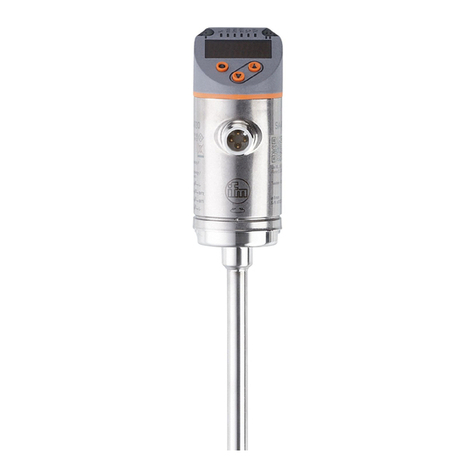
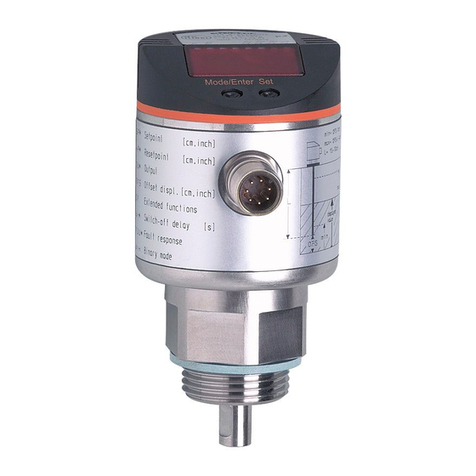
IFM LX Series User manual

Operating instructions
Electronic level sensor
LR9020
LXxxxx
80227276 / 00 01 / 2022
UK

2
Contents
1 Preliminary note���������������������������������������������������������������������������������������������������4
1�1 Symbols used ������������������������������������������������������������������������������������������������4
2 Safety instructions �����������������������������������������������������������������������������������������������4
3 Items supplied������������������������������������������������������������������������������������������������������5
4 Functions and features ����������������������������������������������������������������������������������������5
4�1 Operation with single probe���������������������������������������������������������������������������6
4�2 Operation with coaxial probe �������������������������������������������������������������������������6
4�3 Applications ���������������������������������������������������������������������������������������������������6
4�3�1 Restriction of the application area ��������������������������������������������������������7
4�4 Special information on DNV-GL approval ������������������������������������������������������8
5 Function���������������������������������������������������������������������������������������������������������������8
5�1 Measuring principle ���������������������������������������������������������������������������������������8
5�2 Features of the unit����������������������������������������������������������������������������������������9
5�2�1 Set-up via IO-Link���������������������������������������������������������������������������������9
5�2�2 Analogue function ��������������������������������������������������������������������������������9
5�2�3 Probes for different tank heights���������������������������������������������������������10
5�2�4 Defined state in case of a fault �����������������������������������������������������������10
5�2�5 IO-Link ������������������������������������������������������������������������������������������������10
6 Installation���������������������������������������������������������������������������������������������������������� 11
6�1 Installation location / environment ��������������������������������������������������������������� 11
6�1�1 Unit with single probe ������������������������������������������������������������������������� 11
6�1�2 Unit with coaxial probe �����������������������������������������������������������������������14
6�2 Installation of the probe �������������������������������������������������������������������������������14
6�2�1 Installation of the rod ��������������������������������������������������������������������������14
6�2�2 Installation of the coaxial pipe ������������������������������������������������������������15
6�3 Shortening of the probe �������������������������������������������������������������������������������16
6�3�1 How to shorten the rod and to determine its length L�������������������������16
6�3�2 Shortening of the coaxial pipe ������������������������������������������������������������16
6�3�3 Determination of the rod length L when coaxial probes are used�������17
6�4 Installation of the unit with single probe�������������������������������������������������������17
6�4�1 Installation in closed metal tanks (without flange plate) ���������������������18
6�4�2 Installation in closed metal tanks (with flange plate) ��������������������������18
6�4�3 Installation in open tanks ��������������������������������������������������������������������19

3
UK
6�4�4 Installation in plastic tanks������������������������������������������������������������������20
6�5 Installation of the unit with coaxial probe in the tank �����������������������������������20
6�6 Alignment of the sensor housing �����������������������������������������������������������������21
7 Electrical connection������������������������������������������������������������������������������������������21
8 Operating and display elements ������������������������������������������������������������������������21
9 Parameter setting ����������������������������������������������������������������������������������������������22
9�1 Parameter setting via PC�����������������������������������������������������������������������������22
9�2 Parameter setting via the memory plug�������������������������������������������������������23
10 Operation���������������������������������������������������������������������������������������������������������23
10�1 Operating and diagnostic messages via IO-Link ��������������������������������������23
10�2 Output response in different operating states��������������������������������������������23
10�3 Setting ranges ������������������������������������������������������������������������������������������23
11 Maintenance ���������������������������������������������������������������������������������������������������24
12 Factory setting �������������������������������������������������������������������������������������������������24

4
1 Preliminary note
1.1 Symbols used
►Instructions
> Reaction, result
[…] Designation of keys, buttons or indications
→Cross-reference
Important note
Non-compliance may result in malfunction or interference�
Information
Supplementary note�
2 Safety instructions
• The device described is a subcomponent for integration into a system�
- The manufacturer of the system is responsible for the safety of the system�
- The system manufacturer undertakes to perform a risk assessment and to
create a documentation in accordance with legal and normative requirements
to be provided to the operator and user of the system� This documentation
must contain all necessary information and safety instructions for the operator,
the user and, if applicable, for any service personnel authorised by the
manufacturer of the system�
• Read this document before setting up the product and keep it during the entire
service life�
• The product must be suitable for the corresponding applications and
environmental conditions without any restrictions�
• Only use the product for its intended purpose (→ Functions and features).
• Only use the product for permissible media (→ Technical data).
• If the operating instructions or the technical data are not adhered to, personal
injury and/or damage to property may occur�
• The manufacturer assumes no liability or warranty for any consequences
caused by tampering with the product or incorrect use by the operator�
• Installation, electrical connection, set-up, operation and maintenance of the unit
must be carried out by qualified personnel authorised by the machine operator�
• Protect units and cables against damage�

5
UK
3 Items supplied
• Level sensor LR9020 or LXxxxx
• Operating instructions
In addition, the following is necessary for installation and operation:
• Rod (for operation of the unit with single probe → 4.1)
• If required, 1 coaxial pipe (for operation of the unit with coaxial probe → 4.2)
• Mounting material (if necessary, a launching plate → 4.1).
Only use accessories from ifm electronic gmbh! The optimum function is
not ensured when using components from other manufacturers�
Available accessories: www�ifm�com
Set-up requires a PC with IO-Link compatible software or a memory plug
with corresponding programming� More information → 5.2.5 and → 9�
4 Functions and features
The unit continuously detects the level in tanks and generates output signals
according to the parameter settings�
2 outputs are available:
- OUT1: Level via IO-Link�
More information → 5.2.5 and → 9�
- OUT2: analogue signal proportional to the level 4���20 mA / 0���10 V
On delivery the device is not operational!
For set-up valid basic settings / parameters must be transferred to the
device (→ 9.1)� Ensure that the basic settings are entered correctly
according to the mounted probe and the medium to be detected�

6
4.1 Operation with single probe
The single probe is made up of one individual rod� Operation with single probe is
suited for the detection of aqueous media, in particular of heavily soiled aqueous
media�
For the correct function with single probe, the unit needs a large enough
metal launching plate� It is necessary for transferring the microwave pulse
to the tank with optimum transmission power�
The flange plates that are available as accessories are not sufficient as
launching plates (for suitable launching plates → 6.4).
For installation in closed metal tanks, the tank lid serves as a launching
plate� For installation in open metal tanks, tanks made of plastic or metal
tanks with plastic lids, a sufficiently large fixing plate, a metal plate or
similar must be used (→ 6.4.3 / → 6.4.4).
For operation with single probe, minimum distances to tank walls, objects
in the tank, bottom of the tank and further level sensors must be adhered
to (→ 6.1.1).
4.2 Operation with coaxial probe
The coaxial probe is made up of an inner rod and an outer probe pipe (coaxial
pipe)� The rod is centered in the coaxial pipe by one or several spacers�
In case of operation with a coaxial probe, media with a low dielectric constant (e�g�
oil and oil-based media) are detected in addition to aqueous media�
No launching plate is required for operation with coaxial probe�
Furthermore, no minimum distances to tank walls and objects in the tank
are required�
4.3 Applications
• Water, water-based media
• Oils, oil-based media (only for operation with coaxial probe)
• For applications under difficult environmental conditions (e�g� weather)
(→ Technical data sheet).

7
UK
Application examples:
• Detection of coolant emulsion in a machine tool�
• Detection of cleaning liquid in a parts cleaning system�
• Monitoring of hydraulic oil in a hydraulic power unit (only for operation with
coaxial probe)
• Detection of Diesel fuel (only for operation with coaxial probe, in non hazardous
areas!)�
4.3.1 Restriction of the application area
• The unit is not suitable for bulk materials (e�g� plastic granulates)
• If the unit is to be used in acids or alkalis, in hygienic areas or in electroplating
applications: first check the compatibility of the product materials (→ Technical
data sheet) with the media to be monitored�
• Incorrect measurements or signal loss may be caused by the following media:
- Highly absorbing surfaces (e�g� foam)�
- Intensely bubbling surfaces�
- Media which are very inhomogeneous, separate from each other thus forming
separation layers (e�g� oil layer on water)�
►Check the function with an application test�
> The unit reports any signal loss via IO-Link and provides a defined signal at
the analogue output (→ 5.2.4)�
• The unit is not suitable for applications where the probe is subjected to
permanent and high mechanical stress (e�g� strongly moving viscous media or
strongly flowing media)�
• In case of operation with single probe: use preferably in metal tanks� When
installed in plastic tanks, deterioration caused by electromagnetic interference
may occur (noise immunity to EN61000-6-2). Corrective measures: → 6.4.4.
• When operating with a single probe and small tanks (probe lengths shorter
than 200 mm and less than 300 mm distance to the tank wall), interference
from the tank (resonances) may occur in rare cases�
Corrective measures: (→ 6.1.1)
• In case of operation with coaxial probe: not suitable for viscous media and
media prone to formation of deposit� Maximum viscosity: 500 mPa
·
s�

8
4.4 Special information on DNV-GL approval
For use under DNV-GL conditions (if device approval is available), observe
the following instructions:
• Single probes and coaxial probes up to a length of 500 mm can be
operated without support�
• For probe lengths from 500 mm to 2000 mm, coaxial probes must be
used� These must be supported additionally, either at half length or at
the end� The support must be suited to damp occurring vibrations�
• If using a coaxial pipe with a length of 700 mm or longer, additional
centering pieces must be mounted in this coaxial pipe (→ Accessories).
5 Function
5.1 Measuring principle
fig. 5-1 fig. 5-2
D
The unit operates to the principle of guided wave radar� It measures the level
using electromagnetic pulses in the nanosecond range�
The pulses are transmitted by the sensor head and guided along the rod
(fig� 5-1)� When they hit the medium to be detected they are reflected and guided
back to the sensor (fig� 5-2)� The time between transmitting and receiving the
pulse directly relates to the travelled distance (D) and the current level� The
reference for distance measurement is the lower edge of the process connection�
The figures show the operation with single probe� In case of operation with
a coaxial probe, the guided wave runs only along the inside of the coaxial
pipe�

9
UK
5.2 Features of the unit
5.2.1 Set-up via IO-Link
• The device parameters are set via the IO-Link interface (→ 5.2.5 and → 9)�
• All settings can also be carried out before installation of the unit�
5.2.2 Analogue function
The unit provides an analogue signal proportional to level� The analogue output
(OUT2) can be configured�
• [OU2] defines the output function of the analogue output:
-[OU2] = [I] the measuring range is provided as 4���20 mA�
-[OU2] = [InEG] the measuring range is provided as 20���4 mA�
-[OU2] = [U] the measuring range is provided as 0���10 V�
-[OU2] = [U] the measuring range is provided as 10���0 V�
Curve of the analogue signal (factory setting):
L
20 mA / 10 V
4 mA / 0 V
A
I2 I1
L: Level
①:
[OU2] = I / U (factory setting)
A: Active zone
②:
[OU2] = [InEG] / [UnEG]
I1: Inactive zone 1
I2: Inactive zone 2 (→ Technical data sheet)
Note the tolerances and accuracy limits during the evaluation of the analogue
signal (→ Technical data sheet).

10
5.2.3 Probes for different tank heights
• The unit can be installed in tanks of different sizes� Probes in different lengths
are available� To adapt to the tank height, each probe can be shortened� The
minimum probe length is 100 mm, the maximum probe length is 1600 mm�
• Probe and housing can be rotated without restriction� This enables easy
installation and orientation of the head of the unit after installation�
5.2.4 Defined state in case of a fault
• If a fault is detected or if the signal quality is below a minimum value, the
analogue output passes into a defined state� For this case, the response of the
output can be set via the parameter [FOU2]�
• Temporary loss of signal caused e�g� by turbulence or foam formation can
be suppressed by a delay time (→ 9.1 [dFo])� During the delay time the last
measured value is frozen� If the measured signal is received again in sufficient
strength within the delay time, the unit continues to work in normal operation� If,
however, it is not received again in sufficient strength within the delay time, the
output passes into the defined state�
5.2.5 IO-Link
General information
This unit has an IO-Link communication interface which requires an IO-Link-
capable module (IO-Link master) for operation�
The IO-Link interface enables direct access to the process and diagnostic data
and provides the possibility to set the parameters of the unit during operation� In
addition communication is possible via a point-to-point connection with a USB
adapter cable�
For further information about IO-Link view: www�ifm�com/gb/io-link�
Device-specific information
You will find the IODDs necessary for the configuration of the IO-Link unit and
detailed information about process data structure, diagnostic information and
parameter addresses at www�ifm�com/gb/io-link�
Parameter setting tools
You will find all necessary information about the required IO-Link hardware and
software at www�ifm�com/gb/io-link�

11
UK
6 Installation
6.1 Installation location / environment
• Vertical installation from the top is preferred�
6.1.1 Unit with single probe
• For safe functioning, the unit requires a launching plate (→ 6.4).
• The following minimum distances between the rod and tank walls, objects in
the tank (B), tank bottom and other level sensors must be adhered to:
50mm
10mm
100mm
B40mm
• For tank walls which are not straight, steps, supports or other structures in the
tank a distance of 50 mm to the tank wall must be adhered to�
• When operating the unit in small tanks (probe lengths shorter than 200 mm
and less than 300 mm distance to the tank wall), mount the unit off-centre
(eccentrically) to prevent possible interference from tank resonances�
• For probe lengths > 700 mm, the rod can be considerably deflected by
movement of the medium� To avoid contacting the tank wall or other structures
in the tank in such cases, the minimum distances should be increased�
Reference values:
Probe length Distance to the tank wall or structures in the tank
700���1000 mm 100 mm
1000���1600 mm 180 mm

12
• If the medium is strongly polluted, there is the risk that a bridge forms
between the rod and the tank wall or structures in the tank� To avoid incorrect
measurements: adhere to increased minimum distances depending on type
and intensity of the soiling�
• For installation in pipes:
- The inside pipe diameter (d) must be at least 100 mm (fig� 6-1)�
- If possible, mount the unit off-centre (eccentrically)�
- Only install the unit in metal pipes�
• For installation in connection pieces:
- The diameter of the boss (d) must be at least 60 mm (fig� 6-2)�
- The height of the boss (h) must not exceed 40 mm (fig� 6-2)�
Although the unit can be installed in a boss, installation in a flat tank lid is
recommended� A boss will impede the distribution of the microwaves�
fig. 6-1 fig. 6-2
d
d
h
• Do not install the unit in the immediate vicinity of a fill opening (fig� 6-3)� If
possible, install a fill pipe (A) in the tank (fig� 6-4)� Minimum distance between
the fill pipe and the rod = 50 mm; higher for rod lengths > 700 mm and in case
of heavy soiling (→ 6.1.1).

13
UK
fig. 6-3 fig. 6-4
50mm
A
• Strong foam formation and strongly moving surfaces can lead to malfunctions
(see the following fig�)� Recommended remedies: use a coaxial probe, install
a still pipe or bypass� Note: minimum diameter d = 100 mm� The upper access
to the bypass (A) and the fill openings of the still pipe (B) must be above the
maximum level� The lower edges of the bypass (C) and of the still pipe (D)
must be below the minimum level� This ensures that neither foam nor waves
impact the sensor zone:
d
d
AB
CD

14
6.1.2 Unit with coaxial probe
• No minimum distances to the
tank wall and the baffles (B) are
required�
• Minimum distance to the bottom of
the tank: 10 mm�
• The vent hole (A) must not be
covered by mounting elements or
similar�
• Do not install the unit in the
immediate vicinity of a fill opening�
No water jets must enter into the
holes of the coaxial pipe�
A
B
10 mm
• Note in case of foam formation: the vent of the coaxial pipe must be above the
maximum level� The lower edge of the coaxial pipe must be below the minimum
level�
6.2 Installation of the probe
Rod and coaxial pipe are not included in the scope of delivery� They must be
ordered separately (→ 3 Items supplied).
6.2.1 Installation of the rod
Fixing of the rod:
►Screw the rod to the unit and tighten
it�
Recommended tightening
torque: 4 Nm�
For ease of installation and removal
the rod connection can be rotated
without restriction� Even if rotated
several times there is no risk of
damage to the unit�
6
In case of high mechanical stress (strong vibration, moving viscous media) it
may be necessary to secure the screw connection, e�g� by a screw retaining
compound�

15
UK
Substances such as screw retaining compounds may migrate into the
medium� Make sure that they are harmless!
When using mechanical means of securing (e�g� tooth lock washer), protruding
edges must be avoided� They may cause interference reflection�
6.2.2 Installation of the coaxial pipe
This subchapter is only relevant if the unit is to be operated with a coaxial probe�
The coaxial pipe and the rod must be of the same end length� The coaxial
pipe can be shortened (→ 6.3.2).
►Screw the rod to the unit and tighten
it� Recommended tightening torque:
4 Nm�
►Slide the sensor seal (A) onto the
thread�
►Slide the coaxial pipe (B) onto the
rod� Carefully center it and carefully
move the rod through the centring
piece (C) (for lengths > 1400 mm
through both centring pieces) of the
coaxial pipe� Do not damage the
centring pieces�
►Screw onto the sensor thread and
tighten�
A
C
B
32
32
If used under DNV GL conditions (if approval available for the device) and if
a coaxial pipe of 700 mm or longer is used, additional centring pieces must
be mounted in this coaxial pipe (→ Accessories).

16
6.3 Shortening of the probe
6.3.1 How to shorten the rod and to determine its length L
The rod can be shortened to adapt the probe to different tank heights�
Ensure that the probe length is never below the minimum permissible
probe length of 100 mm (Lmin)! The unit does not support probe lengths
below 100 mm� If shorter probes are used, measurement errors can occur�
Proceed as follows:
►Screw the probe to the unit�
►Mark the desired length (L) on the
rod� The reference point is the lower
edge of the process connection�
►Remove the rod from the unit�
►Shorten rod at the mark�
fig. 6-5
Lmin
L
Lmin = 100 mm
►Remove all burrs and sharp edges�
►Screw the rod to the unit again and tighten it� Recommended tightening torque:
4 Nm�
►Precisely measure the probe length L, note the value� It must be entered during
parameter setting of the unit�
6.3.2 Shortening of the coaxial pipe
The coaxial pipe and the rod must be of the same end length:

17
UK
►Remove fastening bracket and
centring piece (A, B)�
►Shorten the coaxial pipe to the
requested length: LK= L + 9 mm�
►After shortening, at least one
hole (C) for insertion of the fixing
bracket has to be left�
►Remove all burrs and sharp
edges�
►Insert centring piece (A) at the
lower end of the pipe and attach it
using the fixing bracket (B) at the
lower hole (C)�
fig. 6-6
AB
C
LK= length of the coaxial pipe
L = length of the rod from the lower edge
of the process connection (fig� →6�5)�
6.3.3 Determination of the rod length L when coaxial probes are used
Relevant in case the rod length L is unknown (fig� 6-5):
►Measure the exact total length LKof the coaxial pipe (fig� 6-6)�
►Deduct 9 mm from the total length of the coaxial pipe: L = LK– 9 mm �
►Note down L� Value L must be entered when setting the parameters of the
device (→ 9.1 Parameter setting via PC)�
6.4 Installation of the unit with single probe
For the correct function when used with single probe, the unit needs a
large enough metal launching plate� It is necessary for transferring the
microwave pulse to the tank with optimum transmission power� The flange
plates that are available as accessories are not sufficient as launching
plates�
For installation in closed metal tanks, the tank lid serves as a launching plate (R in
fig� 6-7 and 6-11)� 2 ways of installation are possible:
• Screw in a G¾ process connection in the tank lid (→ 6.4.1).
• Installation in the tank lid using a flange plate, e�g� for tanks with thin walls
(→ 6.4.2).
Furthermore, installation in open tanks (→ 6.4.3) and plastic tanks is possible
(→ 6.4.4).

18
6.4.1 Installation in closed metal tanks (without flange plate)
fig. 6-7 fig. 6-8 fig. 6-9
R
32 D
►The lower edge of the process connection should be flush with the installation
environment (fig� 6-7)�
►Avoid non-flush installation (fig� 6-8)�
►Use seals or washers (D in fig� 6-9) to reach the required height�
►For tanks with thick walls arrange for sufficiently deep recesses to ensure flush
installation�
6.4.2 Installation in closed metal tanks (with flange plate)
Flange plates are not supplied� They must be ordered separately
(→ 3 Items supplied).
fig. 6-10 fig. 6-11
d
R
AB
►Arrange for a bore hole in the tank lid� It must have a minimum diameter (d) to
enable sufficient transfer of the measured signal to the probe (Abb� 6-10)� The
diameter depends on the wall thickness of the tank lid:

19

UK
Wall thickness [mm] 1���5 5���8 8���11
Bore hole diameter [mm] 35 45 55
►Install the flange plate with the flat surface showing to the tank and fix it with
appropriate screws�
A seal (B in fig� 6-11) can be inserted between flange plate and tank� Some
flange plates are supplied with a seal�
►Ensure cleanness and evenness of the sealing areas, especially if the tank is
under pressure� Tighten the fixing screws sufficiently�
►Screw the unit into the flange plate using the process connection and tighten
firmly�
►Make sure that the supplied sensor seal (A in fig� 6-11) is correctly positioned�
6.4.3 Installation in open tanks
►For installation in open tanks, use a metal fixture to install the unit� It serves
as a launching plate (R); Minimum size: 150 x 150 mm for a square fixture,
150 mm diameter for a circular fixture�
►If possible, mount the unit in the middle of the fixture� The distance D2 must
not be below 40 mm, higher for probe lengths > 700 mm and in case of heavy
soiling (→ 6.1.1):
D2
150 mm
R
►The lower edge of the process connection should be flush with the installation
environment (see fig� 6-7)�
►Avoid non-flush installation (see fig� 6-8)�
►Use seals or washers (see D in fig� 6-9) to reach the required height�

20
6.4.4 Installation in plastic tanks
150 mm
R
To enable sufficient transfer of the measured signal, note in case of installation in
plastic tanks or metal tanks with plastic lid:
►The plastic lid must be provided with a drill hole with a minimum diameter of
150 mm�
►For installation of the unit, a metal flange plate (= launching plate R) must be
used which sufficiently covers the drill hole�
►Ensure the minimum distance (= 80 mm) between rod and tank wall, higher for
probe lengths > 700 mm and in case of heavy soiling (→ 6.1.1).
When installed in plastic tanks, there may be deterioration caused by
electromagnetic interference� Corrective measures:
• Apply a metal foil to the outside of the tank�
• Apply a shielding screen between the level sensor and other electronic
units�
• Operation with coaxial probe efficiently protects the unit from
electromagnetic interference� Please note the restrictions regarding the
application area (→ 4.3).
6.5 Installation of the unit with coaxial probe in the tank
►Seal the process connection:
- For pipes with G¾ process connection: slide the supplied seal onto the thread
of the coaxial pipe�
- For pipes with ¾" NPT process connection: apply a suitable sealing material
(e�g� Teflon tape)�
►Screw the unit with the coaxial pipe into the tank and tighten it�
Other manuals for LX Series
1
This manual suits for next models
1
Table of contents
Other IFM Measuring Instrument manuals

IFM
IFM efector300 VS3000 User manual

IFM
IFM OY51 User manual

IFM
IFM SI0551 User manual

IFM
IFM efector 300 SD2001 User manual

IFM
IFM SI0555 User manual

IFM
IFM AS-i CompactModule M8 User manual

IFM
IFM SD26 Series User manual

IFM
IFM SD6020 User manual

IFM
IFM SD1540 User manual

IFM
IFM efector300 SD0523 User manual
Popular Measuring Instrument manuals by other brands

Endress+Hauser
Endress+Hauser Proline Promag 55 PROFIBUS PA operating instructions

ELSEC
ELSEC 764 user manual

Data Translation
Data Translation DT9812 Series user manual

Hanna Instruments
Hanna Instruments HI 9023C instruction manual

gefran
gefran 650 L Installation and instruction manual

Siemens
Siemens SITRANS P300 quick start guide