manuals.online logo
Brands
  1. Home
  2. •
  3. Brands
  4. •
  5. Korg
  6. •
  7. Recording Equipment
  8. •
  9. Korg SDD-1200 User manual

Korg SDD-1200 User manual

Other manuals for SDD-1200

1

Other Korg Recording Equipment manuals

Korg D16XD Product information sheet

Korg

Korg D16XD Product information sheet

Korg Electribe SX ESX-1SD User manual

Korg

Korg Electribe SX ESX-1SD User manual

Korg MR-2000S General instructions

Korg

Korg MR-2000S General instructions

Korg volca-fm2 User manual

Korg

Korg volca-fm2 User manual

Korg ToneLab TT User manual

Korg

Korg ToneLab TT User manual

Korg Electribe SmkII User manual

Korg

Korg Electribe SmkII User manual

Korg D8 User manual

Korg

Korg D8 User manual

Korg ToneWorks AX1000G User manual

Korg

Korg ToneWorks AX1000G User manual

Korg D3200 User manual

Korg

Korg D3200 User manual

Korg KONTROL49 User manual

Korg

Korg KONTROL49 User manual

Korg Toneworks AX1B User manual

Korg

Korg Toneworks AX1B User manual

Korg EASYSTART D1600MKII User manual

Korg

Korg EASYSTART D1600MKII User manual

Korg EasyStart mini-KP Product information sheet

Korg

Korg EasyStart mini-KP Product information sheet

Korg Pandora PX2 User manual

Korg

Korg Pandora PX2 User manual

Korg nanoKONTROL Studio User manual

Korg

Korg nanoKONTROL Studio User manual

Korg MR-2000S User manual

Korg

Korg MR-2000S User manual

Korg Tone Works Pandora PX4D User manual

Korg

Korg Tone Works Pandora PX4D User manual

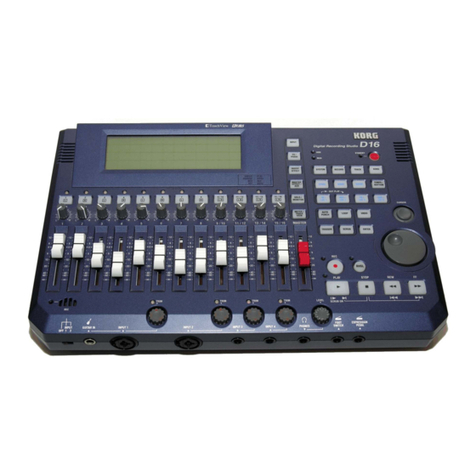
Korg D16 User manual

Korg

Korg D16 User manual

Korg Triton-Rack User guide

Korg

Korg Triton-Rack User guide

Korg PA80 User manual

Korg

Korg PA80 User manual

Korg Electribe ESX-1 Product information sheet

Korg

Korg Electribe ESX-1 Product information sheet

Korg Volca Sample User manual

Korg

Korg Volca Sample User manual

Korg KAOSS PAD KP2 User manual

Korg

Korg KAOSS PAD KP2 User manual

Korg nanoPad2 User manual

Korg

Korg nanoPad2 User manual

Popular Recording Equipment manuals by other brands

Philips CDR 765 null

Philips

Philips CDR 765 null

Philips CDR770 null

Philips

Philips CDR770 null

KV2 Audio 500 Series user guide

KV2 Audio

KV2 Audio 500 Series user guide

Robotics Technologies microBus-Cam II installation manual

Robotics Technologies

Robotics Technologies microBus-Cam II installation manual

Seca 460 quick start guide

Seca

Seca 460 quick start guide

Cognex MVS-8000 Series Hardware manual

Cognex

Cognex MVS-8000 Series Hardware manual

Mect MPNC006 Series user manual

Mect

Mect MPNC006 Series user manual

Bad Caf THE LEASH operating manual

Bad Caf

Bad Caf THE LEASH operating manual

Strymon NIGHTSKY user manual

Strymon

Strymon NIGHTSKY user manual

Mitsubishi Electric 16CH DIGITAL RECORDER DX-TL5000U user manual

Mitsubishi Electric

Mitsubishi Electric 16CH DIGITAL RECORDER DX-TL5000U user manual

Tews Technologies TPMC465 user manual

Tews Technologies

Tews Technologies TPMC465 user manual

Honeywell Excel 50 user guide

Honeywell

Honeywell Excel 50 user guide

SeaLevel COMM+8.LPCI user manual

SeaLevel

SeaLevel COMM+8.LPCI user manual

Arturia AUDIOFUSE STUDIO user manual

Arturia

Arturia AUDIOFUSE STUDIO user manual

Rukra RK-1240 quick start guide

Rukra

Rukra RK-1240 quick start guide

Samson SCOM owner's manual

Samson

Samson SCOM owner's manual

Dynacord DPS260 owner's manual

Dynacord

Dynacord DPS260 owner's manual

Pyle Pro PSS8 manual

Pyle Pro

Pyle Pro PSS8 manual

manuals.online logo
manuals.online logoBrands
  • About & Mission
  • Contact us
  • Privacy Policy
  • Terms and Conditions

Copyright 2025 Manuals.Online. All Rights Reserved.

DUALDIGITAL DELAY
OWNER'SMANUAL
l1011司
• l:l::f.:.'l ol:Ior.m llll :w:::t.
~
~
1a:f::tIlTomeill loll lIIt::t.: i IDr;ID., ..';
~
A B 。ロ‑‑
、,. 、
r. 、,... I=‑.i
/ 3、.. 3、
2・[1 :.1
iId
~
m
.j e人EI。帥 u
ー
~
ー. [']1
II_
I~
ー
、、
、liiIll
CII'~:J
口、
[.:
ノ¥
、¥ ¥
N
i
,,~
••
11 =n'l Illf.] ;m R c Ilil
• 手不
」m;rm
A
モ~
[.l:::nrS..Itl'i I:=
r:J:reT:IN:r~
MAIN FEATURES OF THE SDD・1200
‑・・・・・ 2
The 80D‑1200 is an all‑new effect mOdule,composed 012 to 旬lIyindependent,precision digit‑
al delay units in one 1U rack剖ze pac陥ge,with ou臆tanding characteristics such as adynamic
range 01 over 92dB,lrequency response between 30Hz and 16kHz,and delay time range 01
0.5ms and 1024ms.
Each unit leatures 2i
叩uts Onput,Feedback Input) ,and 4outputs (+Mix,‑Mix,Direct,EI‑
lect). The units can be used as parallel delays,or by utilizing the variety 01 inputs and outputs
they can be used in series,or connected lor cross‑Ieedback",and other new effects never
belore possible with conventional delay units.
Each unit houses aseparate modulation generator (LFO),so awide range 01 stereo effects are
possible. There's also modulation modeswitching,so the uni包can be used in or out 01 phase
with each other,by utilizing asingle modulation generator.
3〆
1tl'i[.].]1l
Thankyou andcongratulafions onyour choice of the
KORG500‑1200OUALDIGITAL OELAY.
To obtain opfimum performance andlong service Ii fe
from the DualDigital Delay,please read this manual
carefully before use.
Each unit houses abuilt‑in independent 8amplingIH0ld function. 80und in one unit can be
sampled while the other is used‑ for delay effects; or adifferent phrase can be held in each
unit. These features make the 800‑1200 useful as aone‑point sound source.
Each unit features ahigh‑cutJI ow‑cut filter ,which are useful in creating soft chorus effects,or
sharp,strong flanging.
Bypass functions,absolute necessities in live performances,are built‑in to each unit. They can
be used simultaneously,or controlled to 旬lIyindependently.
3・・圃・・・
IMPORTANT SAFETY PRECAUTIONS
• Location
00not use this unit for extended periods of time where it is exposed to:
・
direct sunlight
• extremes of temperature or humidity
・
sand or dust
・
PowerSupply
• Useonly with rated ACvoltage. If you will beusing this unit in acountry
having adifferent voltage
,
be sure to obtain the proper transformer to
convert to rated voltage.
.Tohelp prevent noise and poor sound quality
,
avoid using the same
outlet as other equipment
,
or branching 0
仔
extensions shared by other
eq
Ul
pment.
• Inpu
t/
Output Jacks and Connection Cords
Besure to usestandard cables with phone plugs for input and output con‑
nections to the rear panel of the 800‑1200. Never insert anyother kind of
plug into these jacks.
・
Handle Gently
Knobs and switches are designed to provide positive operation with a
gentle touch.00not use force.
• Maintenance
Wipethe exterior with aso
代,
dry cloth.Never use paint thinner
,
benzene
or other solvents.
• Keep This Manual
8tore this manual in asafe place for future reference.
• Rack Mounting Procedures
‑・・・・・
4
A
社
ach using supplied screws.
ιつ
If there is agap of 3mmor more between units
, I
fill space with styrofoam
,
etc .
一ー」
CONTENTS
6
1. Front Panel 6
2. Rear Panel
8
,、,、邑
lal
,.,、"'1"
1'
、邑
1
.‘
Ir
、
n.~I'
、,、,、,.
r
、
a
司
~I'
、‘・
10
一一一一一
一一
1. SOO‑1200 InpuUOutput and Basic Settings 10
2. Actual Setting Examples 11
..〒
1
1'、
al~
0 ft
nT
lft.ll" 13
1. Specifications
&Options 13
2. Modulation Characteristics 14
3. HIGH CUT/LOW CUT Filter Characteristics 14
5
・・・・圃・
FEATURES AND FUNCTIONS
1. Front Pa附
ilnputSection
ー
i,
Delay Time Section 11
Regeneration Section 寸「一一一一 Modulatior
。。
HEADROOM LEVEL
A B
TIME(ms)
8
512
1024
FACTOR
xO.5
xO
忌耳れ
FEEDBACK
O
FILTER
O
2
1
。。
INPU DELAY TIME
①
Headroom
indicator
②
Input volume
③
Delay time range selector
④
Factor control
⑤
Feedback control
@
Filter control
⑦
Modulation intensity control
③Modulation frequency control
• About Control Knobs
AII revolving pots feature dual concentric

stacked" knobs
The inner (front) knob controls Unit A
,
and the outer (back)
knob controls Unit 8
• Input Section
の
Headroom Indicator
This LEDmeter shows input levels. It shows the level of
the mixed signal composed of the input and feedback
signals.
②
Input Volume
Used to adjust the input signal level.
• Delay Time Section
③
Delay Time Range Selector
‑・・・・・ 6
Usedto select delay time range for each uni
t.
Control of
delay timewithin the selected range is performed with
the Factor Control
④ .
1of 6ranges as shown below maybe selected.
Position of
Selector knob
1024
512
128
32
8
2
Delay Ti
町、
e
256ms ‑1024ms
128πlS ‑512ms
32ms ‑128ms
8ms ‑32ms
2ms ‑8πlS
O.5ms ‑2ms
fThis control revolves successivelY
,
l
Ihowever ranges change step‑by‑I
lstep as shown.
J
④Factor Control
Usedto select delay time within range selected via Delay
Time Range Indicator ③
• Regeneration Section
⑤
Feedback Control
Used to control feedback level and phase. When exter‑
nal signals are input via the Feedback input on the rear
panel
,
the input level and phase are set via this control.
(See page 8
,
Feedback Input
②.)
⑥
Filter Control
Used to controls the timbre of e
仔
ect sounds. Turning
the knob to the right brings on the high
‑c
ut filter cutting
high frequencies for a

warmer" sound
,
while turning it to
the left brings onthe low‑cut filter cutting low frequencies
for athinner
,
sharper sound
• Modulation Section
⑦
Modulation Intensity Control
Used to adjust the intensity of modulation.(Each Unit is
controlled independently
,
regardless of Modula tion Mode
Switch position.)
③
Modulation Frequency Control
Speed of delay time modulation is set via this control.
(However
,
if the Modulation ModeSwitch
⑦
is set to IN
PHASEor OUTPHASE
,
then Unit A's control knob is us‑
ed to control both Units' modulation frequency
,
with Unit
8's control having no e
行
ect on either Uni
t.)
⑨Modulation Indicator
Flashes to indicate modulation speed and phase.
Section r‑Output Section
~
rSampling Section Ir
:~~~:'ll
Power Sectionl
NCY DIRECTA B EFFECT
au
ad
o
‑
8 2
9
,TION OUTPUT SAMP
Ll NG
KII&勝。 。
。。
⑪Powerswitch
⑮Power indicator
⑮Bypass indicator
⑪Bypa鎚switch
⑬Sampling switch
⑫Effect output volume
⑪Direct output volume
⑩Modulation modeswitch
⑨Modulation indicator
⑩Modulation ModeSwitch
This switch is used to select the relationship of modula‑
tion signals between Units Aand B. (Changes modula‑
tion added to Unit B.)
Oneof 3positions maybe selected as shown below.
Switch P
関ition I Units A,Bmodulation
s
凹陥
T花EIMo帥tiωO∞nof 伺ch 川i陪sc∞on川tro削111
ωt
剖副 Iy i川ndependen川tly.
IN PHASE IModulation for both units is controlled by
using Unit A's LFO. LFO's are In Phase
OUTPHASE IMo帥tion for both units is controlled by
using Unit A'sLFO. LFO's are Out of
Phase.
• Output Section
⑪Direct Output Volume
Usedto adjust direct signallevel in +Mix and,‑Mix out‑
puts.
⑫E何ect Output Volume
Used to adjust effect signal levels in +Mix and,‑Mix
outputs.
• Sampling Section
⑬Sampling Switch
Each unit maybe used as asampling unit by setting this
switch to either RECor PLAY.(See page 9
, Using Units
as Sampling Machines" for information on recording and
playback.)
This should beset to OFFfor normal use as adelay unit
•
~ypass
Section
⑪Bypass Switch
Both units use this single bypass switch.Note that when
the footswitch is connected to the back panel,and only
one unit is set to BypassOn
,Bypasswill beset 0行when
the bypass switch is pressed.
Whense! to Bypass On
,it becomesimpossible to output
E
付ect sounds from the rear panel +Mix,‑Mix and Ef‑
fect outputs. Direct sounds maybe output
⑮Bypass Indicator
Li ghts when bypass is set to ON
• Power Section
⑮Power Indicator
Li ghts when power is turned ON
⑪PowerSwitch
7・・・・・・
2.Rear Pa 附
~ACV
⑨
ACcord
@
Hold/Trigger jack
⑦Bypa
弱
jack
• Inpu
tJ
Output Section
の
Input
Whennothing is connected to Input jack B
,
the signal in‑
put of Unit Ais also connected to Unit B.
Also
,
whenlow level signals such as somemicrophones
,
are input directly
,
it maybeimpossible to raise volume to
appropriate levels. (In such cases it is necessaryto use a
preamp.)
②Feedback Input
Used for patching
・
The internal feedback loop is cancel‑
led whenthis input is used. Volume and phase of signals
connected to this input jack are controlled via the Feed‑
back Control
⑤
on the front panel.
③
E
作
ect Output
Effect sounds are output via this jack.Theoutput level is
fixed
,
and is not controlled by the E
付
ect Output Control
⑫
on the fr ont panel.
④
Direct Output
Direct sounds are output via this jack.Theoutput level is
fixed
,
and is not controlled by the Direct Output Control
([J)
on the front panel.
⑤
‑Mix Output
This provides amixed output of direct and reversed
phase effect sounds. Mixing level is controlled by!he
Direct Output Control andthe E
偽
ct Output Control
⑪&
⑫on the front panel.
@ 千
Mix Output
‑・・・・・ 8
This provides amixed output of direct and in phaseeffect
sounds. Mixing le vel is controlled by the Direct Output
Control and the Effect Output Control
([J) &⑫
on the
front panel.
,‑‑
‑‑Control Section
‑HOLD/TRIG‑ ‑‑BYPASS‑‑
B
A
B
A
⑧⑬⑬@
'‑GND ‑"・ GND
• Control Section
⑦
Bypass Jack
For control of the BYPASS function. Independent for
each unit. Refer to page 7
, Bypass Switch"
⑪
and

Bypass Indicator" ⑮
③Hold/Trigger Jack
Usedas Hold control whenunits are used as norma1ldelay
machines. Phrase is held via footswitch control. Input
phrase is repeated as long as footswitch is held down
,
according to preset delay time. Used as Trigger Control
whenunits are used for sampling. Recording/Playback is
controlled via drum machine or footswitch(
l..
GND). Nor‑
mally open type footswitches
,
such as the PS‑1 or PS
・
2
昨lU
St be used.
⑦
ACCord Socket
Supplied ACcord is connected here
inputloutput section
m
inputloutput section
INPUT
FEEDBACK
IN
EFFECT
:o:
OUTPUT
‑MIX DIRECT
;o:
(0
+MIX
。;
;o:
。
①
Input
②
Feedback input
③
Effect output
④
Direct output
⑤
‑Mix output
@
+Mix output
①②③④⑤⑥
• Other Recording/Playback Information
1) Sounds remaining in memory are played‑back at the
time that newsounds are recorded. Bycontrolling feed‑
back via the front panel control,
amix of both old and
new sounds can be recorded. This is called over‑dub‑
bing. Volume and phase of recorded sound can be con‑
trolled via the Feedback Control,
and timbre maybe ad‑
justed via the Filter Control.
Whenover‑dubbing is not desired,
turn sampling switch
to OFFand wait appro
刈
mately 1second Memorywill be
erased.
2) Pitch can becontrolled via the Factor Control
,
andtimbre
via the Filter Control. Vibrato may be induced by using
the Modulatin Frequency Control
,
and Modulation Inten‑
sity Control.
3) After recording
,
playback time maybe selected in steps
,
without changing pitch
,
by using the Delay Time Range
Selector.However
,
do not set to 2ms
,
as recorded data
will be destroyed
圃
Using Units as Sampling Machines
1) Connect a footswitch (PS‑1 or similar type) to the
Hold
庁
rigger jack of the unit to be used for samplingl
recording
2) Set Delay Time Range Selector and Factor control ac‑
cording to desired recording time and range of pitch
change after recording. Set input level at this time also.
3) Set Sampling Switch on front panel to

REC".
4) Press footswitch to begin recording. Recording ends au‑
tomatically at the end of set recording time limi
t.
5)
At the end of recording
,
set front panel Sampling Switch
to

PLAY".
6) Playback may be controlled by connecting adrum ma
・
chine or footswitch to the Hold
/T
rigger jack on the rear
panel.
「一一一一一一一一一 一一一一一一一一一一一一一一一一一一
‑1
I Note:
I 1 Whenrecording,
se討
tModuωla
討副
tion I
加
n
川脚
t匂
en
附
si
比
tyCon
附
t甘加州
ro
削。
ωI t
旬。
l
!
0"
ヘ. Failure t
拘。
doso wil
川11 r
陪
esul

ti
加
nrecorded sound I
I be
創in
叩
9modul
陥
at
怜
ed. Th
刷is cann
問。
tbec∞
ont
廿加刷
ro
削
oωl刷a紙
tpl陥
ayT. ;
I back.
I 2 There is aninterval of approximately onesec. from I
! the time Sampling Switch is set to

Play" wherein
I playback cannot beperformed
,
evenwhenatrigger i
i
source is inpu
t.
i
3 Recorded sounds are erased whenpower is turned I
I OFF. I
L
一一一一 一一一一一一 一
一一一
一一一一一一一 J
• Recording/Playback Procedures
9・・・・・・

CONNECTION AND BASIC OPERATION
1.sDD・
1200 Input/ Output and Basic
Settings
.800
・
1200 basic circuitry is shown in the right diagram.
①When both units' Feedback Input are not used,
both units
function as normal delay machines,using internal feedback
loops.
Input from an external source is possible by using the Feed‑
back Input jack. The internal feedback loop is cancelled
whenthis jack is being used.
②Whenonly Unit A's delay input is used (Unit B's is not used),
the signal to Unit Ais also sent to Unit B.
When Unit B's input is used in addition to Unit A's,
each
units signal is input entirely independently.
• For effective use of the 800‑1200,
four major types of set‑
tings are
阿部
ible;
①Parallel
Each unit is independen
t.
②Serial
Output from one unit is input into the other unit
③Cross‑feedback
Allows feedback of each unit to be input into the other.
④Openfeedbackloop
Allows input of one unit into the othe
r'
sfeedback loop.
‑・・・・
10
l:J1J]:!llヨ (Feedback loop)
INPUT
FEEDBACK
IN
(Internal Input
Connection)
日コ
Eコ
こっ
DELAY A
(Feedback loop)
DELAY B
•
‑ー
ffi
l1
iiH
.i剖
EFFECT
'h
ロ
F
、
DIRECT
+MIX
一MIX
EFFECT
h
,
u
DIRECT
+MIX
一MIX