EnglishDeutsch
 logo
Brands
  1. Home
  2. •
  3. Brands
  4. •
  5. Leica
  6. •
  7. Microscope
  8. •
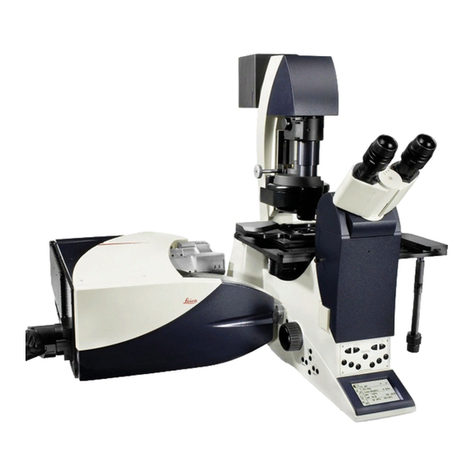
  9. Leica SP2 User manual

Leica SP2 User manual

Other manuals for SP2

1

Other Leica Microscope manuals

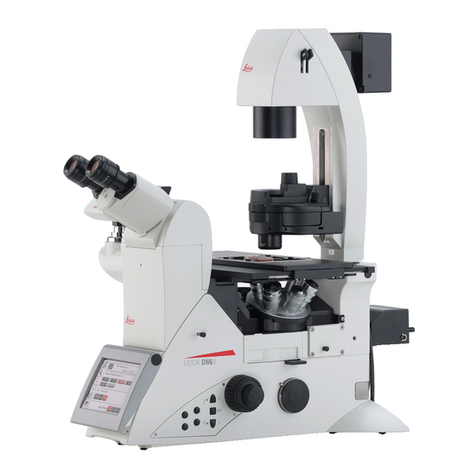
Leica DM1000 LED User manual

Leica

Leica DM1000 LED User manual

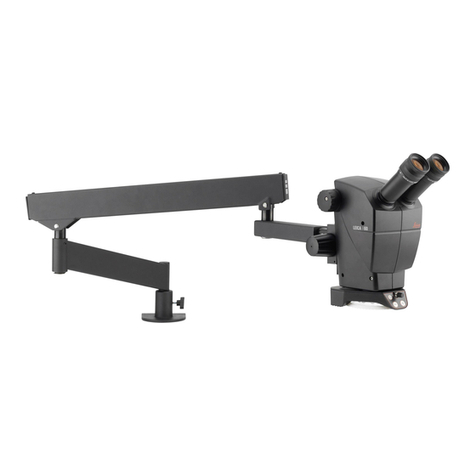
Leica StereoZoom 7 User manual

Leica

Leica StereoZoom 7 User manual

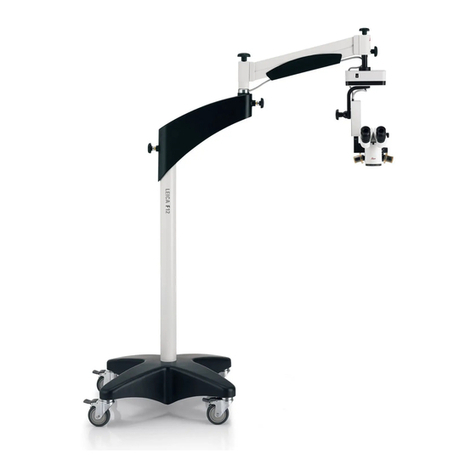
Leica M220 F12 User manual

Leica

Leica M220 F12 User manual

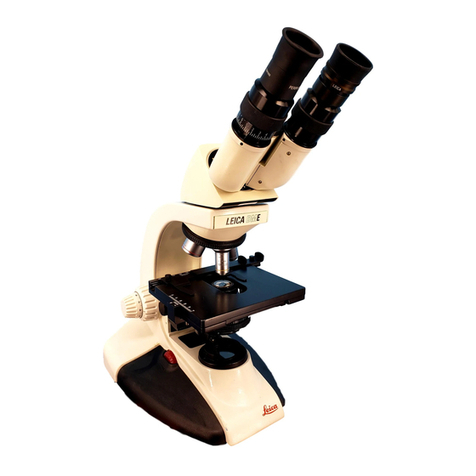
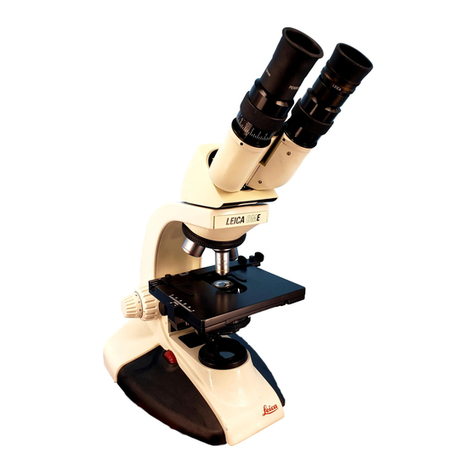
Leica DM E User manual

Leica

Leica DM E User manual

Leica M844 User manual

Leica

Leica M844 User manual

Leica MC120 HD User manual

Leica

Leica MC120 HD User manual

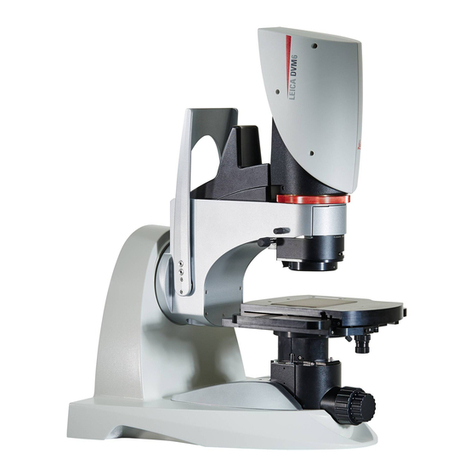
Leica DVM6 User manual

Leica

Leica DVM6 User manual

Leica MATEO TL User manual

Leica

Leica MATEO TL User manual

Leica DM5500 B User manual

Leica

Leica DM5500 B User manual

Leica MATEO TL User manual

Leica

Leica MATEO TL User manual

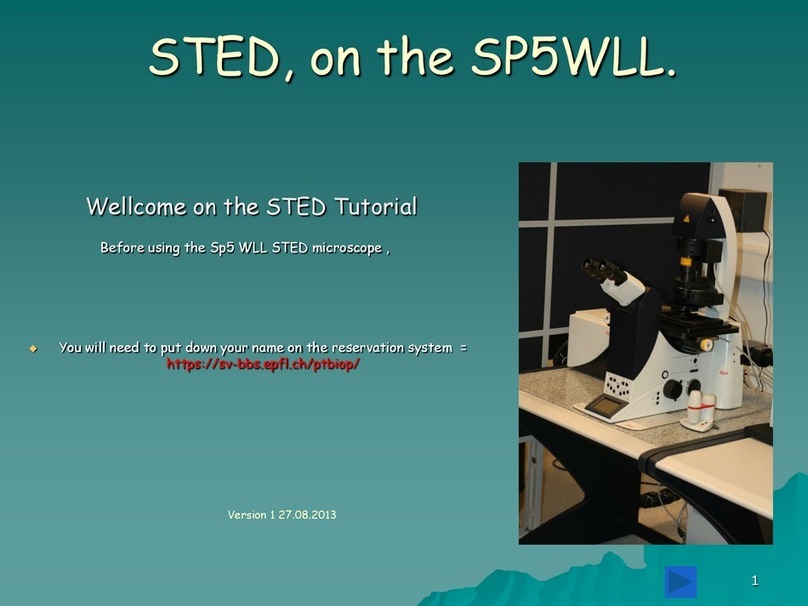
Leica Sp5 WLL STED Operation instructions

Leica

Leica Sp5 WLL STED Operation instructions

Leica FL800 ULT User manual

Leica

Leica FL800 ULT User manual

Leica TCS SP5 X User manual

Leica

Leica TCS SP5 X User manual

Leica DMI6000 B User manual

Leica

Leica DMI6000 B User manual

Leica DM6000 M User manual

Leica

Leica DM6000 M User manual

Leica DM1000 LED Manual

Leica

Leica DM1000 LED Manual

Leica M125 User manual

Leica

Leica M125 User manual

Leica TCS SP5 X User manual

Leica

Leica TCS SP5 X User manual

Leica ES2 User manual

Leica

Leica ES2 User manual

Leica SP8 User manual

Leica

Leica SP8 User manual

Leica DMIL User manual

Leica

Leica DMIL User manual

Leica DMi1 Manual

Leica

Leica DMi1 Manual

Leica DMi8 User manual

Leica

Leica DMi8 User manual

Leica DMS300 User manual

Leica

Leica DMS300 User manual

Popular Microscope manuals by other brands

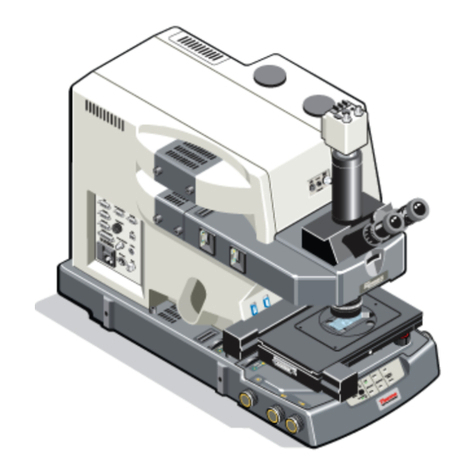
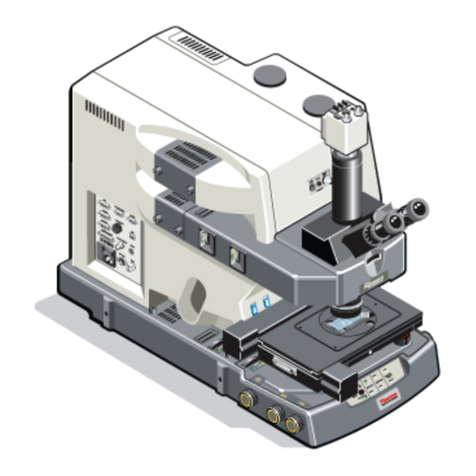
Thermo Scientific Nicolet iN10 Using

Thermo Scientific

Thermo Scientific Nicolet iN10 Using

National DC3-163 instructions

National

National DC3-163 instructions

KERN Optics OPE-1 User instructions

KERN Optics

KERN Optics OPE-1 User instructions

OPTIKA MICROSCOPES B-150D Operation manual

OPTIKA MICROSCOPES

OPTIKA MICROSCOPES B-150D Operation manual

Prior Lux POL operating instructions

Prior

Prior Lux POL operating instructions

Opitec Smartscoop 115615 instructions

Opitec

Opitec Smartscoop 115615 instructions

KERN OPO-1 operating instructions

KERN

KERN OPO-1 operating instructions

Topcon SP-1P user manual

Topcon

Topcon SP-1P user manual

Motic PA43 Operation manual

Motic

Motic PA43 Operation manual

MshOt MZ62 user manual

MshOt

MshOt MZ62 user manual

KERN Optics OZR-5 User instructions

KERN Optics

KERN Optics OZR-5 User instructions

VWR VisiScope 384 Series instruction manual

VWR

VWR VisiScope 384 Series instruction manual

ThermoFisher Scientific Continuµm manual

ThermoFisher Scientific

ThermoFisher Scientific Continuµm manual

ThermoFisher Scientific Continuµm manual

ThermoFisher Scientific

ThermoFisher Scientific Continuµm manual

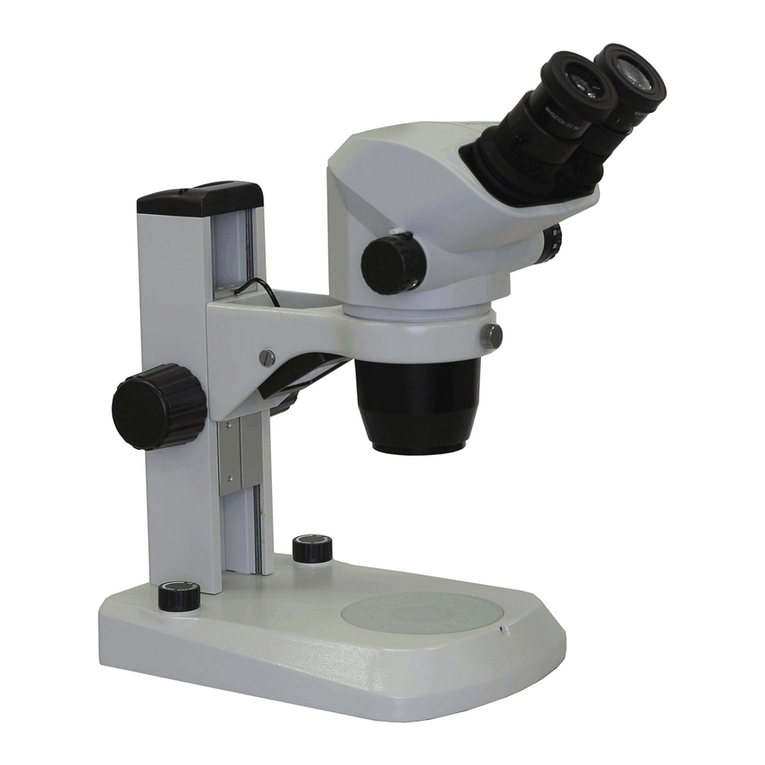
Olympus SZ61 instructions

Olympus

Olympus SZ61 instructions

AO Cycloptic Reference manual

AO

AO Cycloptic Reference manual

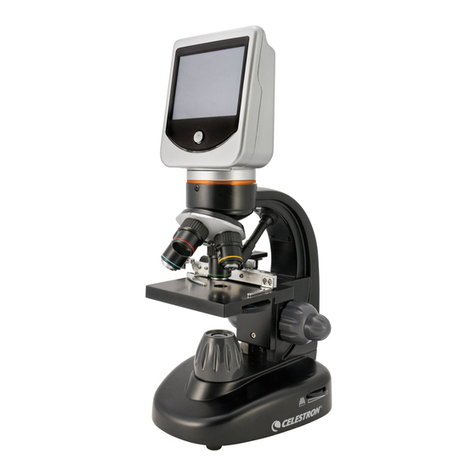
Celestron 44345 instruction manual

Celestron

Celestron 44345 instruction manual

Atlantis SL 2000 user manual

Atlantis

Atlantis SL 2000 user manual

https://manuals.online logo
https://manuals.online logoBrands
  • About & Mission
  • Contact us
  • Privacy Policy
  • Terms and Conditions

Copyright 2026 Manuals.Online. All Rights Reserved.

LMW Microscopy Lab : Leica SP2 Page 1 `6/26/2012
ManualforLeicaSP2ConfocalMicroscope

Enteryouname,thedate,thetime,andtheaccountnumberintheuserlogbook.

Thingstocheckbeforestart‐up.

Makesurethatyoursampleslidesarecleanandsealed.UseWindexandcottonballsorKimwipestoclean
coverslips.Fixedsamplesneedtobesealedwithnailpolish.
Checktheobjectives.The10xand20xobjectivesareDRYobjectives,andshouldNEVERhaveoilonthem!
Thereare40xand63xOILimmersionobjectives,anda63xWATERimmersionobjectivealsoonthis
microscope.Ifoilimmersionobjectiveshaveoilonthem,wipethelensgentlyonlywithlenspaper.

SystemStart‐up.
1. Turnonthemicroscopecontrollerbandthe
ScannerLaserHeNecandPC/Standd
switches.
2. Turnonthecomputereandlogontothe
desktop.
3. TurnontheMercuryArcLamppowersupplier,
ifyoulookatfluorescentlylabeledsamples.
4. StarttheLCSprogramby
double‐clickingtheLCSiconon
thedesktop.
Onthepop‐upstartingwindowpanel,select
thePersonalthatcontainsyoursettingfor
acquisitionparametersyouhavecreatedor
Companyforadefaultsetting.











b
f
e
d
c
LMW Microscopy Lab : Leica SP2 Page 2 `6/26/2012
OveviewofLeicaConfocalSoftware(LCS)
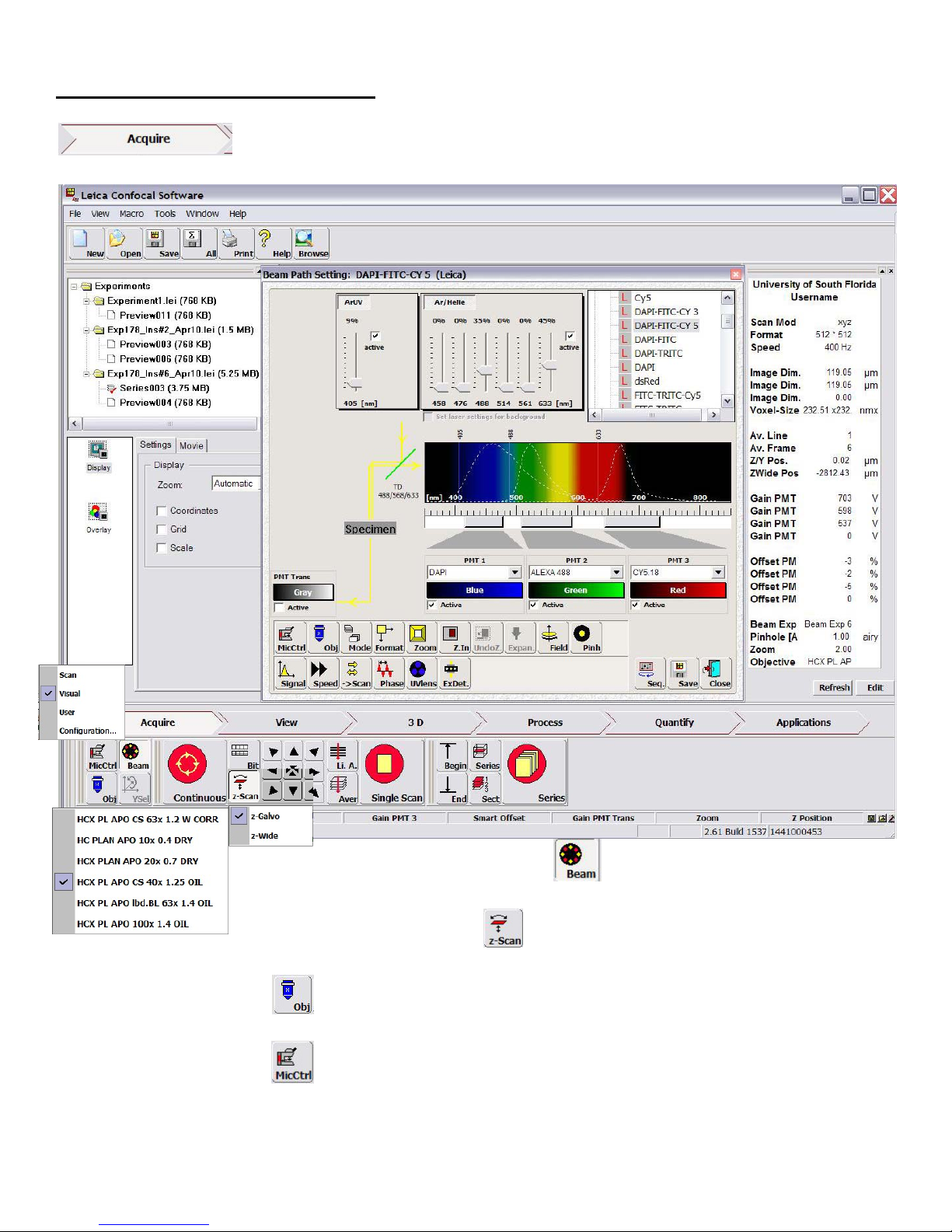
UponLCSprogramstart,thebasicimageacquisitionmenuwillappear.TheAcquirebutton
shouldappearpressed.

ClicktheBeambutton todisplaytheBeamPathSettingas
appeared.
ClicktheZ‐Scanbutton andselectz‐Wide(thisisrequiredtofocusto
sampleontheregularslideholderbytheRemoteControlKnobs;seebelow).
WiththeObjbutton,youcanselecttheobjectiveyouwanttouse.(Amessagewindowmaypop
up,andclickOK)
WithMicCtrlbutton,youcanswitchbetweenScanmode(forlaserscanning)andVisualmode
(forviewingthroughtheeyepiece).


LMW Microscopy Lab : Leica SP2 Page 3 `6/26/2012
BasicOperationofLeicaDMIRE2Microsocpe.
Bright‐fieldviewing:
1. Placeyoursampleslidewithcoverslip
(preferably#1.5thickness)facingdowntothe
objectiveonthestage.

2. Forbright‐fieldviewing,turnonthemicroscope
halogenlamplightbyturningthewheel b
towardyouandturntheVIS‐SCANswitchcto
VISposition(Note:switchbacktoScanpositionforconfocalscanning,see
below)

3. Startwithlowmagnificationobjectives(10Xor20X)firsttofocusontoyour
specimen.Youcanplacethedesiredobjectiveinpositionbyturningthe
lensturret dbyhandorbyclickingObjbutton andselectingan
objectiveyouwanttouse(recommended;seebelow).Theinformationof
theselectedobjectiveandtheirz‐positioncanbereadonthereadout
panel eatthefrontofthescope.

4. FocusontothesamplebymovingtheobjectiveturretwiththeCoarse
FocusButtonsf(upperandlower)andtheFineFocusKnob g.Pushthe
upperCoarseButtontobringtheobjectivetotheupperlimit(“0µm”)
position–wherethemicroscopehasbeencalibratedforyoursampleto
benearinfocus.

5. UsetheFinefocusknobtofinetunefocusing.Theextentofthefine
movementcanbesetfromS0(veryfine)toS3(coarse)bypressingthe
STEPbutton h(S2isrecommendedformostcases).
PleaseDONOTpresstheLEARN,CHANGE,orbuttons.

6. Withmostcellsortissuesamplesstainedwithfluorescentdye,you
couldeasilyfocustoyoursamplewithafluorescencemode(see
below)orPhaseContrastmode.ForPhaseContrastmodewith10xor
20xobjectives,turntheCondenserRingi toselectPH1(for10x)or
PH2(for20x).

7. Forusingoilorwaterimmersionlens,lowertheobjectiveturret
slightly,exposethelensbyturningtheturrethalfwaybyhand,and
placeadropofoilorwaterontheobjective(becarefulnottotouchthelensdirectlywithapplication
tools!).Placetheslideovertheobjectiveandraisetheobjectiveuntiltheoiljustspreadsoutasitcontacts
theslide.Usefindfocusknobtograduallybringyoursampleintofocus.Checkyourslideoccasionallyto
makesurethatyouarenotpushinguptheslidewiththeobjective.Thiscandamagetheobjectivelensand
yoursample!

e
c
b
d
e
g
f
h
i
LMW Microscopy Lab : Leica SP2 Page 4 `6/26/2012
Fluorescentviewing:
Youcancheckyoursampletoseeifyourfluorescencelabelingworksby
usingthemercurylampilluminationandtheappropriatefiltersets.The
microscopehasfiltersetsforviewingDAPI(A),greenfluorescence(I3)
andredfluorescence(N2.1).
1. Presseithertheleftorrighthorizontalarrowbutton jonthefront
ofthescopetochoosethefilter(FLUO)set.“Scan”positionhasno
filtersetinplaceandisusedforlaserconfocalscanning.The
fluorescentlightcanbeblocked(closed)oremittedbypressingthe
Shutter 1) button(The“closed”lightshouldbeoffforfluorescent
viewing.).
2. TurntheVIS‐SCANswitch 1! toScanpositiontoblockthe
transmittedbright‐fieldlight,ifnecessary.
3. Examinethesamplethroughtheeyepieces.(MakesurethatPORTSisinVISand
MAGisat1x.Ifnot,changeitselectingVisualfromMicCtrlbuttoninLCS
programwindow.)
4. Whenyouarereadytoscanyoursamplewithlaser,closetheSHUTTER1) to
preventanyunnecessarybleachingofthesamplewithmercuryarclamplight.

SettingupforConfocalLaserScanning.

Toturnonthelaser(s);
(1) Turnononlythelasersyouwilluse.Theydo
notneedmorethanaminuteorsotowarmup
andstabilize,soitisnotnecessarytoturnthem
onuntilyouknowyouneedthem.
(2) Argonlaser(for458,476,488,and514nm
excitationline):Turn ontheredLaserAr/ArKr
switch bandturntheLevelAr/ArKrlevelknob
ctoMIN.Then,turntheleftAr/ArKrkeydto
“ON”,andthenturnfurtherto“START”positionand
releasethekey.AdjustthelaserpowerwithLEVEL
knob c(usually9o’clockpositionissufficient).
(3) MellesGriotyellowDPSS(561nm)laser:push the
greenbutton eforafewsecondsandrelease.
(4) He/Ne(633nm)laser:turntheHe/Ne633keyfto
ON.
(5) DiodeUVlaser405nm:Turnontheredpower
button g andturnthekey h toIposition.
1$ 1%
b
g
j
1)
1
!
c
d
e
f
h
LMW Microscopy Lab : Leica SP2 Page 5 `6/26/2012
LCSImagingprogramsetting
1. First,selecttheappropriatelaserlinesandsetupdetectorsforthe
fluorescentlabelsyouusedonyoursamplefromthedrop‐downLlisti
(LeicaFactorysetting). Thiswillautomaticallysetuptheemissiondetector
band‐widthj,activatetheproperdetector(PMTs)1),dichroic
beamsplitter1!,andexcitationlaserwavelengthandpower1@.Youcan
adjusttherangeandpositionofdetectorbandwidthandthelaserpower
levelasnecessary.

2. Youcanalsochangethecolorschemeofindividualimagesintoanycoloror
greyscalebyclickingthepseudo‐colorselector 1# associatedwitheach
PMTonthewindowscreen(Note:thecolorinformationwillbesavedwithimagefileswhensaved).
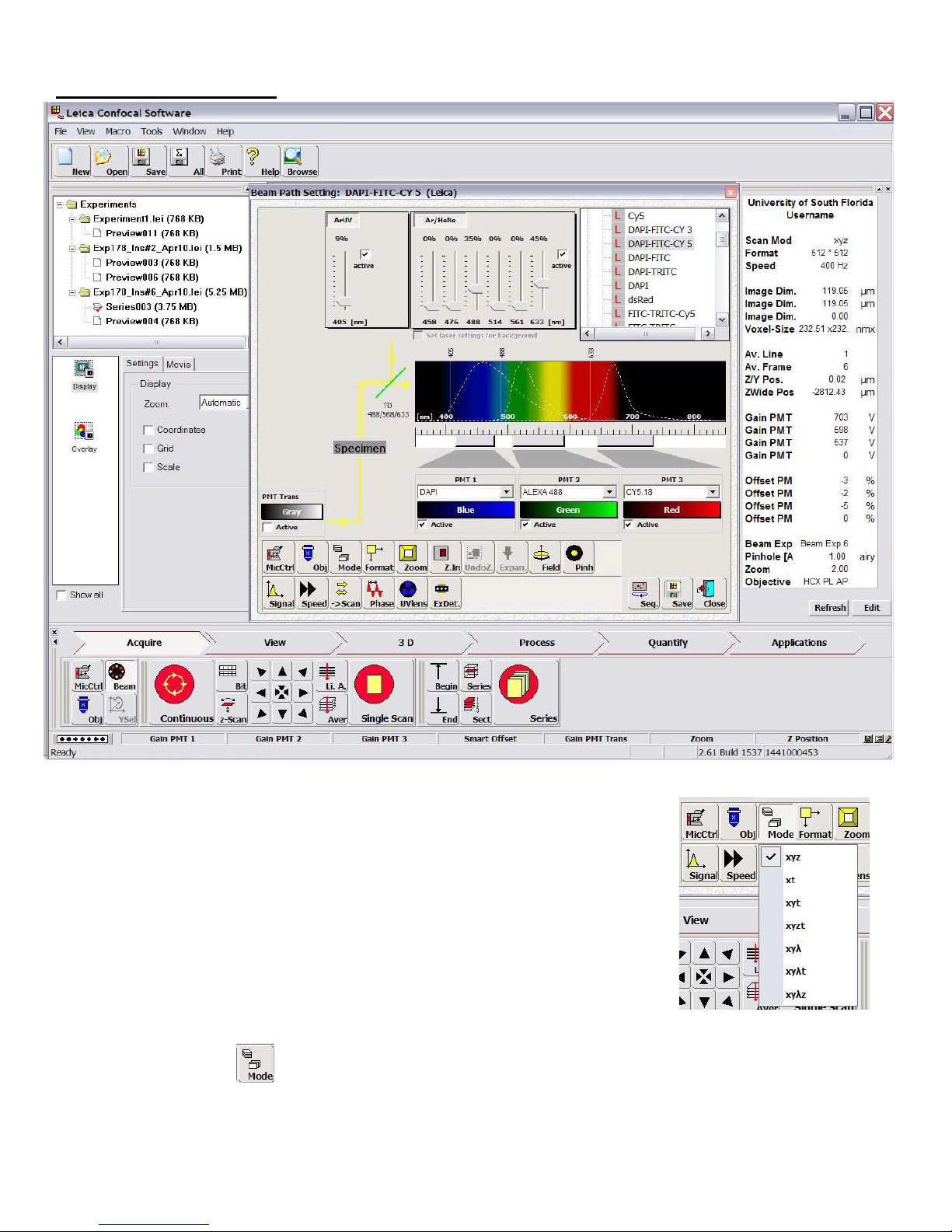
3. PressModebuttontoselectScanMode(defaultisXYZ).

i
1@
j
1)
1!
1#
LMW Microscopy Lab : Leica SP2 Page 6 `6/26/2012
4. PressFormat ,andSpeedbuttonstoselecttheseparameters(defaultsare512x512formatand
400Hzscanspeed).
5. PressZ‐scanbuttonandselectz‐WideinordertouseZPOSknob 1$ tomovetheobjectivefor
focusing(Defaultisz‐Galvo,whichisusedwithGalvostageadaptor).

6. ClickMicCtrlbutton toselectScanmodeforlaserscanning(itwillautomaticallyshutoffvisual
outputthroughtheeyepieces).
7. PressContinuousbuttontostartscanning(itwillbecomeStopbutton).Animageorimages,
dependingonthenumberofactivedetectors,willappearontherightmonitor.
RemoteControlKnobs
8. Optimizetheimagesbyadjustingparametersincluding;
1. Thez‐position(focusing)withinthespecimen(Z‐POSknob1$).
2. Zoomfactor(ZOOMknob 1%): Defaultis1;increasingzoomwillmagnifytheimageandimprovethe
resolution,butalsowillbleachthesamplefaster!
3. PMT1,2,3,TransandSmartOffsetknobs 1^: TurnPMTknobstoincreasethedetectorsensitivitysoto
increasethesignalintensityofeachfluorescentandtransmissionimagechannel(Note:KeepthePMTlevel
under600V).Todecreasebackgroundsignal,clickthemouseoverachanneltoselectitandturnOffset
knobcounterclockwise.WithQLUTbuttonintheExperimentliveviewwindow,afulldynamicrange
ofthePMTforoptimalimagequalitycanbeobtained.Everyclickingthisbuttonchangestheviewwindow
inthreedifferentLUTmodes;pseudocolor,Hi‐Lo,andmonochrome.IntheHi‐Lomode,pixelssaturating
thePMTwillappearblueandpixelswhichareblack(0value)appeargreen.AdjustthePMTgainandPMT
offsetsuchthatthebrightestpixelsarejustunderthesaturation(afewbluepixels)andthedarkestpixels
arejustabovethezerovalue(asomegreenpixels).(AdjustLaserpowerbydraggingthelaserpowerbaron
themenuwindowifnecessary).

Pseudocolor    Hi‐Lomonochrome
1$ 1%
1^
LMW Microscopy Lab : Leica SP2 Page 7 `6/26/2012
ClicktheStopbutton againtostopscanning.(Youcansavethecurrentparametersettingwith
Savebuttonandputaspecificnameforlateruse). 
ViewingImages.
Singlebutton–
putsupfull
screenof
selected
fluorescent
channel.
Ch1,2,3,4
buttons–activate
thechannelon
thescreen.
Tiledbutton–
viewsupto3
channels
simultaneously.
Ovlbutton–
overlays(merge)
multiplechannels
intoone.
Displaybutton‐
changethe
magnificationof
thescreenimage.
Lutbutton‐open
colorlook‐up
table.
AcquiringSingleOpticalSectionImage.
MakesuretoswitchMicCtrltoScanmode.
PressSingleScanbuttontoacquireanimagebyasinglelaserscanningatascanningspeed(normally
400Hz).Theresultingimagemaydisplaybackgroundnoise.Imageaveragingisaprocesstodecreasethis
noiseandimprovethesignal‐to‐noiseratio.
Touseaveraging,clickeitherLi.A(lineaveraging,recommended)orAver (frameaveraging)
buttonandselectthenumberoflines(orframes)tobeaveraged(4lineorframeaveragingisagood
startingpoint).Then,clicktheSingleScanbutton.
LMW Microscopy Lab : Leica SP2 Page 8 `6/26/2012
Afterscanning,theimagewillbesavedinthedirectory(temporarilyintheRAM).Savethedatatothe
harddrivewiththeSavebuttononthetopmenuiconpanel ,
andtypethefilename.(Note:Alltheimages(as*.tiff)willbesavedunderthesavedLeicafile(as*.lei)).
Computercrashorpoweroutagewillresultinlossofunsaveddata!SAVEFREQUENTLY!!
Ifyouwanttocreateanewfolderforanewsetofimages,clickNewicononthemenupanel.
LMW Microscopy Lab : Leica SP2 Page 9 `6/26/2012
SequentialScanningMode
Thisconfocalmicroscopycandetectupto
fourchannels(3fluorescenceand1
transmission)simultaneouslyaslongasall
theexcitationandemissionspectraof
fluorophoresarewellseparated.Imagingof
samplesstainedwithdifferentdyesthus
simplyrequiresmanipulationoflaserpower
andadjustmentofthedetectorbandwidth.
However,oftenexcitationofone
fluorophoremaycausetheemissionto
appearintotherangeofanother(bleed‐
through)orcanbeinducedbyneighboring
laserlines(cross‐talk),bothofwhich
producefalsesignals.Toavoidthese,the
sampleshouldbescannedsequentiallyby
collectingonefluorophoresignalatany
giventime.Therearetwowaystosetup
sequentialscanmodedependingon
fluorescenceofyoursample.
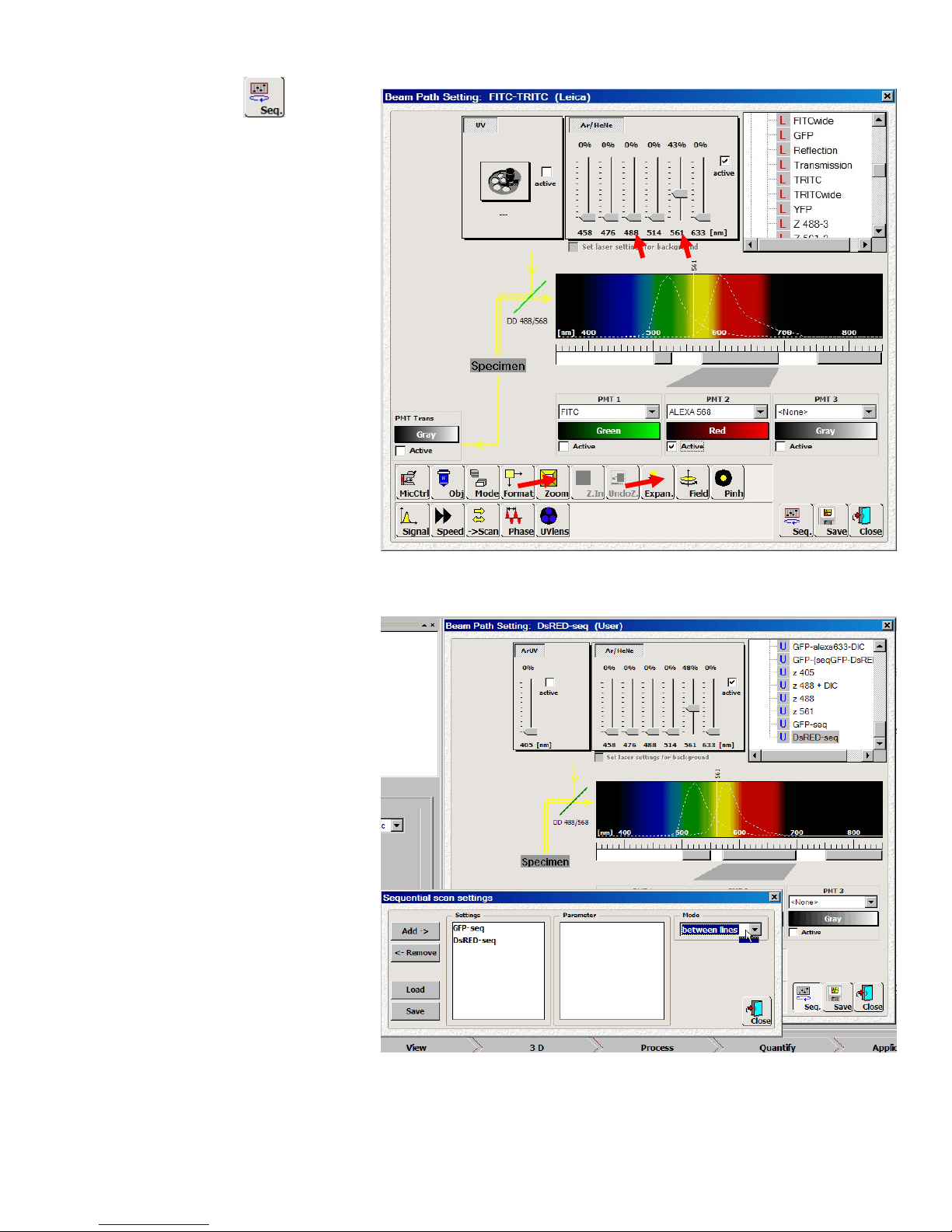
Toscansequentiallythesamplewithoutneedtouse405nmUVlaser(noDAPIstaining):
1. Choosethebeamsettingparameter
foryourfluorophores(forexample,
GFPandDsRED)byselectingtheLeica
FITC‐TRITCfromthepresetlist).Itwill
setlaserlines,dichroicmirror,and
PMTsforsimultaneousimagingofthe
twocolors.

2. Setupaconditionforone
fluorophore(i.e.FITC)byonly
activatingandadjustingthelaserlevel
andthePMT(i.e.decreasethe561
nmlaserpowerto0%anduncheck
thePMT2Activebox).

3. ClickSavebuttonbontheBeamPath
Settingpanelandtypeanameforthis
setupasyourownsetting(i.e.“GFP‐
seq”).ClickOKandthesettingwillbe
intheUsersetlist(Uinfrontofthe
settingname).

4. Repeatthesameprocessfortheotherfluorophore(i.e.TRITC)andsavetheconditionasanothersetting
(i.e.“DsRED‐seq”).MakesuretouncheckthePMT1Activecheckboxandlower488laserlevelto0%.

b
LMW Microscopy Lab : Leica SP2 Page 10 `6/26/2012
5. ClicktheSeqbuttonin the
BeamPathSettingwindow.The
Sequentialscansettingswindowc
willappear.Addthefluorophore
acquisitionsettingoneatatimeby
selectingitfromthepresetlistmenu
andthenclickAddbuttoninthe
Sequentialscansettingswindow.

6. Keepthescanmodedat“between
lines”.DonotclosetheSequential
scansettingswindow.
Youcansavethissequential
acquisitionsettingsbySavebutton
e intheSequentialscansettings
window.

7. Starttheacquisitionbyclicking
SingleScanorSeriesbutton
dependingonyourimaging
condition.

























c
d
e