9/23/02 5
1 General Description
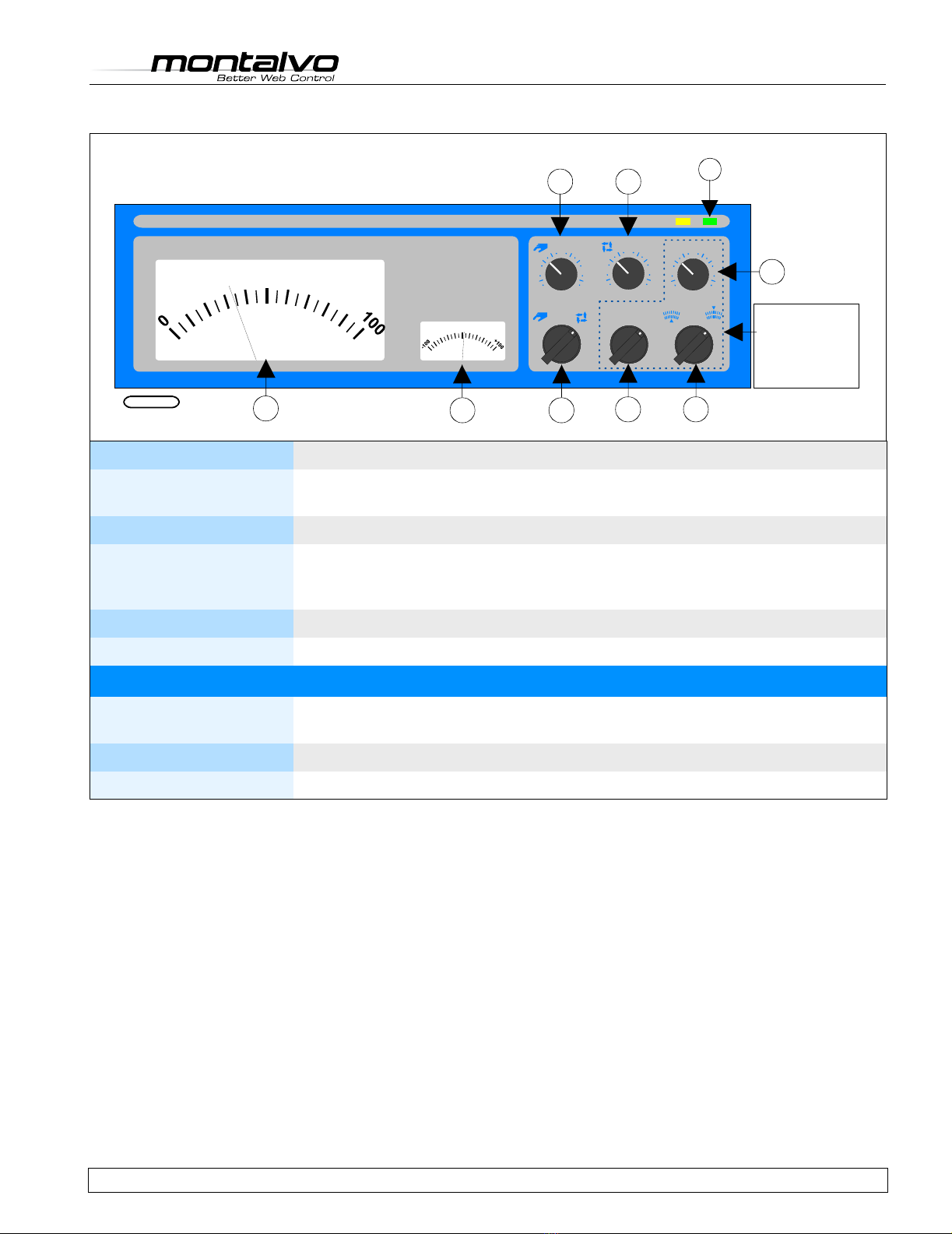
The Montalvo X-3000ce-N analog controller provides precise automatic control of
web tension. The X-3000ce-N is used in a closed loop that includes a load cell roll, a
motor, and a motor controller.
To properly set up and operate the X-3000ce-N and to take advantage of all its
available features, it is important to have a general understanding of the controller
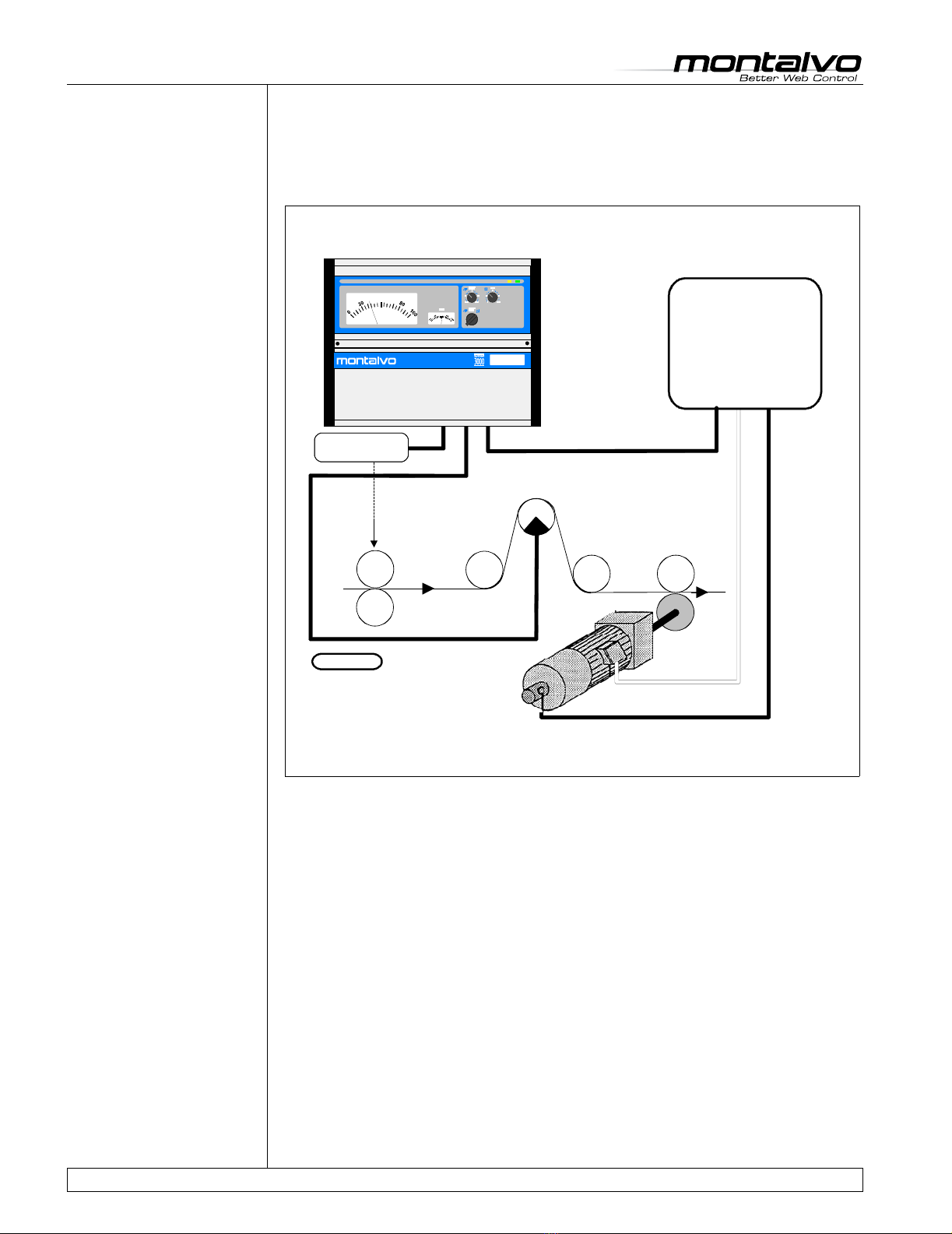
and its place in the tensioning system (please refer to the diagram on the following
page). The control outputs of 4 to 20 mA and 0 to 10 volts DC enable the X-3000ce-N
to interface with a variety of variable speed drives to control web tensioning motors.
Load Cell Function
Two load cells (also called transducers) are normally used. The signals from the load
cells are summed together to indicate total web tension across the entire web. Each
load cell contains two strain gauges connected in a series. The two load cells are
connected so that the four strain gauges form a Wheatstone bridge configuration
supplied with + 2.5 VDC. The web tension transfers a force to the load cell roll,
changing the resistance values in the bridge. The resulting voltage change is
amplified and calibrated to display actual web tension.
Motor Controller and Motor Function
The motor controller converts the 0 to 10 volt signal from the X-3000ce-N into the
output appropriate to regulating the speed of the nip motor. The nip motor tracks the
line speed of the main drive motor.
Auto Mode Function (Closed Loop)
In auto mode, the speed of the NIP motor follows line speed. The signal from the load
cells is calibrated to display the actual web tension. When this signal is compared to
the desired tension (or setpoint), the regulator automatically trims the line speed until
the setpoint and actual tension are equal. Because the web itself is part of the
feedback loop, the X-3000ce-N can quickly compensate for changes in speed, and for
other factors that affect tension during the process.