manuals.online logo
Brands
  1. Home
  2. •
  3. Brands
  4. •
  5. MSA
  6. •
  7. Controllers
  8. •
  9. MSA ZGARD C User manual

MSA ZGARD C User manual

Other MSA Controllers manuals

MSA Zero Two Series User manual

MSA

MSA Zero Two Series User manual

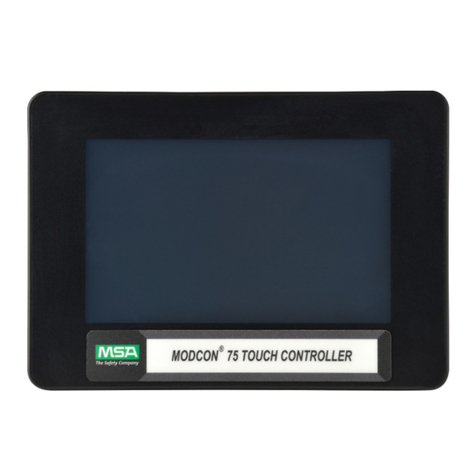
MSA ModCon 75 User manual

MSA

MSA ModCon 75 User manual

MSA Ultima Series User manual

MSA

MSA Ultima Series User manual

MSA ZGARD CX II User manual

MSA

MSA ZGARD CX II User manual

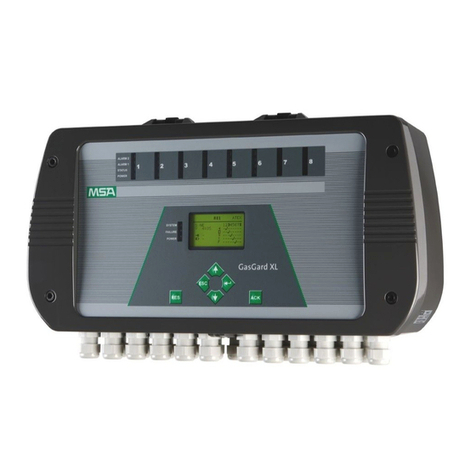
MSA GasGard XL Operating and maintenance instructions

MSA

MSA GasGard XL Operating and maintenance instructions

MSA FireHawk M7 Setup guide

MSA

MSA FireHawk M7 Setup guide

MSA 10033170 User manual

MSA

MSA 10033170 User manual

MSA Ultima User manual

MSA

MSA Ultima User manual

MSA GasGard XL User manual

MSA

MSA GasGard XL User manual

MSA GasGard XL User manual

MSA

MSA GasGard XL User manual

MSA Ultima Series User manual

MSA

MSA Ultima Series User manual

MSA SMC Sentry-IT NEMA Retrofit Kit User manual

MSA

MSA SMC Sentry-IT NEMA Retrofit Kit User manual

MSA Firehawk Responder Series Operating instructions

MSA

MSA Firehawk Responder Series Operating instructions

MSA PremAire System User manual

MSA

MSA PremAire System User manual

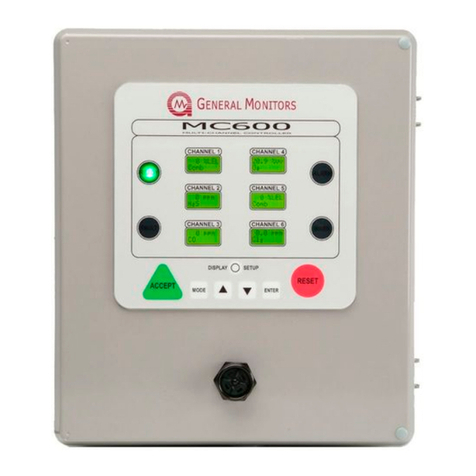
MSA General Motions MC600 User manual

MSA

MSA General Motions MC600 User manual

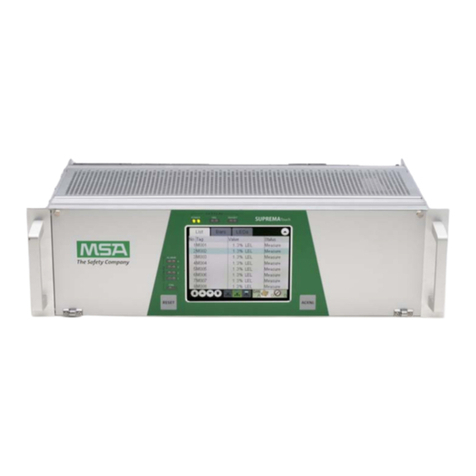
MSA SUPREMA Touch Installation and operating instructions

MSA

MSA SUPREMA Touch Installation and operating instructions

MSA BVC-650 User manual

MSA

MSA BVC-650 User manual

MSA Firehawk 10043892 Setup guide

MSA

MSA Firehawk 10043892 Setup guide

MSA 10033170 User manual

MSA

MSA 10033170 User manual

MSA M1 User manual

MSA

MSA M1 User manual

MSA SENTRY io User manual

MSA

MSA SENTRY io User manual

Popular Controllers manuals by other brands

Sunricher SR-ZV9003T3-RGBW-US Installation

Sunricher

Sunricher SR-ZV9003T3-RGBW-US Installation

Ksenia intro Installation and configuration manual

Ksenia

Ksenia intro Installation and configuration manual

Inovance CAN200 Series manual

Inovance

Inovance CAN200 Series manual

Gauzy LC6 FLEX Controller Installation and operation guide

Gauzy

Gauzy LC6 FLEX Controller Installation and operation guide

Viking SLP-1 Technical practice

Viking

Viking SLP-1 Technical practice

CKD KBX-30E-U Series instruction manual

CKD

CKD KBX-30E-U Series instruction manual

Sharp Energy Sun Flux User manual & installation guide

Sharp Energy

Sharp Energy Sun Flux User manual & installation guide

Yamaha RCX40 user manual

Yamaha

Yamaha RCX40 user manual

AB Quality PowerFlex 400 Frames D-H Service bulletin

AB Quality

AB Quality PowerFlex 400 Frames D-H Service bulletin

Yamaha MJC8 owner's manual

Yamaha

Yamaha MJC8 owner's manual

AL-KO ATC operating instructions

AL-KO

AL-KO ATC operating instructions

Savant SmartControl 2 Deployment guide

Savant

Savant SmartControl 2 Deployment guide

GameSir T3S user manual

GameSir

GameSir T3S user manual

Kostal inveor operating manual

Kostal

Kostal inveor operating manual

Emerson Yarway 20-55 Operating and safety instructions

Emerson

Emerson Yarway 20-55 Operating and safety instructions

CoCo ACM-LV24 Quick installation guide

CoCo

CoCo ACM-LV24 Quick installation guide

Brooks SLA5810/20 Installation and operation manual

Brooks

Brooks SLA5810/20 Installation and operation manual

SIGMA TEK SR 011 Technical manual

SIGMA TEK

SIGMA TEK SR 011 Technical manual

manuals.online logo
manuals.online logoBrands
  • About & Mission
  • Contact us
  • Privacy Policy
  • Terms and Conditions

Copyright 2025 Manuals.Online. All Rights Reserved.

Controllers
Instruction Manual
WARNING
THIS MANUAL MUST BE CAREFULLY READ BY ALL INDIVIDUALS WHO HAVE OR WILL HAVE
THE RESPONSIBILITY FOR INSTALLING, USING OR SERVICING THIS PRODUCT. Like any piece
of complex equipment, this product will perform as designed only if installed, used and serviced in
accordance with the manufacturer’s instructions. OTHERWISE, IT COULD FAIL TO PERFORM AS
DESIGNED AND PERSONS WHO RELY ON THIS PRODUCT FOR THEIR SAFETY COULD
SUSTAIN SEVERE PERSONAL INJURY OR DEATH.
The warranties made by Mine Safety Appliances Company with respect to these Products are voided if the
products are not installed, used and serviced in accordance with the instructions in this user guide. Please
protect yourself and others by following them. We encourage our customers to write or call regarding this
equipment prior to use or for any additional information relative to use or repair.
Instrument Division 1-800-MSA-INST or FAX (412) 776-9783
MSA International (412) 967-3228 or FAX (412) 967-3373
In Canada 1-800-267-0672 or FAX (905) 238-4155
© Mine Safety Appliances Company 2005 - All Rights Reserved
MINE SAFETY APPLIANCES COMPANY
PITTSBURGH, PENNSYLVANIA 15230
REV 1.2 August 2008 10063483
MSA
Permanent Instrument Warranty
1. Warranty- Seller warrants that this product
will be free from mechanical defect or faulty
workmanship for a period of eighteen (18)
months from date of shipment or one (1) year
from installation, whichever occurs first,
provided it is maintained and used in
accordance with Seller’s instructions and/or
recommendations. This warranty does not
apply to expendable or consumable parts
whose normal life expectancy is less than one
(1) year such as, but not limited to, non-
rechargeable batteries, filament units, filter,
lamps, fuses etc. The Seller shall be released
from all obligations under this warranty in the
event repairs or modifications are made by
persons other than its own or authorized
service personnel or if the warranty claim
results from physical abuse or misuse of the
product. No agent, employee or representative
of the Seller has any authority to bind the
Seller to any affirmation, representation or
warranty concerning the product. Seller makes
no warranty concerning components or
accessories not manufactured by the Seller,
but will pass on to the Purchaser all warranties
of manufacturers of such components. THIS
WARRANTY IS IN LIEU OF ALL OTHER
WARRANTIES, EXPRESSED, IMPLIED OR
STATUTORY, AND IS STRICTLY LIMITED
TO THE TERMS HEREOF. SELLER
SPECIFICALLY DISCLAIMS ANY
WARRANTY OF MERCHANTABILITY OR OF
FITNESS FOR A PARTICULAR PURPOSE.
2. Exclusive Remedy- It is expressly agreed
that Purchaser’s sole and exclusive remedy for
breach of the above warranty, for any tortious
conduct of Seller, or for any other cause of
action, shall be the repair and/or replacement
at Seller’s option, of any equipment or parts
thereof, which after examination by Seller is
proven to be defective. Replacement
equipment and/or parts will be provided at no
cost to Purchaser, F.O.B. Seller’s Plant.
Failure of Seller to successfully repair any
nonconforming product shall not cause the
remedy established hereby to fail of its
essential purpose.
3. Exclusion of Consequential Damage-
Purchaser specifically understands and agrees
that under no circumstances will seller be liable
to purchaser for economic, special, incidental
or consequential damages or losses of any
kind whatsoever, including but not limited to,
loss of anticipated profits and any other loss
caused by reason of non operation of the
goods. This exclusion is applicable to claims
for breach of warranty, tortuous conduct or any
other cause of action against seller.
General Warnings
WARNING
1. The ZGARD C controllers described
in this manual must be installed,
operated, and maintained in strict
accordance with the labels,
cautions, warnings, instructions,
and within the limitations stated.
2. The ZGARD C controllers must not
be installed in outdoor areas or in
locations where explosive
concentrations of combustible
gases or vapors might occur in the
atmosphere: Class 1, Group A, B,
C, and D areas as defined by the
NEC. Because the controller is not
explosion-proof, it must be located
in non-hazardous areas.
3. Do not paint the ZGARD C
controllers.
4. The only absolute method to assure
the proper overall operation of a
gas detection instrument is to check
it with a known concentration of the
gas for which it has been calibrated.
Consequently, a calibration check
must be included as part of the
installation and as a routine
inspection of the system.
5. Use only genuine MSA replacement
parts when performing any
maintenance procedures provided
in this manual. Failure to do so may
seriously impair instrument
performance. Repair or alteration of
the ZGARD C controllers, beyond
the scope of these maintenance
instructions or by anyone other than
authorized MSA service personnel,
could cause the product to fail to
perform as designed, and persons
who rely on this product for their
safety could sustain serious
personal injury or death.
6. The ZGARD C controllers must be
installed, located and operated in
accordance to all applicable codes.
These codes include, but are not
limited to, the National Fire
Prevention Code and National
Electric Code.
7. Do not exceed the relay contact
ratings listed in this manual.
Otherwise, the relay operation may
fail, which can result in personal
injury or death.
Failure to comply with the above warnings
can result in serious personal injury or
death.
Table of Contents
Section 1 General Information 1.0
Section 2 General Installation Guidelines 2.0
Section 3 ZGARD C 1-Channel Controller, General Information, Operating Specifications and Features 3.0
Installation and Set-up Display Mode 3.1
Relay Function, Setting up the Warning and Alarm Delays 3.2
Audible Alarm Device Setting, Warning and Alarm Set-Points 3.3
Alarm Relay Latch Set-up, Analogue Output Adjustment 3.4
Section 4 ZGARD C 4-Channel Controller, General Information, Operating Specifications and Features 4.0
Installation and Set-up Display Mode, Number of Remote Sensor Inputs 4.1
Relay Function, Setting up the Warning and Alarm Delays 4.2
Audible Alarm Device Setting, Warning and Alarm Set-Points 4.3
Alarm Relay Latch Set-up, Analogue Output Adjustment 4.4
Section 5 Start-Up Procedure 5.0
Section 6 Parts List 6.0
Drawings ZGARD C 1-Channel Controller
106956-1A Installation Outline for 4-20mA Analog Signal Type sensors
106956-2A Installation Outline for RS485 Digital Signal Type sensors
ZGARD C 4-Channel Controller
106957-1A Installation Outline for 4-20mA Analog Signal Type sensors
106957-2A Installation Outline for RS485 Digital Signal Type sensors
Section 1
ZGARD C Controllers
General Information
The ZGARD C Controllers are microprocessor-based monitoring systems designed to interface with remote
gas sensors and perform user configured control functions for surveillance, activate ventilation equipment,
personnel alert or alarm indication. The controllers feature audible and visual status indicators with relay
outputs. MSA ZGARD S or GS sensor-transmitters are available to detect a wide variety of gases including
Carbon Monoxide, Carbon Dioxide, Nitrogen Dioxide and Refrigerants.
The table below provides the distinctive features of the ZGARD C Controllers. This is a quick guide for
determining the functionally, capability and configuration of each controller.
ZGARD C CONTROLLER MODEL 1 CHANNEL
4 CHANNEL
Number of Remote Sensors
1 4
Power LED (Green)
Yes None
Digital Readout
1 + 3 digits 1 + 3 digits
Audible Alarm
Solid ON /
Variable,
(Jumper H1-6)
Solid ON /
Variable,
(Jumper H1-6)
Relay Mode, Energized
De-Energized
YES
(Jumper H1-3)
YES
(Jumper H1-3)
Time Delay
5 min. ON/OFF
(Jumper H1-5 IN)
OR
0-10 min., Pots
(H1-5 OUT)
5 min. ON/OFF
(Jumper H1-5 IN)
OR
0-10 min., Pots
(H1-5 OUT)
Warning Set Points
Pot (H1-7 IN)
OR
35% FS
(H1-7 OUT)
Pot (H1-7 IN)
OR
35% FS
(H1-7 OUT)
Alarm Set Points
Pot (H1-8 IN)
OR
50% FS
(H1-8 OUT)
Pot (H1-8 IN)
OR
50% FS
(H1-8 OUT)
Alarm Relay Latching
YES
(Jumper H1-9)
YES
(Jumper H1-9)
Optional Analogue Output
4-20mA
(Hi-Select)
4-20mA
(Hi-Select)
1.0
Section 2
ZGARD C Controllers
Installation Guidelines
The performance of ZGARD C Controllers is dependent on the appropriate employment of the
associated remote gas sensors. The remote gas sensors should be strategically placed
closest to the areas where the target gases or vapors might occur in the atmosphere. Follow
the recommended guidelines listed below.
Mounting:
•Do not mount the controller to structures subject to vibration and shock, such as piping and piping
supports.
•Do not locate the controller near excessive heat source or in wet and damp locations.
•For proper cooling, allow at least five inches of clearance around all surfaces except for the mounting
surface. Also consider mounting the controller so it can be easily accessed for service and routine
testing.
•Make sure the controller is not blocked; otherwise front panel lights and controls will be obscured from
view.
•The controller has four mounting lugs; securely mount the instrument to a wall or support using
appropriate hardware.
Wiring Connections:
Before putting a ZGARD C controller into operation, determine the capacity, designation and number of remote
gas sensors, and configure the controller according to the required application. Also refer to the ZGARD C
controllers Installation Outline drawings located in the back of this manual, which provides important information
regarding;
•Operating power.
•Number and type of remote sensors.
•Required conductors and wire size.
•Relay wiring connection.
•4-20mA Output wiring connection.
CAUTION
1. When wiring the controller, disconnect the main power to prevent bodily harm.
2. Do not use the controller power when connecting any external devices to the relay contacts.
3. Use shielded cable for wiring installation. Do not install low voltage signal cable in the same conduit as
the controller’s operating power and or relay wiring.
4. Do not exceed the contact ratings marked on the relays.
5. Make sure that each sensor is given a unique address (Jumper selected), or the ZGARD C controller
may not be able to communicate appropriately.
6. When connecting the remote sensors, make sure that all wiring is correct for the power and signal
leads. Ensure the RS485 bus wiring is not interchanged, or permanent damage to the sensor may
result.
7. Perform all wiring and conduit installation in accordance to the National Electrical Code.
8. The fuse at the input is a SloBlo type fuse and REPLACE FUSE ONLY WITH A FUSE WITH THE
SAME RATING.
Failure to follow the above cautions can result in injury or property damage.
2.0
Section 3
ZGARD C 1-Channel Controller
General Information
OPERATING SPECIFICATIONS
Remote Sensor Input 1 only, 4-20mA analogue, 2 or 3wire OR RS485 digital data bus, 4-wire connection
Remote Sensor Power 24Vdc at 100mA / Input
Network Capacity 1 Remote Gas Sensor
Power Requirements
(Optional)
Standard 110Vac, 50/60 Hz ± 10% at 0.15 Amps
220Vac, 50/60 Hz ± 10% at 0.10 Amps; 24Vdc ±10% at 0.5 Amps
Temperature Operating: -10° to 40°C (14° to 104°F); Storage: -20° to 50°C (-4° to 122°F)
LED Readout 1 + 3 Digit LED display exhibits the channel number and gas level, at 2 second intervals
Status LED Indicators Power, Warning, Alarm and Sensor OK
Audible Alarm Electronic device, 93 dB @ 0.3 meters with variable sound selection
Pushbutton Alarm reset and Silence function
Alarm & Warning Set points Factory set at 35% and 50% Full-Scale, unless otherwise specified (Field Adjustable)
Sensor Fail Set point Non-adjustable
Time Delays Fixed 5 minutes ON delay for Alarm and 5 minutes OFF delay for Warning or manually
adjusted from 0 to10 minutes
Relay Outputs Warning Relay, Alarm Relay and Sensor Fail Relay: Form C - SPDT
Relay Action Alarm Relay Latching or Non-Latching, jumper selected
Relay Contacts Rating 10 Amps 1/8 H.P., 125Vac, 5 Amps, 30Vdc, 6 Amps 1/8 H.P., 277Vac
(Optional) Signal Output 4-20mA analogue output
Enclosure
(Optional)
Metal NEMA 1
Fiberglass NEMA 4X design
Dimensions 11.5” H (292 mm) x 10” W (254 mm) x 3.75” D (95 mm)
Weight 4.5kg (10 lbs.)
Certification ENTELA (to CSA Standards)
Sensor Input: The ZGARD C 1-Channel controller
accepts 1 remote gas sensor. The MSA ZGARD S or
GS, 4-20mA 2 or 3-wire analogue or RS485 type
sensor. The RS485 serial communication sensors are
automatically recognized by the controller and establish
the sensor range and gas code type.
Readout: LED display exhibits the corresponding sensor
gas concentration level.
Warning and Alarm Set Points: The Warning and Alarm
threshold levels are independently adjustable on the
controller and can be set to any value between 0 and
100% Full-Scale (FS).
Delay Function: There are two user jumper selected
methods for setting the ZGARD C 1-Channel controller
warning and alarm delays. The first uses pre-
programmed, fixed delays of 5 minutes OFF delay for
warning and 5 minutes ON delay for alarm. The second
allows adjusting of the delays from 0 to 10 minutes using
potentiometers.
Warning and Alarm Scheme: During a Warning event,
the Warning (Amber) LED will turn on and the warning
relay will be activated. No audible alarm is set off at this
time. Once a warning occurrence has been abated, the
associated warning LED will turn off and the warning
relay will be deactivated. If the 5 minute delay feature is
selected, then this action takes place after a 5 minute
delay period. During an Alarm event, the associated
Alarm (Red) LED will turn on and the alarm relay will be
activated. If the 5 minute delay feature is selected and the
alarm event has prolonged for a period of 5 minutes, then
the alarm relay will be activated and the audible device
will sound. Pressing the reset button on the front panel
will silence the audible device. Once the alarm
occurrence has been abated, the audible device will
silence (if not silenced already by reset button) and the
alarm relay will be deactivated. If any other active
channels reach the alarm state, the audible device will
sound with every new alarm event. Once all of the active
channels have been cleared of alarm events, the audible
device will silence (if not silenced already by reset button)
and the alarm relay will be deactivated.
Sensor Fail: If an analog sensor is used and the input is
between 1mA and 3.5mA, the Sensor OK LED will turn
off and the Sensor Fail Relay will be activated. Any
analog input below 1.0mA causes the controller to ignore
that analog input and treat that sensor as an RS485 type
sensor. If there is a lose of communication between the
controller and the remote gas sensor residing on the
RS485 network, the Sensor Fail Relay will be activated
and the Sensor OK LED will turn off.
Optional 4-20mA Output: The analogue output
continuously represents the signal generated by the
remote sensor output.
3.0

Section 3
ZGARD C 1-Channel Controller
Installation and Setup
On the main circuit of every ZGARD C
Controller is a series of user configurable
components for setting, adjustment and
selecting the required functionality and
operation of the instrument. Refer to the
associated controller, Installation Outline
Drawing, 106956 for further details.
Display Mode:
The ZGARD C controller can accept a 4-20mA or RS485 input signal depending on the type of remote
gas sensor employed. If the incoming signal is a 4-20mA analog type, then the controller must be
configured to reflect the actual operating range of the incumbent remote gas sensors.
There are two display mode options, A and B and is selected by placing Jumper H2 in the required
position. If jumper H1-4 is OUT, Range A is selected. If jumper H1-4 is IN, then Range B is selected.
After the display mode is chosen the operating range must be selected. This option is chosen using
Jumper H2 with various jumper positions for the different display operating ranges.
3.1
H2
RANGE A H2-2 H2-1 RANGE B H2-2 H2-1
1 999 OUT OUT 500 OUT OUT
2 250 OUT IN 200 OUT IN
100 IN OUT 75 IN OUT
10.0 IN IN 50 IN IN
H1 PARAMETER SETUP
1
2
3 RELAY NORMALLY EN/DE (IN/ OUT)
4 DISPLAY RANGE B/A (IN/ OUT)
5 DELAY 5MIN. / POT (IN/ OUT)
6 HORN SOLID / VAR (IN / OUT)
7 WARNING POT / 35% (IN / OUT)
8 ALARM POT / 50% (IN / OUT)
9 ALARM LATCH (IN)
Section 3
ZGARD C 1-Channel Controller
Installation and Setup
Setting-up Relay Functions:
When jumper H1-3 is not inserted (OUT), all relays are normally de-energized when inactive and
energized when activated. If jumper H1-3 is inserted (IN), then all relays are normally energized when
inactive and de-energized when activated.
Setting-up the Warning & Alarm Delays:
There are two methods for setting the warning and alarm delays. The first uses pre-programmed,
fixed delays of 5 minutes OFF delay for warning and 5 minutes ON delay for alarm. To select the fixed
delay, jumper H1-5 must be inserted.
The second allows adjusting of the delays from 0 to 10 minutes via two potentiometers (labeled:
Warning Delay, Alarm Delay). To select the adjustable delay, jumper H1-5 is NOT inserted. Removing
the jumper activates the associated potentiometer and test points (TP3 for warning delay and TP4 for
alarm delay). The test points show a voltage of 0-5Vdc for a delay of 0 - 10 minutes.
TP = Delay (minutes)/10 x 5Vdc
Example: To set up a Warning delay of 4 minutes and an Alarm delay of 6 minutes,
Warning Delay TP3 and TPCOM should read: Warning Delay (4/10) x 5 = 2.0Vdc
Alarm delay TP4 and TPCOM should read: Alarm Delay (6/10) x 5 = 3.0Vdc
3.2
H1 PARAMETER SETUP
1
2
3 RELAY NORMALLY EN/DE (IN/ OUT)
4 DISPLAY RANGE B/A (IN/ OUT)
5 DELAY 5MIN. / POT (IN/ OUT)
6 HORN SOLID / VAR (IN / OUT)
7 WARNING POT / 35% (IN / OUT)
8 ALARM POT / 50% (IN / OUT)
9 ALARM LATCH (IN)
Section 3
ZGARD C 1-Channel Controller
Installation and Setup
Audible Alarm Device Setting:
There are two audible alarm modes. The first is a Solid-ON mode that sounds the audible alarm
continuously while the ZGARD C controller is in an alarm state. The second is a Variable-ON mode that
sounds the audible alarm in an eight second interval pulsed fashion. The time between pulses is fixed,
but the on-time of the audible alarm is determined by the amount that the alarming sensor is exceeding
the alarm set point. For example, if the set point is at 50% and an alarm comes in at 55%, the audible
alarm would give short beeps every eight seconds. As the alarm level increases from 55% to 100%, the
beeps become longer in duration until a solid tone appears at 100%.
To select the Solid-ON audible alarm mode, jumper H1-6 must be inserted. To select the variable-ON
audible alarm mode, jumper H1-6 must be removed. In both modes, pressing the reset button will
silence the audible alarm, but will not have any effect on the alarm LED on the front panel or the alarm
relay.
Warning and Alarm Set-Points:
There are two methods for setting the warning and alarm set points. The first uses pre-programmed,
fixed set points of 35% for warning and 50% for alarm.
The second allows for adjusting the set points anywhere from 0% to 100% via two potentiometers
(labeled: WARNING, ALARM). To select the fixed set points, jumpers H1-7 (warning) and/or H1-8
(alarm) must NOT be inserted. Inserting a jumper activates the associated potentiometer and test
point (TP1 for warning and TP2 for alarm). The test points show a voltage of 0 - 5Vdc for a set point of
0 - 100%.
TP = Set point (% full-scale)/100 x 5Vdc.
Example: To set up a Warning threshold of 25% FS and an Alarm threshold of 60% FS.
Warning Set-Point TP1 and TPCOM should read: Warning (25/100) x 5 = 1.25Vdc
Alarm Set-Point TP2 and TPCOM should read: Alarm (60/100) x 5 = 3.0Vdc
3.3
H1 PARAMETER SETUP
1
2
3 RELAY NORMALLY EN/DE (IN/ OUT)
4 DISPLAY RANGE B/A (IN/ OUT)
5 DELAY 5MIN. / POT (IN/ OUT)
6 HORN SOLID / VAR (IN / OUT)
7 WARNING POT / 35% (IN / OUT)
8 ALARM POT / 50% (IN / OUT)
9 ALARM LATCH (IN)