1.4 Printing
For printing instructions see Printing ►57.
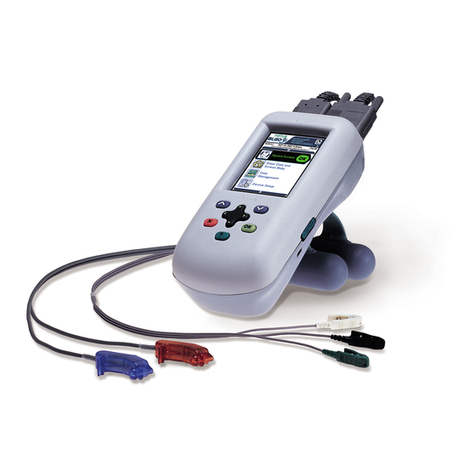
AccuScreen
With AccuScreen you can upload data to AccuLink and print test results from the PC, or you can place AccuScreen in the
docking station and print directly to a label printer connected to the docking station.
1.5 Intended Use
The Type 1077 device is indicated for use in the recording and automated analysis of human physiological data (screening
auditory brainstem responses and/or otoacoustic emissions) necessary for the diagnosis of auditory and hearing-related dis-
orders.
Distortion Product Otoacoustic Emissions and Transient Evoked Otoacoustic Emissions:
The Type 1077 DPOAE module and TEOAE module can be used for patients of all ages, from children to adults, including
infants and geriatric patients. It is especially indicated for use in testing individuals for whom behavioural audiometric res-
ults are deemed unreliable, such as infants, young children, and cognitively impaired adults.
Auditory Brainstem Response:
The Type 1077 ABR module is especially intended for infants from 34 weeks (gestational age) up to 6 months of age.
When the device is used to screen infants, they should be asleep or in a quiet state at the time of screening.
The device is intended for use by audiologists, ENTs and other healthcare professionals.
Important •Natus does not guarantee the accuracy of the test results or the tests themselves, if accessories other than
those supplied by Natus are used for this device (i.e. eartips, electrodes, ear couplers, etc.).
1.6 Physical operating principle
AccuScreen uses TEOAE (Transiently Evoked Otoacoustic Emissions) and DPOAE (Distortion Product Otoacoustic Emissions)
technologies, which are highly effective for neonatal hearing screening. Otoacoustic Emissions measure cochlear mech-
anics and indicate whether the cochlea is functioning correctly or not.Children's emissions are typically strong, which
makes them easy and fast to detect. Emission strength usually decreases with age or hearing impairment.
Automated ABR (Auditory Brainstem Response) is available in AccuScreen. This technology measures responses to sound in
the auditory pathways. It provides a valuable supplement to TEOAE and DPOAE screening, and is an essential tool for
screening infants with a risk of hearing loss.
The simple yet reliable technology ensures that hearing loss can be detected and that intervention can be implemented at
an early age. With early intervention, hearing-impaired children are given the possibility of developing normal speech and
language skills.
8 MADSEN AccuScreen
1 Introduction