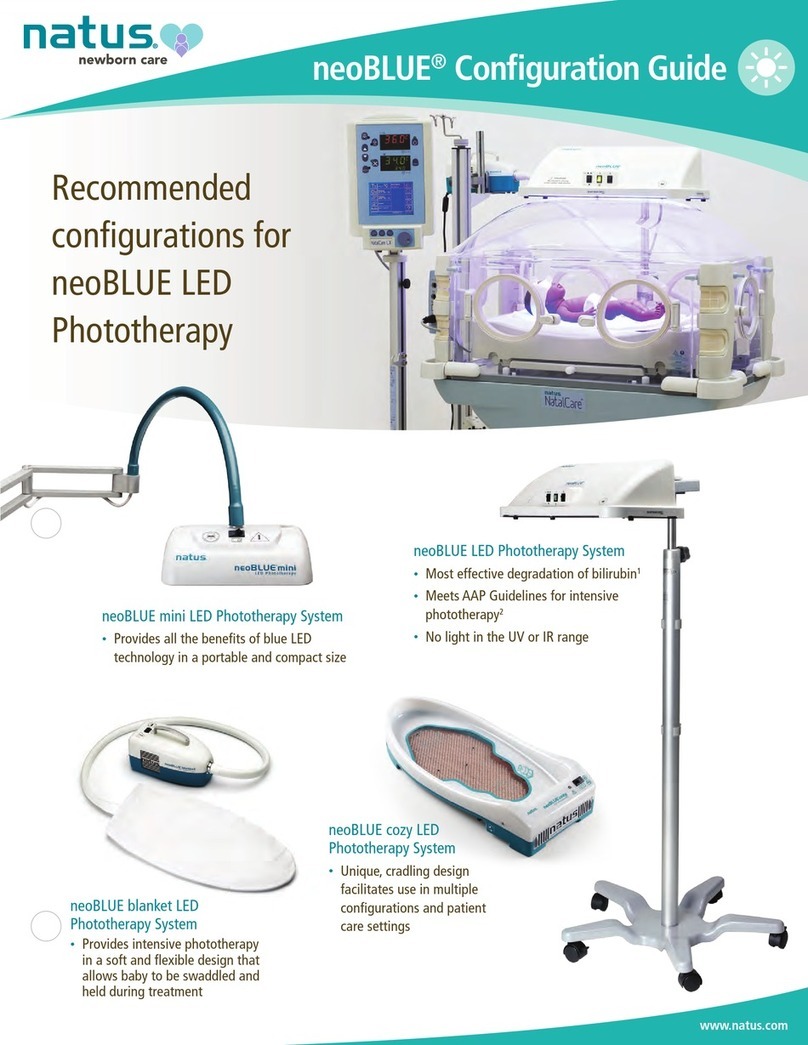
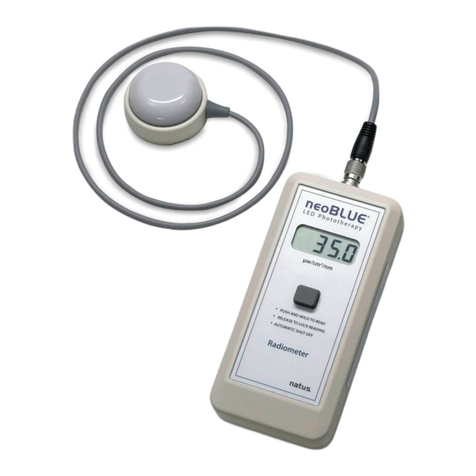
Pictorial introduction to the neoBLUE system
neoBLUE® LED Phototherapy System Service Manual 7
PN 051296
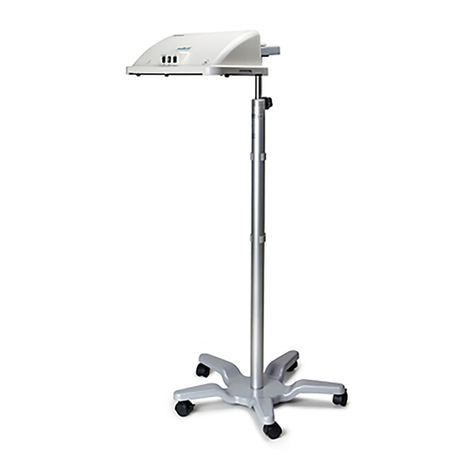
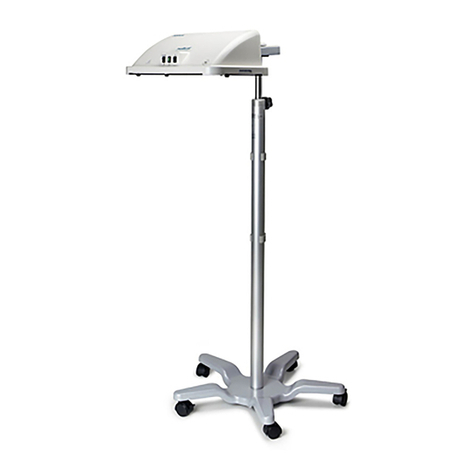
These components provide a floor-standing, mobile, phototherapy light that delivers a narrow band
of high-intensity blue light via blue light emitting diodes (LEDs) to provide treatment for neonatal
hyperbilirubinemia.
Blue LEDs emit light in the range of 400 – 550 nm (peak wavelength 450-475 nm). There are two
light intensity settings, high and low. The light output is optimized to provide an average intensity
of 30-35 µW/cm2/nm at the high setting and 12-15 µW/cm2/nm at the low setting at 30 cm (12
inches) distance from the light enclosure.
LEDs have minimal light output degradation over their lifetime with proper use. Nevertheless, the
technician can adjust the output of the LEDs using two potentiometers located on the side of the
light enclosure. The light is expected to operate as specified at least 10,000 hours at the low
setting, and at least 3,000 hours at the high setting.
The roll stand is designed to hold 8 lbs of weight with a base designed to accommodate the weight
distribution of the light enclosure at any height or angle.
The light is mains-power operated. The power cord plugs into a receptacle at the power inlet at the
back of the light enclosure. A power cord strain relief bracket is provided to hold the power cord in
place.
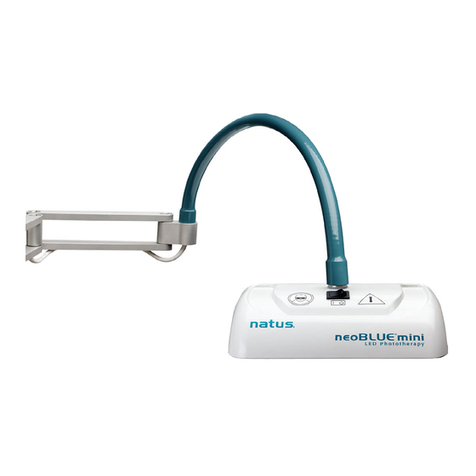
1.3 Pictorial introduction to the neoBLUE system
This section is meant to acquaint you with the various views of the neoBLUE light that you will see
in the course of troubleshooting and repairing it. The item numbers and names used in the Parts
List (see Chapter 5) are used throughout the book whenever parts are discussed.
These pictures show the front and rear views of the light enclosure, and internal views showing
where the major components are located and some details. Also included is a block diagram.
WARNING Eye Protection: Do not look directly into the LEDs. Some people are
sensitive to blue light in the environment. Amber safety glasses shield
sensitive eyes, minimizing the effects of the blue light.
WARNING If an alternative stand is used, care must be taken to validate the load
capacity.