3
MACHINE INSPECTION
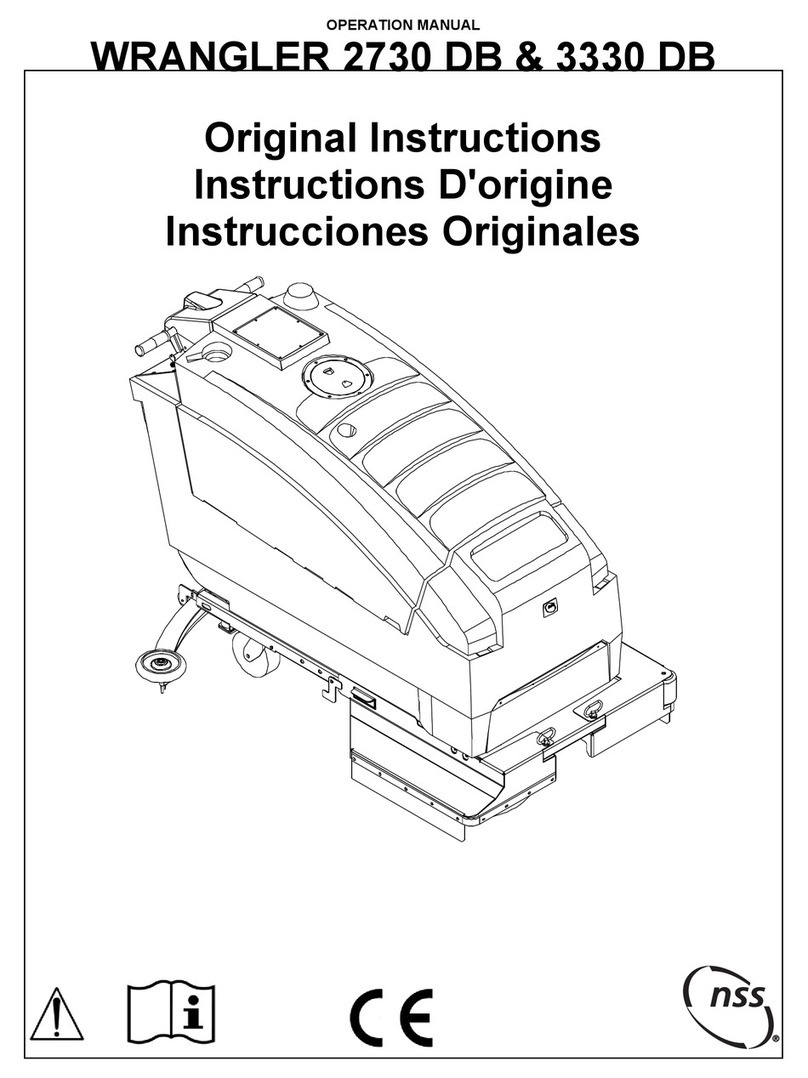
•Carefully unpack the Wrangler 1708/2008 and recycle
all packing materials.
•Inspect machine for damage or missing
components. If damage is found, contact the local
freight company and file a freight claim.
DAILY USE
The Wrangler 1708/2008 is very maneuverable and is
designed to scrub floors as you operate the machine
from behind. Always dust mop the floor before
scrubbing. You may also need to preclean some types
of spills or stains before scrubbing. Plan your work so
that you make long, straight paths with the fewest
amount of turns possible. Remove as many obstacles
as possible from the area to be scrubbed. The Wrangler
1708/2008 is designed for light to medium scrubbing.
Consult your local NSS distributor for more complete
procedures and chemical advice.
MACHINE COMPONENTS AND
OPERATION
Battery Package (see safety instructions)
The Wrangler 1708/2008 is a 24 volt system with two
(2) 12 volt, 115 amp hour batteries. Consult your local
NSS authorized distributor for application
recommendations.
To install the batteries:
•Batteries are heavy, use two people to install.
•Turn off all the switches.
•Empty all liquids from recovery tank.
•Step on foot pedal at front of machine to release tanks.
Lift tanks up and tilt back to rest on handles.
•Refer to wiring diagram on bottom of tanks. Align
batteries in compartment as shown on diagram.
•Install battery cables as shown on wiring
diagram. Tighten all bolts and hex nuts with a wrench.
•CAUTION: Do not touch two terminals with a wrench.
•Loose or improper battery connections will cause
battery or machine damage and possible
personal injury.
To charge the batteries:
•Charge machine after every shift or whenever batteries
are 75% expended.
•Turn off all the switches.
•Disconnect battery connectors below user control
panel.
•Connect lower connector from batteries to
connector from automatic battery charger.
•Needle on charger gauge should jump within 30
seconds to working level.
•Needle on machine battery gauge should not move
when machine is plugged into charger –batteries will
not be charged.
•NSS supplied battery chargers are automatic and
will shut off when charging cycle is complete.
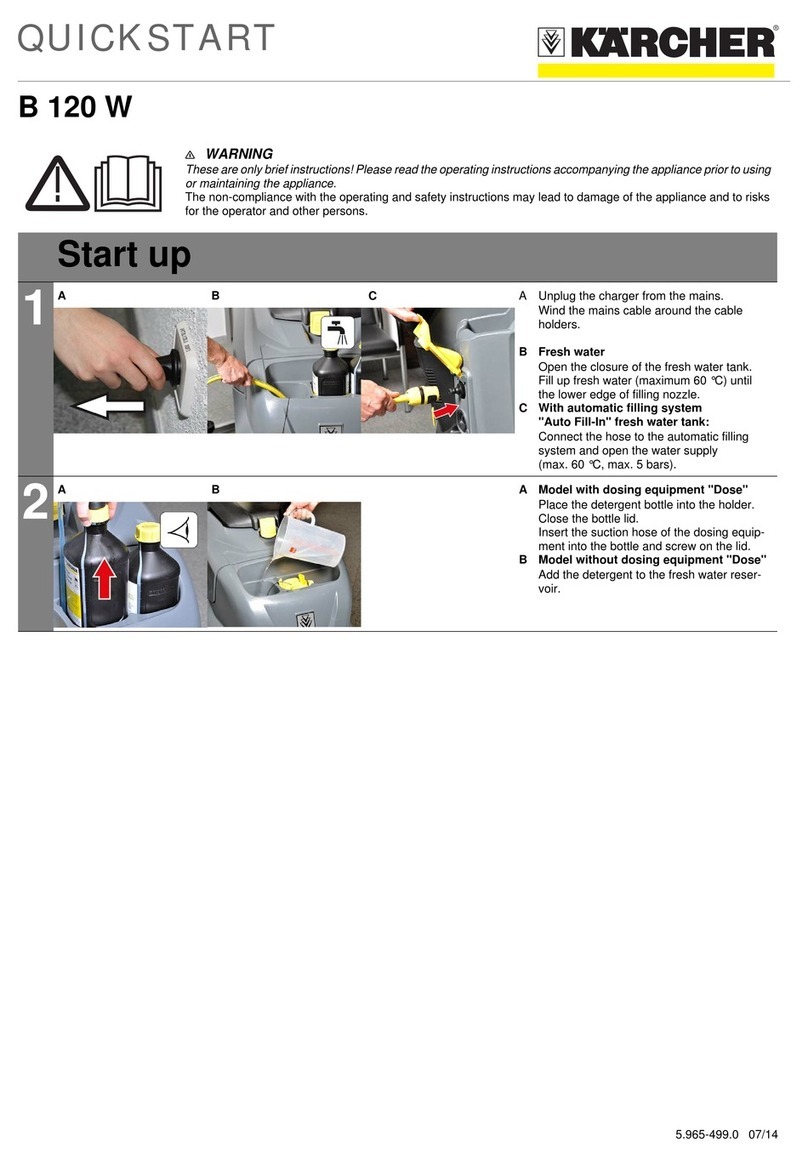
Solution Tank
The solution tank is the lower part of the machine
body. The tank has a capacity of 8 gallons (30
litters) and is filled by pouring the water and cleaning
chemicals through the mesh covered opening and
filter at the front of the machine. Drain the solution
tank through the solution valve or the sight hose at
the rear of the machine.
To prepare the solution tank:
•Never use water over 140°F (60°C).
Excessively hot water may damage components
such as the tanks.
•Pour all liquids through mesh filter at the front of
the solution tank.
•Put 1 to 2 gallons of clean water into the solution
tank first to help dilute the chemicals and prevent
excess sudsing.
•Do not put strip solution in solution tank. Apply
with mop and bucket and rinse with clean water in
solution tank.
•Consult your local NSS distributor for complete
chemical advice. Dilute the cleaning chemicals
according to the manufacturer’s instructions.
•Add the cleaning chemicals to the solution tank
and fill with water as needed.
Recovery Tank
The recovery tank is the upper part of the machine
body. The tank has a capacity of 10 gallons (38
liters). The recovery tank is closed by a rectangular,
clearview lid assembly. The recovery tank has a
foam-sensitive float shut-off assembly. As the water
or foam level rises, the float ball will rise and shut off
the air flow of the vacuum motor to the squeegee. It
does not shut off the vacuum motor. Drain the
recovery tank through the black hose at the rear of
the machine.
To prepare the recovery tank:
•Always use a defoamer to protect the vacuum
motor of this machine. Every time you empty the
recovery tank, we recommend that you add at
least 4 to 6 ounces of defoamer chemical into the
recovery tank before resuming work. Vacuum the
defoamer into the empty recovery tank through the
squeegee vac hose.
•Make sure the recovery tank drain hose is tight on
the plug.