3
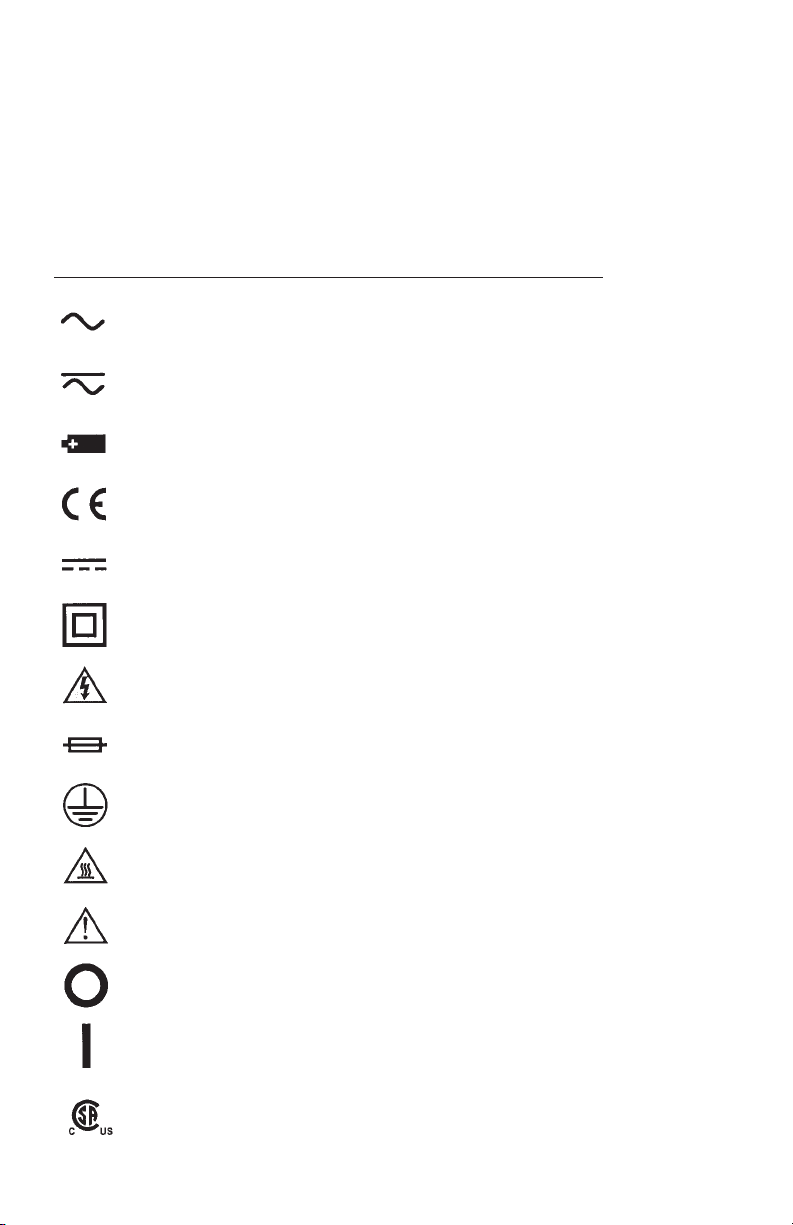
The following definitions apply to the terms “Warning” and “Caution”.
•“Warning”identifiesconditionsandactionsthatmayposehazards
to the user.
•“Caution”identifiesconditionsandactionsthatmaydamagethe
instrument being used.
Usethecalibratoronlyasspecifiedinthismanual,otherwiseinjury
and damage to the calibrator may occur.
Warning
To avoid possible electric shock or personal injury:
•Donotapplymorethantheratedvoltage.Seespecificationsfor
supported ranges.
•Followallequipmentsafetyprocedures.
•Nevertouchtheprobetoavoltagesourcewhenthetestleadsare
plugged into the current terminals.
•Donotusethecalibratorifitisdamaged.Beforeyouusethe
calibrator, inspect the case. Look for cracks or missing plastic. Pay
particular attention to the insulation surrounding the connectors.
•Selecttheproperfunctionandrangeforyourmeasurement.
•Makesurethebatterycoverisclosedandlatchedbeforeyou
operate the calibrator.
•Removetestleadsfromthecalibratorbeforeyouopenthebattery
door.
•Inspectthetestleadsfordamagedinsulationorexposedmetal.
Check test leads continuity. Replace damaged test leads before
you use the calibrator.
•Whenusingtheprobes,keepyourfingersawayfromtheprobe
contacts. Keep your fingers behind the finger guards on the
probes.
•Connectthecommontestleadbeforeyouconnectthelivetest
lead. When you disconnect test leads, disconnect the live test lead
first.
•Donotusethecalibratorifitoperatesabnormally.Protectionmay
be impaired. When in doubt, have the calibrator serviced.
•Donotoperatethecalibratoraroundexplosivegas,vapor,ordust.
•Disconnecttestleadsbeforechangingtoanothermeasureor
source function.