manuals.online logo
Brands
  1. Home
  2. •
  3. Brands
  4. •
  5. Siemens
  6. •
  7. Control System
  8. •
  9. Siemens LOK16 Series User manual

Siemens LOK16 Series User manual

Other manuals for LOK16 Series

2

This manual suits for next models

11

Other Siemens Control System manuals

Siemens SINUMERIK ONE NCU 1740 Technical Document

Siemens

Siemens SINUMERIK ONE NCU 1740 Technical Document

Siemens DESIGO RX QAX33.1 User manual

Siemens

Siemens DESIGO RX QAX33.1 User manual

Siemens SINUMERIK 840D sl Parts list manual

Siemens

Siemens SINUMERIK 840D sl Parts list manual

Siemens SINUMERIK 840D sl Quick start guide

Siemens

Siemens SINUMERIK 840D sl Quick start guide

Siemens SIMADYN D User manual

Siemens

Siemens SIMADYN D User manual

Siemens SIMATIC PCS 7 User manual

Siemens

Siemens SIMATIC PCS 7 User manual

Siemens LOK16 Series User manual

Siemens

Siemens LOK16 Series User manual

Siemens SINAUT ST7 User guide

Siemens

Siemens SINAUT ST7 User guide

Siemens SIMATIC PCS 7 Quick start guide

Siemens

Siemens SIMATIC PCS 7 Quick start guide

Siemens SIMATIC NET MOBIC T8 User manual

Siemens

Siemens SIMATIC NET MOBIC T8 User manual

Siemens SIMATIC PCS 7 Owner's manual

Siemens

Siemens SIMATIC PCS 7 Owner's manual

Siemens SINUMERIK 840D sl Quick start guide

Siemens

Siemens SINUMERIK 840D sl Quick start guide

Siemens SIMATIC PCS 7 BOX User manual

Siemens

Siemens SIMATIC PCS 7 BOX User manual

Siemens SIJECT15 User manual

Siemens

Siemens SIJECT15 User manual

Siemens NCU 7 0.2 Series User manual

Siemens

Siemens NCU 7 0.2 Series User manual

Siemens DMS8000 MP4 Series User manual

Siemens

Siemens DMS8000 MP4 Series User manual

Siemens COMOS User manual

Siemens

Siemens COMOS User manual

Siemens SIMATIC 6ES7673-2CC40-0YA0 User manual

Siemens

Siemens SIMATIC 6ES7673-2CC40-0YA0 User manual

Siemens QAX850 User manual

Siemens

Siemens QAX850 User manual

Siemens SIPLUS HCS Administrator guide

Siemens

Siemens SIPLUS HCS Administrator guide

Siemens REV32 User manual

Siemens

Siemens REV32 User manual

Siemens SINUMERIK 840D sl Quick start guide

Siemens

Siemens SINUMERIK 840D sl Quick start guide

Siemens SINUMERIK 840D sl User manual

Siemens

Siemens SINUMERIK 840D sl User manual

Siemens SINUMERIK 808D User manual

Siemens

Siemens SINUMERIK 808D User manual

Popular Control System manuals by other brands

Comunello BORDER 400 Installation and user manual

Comunello

Comunello BORDER 400 Installation and user manual

Verlinde EUROBLOC Variator VTN Service manual

Verlinde

Verlinde EUROBLOC Variator VTN Service manual

Diginet DGOZ-TCSW-LR35 installation guide

Diginet

Diginet DGOZ-TCSW-LR35 installation guide

VADDIO ControlVIEW Xtreme manual

VADDIO

VADDIO ControlVIEW Xtreme manual

Duke HSHU 13 SERIES Installation and operation manual

Duke

Duke HSHU 13 SERIES Installation and operation manual

AIRTRONICS Blazer Sport manual

AIRTRONICS

AIRTRONICS Blazer Sport manual

Pentair Pool Products Compool Installation and user guide

Pentair Pool Products

Pentair Pool Products Compool Installation and user guide

ComfortNET CTK04 manual

ComfortNET

ComfortNET CTK04 manual

CAME G3000 installation manual

CAME

CAME G3000 installation manual

Idemia MorphoAccess VP MD installation guide

Idemia

Idemia MorphoAccess VP MD installation guide

Doosan DVF Series Operation user's manual

Doosan

Doosan DVF Series Operation user's manual

Axis P1445-LE-3 user manual

Axis

Axis P1445-LE-3 user manual

CNC-Step High-Z T-Series operating instructions

CNC-Step

CNC-Step High-Z T-Series operating instructions

Honeywell KAP 140 Maintenance manual

Honeywell

Honeywell KAP 140 Maintenance manual

Honeywell vk41 series Handbook

Honeywell

Honeywell vk41 series Handbook

Cypress HHR-3160 product manual

Cypress

Cypress HHR-3160 product manual

Zonex GEN II -VVT Installation and application manual

Zonex

Zonex GEN II -VVT Installation and application manual

Altronics K 9650 quick start guide

Altronics

Altronics K 9650 quick start guide

manuals.online logo
manuals.online logoBrands
  • About & Mission
  • Contact us
  • Privacy Policy
  • Terms and Conditions

Copyright 2025 Manuals.Online. All Rights Reserved.

CC1N7785en
06.03.2012
Building Technologies Division
Infrastructure & Cities Sector
7785
Burner Controls LOK16...
LGK16...
Burner controls
For gas, oil or dual-fuel forced draft burners of medium to high capacity
With self-checking flame signal amplifier
For continuously operating multistage or modulating oil or gas burners of
medium to high capacity
With air pressure supervision for checked air damper control.
Burner control for oil burners to EN 230: 2005
The LOK16.../LGK16... and this Data Sheet are intended for use by OEMs which
integrate the burner controls in their products.
2/24
Building Technologies Division CC1N7785en
Infrastructure & Cities Sector 06.03.2012
Use
Burner controls type LOK16.../LGK16... feature a self-checking flame supervision
circuit.
The supervision circuit initiates the required safety actions not only in the case of
premature or missing flame signals, but also in the event of any kind of fault on the
flame detector, the detector cables or the flame signal amplifier that could simulate a
flame signal during burner operation.
The burner controls are therefore suited for use in all types of oil- or gas-fired
combustion plant where self-checking flame supervision systems are either mandatory
or recommended.
For example:
-Burners that operate continuously
-Burners in intermittent operation that, in the case of great heat demand, may
operate continuously for more than 14 hours, e.g. in plant using boiler sequencing
-Burners that need to comply with the German TRD 411 and TRD 412 regulations
for steam boilers
-Burners in plant where, for specific safety requirements, supervision of the burner
by a self-checking flame supervision system seems advisable
-The control sequence and connection circuitry of the LOK16…/LGK16… burner
controls are identical to those of the LAL2... and LFL1... respectively (with the
exception of the LFL1.148), so that existing combustion plant can also be equipped
with self-checking burner controls,
provided very good flame detector current values are measured in the plant
supervised so far by the LFL1..., and
provided the following types of flame detectors are either installed or can
subsequently be fitted:
-Silicon photocell detector RAR9...
-Flame detector QRA53.../QRA55...
-Ionization probe
-Flame detector QRA53.../QRA55... together with ionization probe, e.g. in the case
of burners using a pilot burner (also see Data Sheet N7712)
Flame supervision
when using LOK16...
Flame supervision
when using LGK16...
3/24
Building Technologies Division CC1N7785en
Infrastructure & Cities Sector 06.03.2012
Warning notes
To avoid injury to persons, damage to property or the environment, the following
warning notes must be observed!
Do not open, interfere with or modify the unit!
All activities (mounting, installation and service work, etc.) must be performed by
qualified staff
Before making any wiring changes in the connection area, completely isolate the
plant from mains supply (all-polar disconnection). Ensure that the plant cannot be
inadvertently switched on again and that it is indeed dead. If not observed, there is
a risk of electric shock hazard
Ensure protection against electric shock hazard by providing adequate protection
for the burner control’s connection terminals
Each time work has been carried out (mounting, installation, service work, etc.),
check to ensure that wiring is in an orderly state and make the safety checks as
described in Commissioning notes
Press the lockout reset button only manually (applying a force of no more than
10 N) without using any tools or pointed objects
Do not press the lockout reset button on the unit or the remote reset button
(input 21) for more than 10 seconds, since this would damage the lockout
relay inside the unit
Fall or shock can adversely affect the safety functions. Such units must not be put
into operation, even if they do not exhibit any damage
Mounting notes
Ensure that the relevant national safety regulations are complied with.
When converting plant to LOK16... or LGK16..., the existing LAL... or LFL... base must
be secured by a cylinder-shaped grooved pin, thus ensuring that only an LOK16... or
LGK16... type burner control can be fitted.
Part number of grooved pin: 4 166 8024 0
Location of grooved pin:
Between terminals 10 and 11 of the LAL... base, and between terminals 4 and 5 of the
LFL... base.
By removing link (B) on the underside of the unit, the LOK16... can be switched to start
repetition in the event of loss of flame during operation.
In that case, the wire link must be cut off completely.
However, it must be checked whether this is in compliance with national standards and
regulations.
Installation notes
Always run the high-voltage ignition cables separately while observing the greatest
possible distance to the unit and to other cables
Neutral conductors must not be interchanged
Install switches, fuses, earthing, etc., in compliance with local regulations
Make certain that the maximum permissible current rating of the connection
terminals will not be exceeded
Upgrading existing plant
Start repetition in the
event of loss of flame
4/24
Building Technologies Division CC1N7785en
Infrastructure & Cities Sector 06.03.2012
Electrical connection of flame detectors
It is important to achieve practically disturbance- and loss-free signal transmission:
Never run the detector cable together with other cables
– Line capacitance reduces the magnitude of the flame signal
– Use a separate cable
Observe the permissible detector cable lengths (see Technical data)
It is not permitted to connect 2 flame detectors QRA53.../QRA55... in parallel
When using the QRA53.../QRA55..., earthing of terminal 22 is mandatory
The ionization probe is not protected against electric shock hazard
Locate the ignition electrode and ionization probe such that the ignition spark
cannot arc over to the ionization probe (risk of electrical overloads) and that it
cannot adversely affect the supervision of ionization
Supervision with ionization probe and QRA… flame detector is possible but, for
safety reasons, both must not be active at the same time, with the exception of the
second safety time (t9). At the end of the second safety time, one of the detected
flames must extinguish, e.g. by shutting down the pilot gas valve connected to
terminal 17
Commissioning notes
When commissioning the plant or when doing maintenance work, make the
following safety checks:
Safety check to be carried out Anticipated response
a) Burner startup with flame detector
darkened
Lockout at the end of safety time
b) Burner startup with simulated
flame
Lockout after no more than 40 seconds
c) Burner operation with simulated
loss of flame; for that purpose,
darken the flame detector in
operation and leave it in that state
LOK16... with wire link cut: Start
repetition followed by lockout at the end
of safety time
LGK16... and LOK16... with wire link
closed: Immediate lockout
d) Burner startup with response of air
pressure switch
Prevention of startup/lockout during
prepurge time
e) Burner operation with simulated air
pressure failure
Immediate lockout
5/24
Building Technologies Division CC1N7785en
Infrastructure & Cities Sector 06.03.2012
Standards and certificates
Conformity to EEC directives
- Electromagnetic compatibility EMC (immunity)
- Low-voltage directive
- Directive for gas appliances
- Directive for pressure devices
2004/108/EC
2006/95/EC
2009/142/EC
97/23/EC
ISO 9001: 2010
Cert. 00739
ISO 14001: 2010
Cert. 38233
Identification code to EN 230/EN 298 F B/M L L X K
Certified with plug-in base and flame detector:
Type reference
LOK16.140... --- ---
---
LOK16.250... --- ---
---
LOK16.650... --- ---
---
LGK16.122... --- --- --- 
LGK16.133A17 --- --- --- --- --- 
LGK16.133A27 --- --- --- 
LGK16.322... --- --- --- 
LGK16.333... --- --- --- 
LGK16.335... --- --- --- 
LGK16.622... --- --- --- 
LGK16.635... --- --- --- 
Service notes
The KF8832 flame detector current measuring device must not be used in
continuous operation
Life cycle
Burner controls has a designed lifetime* of 250,000 burner startup cycles which, under
normal operating conditions in heating mode, correspond to approx. 10 years of usage
(starting from the production date given on the type field). This lifetime is based on the
endurance tests specified in standard EN 230/EN 298 and the table containing the
relevant test documentation as published by the European Association of Component
Manufacturers (Afecor) (www.afecor.org).
The designed lifetime is based on use of the burner controls according to the
manufacturer’s Data Sheet. After reaching the designed lifetime in terms of the number
of burner startup cycles, or the respective time of usage, the burner control is to be
replaced by authorized personnel.
* The designed lifetime is not the warranty time specified in the Terms of Delivery
Disposal notes
The unit contains electrical and electronic components and must not be disposed of
together with household waste.
Local and currently valid legislation must be observed.
6/24
Building Technologies Division CC1N7785en
Infrastructure & Cities Sector 06.03.2012
Mechanical design
- Plug-in design
- Exchangeable unit fuse (including spare fuse)
- Made of impact-proof and heat-resistant black plastic
- Lockout reset button with viewing window; located behind it are:
- The lockout warning lamp
- The lockout indicator
- coupled to the spindle of the sequence switch
- visible in the transparent lockout reset button
- uses easy-to-remember symbols to indicate the type of fault and the point in time
lockout occurred
LGK16.../LOK16...
Housing
7/24
Building Technologies Division CC1N7785en
Infrastructure & Cities Sector 06.03.2012
Type summary
Switching times are given in the order of the startup sequence, valid for 50 Hz mains frequency. At 60 Hz, the times are about 20% shorter.
The type references apply to burner controls operating on AC 230 V, 50...60 Hz.
* For burner controls operating on AC 100...110 V, 50...60 Hz, the last 2 digits of the type reference read «17» in place of «27».
For flame supervision with a silicon photocell detector RAR9... for oil
burners
Preferred use:
Flash-steam
generators
Universal
application
Medium- or
heavy-oil burners
LOK16.140A27* LOK16.250A27* LOK16.650A27 Legend of times
t1 10 s 22 s 66 s Prepurge time with air damper fully open
TSA 4 s 5 s 5 s Safety time or first safety time with burners using a pilot burner
TSA´ --- --- --- Safety time or first safety time with burners using a pilot burner
t3 2 s 2.5 s 2.5 s Preignition time
t3´ From startup command (with air pressure supervision: from
receipt of air pressure signal)
Long preignition time
t3n 10 s 15 s 15 s Postignition time (ignition transformer connected to terminal 15)
t4 8 s 7.5 s 7.5 s Interval between start of safety time and release of valve at
terminal 19
t4´ --- --- --- Interval between start of safety time and release of valve at
terminal 19
t5 4 s 7.5 s 7.5 s Interval between end of interval (t4/t4´) and release of load
controller or valve at terminal 20
t6 10 s 15 s 15 s Postpurge time (identical to permissible afterburn time (t13))
t7 2 s 2.5 s 2.5 s Switch-on delay of fan motor (M2)
t8 30 s 47 s 91 s Duration of startup without «t11» and «t12»
t9 --- --- --- Second safety time with burners using a pilot burner
t10 6 s 10 s 10 s Interval from startup to the beginning of the air pressure check
t11 Optional Air damper running time to the fully open position
t12 Optional Air damper running time to the low-fire position
t13 10 s 15 s 15 s Permissible afterburn time
t16 4 s 5 s 5 s Interval from startup to the open command for the air damper
t20 32 s 34.5 s 12.5 s Interval to self-shutdown of the sequence switch
For flame supervision with flame detector QRA53.../QRA55... or ionization probe
Preferred use:
Flash-steam
generators
Flash-steam
generators
D (also suited
for direct-fired
air heaters),
F
D, A GB F, I B, NL
LGK16.122A27* LGK16.133A27 LGK16.322A27* LGK16.333A27* LGK16.335A27* LGK16.622A27* LGK16.635A27*
t1 10 s 9 s 35.5 s 31.5 s 37 s 65 s 66 s
TSA 2 s 3 s 2 s 3 s 2.5 s 2 s 2.5 s
TSA´ 2 s 3 s 2 s 3 s 5 s 2 s 5 s
t3 4 s 3 s 4 s 6 s 5 s 4 s 5 s
t3´ 4 s --- 4 s 6 s 2.5 s 4 s 2.5 s
t3n --- --- --- --- --- --- ---
t4 6 s 6 s 10 s 11.5 s 12.5 s 10 s 12.5 s
t4´ 6 s --- 10 s 11.5 s 15 s 10 s 15 s
t5 4 s 3 s 10 s 11.5 s 12.5 s 10 s 12.5 s
t6 10 s 14.5 s 12 s 17 s 15 s 12 s 15 s
t7 2 s 3 s 2 s 3 s 2.5 s 2 s 2.5 s
t8 30 s 29 s 65 s 69 s 74 s 95 s 103 s
t9 2 s 3 s 2 s 3 s 5 s 2 s 5 s
t10 6 s 6 s 8 s 11.5 s 10 s 8 s 10 s
t11 Optional
t12 Optional
t13 10 s 14.5 s 12 s 17 s 15 s 12 s 15 s
t16 4 s 3 s 4 s 6 s 5 s 4 s 5 s
t20 32 s 60 s --- 26 s 22 s --- ---
LOK16...
LGK16...

8/24
Building Technologies Division CC1N7785en
Infrastructure & Cities Sector 06.03.2012
Ordering
Oil burner controls, without plug-in base
(plug-in base not included in delivery, must be ordered as a separate item)
For AC 230 V* Control sequence and
connection diagram like
Preferred use
LOK16.140A27* LAL2.14 Flash-steam generators
LOK16.250A27* LAL2.25 Universal application
LOK16.650A27 LAL2.65 Heavy-oil burners
* For burner controls operating on AC 100...110 V, 50...60 Hz, the last 2 digits of the
type reference read «17» in place of «27»
Connection accessories for medium-capacity burner controls see Data Sheet N7230
- Plug-in base AGM16 with Pg11 thread for cable entry glands
- Plug-in base AGM16.1 with M16 thread for cable entry glands
Flame detectors
- Silicon photocell detectors RAR9... see Data Sheet N7713
Gas burner controls, without plug-in base
(plug-in base not included in delivery, must be ordered as a separate item)
For AC 230 V* Control sequence and
connection diagram like
Preferred use
LGK16.122A27* LFL1.122 Flash-steam generators
LGK16.133A27 LFL1.133 Flash-steam generators
LGK16.322A27* LFL1.322 D (also suited for direct-fired
air heaters), F
LGK16.333A27* LFL1.333 D, A
LGK16.335A27* LFL1.335 GB
LGK16.622A27* LFL1.622 I, F
LGK16.635A27* LFL1.635 B, NL
* For burner controls operating on AC 100...110 V, 50...60 Hz, the last 2 digits of the
type reference read «17» in place of «27»
Connection accessories for medium-capacity burner controls see Data Sheet N7230
- Plug-in base AGM17 with Pg11 thread for cable entry glands
- Plug-in base AGM17.1 with M16 thread for cable entry glands
Flame detectors
- Flame detectors QRA53.../QRA55... see Data Sheet N7712
- Ionization probe to be supplied by thirds
Flame detector current measuring device KF8832
- For detector current measurements with QRA53..., QRA55... , recommended up to
series C and E
- Not suited for continuous operation
- Only for measurements of short duration
- The KF8832 negates the self-supervision function
9/24
Building Technologies Division CC1N7785en
Infrastructure & Cities Sector 06.03.2012
Technical data
Mains voltage AC 220 V -15%...AC 240 V +10%
AC 100 V -15%...AC 110 V +10%
Mains frequency 50...60 Hz ±6%
Unit fuse T6,3H250V to DIN EN 60 127
Primary fuse (external) Max. 16 A (slow)
Weight Approx. 1000 g
Power consumption Approx. 3.5 VA
Perm. mounting position Optional
Degree of protection IP40, (to be ensured through mounting)
with the exception of the connection area
(terminal base)
Safety class II
Perm. input current at terminal 1 Max. 5 A to VDE 0660 AC3
Perm. current load of control terminals Max. 4 A to VDE 0660 AC3
Required switching capacity of switching
devices
-Between terminals 4 and 5, 4 and 12
-Between terminals 4 and 14
1 A, AC 250 V
depending on loading of terminals 15, 16,
18, 19 (LGK16...: 16...19), min. 1 A,
AC 250 V
Storage DIN EN 60721-3-1
Climatic conditions Class 1K3
Mechanical conditions Class 1M2
Temperature range -20...+60 °C
Humidity <95% r.h.
Transport DIN EN 60721-3-2
Climatic conditions Class 2K3
Mechanical conditions Class 2M2
Temperature range -20...+60 °C
Humidity <95% r.h.
Operation DIN EN 60721-3-3
Climatic conditions Class 3K3
Mechanical conditions Class 3M3
Temperature range -20...+60 °C
Humidity <95% r.h.
Caution!
Condensation, formation of ice and ingress of water are not permitted!
General unit data
LOK16.../LGK16...
Environmental
conditions
10/24
Building Technologies Division CC1N7785en
Infrastructure & Cities Sector 06.03.2012
Technical data (cont´d)
LOK16... LGK16...
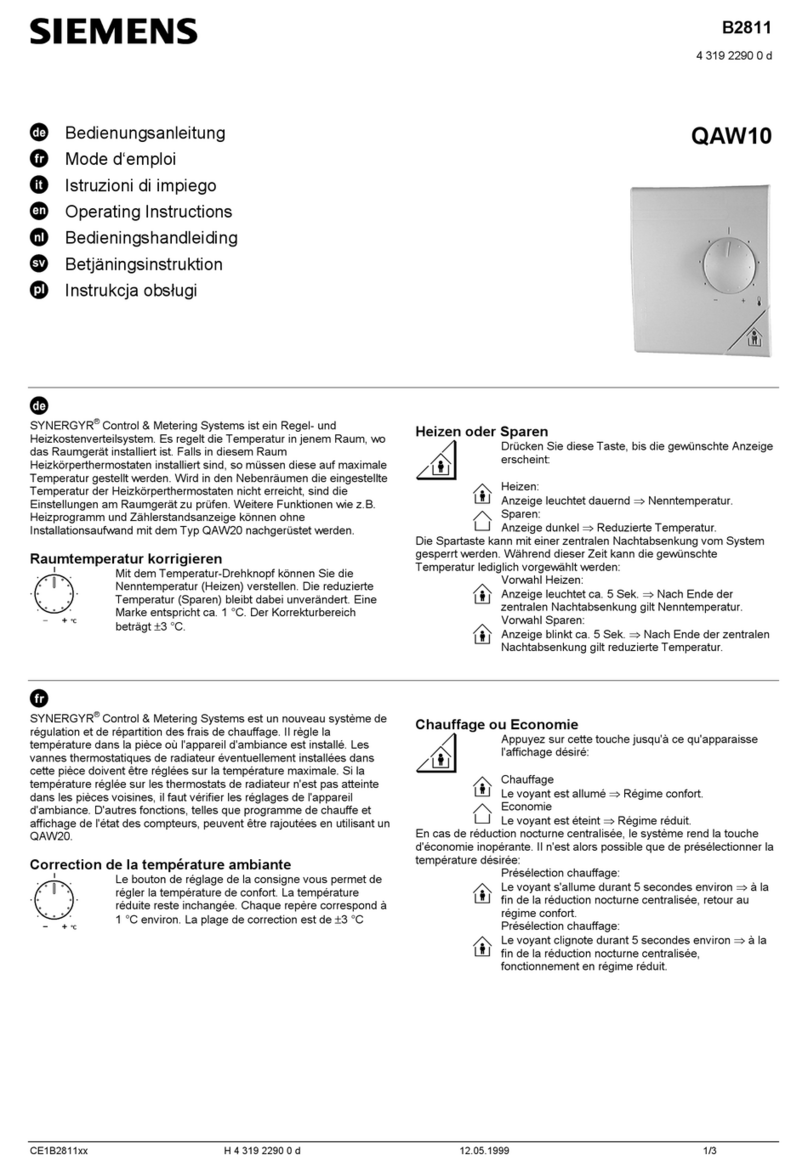
RAR9... QRA5x.C...
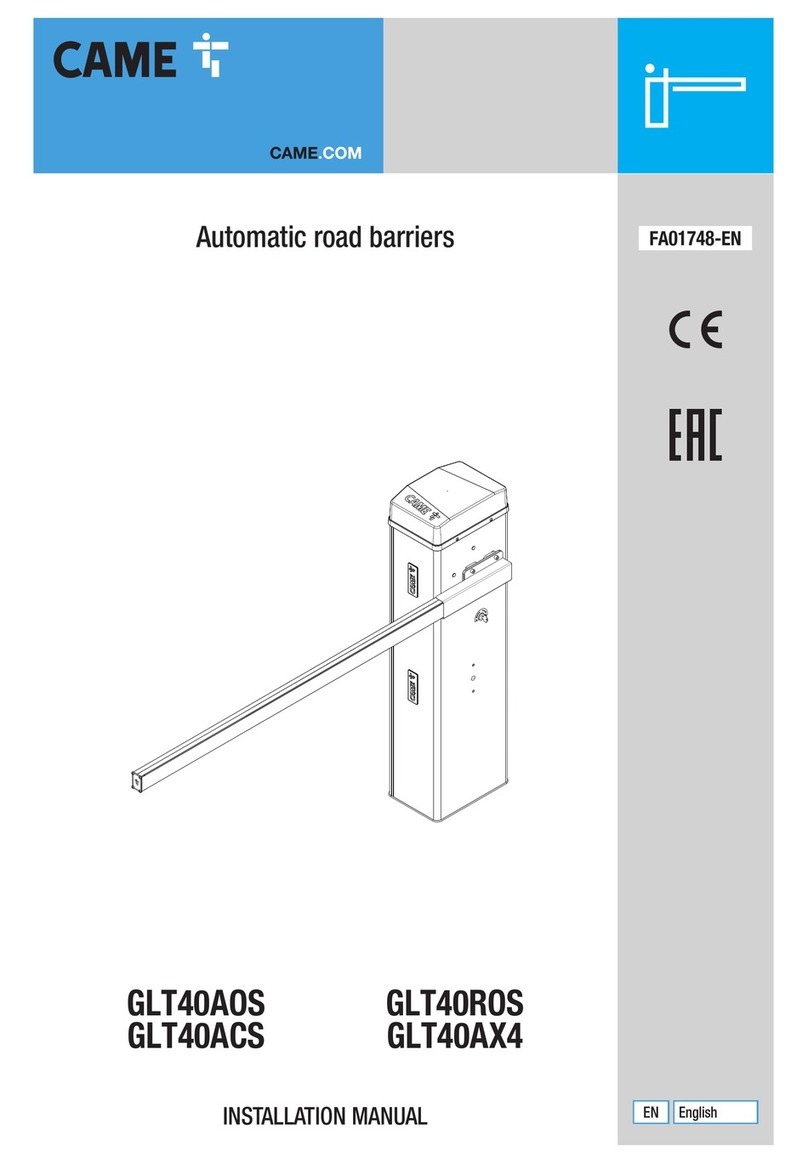
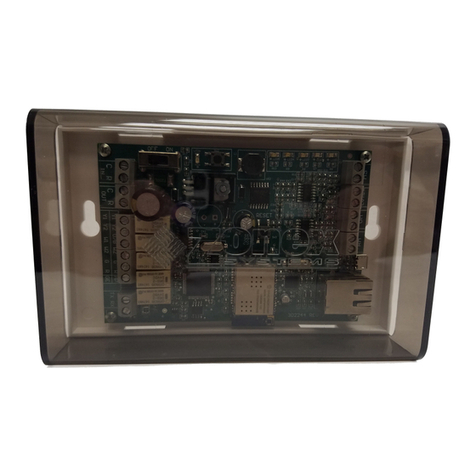
QRA5x.E...
QRA5x.D...
QRA5x.G...
Ionization probe
Operating voltage (Terminal 23 or 24) <DC 1 V
±10%
AC 280 V ¹)
±10%
AC 280 V ¹)
±10%
AC 245 V ¹)
±10%
Minimum detector current required DC 6 µA DC 35 µA DC 120 µA DC 12 µA
Maximum possible detector current DC 38 µA DC 50 µA DC 270 µA DC 100 µA
Short-circuit current --- --- --- Approx. AC 300 µA
Maximum length of detector cable (laid separately) 100 m ²) ²) 60 m ³)
1) AC voltage, measured with no detector current at AC 230 V mains voltage. Internal resistance of
measuring instrument 10 M. The shutter of the flame detector QRA53.../QRA55... is powered by
mains voltage
Detector cable laid in a minimum distance of 5 cm from other mains carrying cable:
-As a multiple cable
-With 5 single wires
Max. 50 m
Max. 70 m
With a shielded 3-core control cable to terminals 3, 4 and 5 of the flame
detector QRA53.../QRA55... and standard mains cable to terminals 1 and 2
Max. 15 m
With 2 shielded single-core coaxial cables (45 pF/m, e.g. RG 62) to terminals
3 and 4 of the flame detector QRA53.../QRA55... and standard mains cable to
terminals 1, 2 and 5
Max. 60 m
2)
If possible, shielding should be earthed at both ends
3) Longer cable distances are permitted when connecting low-capacitance detector cables to terminal
24 of the burner control (especially against earthed wires!)
Flame supervision