manuals.online logo
Brands
  1. Home
  2. •
  3. Brands
  4. •
  5. AGFA
  6. •
  7. Medical Equipment
  8. •
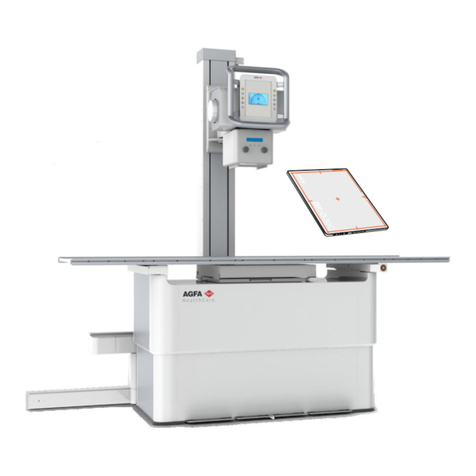
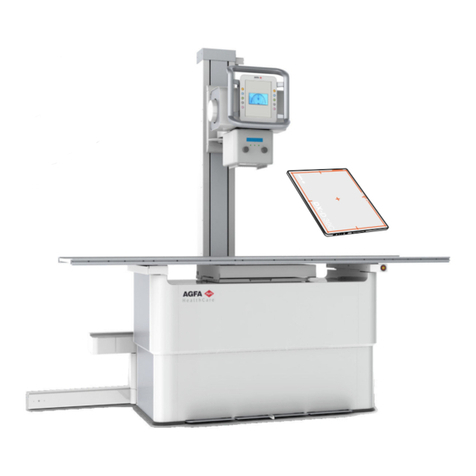
  9. AGFA DX-D 100 User manual

AGFA DX-D 100 User manual

Other manuals for DX-D 100

2

Other AGFA Medical Equipment manuals

AGFA DX-D 60C User manual

AGFA

AGFA DX-D 60C User manual

AGFA DR 100s User manual

AGFA

AGFA DR 100s User manual

AGFA CR 30-X User manual

AGFA

AGFA CR 30-X User manual

AGFA 6005/100 6005/200 User manual

AGFA

AGFA 6005/100 6005/200 User manual

AGFA Drystar 5302 Technical manual

AGFA

AGFA Drystar 5302 Technical manual

AGFA DR 800 User manual

AGFA

AGFA DR 800 User manual

AGFA CRHD5.0 User manual

AGFA

AGFA CRHD5.0 User manual

AGFA DX-D 300 User manual

AGFA

AGFA DX-D 300 User manual

AGFA CR 30-X User manual

AGFA

AGFA CR 30-X User manual

AGFA DR 400 User manual

AGFA

AGFA DR 400 User manual

AGFA DX-D 40C User manual

AGFA

AGFA DX-D 40C User manual

AGFA CR 85-XTM User manual

AGFA

AGFA CR 85-XTM User manual

AGFA DR 10s User manual

AGFA

AGFA DR 10s User manual

AGFA 5523/100 User manual

AGFA

AGFA 5523/100 User manual

AGFA Drystar 4500 User manual

AGFA

AGFA Drystar 4500 User manual

AGFA Classic E.O.S. Technical manual

AGFA

AGFA Classic E.O.S. Technical manual

AGFA Drystar 4500 Plug & Play User manual

AGFA

AGFA Drystar 4500 Plug & Play User manual

AGFA CR User manual

AGFA

AGFA CR User manual

AGFA Valory User manual

AGFA

AGFA Valory User manual

AGFA DR 400 User manual

AGFA

AGFA DR 400 User manual

AGFA CR Series User manual

AGFA

AGFA CR Series User manual

AGFA DR 400 User manual

AGFA

AGFA DR 400 User manual

AGFA DX-D 600 User manual

AGFA

AGFA DX-D 600 User manual

AGFA DX-D 600 User manual

AGFA

AGFA DX-D 600 User manual

Popular Medical Equipment manuals by other brands

Itamar Medical WatchPAT Operation manual

Itamar Medical

Itamar Medical WatchPAT Operation manual

PROTEOR 1P650 KNEE Assembling and adjustment instructions

PROTEOR

PROTEOR 1P650 KNEE Assembling and adjustment instructions

Liberate Medical VentFree user manual

Liberate Medical

Liberate Medical VentFree user manual

Dicarre DA20 user guide

Dicarre

Dicarre DA20 user guide

Stryker Medical M Series Operation manual

Stryker Medical

Stryker Medical M Series Operation manual

Invacare ScanBed 750 user manual

Invacare

Invacare ScanBed 750 user manual

Getinge Arjohuntleigh Nimbus 3 Professional Instructions for use

Getinge

Getinge Arjohuntleigh Nimbus 3 Professional Instructions for use

Mettler Electronics Sonicator 730 Maintenance manual

Mettler Electronics

Mettler Electronics Sonicator 730 Maintenance manual

Pressalit Care R1100 Mounting instruction

Pressalit Care

Pressalit Care R1100 Mounting instruction

Denas MS DENAS-T operating manual

Denas MS

Denas MS DENAS-T operating manual

bort medical ActiveColor quick guide

bort medical

bort medical ActiveColor quick guide

AccuVein AV400 user manual

AccuVein

AccuVein AV400 user manual

agiliti NP Trio user manual

agiliti

agiliti NP Trio user manual

Rocket Medical Rocket Digital Oocyte Aspiration Pump Service manual

Rocket Medical

Rocket Medical Rocket Digital Oocyte Aspiration Pump Service manual

Monteris Medical Neuroblate Instructions for use

Monteris Medical

Monteris Medical Neuroblate Instructions for use

Otto Block 8E33 7 manual

Otto Block

Otto Block 8E33 7 manual

ADVANCED HOME CARE Helios Guide

ADVANCED HOME CARE

ADVANCED HOME CARE Helios Guide

NeuLog NUL-208 Guide

NeuLog

NeuLog NUL-208 Guide

manuals.online logo
manuals.online logoBrands
  • About & Mission
  • Contact us
  • Privacy Policy
  • Terms and Conditions

Copyright 2025 Manuals.Online. All Rights Reserved.

Getting started with DX-D 100 - Performing a DR exposure
0186C EN 20161007
DISPLACEMENT AND
POSITIONING
Before using DX-D 100, check the battery
levels on the control panel. If the red indicator
is blinking, operation is not allowed. In that
case, it is necessary to charge the batteries.
1 Drive the unit
Grip and hold the locking bar towards the handlebar.
Push the handlebar with both hands to drive forwards.
Release the locking bar to block motion.
2 Release the arm
Press the brake control at the tube-collimator handles
to release the arm from parking position.
Press and hold the brake control while using the
handles to rotate the column and move the arm
horizontally and vertically.
WARNING:
Monitor with special care the patient position
or anyone present, to avoid injury caused by
unit movements. Intravenous tubing,
catheters and other patient connected lines
should be routed away from moving
equipment.
3 Position the unit
Use the motion controls to adjust the position of the
unit with respect to the patient.
The four buttons on the tube-collimator handles control
the motion of each driving wheel (forwards/backwards).
1 2 3 4
1Backwards to the right
2Forwards to the right
3Forwards to the left
4Backwards to the left
4 Position the X-ray tube and
collimator
Use the tube-collimator handles to rotate the X-ray tube
on its transversal or horizontal axis. Use the collimator
handles to rotate the collimator on its vertical axis.
BASIC IMAGING
Note: If you use a wired network the network
cable must be plugged in to be able to query
the RIS or to send images.
5 Retrieve patient info
On the RIS, schedule the examinations.
In NX, query the RIS.
Define the patient info for the examination.
Start the exam.
6 Select the exposure
In NX, select the thumbnail for the exposure in the Image
Overview pane of the Examination window.
The DR Detector is activated. The DR Detector Switch
shows which DR Detector is active and shows its status.
The DX-D 100 software console is displayed and the
default X-ray exposure parameters for the selected
exposure are displayed.
Getting started with DX-D 100 - Performing a DR exposure
0186C EN 20161007
7 Prepare the exposure
Check the position of the X-ray unit and the patient.
WARNING:
Liquids ingressing the DR Detector may cause
malfunction and contamination.
If there is a chance that the detector comes in
contact with liquids (bodily fluids,
disinfectants,...), the DR Detector must be
wrapped in a protective plastic bag while
performing the examination.
Switch on the light localizer on the collimator.
If required, adapt collimation.
8 Check the exposure settings
On the NX application:
Check if the DR Detector Switch displays the name of
the DR Detector that is being used.
If a wrong DR Detector is displayed, select the right
DR Detector by clicking the drop down arrow on the DR
Detector Switch.
On a DR Detector that has a status indicator:
Check if the status of the DR Detector is ready for
exposure. If the status is not ready for exposure, the DR
Detector cannot be used for making an exposure.
On the software console:
Check if the exposure settings displayed on the
console are suitable for the exposure. If other exposure
values are required than those defined in the NX exam,
use the console to overwrite the default defined exposure
settings.
Check if the status of the DR Detector is ready for
exposure.
On the control panel:
Check if the led beacon light lights up green. This
indicates that the wireless DR Detector and the X-ray
generator are ready for making an exposure.
9 Execute the exposure
Take a safe distance from the X-ray tube.
CAUTION:
Excessive user or operator radiation exposure.
Always keep a distance of at least 2 meters
from the focal spot and X-ray beam, protect
body and do not expose hands, arms or other
parts of the body to the primary beam.
On the handswitch or on the remote control, press the
exposure button to execute the exposure.
The exposure is sent to NX.
WARNING:
The radiation indicator on the control console
lights up during exposure release.
CAUTION:
Do not select another thumbnail until the
preview image is visible in the active
thumbnail. The acquired image may be linked
to the wrong exposure.
In NX:
While the acquisition is ongoing, the X-ray on
indicator is displayed on the software console. The led
beacon light lights up yellow.
The image is acquired from the DR Detector and
displayed in the thumbnail.
The software console disappears.
If collimation is applied, the image is automatically
cropped at the collimation borders.
The actual X-ray exposure parameters are shown in
the Image Detail pane
10 Perform quality control
In NX:
Select the image on which quality control is to be
performed.
Prepare the image for diagnosis by using e.g. L/R
markers or annotations.
If the image is OK, send the image to a hardcopy
printer and/or PACS (Picture Archiving and
Communication System).