@5.
STARTUP
l'
ATTENTION: Before performing any procedure, make sure that the device is not powered and that the batteries are dis-
L.D. connected.
The operations regarding point
5.5
are without safety devices. The trimmer can oniy be adjusted with door not moving.
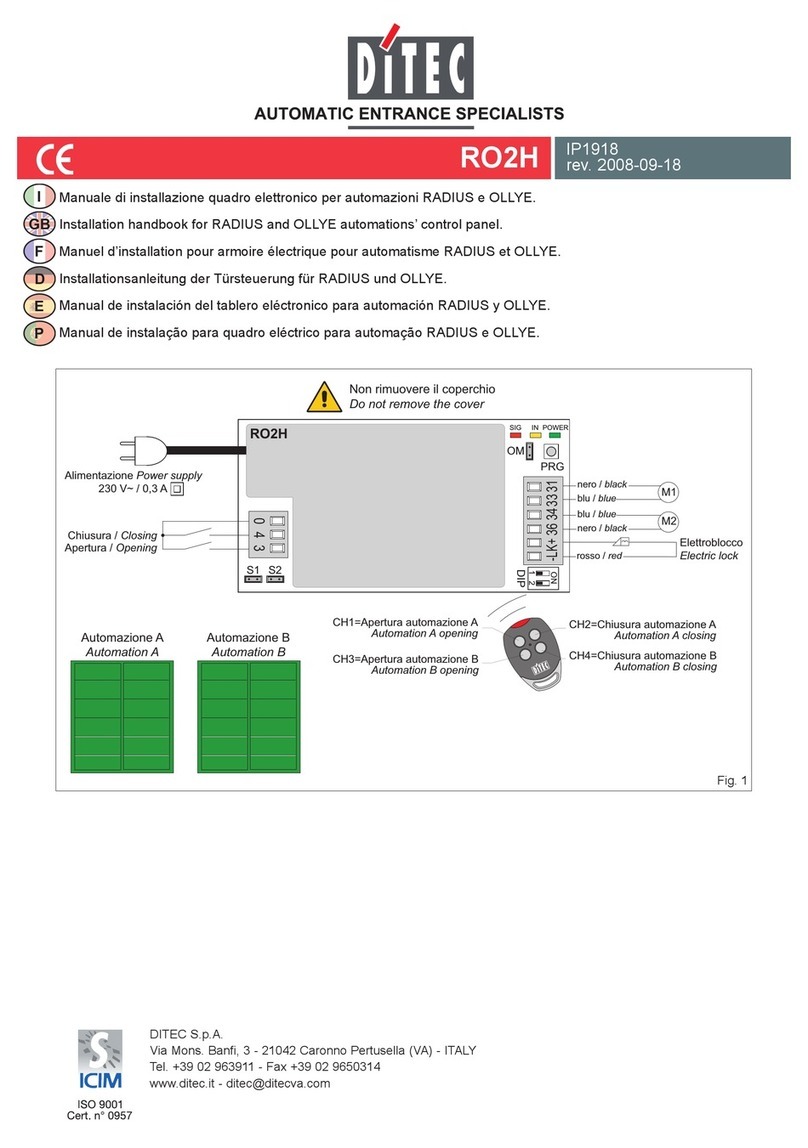
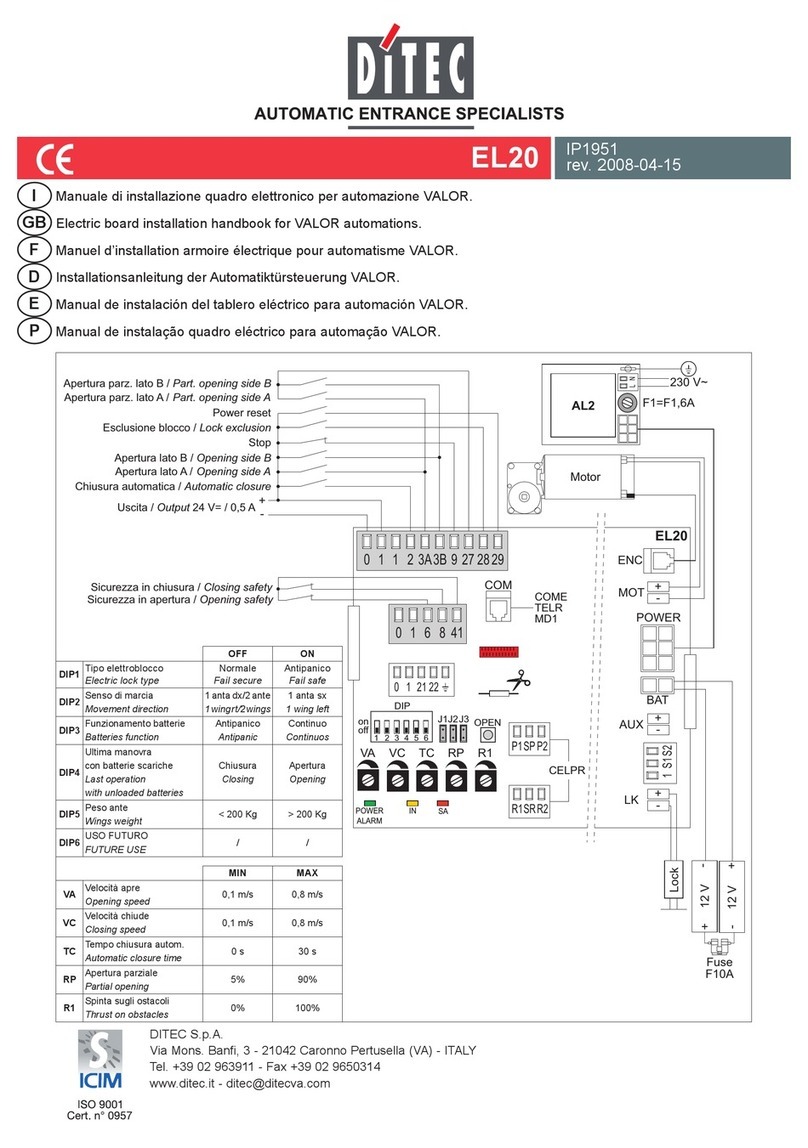
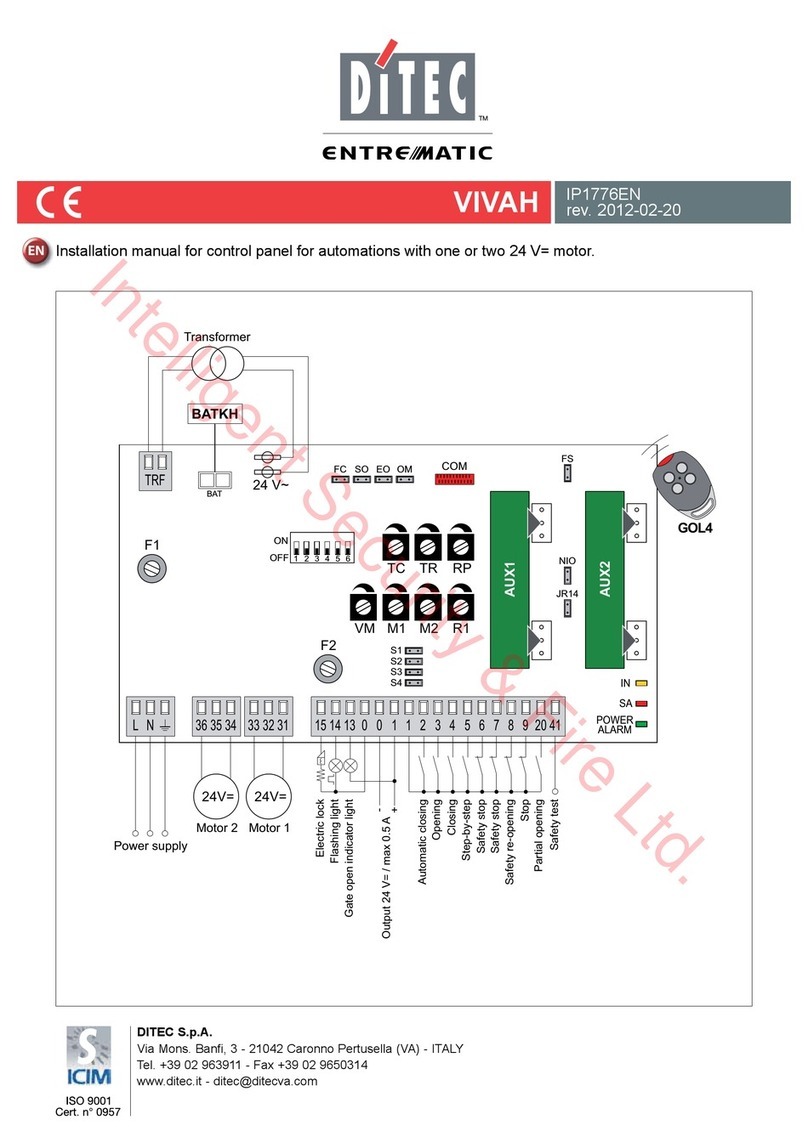
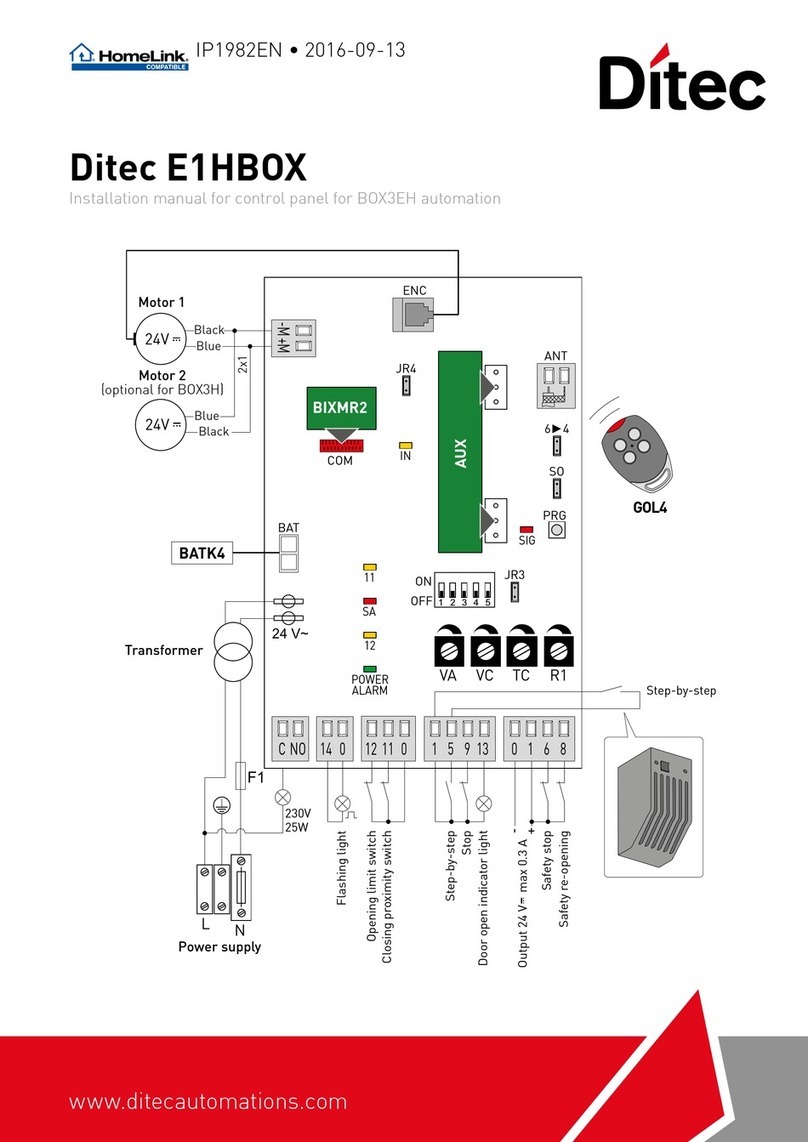
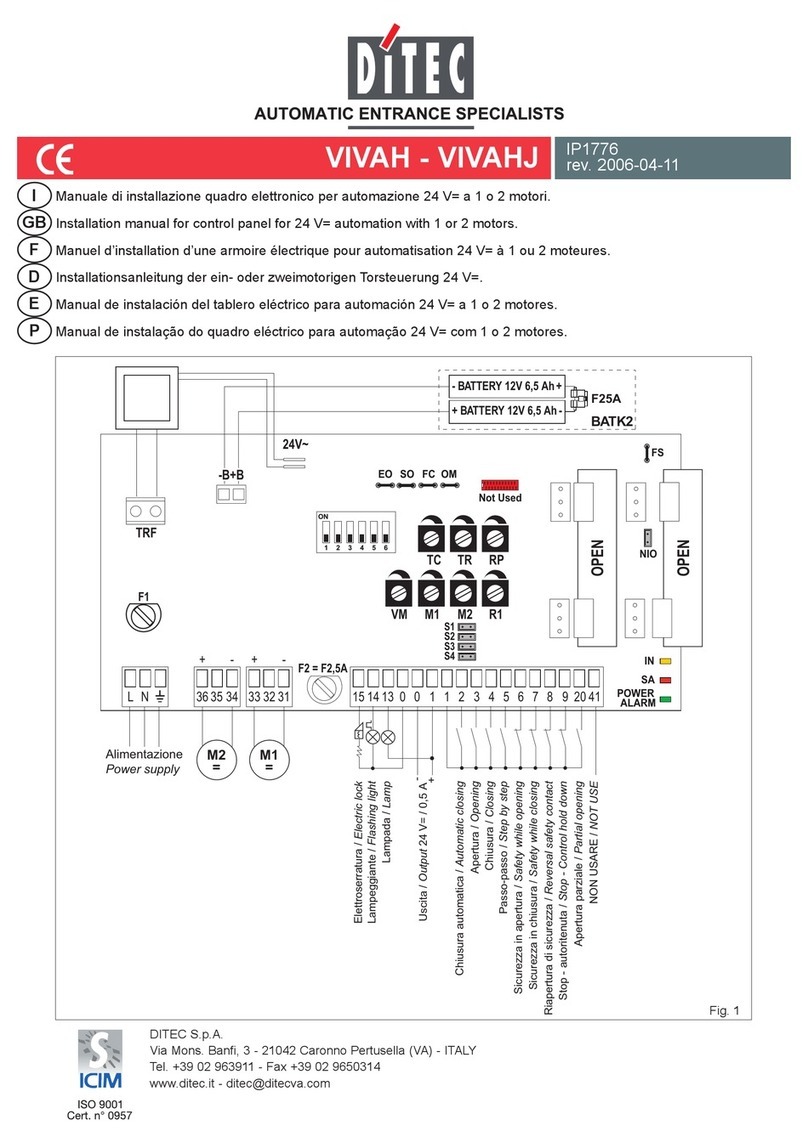
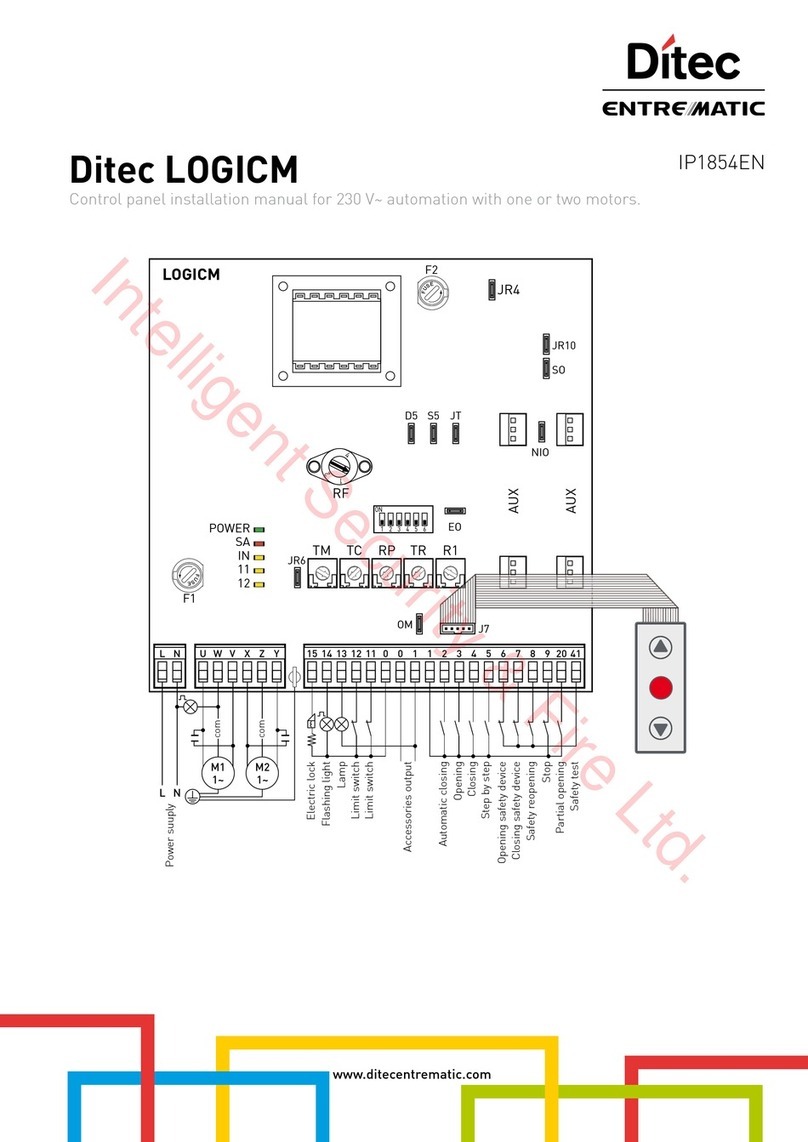
5.1 Set dip-switches and jumpers according to door types (with or without electric lock), arm type (articulated or siiding) and
automation types (with motor or spring closing).
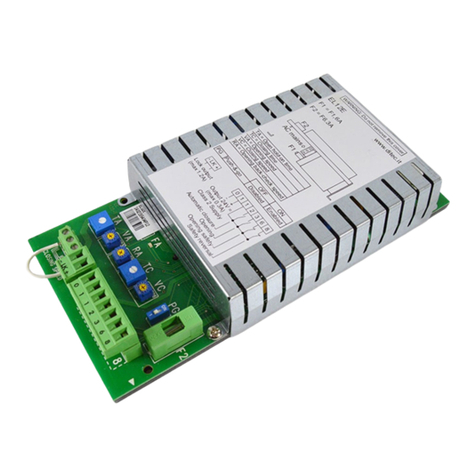
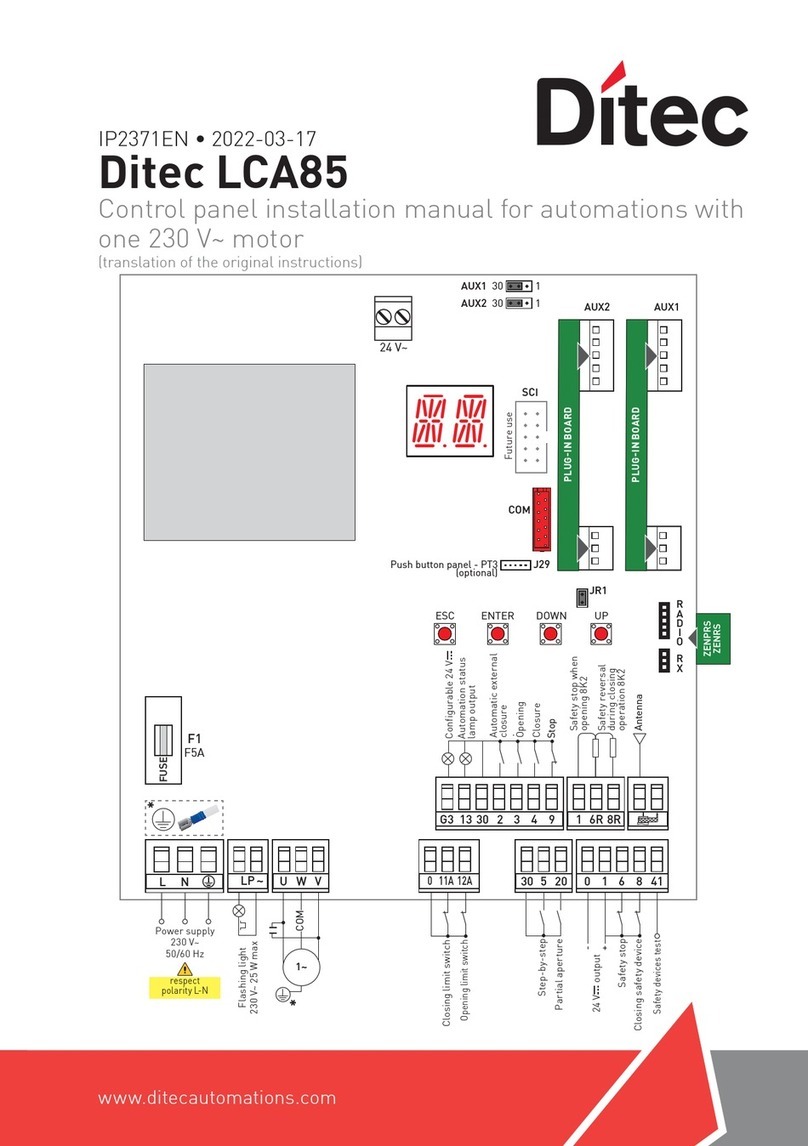
5.2 Set TC, VA, VC trimmers at minimum and RF at mid position.
5.3 Short circuit the safety devices (41-6, 41-8) and the stop (1.9).
5.4 (Only for WELS) Adjust desired spring closing speed by means of CLOSING SPEED LO-ME-HI jumper and HI-ADJ trimmer.
Adjust approaching speed by means of PROXIMITY LO jumper for doors without electric lock and by means of PROXIMITY
HI jumper for doors with electric lock.
5.5 Power and by means of controls 1-3 and 1-4 check that the automation is working property. Set the automation's speed by
means of the VA and VC trimmer.
Attention: upon each tuming on the control panel automatically POWER RESETs so as to permit the first opening and
closing to be made at low speed in order to leam the end-of-travel positions (acquisition phase).
5.6 Adjust thrust on obstacies and motor torque by means of RF trimmer, in order to guarantee proper and safe operation.
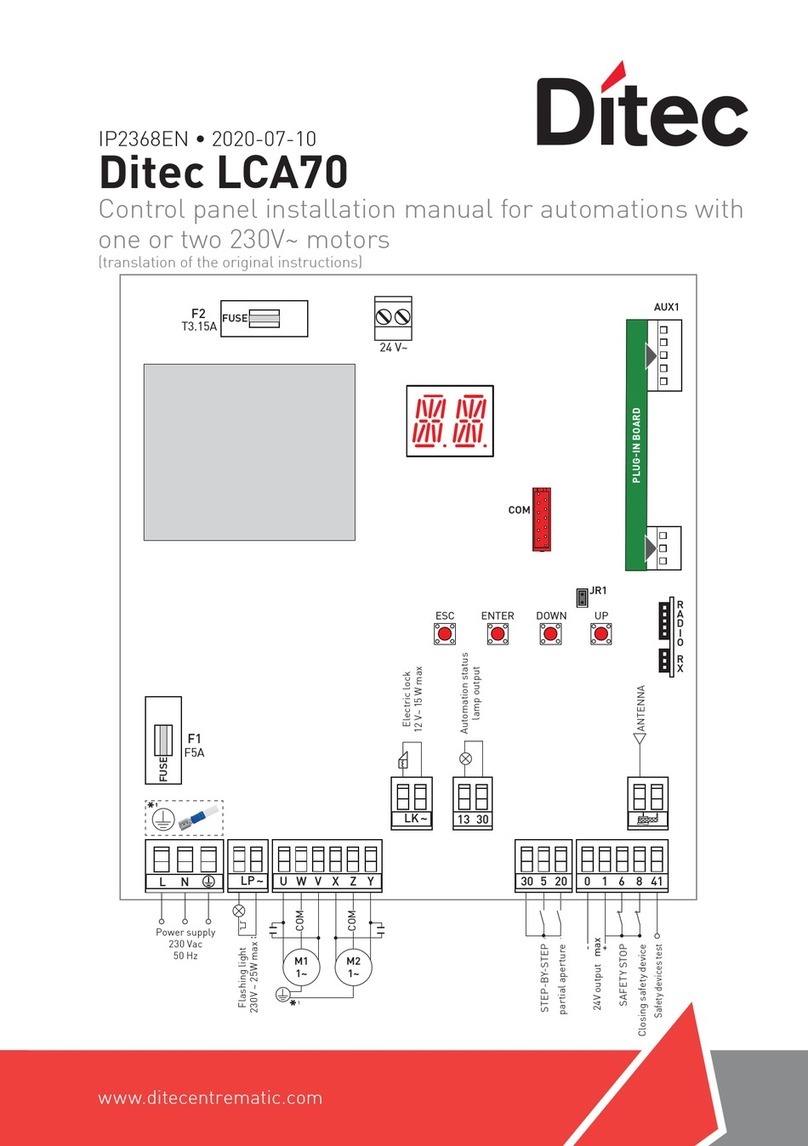
5.7 Make an estimate of the risks present and instail and connect ail the necessary safety devices (41-6, 41-8) to the electronic
control panel. Check for their efficiency.
5.8 Adjust automatic closing (enabled by 1-2 control or by COME-H-K function selector) by means of TC.
5.9 Connect any control devices and function selectors. Check for their efficiency.
5.10 If the automation meets an obstacle during closing stroke, it detects it and opens again. If the obstacle is detected twice,
this is considered to be the new stop position until it is removed.
/\ Attention: ensure that the manoeuvering force and the thrust between the door and the obstacle is lower than the values
set out by regulation DIN 18650-1.
6. TROUBLESHOOTING
Problem Possible Causes Remedy
The door does not open or clo- COME-H-K function selector with wrong set- Check and adjust COME-H-K function seiector
se or else it does not carry out ting. settings.
set functions. COME-H-K function selector not working. Replace COME-H-K function selector.
The door does not open or clo- Power failure. Make sure electric control panel is powered.
se. (POWER ALARM led on).
Accessories short circuit.
Disconnect accessories from terminals 0-1 (with
24 V= voltage) and connect them again one at
a time.
Burnt line fuse. Replace line fuse.
Safety devices are triggered. Check terminals 6 and 8 of the electronic control
(SA LED on). panel.
Make sure photoceils and safety devices are
clean and efficient.
Radars are not triggered (IN LED off). Make sure radars are working properiy.
The door is blocked by boils and locks. Make sure the wing can move freelv.
WELS with incorrect VC trimmer adjustment. Check the correct adjustment of the VC.
(POWER ALARM LED ftashing) Iisee chapter 2.3)
Incorrect J3 selting (ftashing SA LED)
Check the connections of the safeties as
illustra~
ted in paragraphs 2.1 and 2.2.
The door opens but does not Radars are triggered. Make sure the radar is not subject to vibrations,
close. (IN LED on).
nor carrying out false detections or detecting mo-
ving objects within its range of action.
Automatic closing does not work. Check 1-2 jumper and (if present) function se-
lector position.
External safeties are not trigge- Wrong connections between safety devices
Connect in series N.C. safety contacts and ramo-
red. and electronic control Danel. ve any jumper.
The door opens by itself. The radars are unstable or detect moving Make sure the radar is not subject to vibrations,
objects.
nor carrying out false detections or detecting mo-
ving objects within its range of action.
The door opens/closes for a Encoder not working. Replace encoder.
short interval than stops. (POWER ALARM led ftashinal.
Inverted motor wires. Check motor wires.
POWER ALARM led ftashing).
Some friction is present. Check manuaily that the wing can move freely.
Make sure there is no dirt or grit under the wing.
99 -IP1786
1A