Page 7 of 12
2.1 Safety precautions
Use proper safety precautions when using hazardous electrode materials and electrolytes.
Wear protective glasses and gloves to protect you against electrolyte that may accidentally
spill out during disassembly. Upon cell disassembly, dispose all materials properly. Metallic
lithium and some insertion compounds may decompose heavily in contact with water and
other solvents, and can cause fire.
Note: The assembly has to take place under the protective atmosphere in a glove box.
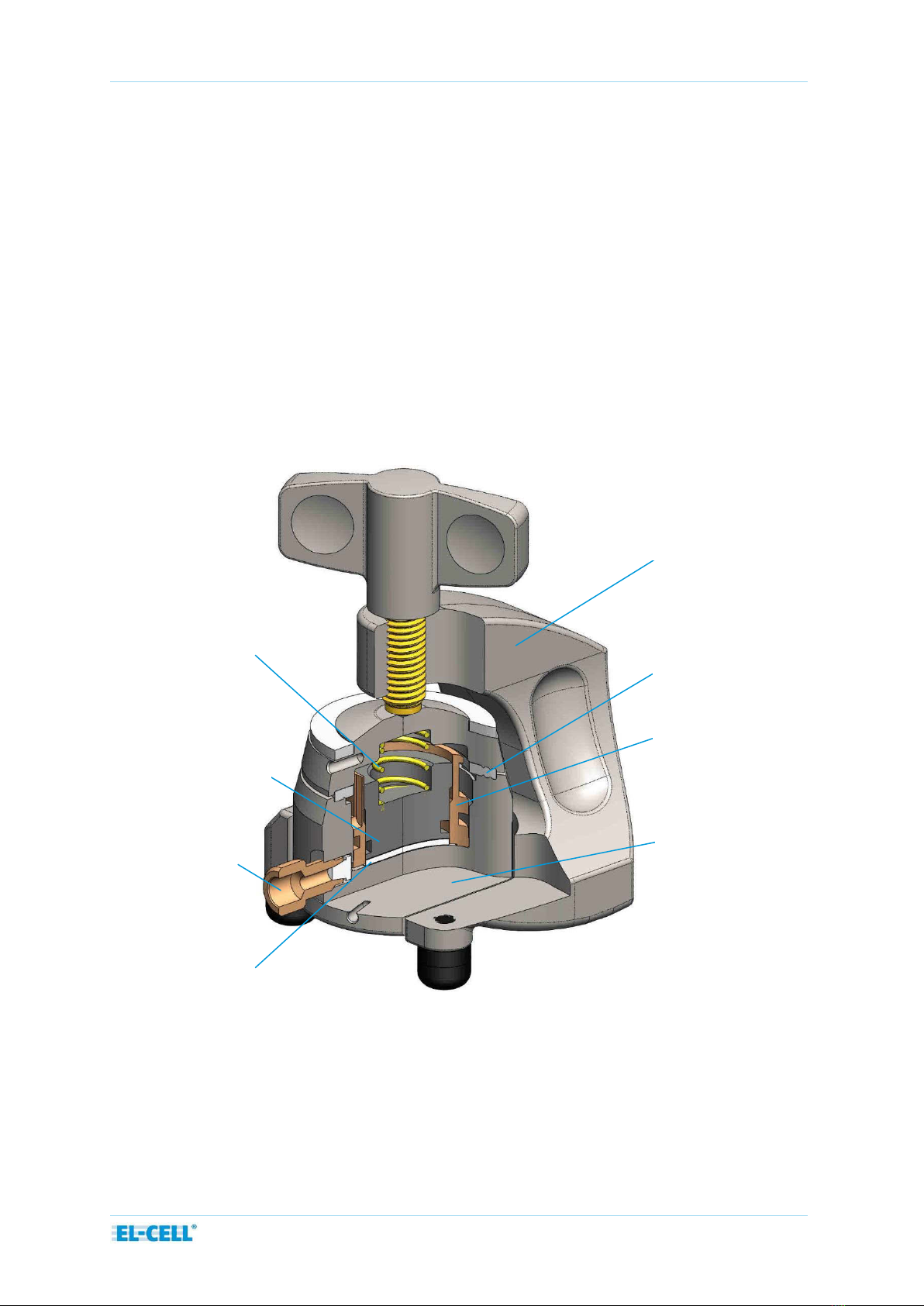
2.2 Assembly Steps for AAA mode
This assembly mode is recommended for half-cell tests against lithium metal. It is also suitable
for full cell tests. In the AAA mode the cell is assembled with a thick fiber cloth (fleece)
separator having the same 18 mm diameter as the two adjacent electrodes. The cell is filled
with the electrolyte by dropping a given volume of electrolyte directly onto the separator
(0.15 to 0.5 ml, depending on the separator and electrodes used). Only when applying the
spring load upon final cell closure, a defined amount of electrolyte is squeezed out of the
separator and soaks the two adjacent electrodes. The confinement of the cell stack by an
insulating sleeve ensures a homogeneous current distribution and thus makes this
configuration ideal for impedance measurements.
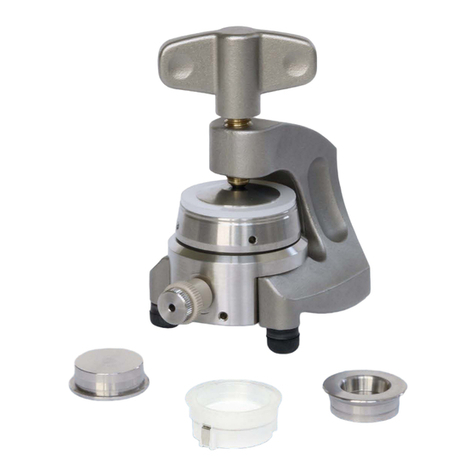
1. Close the side opening of the cell base with the provided PTFE-plug.
2. Insert the plunger into the sleeve and place the plunger/sleeve assembly onto the
workbench with the contact face of the plunger pointing upwards.
3. Place the working electrode (cathode) and the cloth separator into the assembly.
4. Dispense a defined amount of electrolyte onto the separator, and place the counter
electrode on top inside the sleeve.
5. Push the cell base over the assembly, press onto the plunger, and turn the cell around
into the upright position.
6. Mount the spring and the PE seal.
7. Attach the cell lid, insert the cell into the bracket, and tighten the wing nut.
Note: The adequate amount of electrolyte depends on the porosity and thickness of the
components used, and thus has to be determined in pre-tests. The amount must be smaller
than the absorption capacity of the separator in its uncompressed state. For the standard 1.5
mm thick glass fiber separator and standard Li-ion electrodes with <0.1mm thickness, an
electrolyte amount of 0.5 ml is appropriate.