manuals.online logo
Brands
  1. Home
  2. •
  3. Brands
  4. •
  5. ResMed
  6. •
  7. Medical Equipment
  8. •
  9. ResMed ApneaLink User manual

ResMed ApneaLink User manual

Other manuals for ApneaLink

8

Other ResMed Medical Equipment manuals

ResMed Swift FX User manual

ResMed

ResMed Swift FX User manual

ResMed S8 Compact System User manual

ResMed

ResMed S8 Compact System User manual

ResMed AirFit F20 User manual

ResMed

ResMed AirFit F20 User manual

ResMed VPAP ST Technical manual

ResMed

ResMed VPAP ST Technical manual

ResMed AirSense 10 User manual

ResMed

ResMed AirSense 10 User manual

ResMed AirFit N20 Classic User manual

ResMed

ResMed AirFit N20 Classic User manual

ResMed airsense 10 autoset User manual

ResMed

ResMed airsense 10 autoset User manual

ResMed AirStart 10 APAP User manual

ResMed

ResMed AirStart 10 APAP User manual

ResMed Astral 150 User manual

ResMed

ResMed Astral 150 User manual

ResMed Mirage Swift User manual

ResMed

ResMed Mirage Swift User manual

ResMed AirFit N30i User manual

ResMed

ResMed AirFit N30i User manual

ResMed S9 Oximeter Adapter User manual

ResMed

ResMed S9 Oximeter Adapter User manual

ResMed AirFit N10 User manual

ResMed

ResMed AirFit N10 User manual

ResMed AIRMINI User manual

ResMed

ResMed AIRMINI User manual

ResMed AirFit P10 User manual

ResMed

ResMed AirFit P10 User manual

ResMed CPAP User manual

ResMed

ResMed CPAP User manual

ResMed SwiftTM FX User manual

ResMed

ResMed SwiftTM FX User manual

ResMed S9 AutoSet CS-A Technical manual

ResMed

ResMed S9 AutoSet CS-A Technical manual

ResMed AirFit F10 User manual

ResMed

ResMed AirFit F10 User manual

ResMed AirFit P10 Assembly instructions

ResMed

ResMed AirFit P10 Assembly instructions

ResMed AirFit P10 User manual

ResMed

ResMed AirFit P10 User manual

ResMed AirSense S10 User manual

ResMed

ResMed AirSense S10 User manual

ResMed Chin Restraint User manual

ResMed

ResMed Chin Restraint User manual

ResMed Quattro FX NV User manual

ResMed

ResMed Quattro FX NV User manual

Popular Medical Equipment manuals by other brands

TekTone Tek-CARE160 Installation and operation manual

TekTone

TekTone Tek-CARE160 Installation and operation manual

NeuroMetrix Quell 2.0 user manual

NeuroMetrix

NeuroMetrix Quell 2.0 user manual

AMT XLR8 Quick reference guide

AMT

AMT XLR8 Quick reference guide

EDAN SONOTRAX Pro user manual

EDAN

EDAN SONOTRAX Pro user manual

Restorative Therapies RT300 Service guide

Restorative Therapies

Restorative Therapies RT300 Service guide

Gendex Expert DC installation manual

Gendex

Gendex Expert DC installation manual

Dexcowin ADX4000W user manual

Dexcowin

Dexcowin ADX4000W user manual

Libelium MySignals user manual

Libelium

Libelium MySignals user manual

Acelity V.A.C.ULTA 4 user manual

Acelity

Acelity V.A.C.ULTA 4 user manual

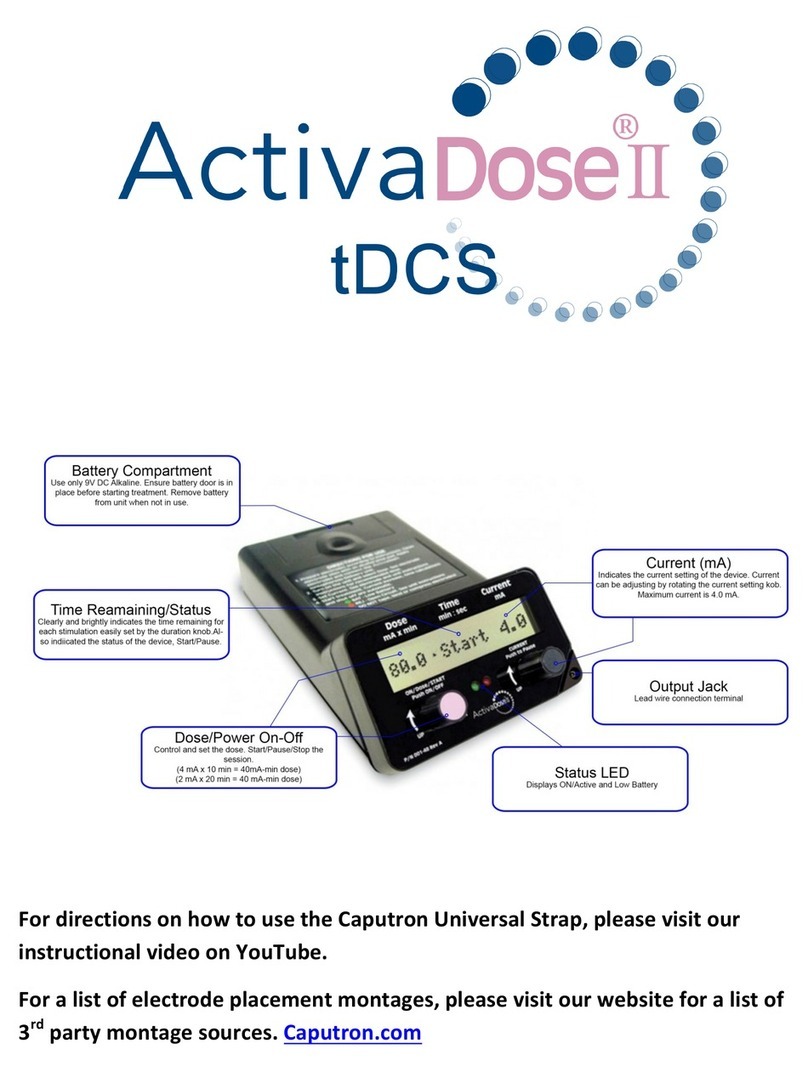
Caputron ActivaDose II tDCS quick start guide

Caputron

Caputron ActivaDose II tDCS quick start guide

Plinth 2000 93CDT Service manual

Plinth 2000

Plinth 2000 93CDT Service manual

GE SENOGRAPHE 800T Operator's manual

GE

GE SENOGRAPHE 800T Operator's manual

GE Definium 5000 Operator's manual

GE

GE Definium 5000 Operator's manual

Kanmed GE-1380 user manual

Kanmed

Kanmed GE-1380 user manual

Huntleigh FD1 Instructions for use

Huntleigh

Huntleigh FD1 Instructions for use

Stryker SPR Plus Operation manual

Stryker

Stryker SPR Plus Operation manual

Tobii Dynavox I-Series user manual

Tobii Dynavox

Tobii Dynavox I-Series user manual

S-Capepod Evac Cocoon Step-by-step guide

S-Capepod

S-Capepod Evac Cocoon Step-by-step guide

manuals.online logo
manuals.online logoBrands
  • About & Mission
  • Contact us
  • Privacy Policy
  • Terms and Conditions

Copyright 2025 Manuals.Online. All Rights Reserved.

Patient Instructions
English
ResMed.com
Intended Use
The ApneaLink Air device is indicated for use by Health Care Professionals (HCP),
where it may aid in the diagnosis of sleep disordered breathing for adult patients.
ApneaLink Air records the following data: patient respiratory nasal airflow, snoring,
blood oxygen saturation, pulse and respiratory effort during sleep. The device uses
these recordings to produce a report for the HCP that may aid in the diagnosis of
sleep disordered breathing or for further clinical investigation. The device is intended
for home and hospital use under the direction of a HCP.
Contraindications
• The ApneaLink Air system must not be used in the vicinity of an MRI device.
• Explosive Hazard: Do not use the ApneaLink Air system in an explosive
atmosphere or in the presence of flammable anesthetics or gases.
Getting started
Before fitting, lay out all the system components and read these instructions first.
Putting the device on the belt
1
Testcomplete
2
Testcomplete
3
1. Thread one end of the belt through the slots on the back of the device. Check
that the device is positioned as shown.
2. Flip the device over. Thread the end of the belt closest to the device through
one of the slots on the effort sensor (if used).
Stopping the test - check if test complete
Testcomplete
1
Testcomplete
2
Testcomplete
3
...3
...3
1. Press the power button for about three seconds.
2. Check that the test complete indicator light is lit and green. This means
the test is complete. If the test complete indicator light is red, replace the
batteries and repeat the test tomorrow night.
3. Press and hold the power button for about three seconds to turn off the
device.
Disassembling and returning the device
When the test is completed:
1. Remove the belt from your body.
2. Remove all the connectors from the device.
3. Screw protective caps on effort and nasal cannula connector.
4. Disconnect the finger sensor from the oximeter.
5. Remove the device from the belt.
6. Throw away the nasal cannula and the disposable finger sensor (see the
Equipment section on the first page).
7. Place everything else back in the bag and return it to your physician or
healthcare provider as requested.
Do not attempt to clean the device.
Note: The device does not need any servicing or maintenance before recording.
WARNING
Ensure that the ApneaLink Air system is assembled as shown and described
so as not to pose a strangulation risk.
CAUTION
•Do not blow into the nasal cannula or effort sensor connectors.
•To avoid irritation or allergic reactions, wear the belt and device over a
long-sleeved shirt.
•If you develop redness, irritation or a rash from the device or its
accessories, discontinue use and contact your healthcare provider or
physician. You may be having an allergic reaction.
•Do not set up the ApneaLink Air system while it is attached to a personal
computer via USB.
Electromagnetic compatibility
The ApneaLink Air complies with all applicable electromagnetic compatibility
requirements (EMC) according to IEC60601-1-2, for residential, commercial, and light
industry environments. Wireless communications equipment such as wireless home
network device, mobile phones, cordless telephones and their base stations, walkie-
talkies can affect the device and should be kept at least a distance d away from
the device. For example the distance d for a typical mobile phone with a maximum
output power of 2W would be 10’8” (3.3m).
For further details, see “Electromagnetic Emissions and Immunity” on
www.resmed.com on the Products page under Service & Support. If you do not
have internet access, please contact your ResMed representative.
Symbols
IP22
Protected against finger sized objects and against dripping water when
tilted up to 15 degrees from specified orientation.
Manufacturer: ResMed Germany Inc. Fraunhoferstr. 16 82152 Martinsried Germany. Distributed by:
ResMed Ltd 1 Elizabeth Macarthur Drive Bella Vista NSW 2153 Australia. ResMed Corp 9001 Spectrum
Center Boulevard San Diego CA 92123 USA. See www.resmed.com for other ResMed locations
worldwide. For patent information, see www.resmed.com/ip. ApneaLink is a trademark of ResMed R&D
Germany GmbH and registered in U.S. Patent and Trademark Office.
© 2014 ResMed Ltd. 228677/2 2014-07
228677 ApneaLink Patient Instructions TRI FOLD.indd 1-3 3/07/2014 8:33:49 AM

3. Fasten the tab to the belt.
Slide the device into a position that is close to the
effort sensor.
Connecting the accessories to the device
Model 3012
S/N
501392587
0123
NoninMedical. Inc. Patent # Re 33,643
www.resmed.com
R
Testcomplete
Testcomplete
1
Testcomplete
2
NONIN
3
4 5
1. Unscrew the protective cap and insert the connector end of the effort
sensor into the effort sensor connector on the device. Turn clockwise until
the connector is secure. Keep the protective caps for use when the test is
complete.
2. Unscrew the protective cap and insert the connector end of the nasal cannula
into the nasal cannula connector on the device. Turn clockwise until the
connector is secure.
3. Attach the oximeter finger sensor to the oximeter
4. Attach the belt clip to the oximeter.
5. Attach the oximeter to the oximeter connector on the device by pushing it on.
Fitting the belt
1
Testcomplete
23
1. Pull the belt around your body. Thread the end of the belt through the slot on
the effort sensor (if used) and fasten the tab to the belt. If you are not using the
effort sensor, attach the tab to the belt.
2. Check that the belt is secure and comfortable and that the device is positioned
over the centre of your chest.
3. If using an oximeter, slide the clip onto the belt. The clip should be worn on the
same side of your body as the oximeter finger sensor.
Fitting the cannula
1 2 3
1. Insert the prongs into your nostrils. Make sure the curved side is pointing
towards the back of your nose.
2. Loop the plastic tubing around your ears.
3. Pull the slider up towards your chin until the plastic tubing is secure and
comfortable.
Note: If the nasal cannula does not stay in your nose, use medical tape or adhesive
bandages on your cheeks to hold it in place.
Fitting the finger sensor (reusable)
To fit the finger sensor, slip the sensor over your finger.
Note: If the finger sensor is uncomfortable, you can move it to a different finger or
your other hand.
Fitting the finger sensor (Disposable)
3
12
45
1. Remove the backing from the sensor.
2. Place the sensor over the fourth finger on the non-dominant hand.
Line up the picture of the fingernail on the oximeter finger sensor with the
patient‘s fingernail.
3. Fold the tabs around the sides of the finger.
4. Fold the top flap under the finger and wrap it around the finger.
5. The sensor should be positioned as shown.
Note: If the oximeter finger sensor is uncomfortable, you can move it to a different
finger or the other hand.
Starting the test
R
3
Test complete
1
Testcomplete
2
...3
1. Press and hold the power button in the centre of the device for about three
seconds or until the light turns on.
2. Check that lights next to the accessories you are using are green. If any of
these lights are red and blinking, the accessories are not attached correctly.
3. Go to sleep as normal.
228677 ApneaLink Patient Instructions TRI FOLD.indd 4-6 3/07/2014 8:33:54 AM