manuals.online logo
Brands
  1. Home
  2. •
  3. Brands
  4. •
  5. Satel
  6. •
  7. Security Sensor
  8. •
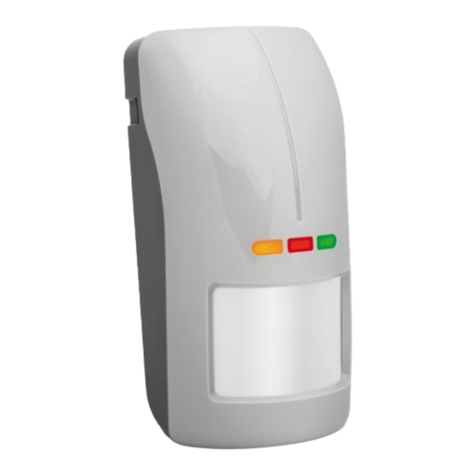
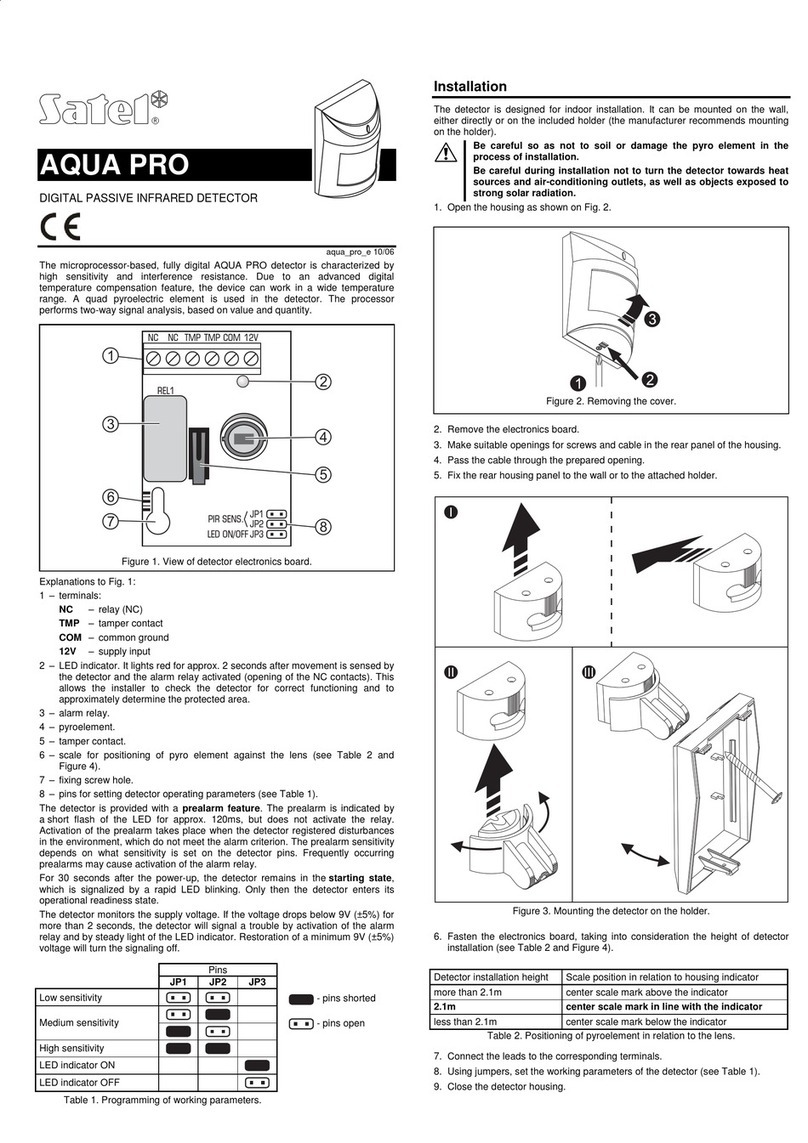
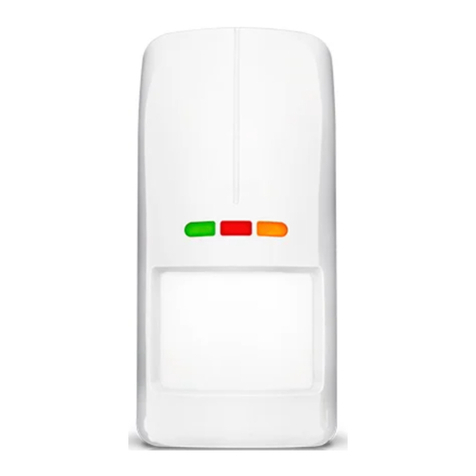
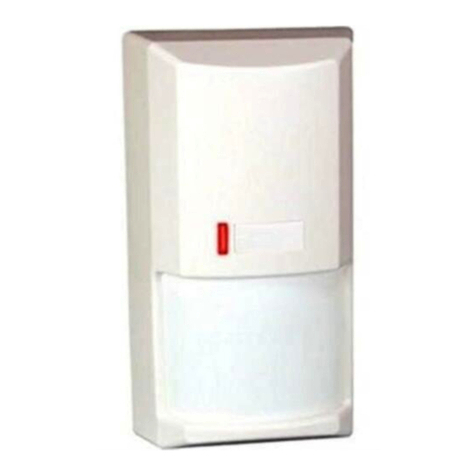
  9. Satel AQUA PRO User manual

Satel AQUA PRO User manual

Other Satel Security Sensor manuals

Satel ACTIVA-2 User manual

Satel

Satel ACTIVA-2 User manual

Satel INDIGO User manual

Satel

Satel INDIGO User manual

Satel SLIM-PIR-PET User manual

Satel

Satel SLIM-PIR-PET User manual

Satel GRAPHITE User manual

Satel

Satel GRAPHITE User manual

Satel PDB-100 User manual

Satel

Satel PDB-100 User manual

Satel MGD-300 User manual

Satel

Satel MGD-300 User manual

Satel APMD-250 User manual

Satel

Satel APMD-250 User manual

Satel micra MPD-300 User manual

Satel

Satel micra MPD-300 User manual

Satel OPAL User manual

Satel

Satel OPAL User manual

Satel SLIM-DUAL-PRO User manual

Satel

Satel SLIM-DUAL-PRO User manual

Satel AQUA RING User manual

Satel

Satel AQUA RING User manual

Satel abax 2 ADD-200 User manual

Satel

Satel abax 2 ADD-200 User manual

Satel AMD-103 User manual

Satel

Satel AMD-103 User manual

Satel XD-2 User manual

Satel

Satel XD-2 User manual

Satel OPAL Plus User manual

Satel

Satel OPAL Plus User manual

Satel AFD-100 User manual

Satel

Satel AFD-100 User manual

Satel SILVER User manual

Satel

Satel SILVER User manual

Satel FD-1 User manual

Satel

Satel FD-1 User manual

Satel AXD-200-DG User manual

Satel

Satel AXD-200-DG User manual

Satel SLIM-PIR-PRO User manual

Satel

Satel SLIM-PIR-PRO User manual

Satel abax 2 ACD-220 User manual

Satel

Satel abax 2 ACD-220 User manual

Satel AQUA S User manual

Satel

Satel AQUA S User manual

Satel VD-1 User manual

Satel

Satel VD-1 User manual

Satel AGD-100 User manual

Satel

Satel AGD-100 User manual

Popular Security Sensor manuals by other brands

THORLABS PDA10JT user guide

THORLABS

THORLABS PDA10JT user guide

Waeco UV-DETECT operating manual

Waeco

Waeco UV-DETECT operating manual

Intermatic IOS-DSIMF manual

Intermatic

Intermatic IOS-DSIMF manual

urmet domus 1083 manual

urmet domus

urmet domus 1083 manual

Siemens AZL66 Series manual

Siemens

Siemens AZL66 Series manual

BTI Profiline Multi Finder operating instructions

BTI

BTI Profiline Multi Finder operating instructions

Challenger SL01 instruction manual

Challenger

Challenger SL01 instruction manual

DMP Electronics 1122INT installation guide

DMP Electronics

DMP Electronics 1122INT installation guide

Rielta Ladoga MK-RK installation guide

Rielta

Rielta Ladoga MK-RK installation guide

Mirion Technologies ACCURAD PRD user manual

Mirion Technologies

Mirion Technologies ACCURAD PRD user manual

Bosch DS835 installation instructions

Bosch

Bosch DS835 installation instructions

Lamptime ST05C instructions

Lamptime

Lamptime ST05C instructions

Ubiquiti MFI-MSC quick start guide

Ubiquiti

Ubiquiti MFI-MSC quick start guide

Subsite 910R Support

Subsite

Subsite 910R Support

Aleph XC-1XTEU manual

Aleph

Aleph XC-1XTEU manual

Pima LARIS QUAD installation instructions

Pima

Pima LARIS QUAD installation instructions

Solinst 301 user guide

Solinst

Solinst 301 user guide

Pyronix KX10DTP quick start guide

Pyronix

Pyronix KX10DTP quick start guide

manuals.online logo
manuals.online logoBrands
  • About & Mission
  • Contact us
  • Privacy Policy
  • Terms and Conditions

Copyright 2025 Manuals.Online. All Rights Reserved.

®
AQUA PRO
DIGITAL PASSIVE INFRARED DETECTOR
aqua_pro_en 07/11
The microprocessor-based, fully digital AQUA PRO detector is characterized by
high sensitivity and interference resistance. Due to an advanced digital
temperature compensation feature, the device can work in a wide temperature
range. A quad pyroelectric sensor is used in the detector. The processor performs
two-way signal analysis, based on value and quantity.
The detector is provided with a prealarm feature. Prealarm is signaled by a short
flash of the LED after changes which do not meet the alarm criteria have been
detected within the coverage area. The prealarm sensitivity depends on what
sensitivity is set on the detector pins. Frequently occurring prealarms may cause
an alarm.
The detector requires to warm up for the first 30 seconds after applying power.
Warm-up is indicated by a rapid LED blinking.
The detector monitors the supply voltage. If the voltage drops below 9 V (±5%) for
more than 2 seconds, the detector will signal a trouble by activation of the alarm
relay and by steady light of the LED indicator. Restoration of a minimum 9 V
(±5%) voltage will turn the signaling off.
NC TMP COM 12V
NC TMP
JP1
JP2
JP3
PIR SENS.
LED ON/OFF
1
2
3
4
5
7
6
Fig. 1. View of detector electronics board.
Explanations to Fig. 1:
1 – terminals:
NC – relay (NC)
TMP – tamper contact
COM – common ground
12V – supply input
2 – red color LED to indicate:
– prealarm – short flash (approx. 120 ms);
– alarm – lit up for 2 seconds;
– warm-up – blinking rapidly;
– low supply voltage – red light.
3 – pyroelectric sensor.
4 – tamper contact.
5 – scale for positioning of pyroelectric sensor against the lens (see: Fig. 7).
6 – fixing screw hole.
7 – detector configuration pins:
PIR SENS - setting detector sensitivity (see Fig. 2);
LED ON/OFF - enabling/disabling the LED indicator. The LED indicator is
enabled when the pins are shorted.
A
JP1
JP2
PIR SENS.
D
JP1
JP2
PIR SENS.
C
JP1
JP2
PIR SENS.
B
JP1
JP2
PIR SENS.
Fig. 2. Setting the detector sensitivity
(A – low sensitivity, B and C – medium sensitivity, D – high sensitivity)
[– pins shorted; – pins open].
Lenses
An extra wide (EWA) lens is installed in the detector. Optionally, lenses with other
characteristics (coverage patterns) can be purchased and installed.
Name Description Range Angle of view
EWA extra wide angle 15 m 141.2°
LR long range with access
zone monitoring
30 m main beam – 3 m wide (at the
end of range)
VB vertical barrier 22.5 m 2.2 m wide (at the end of range)
Table 1. Available lenses.
0 10 m 20 m
10 m
10 m
0
0
2,4 m
Fig. 3. Coverage area of a detector with EWA type lens.
Note: The detector operating range should be selected to match the size of
space where the detector will be installed. The size of the space along the
main direction of detector positioning is not to be less than 1/3 the nominal
range of the detector. Improper selection of the lens may cause excessive
sensitivity and trigger false alarms.
Installation
1. Open the enclosure as shown on Fig. 4.
I II
Fig. 4. Removing the cover.
2. Remove the electronics board.
3. Make suitable openings for screws and cable in the enclosure base.
4. Pass the cable through the prepared opening.
5. Fix the enclosure base to the wall or to the attached bracket.
Note: For compliance with the requirements of EN50131-2-2, the detector shall
be installed directly on the mounting surface, without the additional bracket.

Start-up
A B
C D
1. Switch the
pins are sh
detector power on. The LED will start blinking (if the LED ON/OFF
orted).
2. When the detector is ready to work (the LED will stop blinking), carry out the
detector range test, i.e. check that movement within the supervised area will
activate the alarm relay and lighting of the LED.
3. If necessary, change the detector sensitivity (pins PIR SENS.).
Specifications
Fig. 5. Ways of installing the detector.
Supply voltage..............
Standby current consum
................................................................... 12 V DC ±15%
ption ........................................................................10 mA
Maximum current consumption......................................................................12 mA
I II
Relay contacts rating (resistive load) ............................................ 40 mA / 16 V DC
Alarm signaling time ............................................................................................ 2s
Detectable speed ................................................................................... 0.3...3 m/s
Security grade according to EN50131-2-2.................................................. Grade 2
Environmental class according to EN50130-5 .......................................................II
Operating temperature range ...............................................................-30...+55 °C
Standards complied with ........ EN50131-1, EN50131-2-2, EN50130-4, EN50130-5
Dimensions....................................................................................63 x 96 x 49 mm
Recommended installation height................................................................... 2.4 m
Weight .............................................................................................................. 91 g
Fig. 6. Mounting the de
6. Fasten the elect height of detector
installation (see: Fig.
tector on bracket.
ronics board, taking into consideration the
7).
h=2.4 m
h>2.4 m
B
2.4 m
A
2.4 m
h<2.4 m
C
2.4 m
D
2.4 m
2.4 m
The declaration of conformity may be consulted at www.satel.eu/ce
SATEL sp. z o.o.
ul. Schuberta 79
tel.
in l
80-172 Gdańsk
POLAND
+ 48 58 320 94 00
[email protected]
Fig. 7. Effect of the height of installation on the detector coverage area and the
way of positioning the electronics board to optimize the area. Depending on e
h
7. Connect the wires to the corres als.
Using jumpers, set the working parameters of the detector.
th
mounting height, the medium scale line should be: aligned with the mark on the
enclosure (installation at a height of 2.4 m), situated above the mark (installation
igher than 2.4 m – example B) or below the mark (installation lower than 2.4 m –
example D).
ponding termin
www.satel.pl
8.
9. Close the detector enclosure.