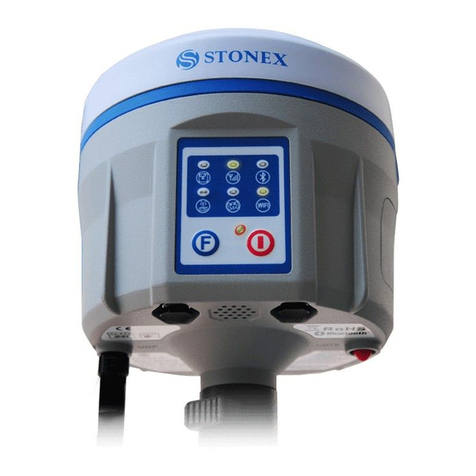
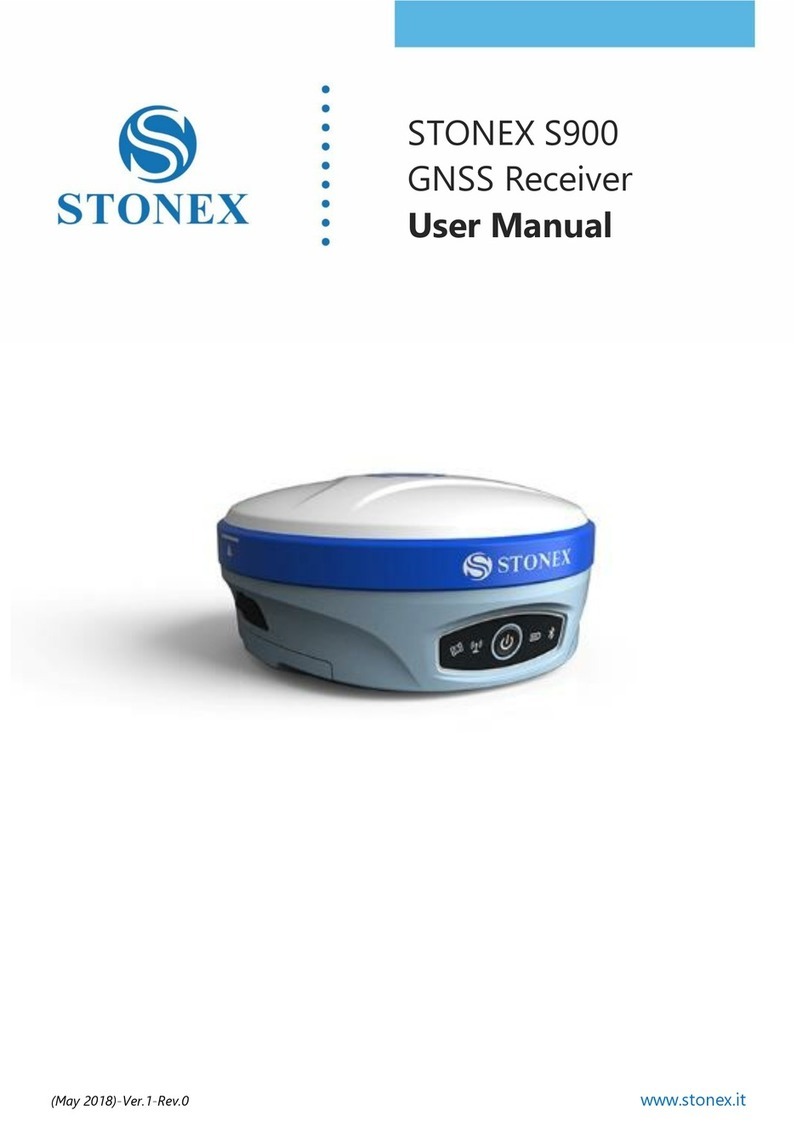
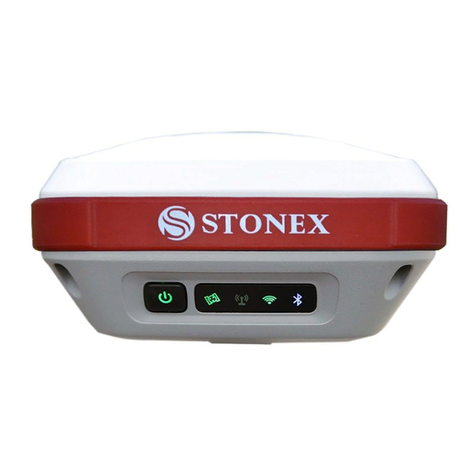
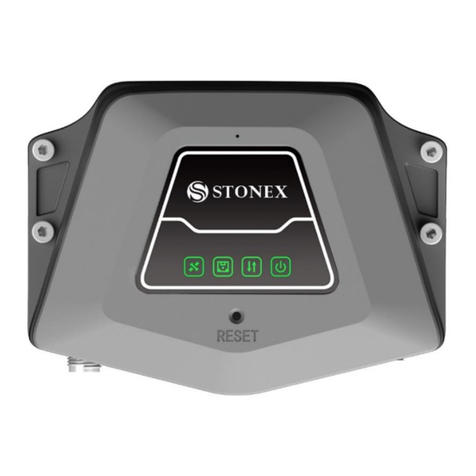
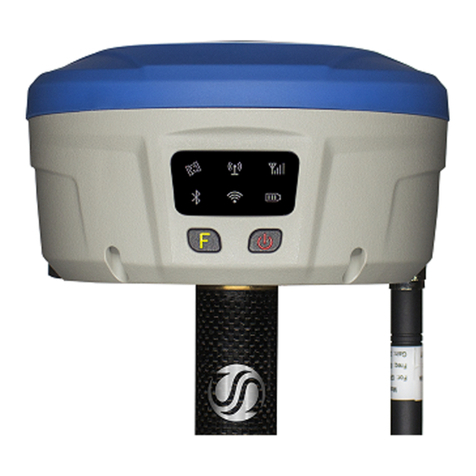
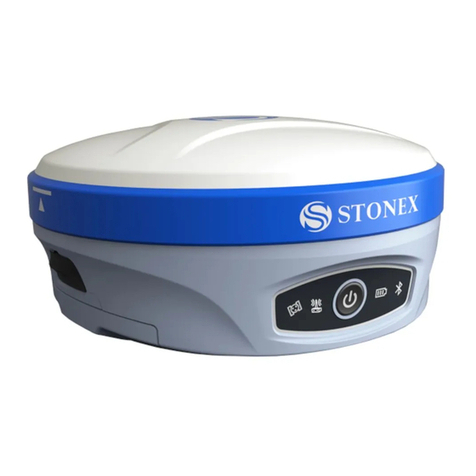
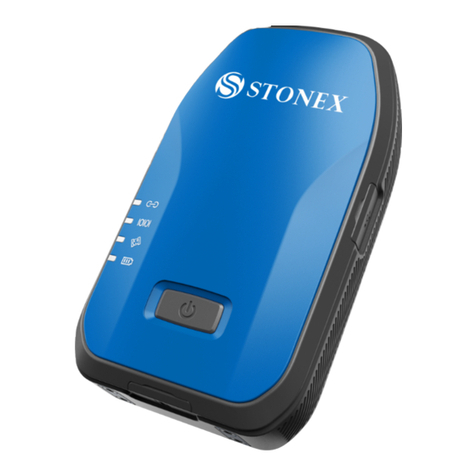
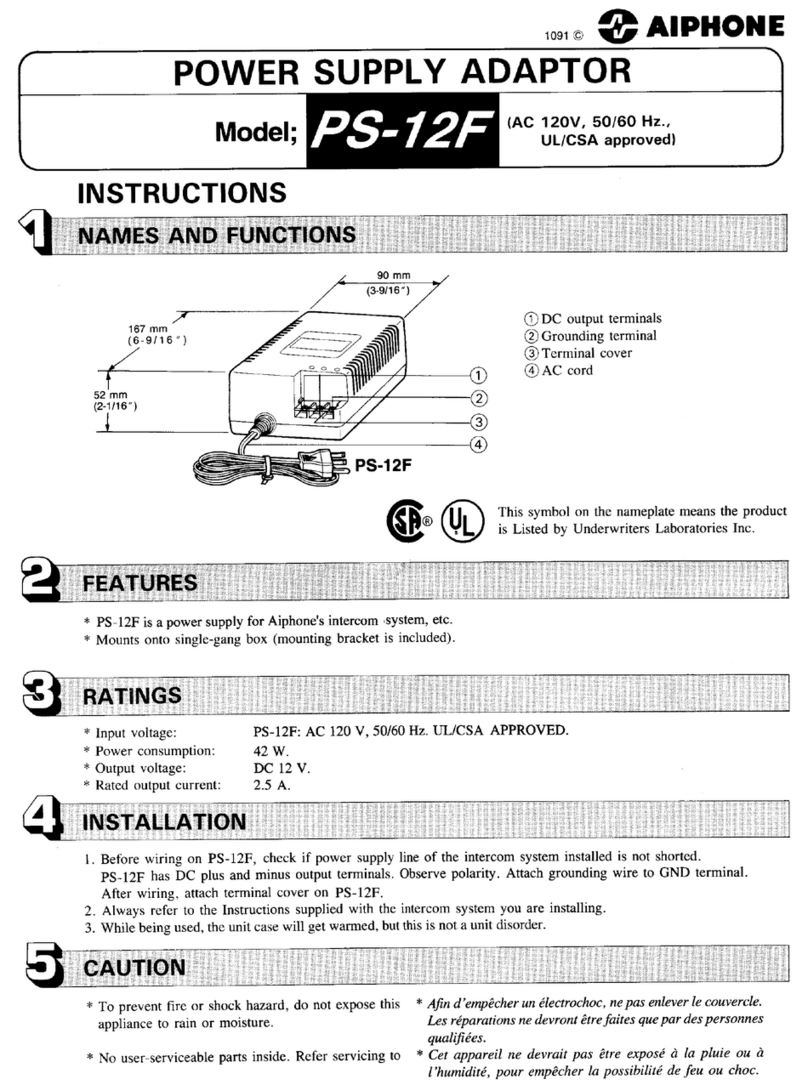
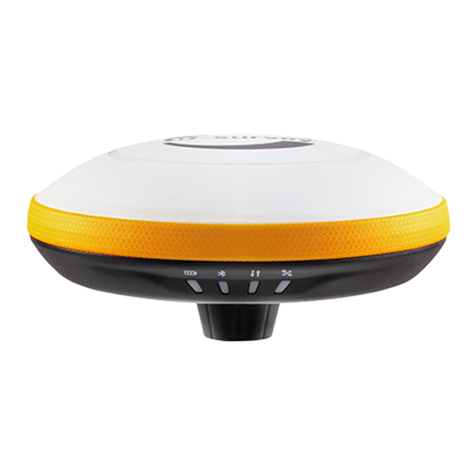
STONEX S10A User manual

RC/GQ (06/04/2017) -Ver.1
STONEX S10A
GNSS Receiver
User Manual
www.stonexpositioning.com

Stonex S10A GNSS Receiver –User Manual 1
Contents
1. Introduction to Stonex S10A GNSS......................................................................................... 2
2. S10A panel description................................................................................................................. 3
2.1. S10A smart panel.................................................................................................................... 3
2.2. Communications & antennas ports.................................................................................. 7
2.3. The back of the receiver....................................................................................................... 8
3. S10A standard accessories .......................................................................................................... 9
3.1. Power supply............................................................................................................................ 9
3.2. The antennas..........................................................................................................................10
3.3. Cables.......................................................................................................................................11
3.4. Other accessories..................................................................................................................11
3.5. Controller STONEX S4C/H .................................................................................................14
4. S10A Operations............................................................................................................................15
4.1. The installation of base and rover...................................................................................15
4.2. Working mode settings......................................................................................................16
4.3. How to download static data ...........................................................................................18
5. STONEX® Web UI Applications..............................................................................................20
5.1. How to connect to WebUI.................................................................................................20
5.2. Working modes and device configuration...................................................................25
5.3. Rover mode............................................................................................................................27
5.3.1. Option UHF.......................................................................................................... 27
5.3.2. Option Network.................................................................................................. 28
5.3.3. Option “External”................................................................................................29
5.4. Base Mode..............................................................................................................................30
5.4.1. Option UHF.......................................................................................................... 30
5.4.2. Option Network.................................................................................................. 31
5.4.3. Option External”.................................................................................................. 32
5.5. Device configuration ...........................................................................................................32
5.6 NMEA Settings .......................................................................................................................33
6. Appendix...........................................................................................................................................34
Appendix 1: STONEX S10A/S10AN electronic bubble and tilt sensor Calibration
procedure........................................................................................................................................34
6.1.1 E-bubble calibration ...........................................................................................38
6.1.2 Azimuth calibration............................................................................................. 38
6.1.3 Declination (compass) calibration.................................................................... 40
Appendix 2: Default Radio Settings........................................................................................44
Appendix 3: Frequently Asked Questions.............................................................................45
Appendix 4: Technical Specifications .....................................................................................46
Appendix 5: Copyrights, warranty and environmental recycling ..................................47
Appendix 6: Safety Recommendations..................................................................................54

Stonex S10A GNSS Receiver –User Manual 2
1. Introduction to Stonex S10A GNSS
STONEX S10A GNSS introduces revolutionary changes to the technique of
surveying.
Designed with the collaboration of professional Surveyors and technical
engineers teams, Stonex S10A GNSS RTK technology gives the user the
maximum possible reliability in every kind of environment.
Compared with the previous generation GNSS receivers, the new smart
Stonex S10A is introducing innovation in technology, a charming appearance
design and solid magnesium alloy fuselage, incredibly small and light –less
than 2Kg included the battery, resistance to impact and shock absorption
function, good electromagnetic shielding and upscale appearance.
Equipped with a new high accuracy integrated antenna, Stonex S10A fully
supports Beidou (Compass), GPS, GLONASS, GALILEO,SBAS (WAAS, EGNOS,
QZSS) and Atlas signals: no troubles or extra costs for new constellations
hardware upgrades.
One new features inside S10A is Atlas reception : Atlas is a differential
corrections systems broadcasted on L-Band, allowing increase in position
accuracy in area not covered by conventional Cors working under Ntrip
Technology ( lack of reference stations, lack of GPRS signals, etc ) .Atlas is
broadcasted by satellite systems ,so the reception is nearly ensured all over
the world . Atlas uses similar technology compared to SBAS, but providing
better positioning accuracy.
The integrated TX/RX UHF radio modem supports the main standard
protocols and allows Stonex S10A to be compatible with most of the existing
GPS receiver.
Stonex S10A is equipped with magnetic sensing system that allows to collect
points quickly and with high precision, even close to walls and buildings
corners.
Even if you have used other GPS or GNSS products before, we recommend
that you spend some time reading this manual to learn about the special
features of this product.

Stonex S10A GNSS Receiver –User Manual 3
If you are not familiar with GNSS technology,
we suggest you read a specific book in order
to understand in a best way the contents of
this manual. Any way you can ask for any
technical support by sending an email to our
local dealer.
2. S10A panel description
STONEX S10A is a light 14 x 14 cm GNSS unit; It is equipped with a high
accuracy triple frequency receiving antenna, Bluetooth© and Wi-Fi, UHF
transceiver radio modem (option).
The unit is divided into three parts: the upper cap, the rubber loop and the
main body. The upper cap protects the integrated GNSS antenna, the rubber
loop has the function of softening possible shocks or falls. In the front of the
main body.
On the front panel there are 2 keys and 7 indicators, on the back there are
the battery house, SIM slot, SD slot and reset key.
2.1. S10A smart panel
From the smart panel is possible to check at any time the status of the S10A.
The following figure shows it and the meaning of the leds.
Fig. 2.1 - S10 GNSS: the front panel

Stonex S10A GNSS Receiver –User Manual 4
1: STATIC led (green):
It switches on when the static mode is selected;
it starts to blink when the receiver is recording
data, with the same frequency of the sample rate.
2: INTERNAL RADIO led (green):
This led is green when UHF radio is selected as
UHF data link. It blinks when transmitting data in
base mode or receiving data in rover mode. The
led is red if the current data link is external.
Fig. 2.2 - S10 smart panel
Fig. 2.3 - S10 static led
Fig 2.4 - S10 internal radio led

Stonex S10A GNSS Receiver –User Manual 5
3: EXTERNAL DATA LINK led (red)
This led is red when external data link is selected
as External data link. It starts to blink when there
is data transfer ongoing.
4: GSM/WCDMA Network led (green):
The led is on when the network module is selected
as RTK data link. It starts to blink when receiving and
transforming data. (download in rover mode and
upload in base mode).
5: BLUETOOTH led (blue):
Once S10A is connected with the controller this led
will switch on.
Fig. 2.6 - S10 Network led
Fig 2.7 - S10 Bluetooth led
Fig 2.5 - S10 External radio led

Stonex S10A GNSS Receiver –User Manual 6
6: SATELLITE led (green):
The led blinks and shows the amount of locked
satellites. It starts to blink every 30 seconds for a
number of times equal to the number of locked
satellites.
7: WiFi Led (green)
WiFi is turned on when the led turns green.
7: POWER led (green and red):
Power led shows 3 different status:
1. Green: power supply in good condition.
2. Red: low power (below 20%).
3. Red blinking and beeping: very low power
(below 10%).
When the status #2 is shown (red) about 1 working hour is left.
External power and internal battery share same power light.
When external power is used, the led indicates external power level.
When the power is below 10%, the red led will flash according to
sampling interval (default is 1 seconds) and you also hear three beep
every 60s.
Fig. 2.9 - WiFi Led
Fig. 2.10 - S10 power led
Fig. 2.8 - S10 satellite led

Stonex S10A GNSS Receiver –User Manual 7
2.2. Communications & antennas ports
The S10A communications ports are shown in the following figures 2.11 and
2.12: the left port (5-pins LEMO) is used for external power supply and
external radio, the right port (7-pins LEMO) is used for data transferring
between receiver and computer or between receiver and the Controller.
Figure 2.13 and 2.14 show the UHF radio port and the GPRS antenna port.
Fig. 2.11 - 5-pins LEMO port Fig. 2.12 - 7-pins LEMO port
Fig. 2.13 - UHF antenna port Fig 2.14 - GPRS antenna port

Stonex S10A GNSS Receiver –User Manual 8
2.3. The back of the receiver
Fig. 2.15 - Battery installation Fig. 2.16 - Release battery
Battery installation: a quick assembly and disassembly lithium-ion battery is
provided with the S10A.
To pull out the battery to the house, slide the battery bail to the left, as it is
shown in the Figure 2.14.
SIM card and SD card slots: Follow the figure to install SIM card
and SD card in the slot.
Reset key: Press the reset key to restart S10A receiver as the following figure
shows.
SIM card slot
Reset button
SD card slot
Fig. 2.15 –SIM and SD Slots and reset button

Stonex S10A GNSS Receiver –User Manual 9
3. S10A standard accessories
3.1. Power supply
Batteries (P/N 30-350170)
The standard configuration contains two batteries with S/N, a slot for
charging the batteries (the battery charger) and one adaptor. The batteries
are “Lithium-Ion” battery (11.1V-3400mAH; 37.7Wh), they features a very
high energy-to-weight ratio respect to Ni-Cd or NiMh batteries, no memory
effect and slow self-discharge when it is not used.
Fig. 3.1 - Lithium-Ion battery
Charger + Adapter (P/N 30-350171 + 30-350072)
The charger can be used for both batteries simultaneously. The lights of the
charger shows if the battery is being charged (red light FULL) or if it is
already charged (green light FULL). Red light POWER shows if the charger is
powered on and there is also a light which turns on in case of too high
temperature (red light TEMP).
Fig. 3.2 - S10A charger and adaptor
Table of contents
Other STONEX Receiver manuals