TD‑5100 ECA Monitor INTRODUCTION
PN 105769
Rev D
TD-5100 ECA Monitor
User Manual
1‑5
The International Maritime Organization (IMO) has set limits for the online monitoring of
phenanthrene, based on studies to date, which have shown no negative inuences of EGCS
wash water on port environments and that phenanthrene is the most prevalent of the 16 US EPA
PAHs to be found in the wash water systems onboard. The PAH concentration must be reported
in units of phenanthrene equivalents (PAHphe). A PAHphe is the uorescence emitted by 1 µg/L
of phenanthrene. A waste water sample has a PAHphe concentration of 1 µg/L when it has a
uorescence response that is equal to the uorescence response of 1 µg/L of phenanthrene.
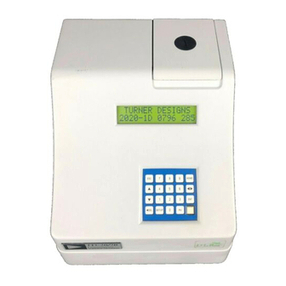
The TD‑5100 ECA is designed to comply with these regulations. Additionally, the TD‑5100 ECA is
factory calibrated and offers:
1. High selectivity, by “targeted PAH” optical tuning, minimizing chemical interferences and false
alarms due to sample turbidity.
2. Low maintenance due to the ow-cell and monitor design, which has no moving parts.
3. An ultrasonic ow cell cleaning system for minimal maintenance.
4. Three 4–20 mA outputs for external monitoring of PAHphe, turbidity, and water temperature.
1.4.1 THEORY OF OPERATION
Fluorometry, as described in the following section, is used to measure the PAHphe concentration.
Fluorescence
Fluorescence occurs when a molecule—in this case a hydrocarbon molecule—relaxes to its ground
state after being electronically excited. Fluorescent hydrocarbons absorb light—excite—at one
wavelength and emit light—relax—at a longer (less energetic) wavelength. The emitted light is
ltered and translated to a voltage response which corresponds to the concentration of uorescent
hydrocarbons in the sample.
Fluorometers contain ve important components:
1. Light Source
2. Excitation Filter
3. Sample Cell
4. Emission Filter
5. Light Detector
The TD‑5100 ECA electronics and a highly sensitive light detector allow hydrocarbons to be detected in
the parts‑per‑billion (ppb), or micrograms per liter (μg/L), range.
1. Light Source
The TD‑5100 ECA light source emits photons over a wide range of wavelengths.
2. Excitation Filter
The excitation lter narrows the range of wavelengths emitted by the light source. Turner Designs
Hydrocarbon Instruments selects the excitation lter to maximize “targeted hydrocarbon” response
and meet the user required detection range while minimizing the impact of chemical interferences and
sample turbidity.
3. Sample Cell
The sample cell is the portion of the ow-cell where the water sample is exposed to the light transmitted
by the excitation lter.