4
1 For your safety
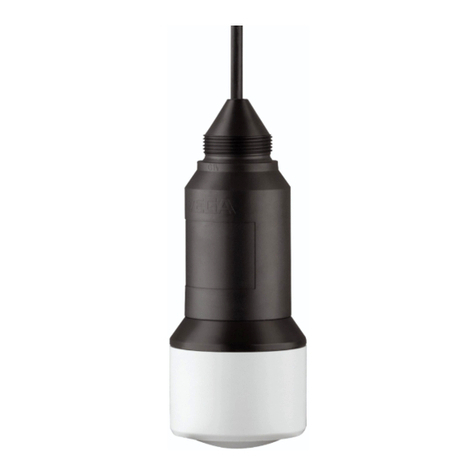
VEGAPULS 65 • 4 … 20 mA/HART - four-wire
51885-EN-160621
1.6 CE conformity
ThedevicefullsthelegalrequirementsoftheapplicableECguide-
lines.ByaxingtheCEmarking,weconrmsuccessfultestingofthe
product.
YoucanndtheCECerticateofConformityinthedownloadsection
of our homepage.
Electromagnetic compatibility
The instruments are designed for use in an industrial environment.
Nevertheless, electromagnetic interference from electrical conductors
and radiated emissions must be taken into account, as is usual with a
class A instrument according to EN 61326-1. If the instrument is used
inadierentenvironment,itselectromagneticcompatibilitywithother
devices must be ensured by suitable measures.
1.7 FulllmentofNAMURrecommendations
NAMURistheautomationtechnologyuserassociationintheprocess
industryinGermany.ThepublishedNAMURrecommendationsare
acceptedasthestandardineldinstrumentation.
ThedevicefullstherequirementsofthefollowingNAMURrecom-
mendations:
• NE 21 – Electromagnetic compatibility of equipment
• NE 43 – Signal level for malfunction information from measuring
transducers
• NE53–Compatibilityofelddevicesanddisplay/adjustment
components
For further information see www.namur.de.
1.8 FCC and IC conformity (only for USA/Canada)
VEGAPULS 65 is FCC and IC approved:
• FCC ID: O6QPULS6566
• IC: 3892A-PS6566
ModicationsnotexpresslyapprovedbyVEGAwillleadtoexpiryof
the operating licence according to FCC.
VEGAPULS 65 is in conformity with part 15 of the FCC regulations.
Take note of the respective operating regulations:
• This device may not cause interference, and
• The device must be resistant to interference signals, including
such that may cause undesired operating states of the device
The instrument was tested and meets the limit values for a digital
instrument of class B, according to part 15 of the FCC regulations.
Thelimitvaluesarepredenedtoensureprotectionagainstinterfer-
ing emissions during operation in industrial environments.
The instrument can generate, use and emit high frequency energy
and can generate interfering emissions if not used as described in the
operator's manual. Because interfering emissions have to be reck-
oned with when the instrument is used in residential areas, the user
must make sure necessary countermeasures are implemented.