88
OPERATING INSTRUCTIONS
GB
PRODUCT CHARACTERISTICS
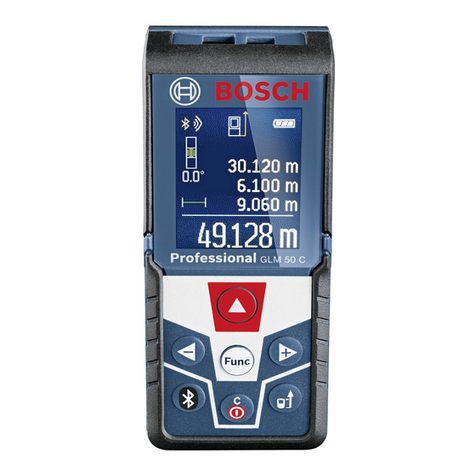
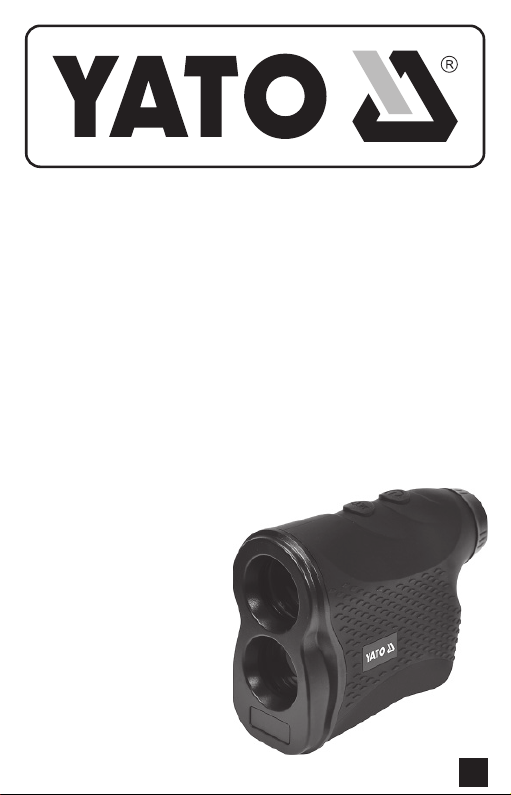
A laser rangefinder is an optical instrument which allows you to measure the distance, height and
speed of an object within the measuring range. Measurement is performed by means of a laser
beam with a wavelength outside the visible range. The instrument is equipped with a telescope
with a display, which allows for easy and quick measurement. Thanks to its battery power supply
and low weight, the rangefinder is perfect for tourists and athletes. Before using the instrument,
read the entire manual and follow its instructions. Keep this manual for later reference.
CAUTION! This rangefinder is not a measuring instrument within the meaning of the Trade
Metrology Act.
ACCESSORIES
The product is supplied without batteries. A cover is supplied with the rangefinder.
GENERAL INSTRUCTIONS
The laser beam used in the device has a wavelength outside the range visible to the human
eye, but you should never point the laser beam emitter towards people and animals. Do not
look at the laser beam emitter. The laser is class two and emits a beam of the wavelength and
power specified in the technical data table. Such a beam does not pose a threat, but aiming it
directing at the eyeball may cause eye damage. Do not try to disassemble the device yourself,
as it could expose you to laser radiation. Do not modify the device, especially the laser system.
Do not use the device in an environment where the ambient temperature is outside the operat-
ing range. If the instrument is stored in a temperature beyond the operating range, wait until the
instrument within the operating range, before using it. The product is not resistant to water and
dust penetration. Never immerse the product in water or any other liquid. Do not place the de-
vice with other tools in the toolbox. Impacts can damage the rangefinder. Transport the device
in the supplied case. Remove the battery from the device, if it is not used for a longer period of
time. Do not store the rangefinder at temperatures above 50OC, as this can damage the LCD
screen. Use a soft, clean, slightly damp cloth to clean the device. Avoid touching the lenses of
the telescope and the laser emitter with your fingers. The laser beam must reach its target, then
reflect and return to the device. As a result, the measurement conditions are subject to limita-
tions. Too bright light at the measuring point or too reflective a surface, e.g. glass, can make
measurement difficult or impossible. In this case, change the measurement conditions or select
the appropriate measurement method. Pay attention to the environment during measurement
with the telescope held close to the eye. Focusing on a point in the distance may cause the
danger near the user to go unnoticed. Do not move around with the telescope held close to the
eye, as this could result in a fall and serious injury. Never point the telescope and the emitter
towards the sun, as this can damage the eyesight and the device.
RANGEFINDER OPERATION
Installing and replacing batteries
The battery compartment is located on the bottom of the device. Open the battery compart-
ment cover and install two batteries. Pay attention to the correct polarity of the batteries. After
installing the batteries, close the battery compartment cover. Ni-Mh batteries can also be used
to power the product, but be aware of the shorter operating time and lower efficiency at low
temperatures. Always replace batteries in pairs. It is recommended to use alkaline batteries. If
the low battery symbol appears on the display, the batteries must be replaced.
Starting and stopping the product
Pressing the on/offswitch shortly will start the product. The viewfinder and the distance meas-