2 3
Instructions for Use
Changing Frequencies Using
the Tunable Diaphragm
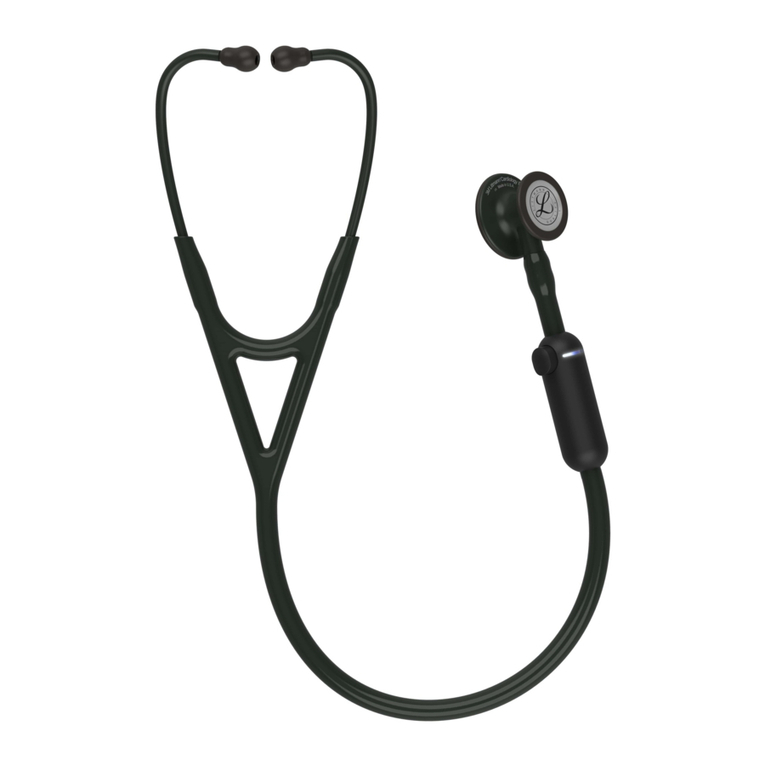
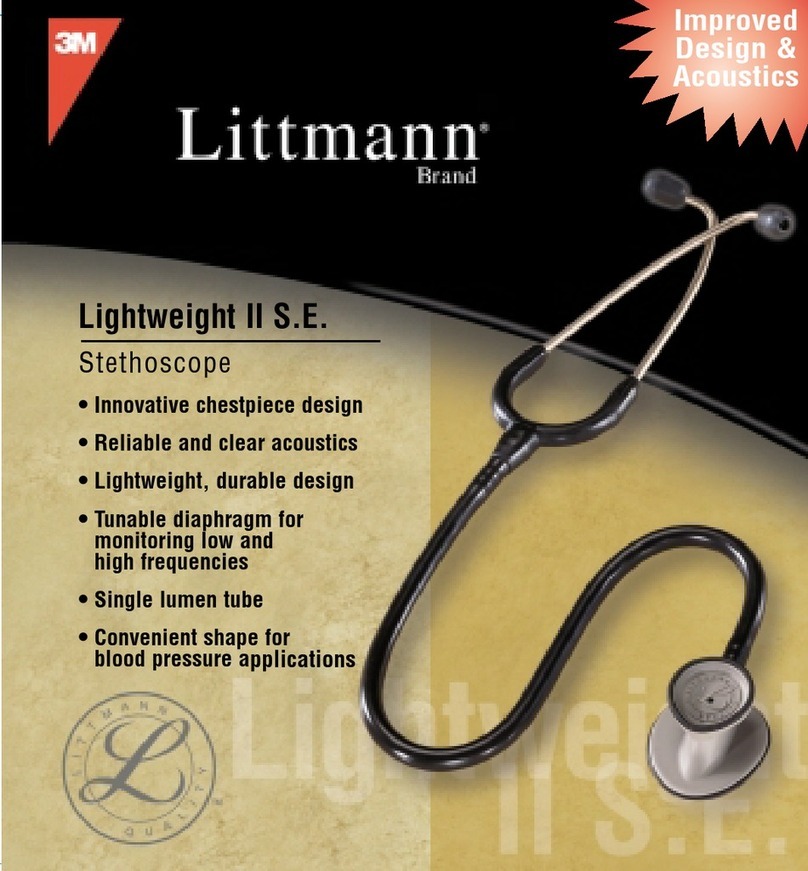
Your 3M™Littmann®Select Stethoscope is
equipped with a tunable diaphragm that enables
you to listen to both low and high frequency
sounds without turning over the chestpiece.
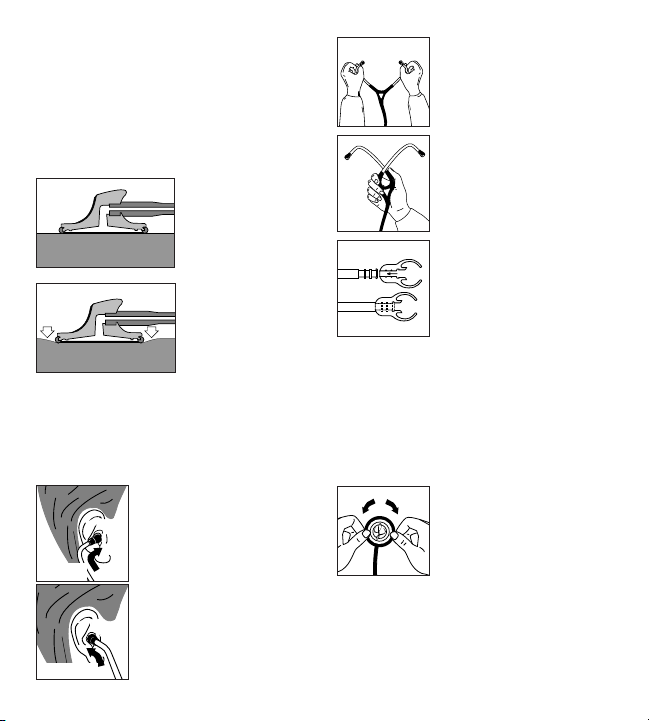
Low frequencies:
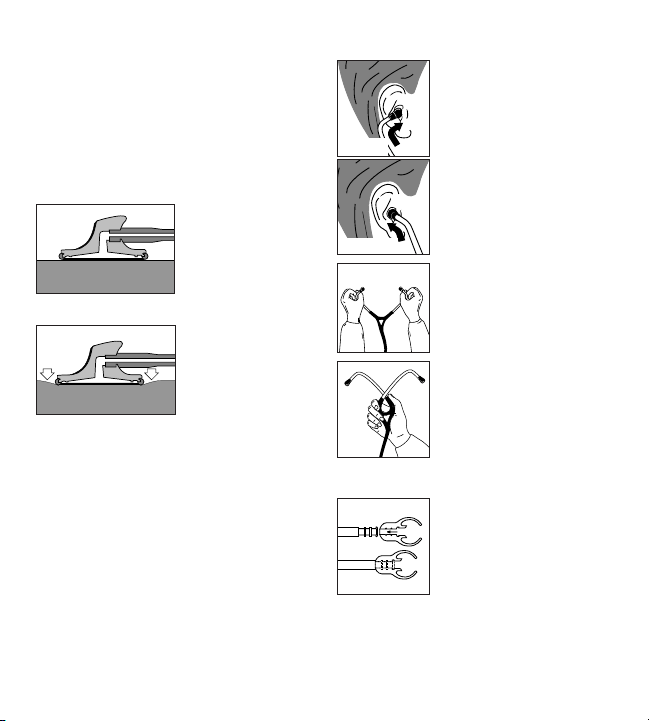
To listen to low
frequency sounds
(traditional bell mode)
use very light
skin contact.
High frequencies:
To listen to higher
frequency sounds
(traditional diaphragm
mode), press firmly on
the chestpiece.
To listen to low and high frequency sounds
without removing and repositioning the
chestpiece simply alternate between light
and firm pressure on the chestpiece.
Headset Adjustment
Your new Littmann stethoscope is
designed to provide a
comfortable, acoustically sealed
ear fit. Notice that the eartubes
are set to accommodate the
typical anatomy of the ear canal.
The eartips should point in a
forward direction as you insert
them into your ear canals.
To reduce spring tension in the
headset, hold each eartube at the
bend near the eartip and
gradually pull apart until
fully extended.
To increase spring tension, grasp
the headset with one hand where
the eartubes enter the tubing and
squeeze until the tubing on one
eartube touches the other. Repeat
as necessary.
For maximum acoustic
performance, comfortable
patented 3M™Littmann®Snap
Tight Soft-Sealing Eartips are
provided with your stethoscope.
This stethoscope utilizes a unique
design for attaching the eartip to
the eartube. The eartips are
pushed on to the end of the
eartube and snapped firmly into
place. To remove, pull firmly on
the eartip.
Removing the Diaphragm and
Cleaning the Chestpiece
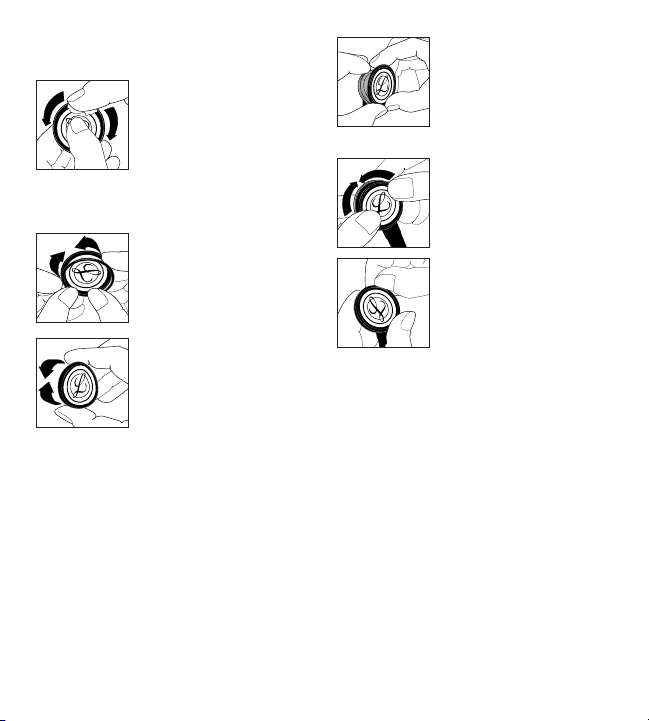
With the diaphragm side up,
grasp the rim with the thumbs
and index fingers of both hands
and roll the rim off the edge of
the chestpiece. Remove the
diaphragm from the rim and
clean the parts in soapy water or
wipe with alcohol. Chestpiece
surfaces can be wiped with
alcohol or soapy water. Dry all
parts and surfaces thoroughly
before reassembly.
Incorrect
Correct
L
I
T
T
M
A
N
N
Q
U
A
L
I
T
Y
TM