Reducer Art. No. Max. Flowrate L/s
418029 0,5
418030 0,7
418031 1
418032 1,2
418033 1,5
418034 2,2
General information
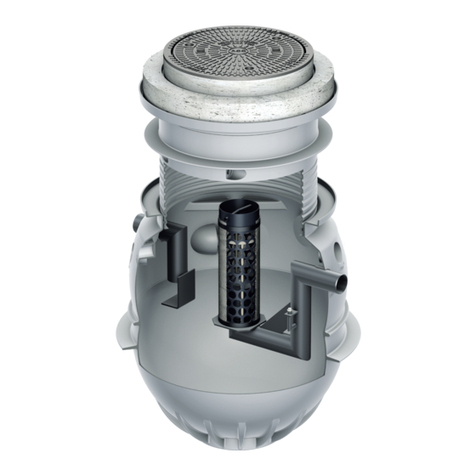
nThe device is intended for the separation of grease and suspended solids
from kitchen wastewater only.
nThe device must be installed in compliance with all applicable local
and national laws, and codes of practice including those relating
to electrics and plumbing.
nInstallation of the device should be performed
by qualified technicians.
nThe device must not be installed in any other way
than as described in this Installation and Operation Manual.
Safety
nThe ACO Grease Capture should only be connected to a properly
grounded and waterproof power socket. Ensure the power socket
is fitted with or supported by a dedicated ground fault circuit
breaker/interrupter (GFCI).
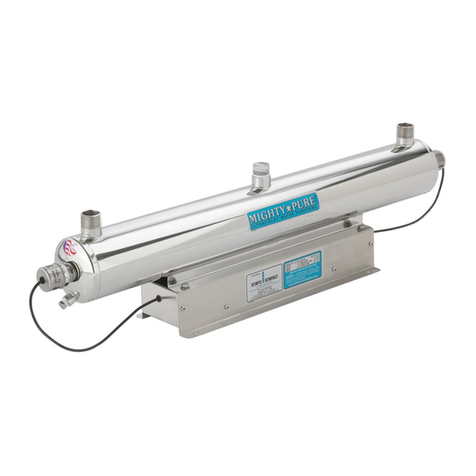
nConnect the heater to the electrical supply after
the unit is filled with water. This is achieved once water flows
over the outlet weir.
nIf water needs to be drained from the device, the heater
must be disconnected from the electrical supply first.
nDo not install the unit outdoors unless a waterproof cover is used.
nDo not remove the heater casing if it is connected
to the electrical supply.
Process of installation
nAn inlet and outlet pipe slope of at least 2%.
nDo not reduce the diameter of the outlet pipe.
nPiping before device inlet should be as short as possible
nMinimize the number of elbows on the outlet pipe.
nThe device has an internal P-trap, there is no need
to install a second P-trap at the outlet.
nPlease check the device for damage before first
use and report any missing or damaged parts
to your local distributor.
nDo not connect the unit to a food grinder,
potato peeler or waste disposal unit.
nPipes leaving the outlet must be at least 2 inches
in diameter.
nRemove any grease buildup or blockages from connecting
drains before installing the ACO Grease Capture.
nThe ACO Grease Capture is provided with an internal
flow reducer to limit throughflow and to aid performance.
Variable size flow reducers are available up to the maximum
flow rate for a given separator size, depending on inlet pipe
diameter. The flow rate of individual flow reducers
is determined according to methodology
established in the PDI standard.
Ventilation pipes should always be open to atmosphere,
either outside the building or by connection to an air
admittance valve. Do not connect to sewage ventilation
systems. Outlet ventilation protects against potential
siphoning issues.
Inlet and outlet connection
Danger
of heating rod
damage!
VentilationVentilation
!
The device must always be filled with water before turning on!
1 A
2 B
Inlet Outlet
ACO Grease Capture
Installation and Maintenance Manual
ACO Grease Capture
Installation and Maintenance Manual
32