manuals.online logo
Brands
  1. Home
  2. •
  3. Brands
  4. •
  5. DanVex
  6. •
  7. Dehumidifier
  8. •
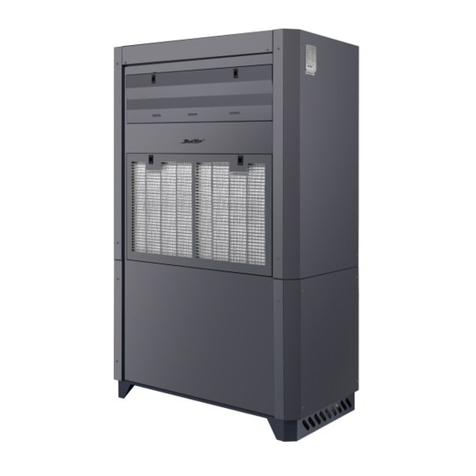
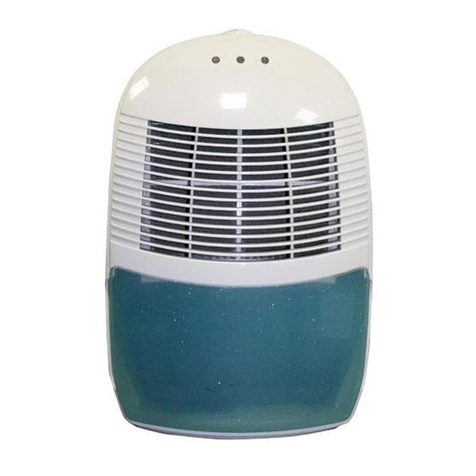
  9. DanVex DEH-1600i User manual

DanVex DEH-1600i User manual

This manual suits for next models

1

Other DanVex Dehumidifier manuals

DanVex AD-3000 User manual

DanVex

DanVex AD-3000 User manual

DanVex AD-200 User manual

DanVex

DanVex AD-200 User manual

DanVex DEH-3K User manual

DanVex

DanVex DEH-3K User manual

DanVex DEH-1200P User manual

DanVex

DanVex DEH-1200P User manual

DanVex DEH-400P User manual

DanVex

DanVex DEH-400P User manual

DanVex AD-10000 User manual

DanVex

DanVex AD-10000 User manual

DanVex DD Series User manual

DanVex

DanVex DD Series User manual

DanVex AD-800 Operating instructions

DanVex

DanVex AD-800 Operating instructions

DanVex DEH-1700wp User manual

DanVex

DanVex DEH-1700wp User manual

DanVex DEH-1700P User manual

DanVex

DanVex DEH-1700P User manual

DanVex DEH-900i User manual

DanVex

DanVex DEH-900i User manual

DanVex AD-550 User manual

DanVex

DanVex AD-550 User manual

DanVex DEH-290h User manual

DanVex

DanVex DEH-290h User manual

DanVex AD-400 User manual

DanVex

DanVex AD-400 User manual

DanVex AD-200 User manual

DanVex

DanVex AD-200 User manual

DanVex DEH-600wp User manual

DanVex

DanVex DEH-600wp User manual

DanVex DEH-500i User manual

DanVex

DanVex DEH-500i User manual

DanVex DEH-600P User manual

DanVex

DanVex DEH-600P User manual

Popular Dehumidifier manuals by other brands

GET DHMD102 User instructions

GET

GET DHMD102 User instructions

Daewoo COL1471 user manual

Daewoo

Daewoo COL1471 user manual

WILMS KT 1130 manual

WILMS

WILMS KT 1130 manual

Aprilaire E080 quick start guide

Aprilaire

Aprilaire E080 quick start guide

fisair DFLEX Series user manual

fisair

fisair DFLEX Series user manual

Daitsu CD031IU-DFA owner's manual

Daitsu

Daitsu CD031IU-DFA owner's manual

Fehom PDGT701BE user manual

Fehom

Fehom PDGT701BE user manual

Trotec TTR 400 D User instructions

Trotec

Trotec TTR 400 D User instructions

Westpoint MDF1-30AE instruction manual

Westpoint

Westpoint MDF1-30AE instruction manual

SOLIS easy dry compact user manual

SOLIS

SOLIS easy dry compact user manual

Sinclair R-9112 instruction manual

Sinclair

Sinclair R-9112 instruction manual

Kenmore 580.54701 owner's manual

Kenmore

Kenmore 580.54701 owner's manual

Demargo DM828NF Installation and operating instructions

Demargo

Demargo DM828NF Installation and operating instructions

Altrad Lescha LDH 600 Original instructions

Altrad Lescha

Altrad Lescha LDH 600 Original instructions

BOMANN LE 1150 CB instruction manual

BOMANN

BOMANN LE 1150 CB instruction manual

SPT SD-46 instruction manual

SPT

SPT SD-46 instruction manual

Haier HD458 user manual

Haier

Haier HD458 user manual

Logik L20DHW12 instruction manual

Logik

Logik L20DHW12 instruction manual

manuals.online logo
manuals.online logoBrands
  • About & Mission
  • Contact us
  • Privacy Policy
  • Terms and Conditions

Copyright 2025 Manuals.Online. All Rights Reserved.

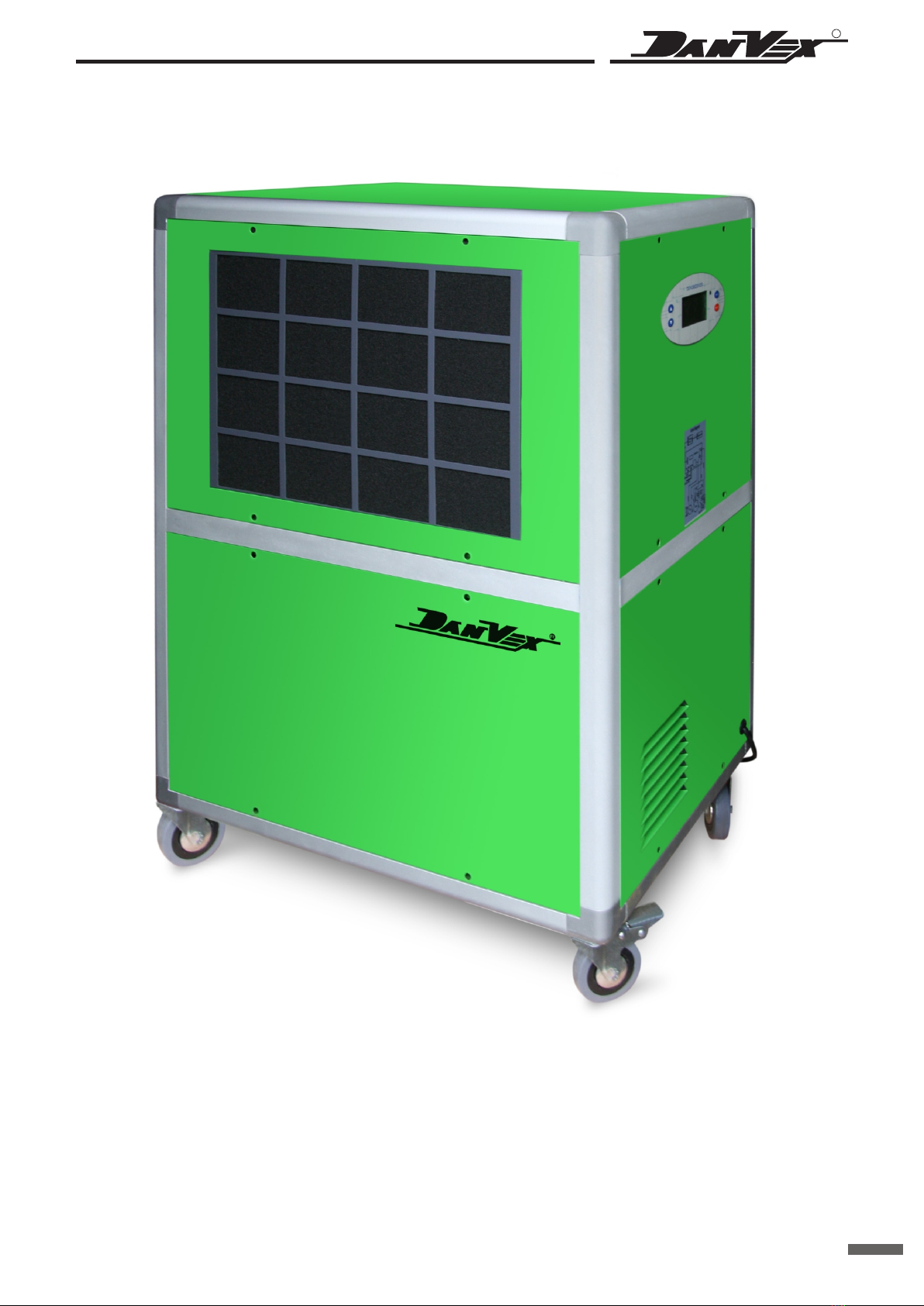
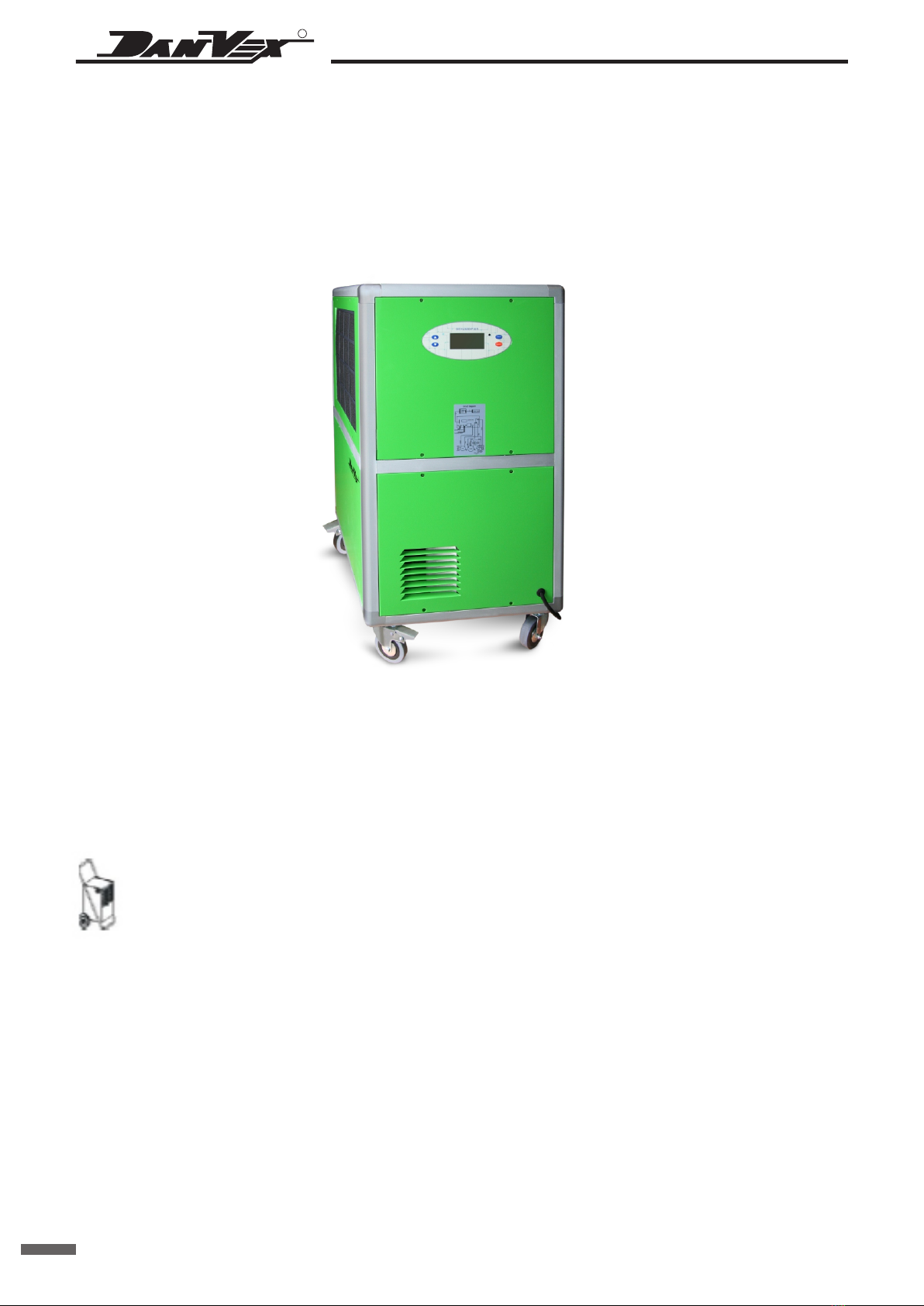
DanVex DEH-1600i
DanVex DEH-1900i
Dehumidifiers
Operation manual
R
www.danvex.fi
1
R
www.danvex.fi
Operation instructions
Please read these instructions carefully before installing / operating this unit!
Our warranty becomes null and void in case of the unit improper operation, installation or
maintenance or in case of the supplied unit modification without prior consent from our part.
Design is subject to changes!
2
Air dehumidification
The processes that take place during dehumidification are based on physical laws. We will try
to illustrate them here in a simplified form to give you a general idea of dehumidification
principles.
Attention!!! These units cannot be used for air cooling!!!
Use of DanVex dehumidifier
· Despite of windows and doors insulation quality, damp and moisture can penetrate
even through thick concrete walls.
· It can take 1-2 months for the water used for construction (concrete works,
whitewashing, plasterworks etc.) to dry out.
· The moisture that has penetrated masonry following high water or flooding is released
very slowly.
· Damping of materials diring storage in moist unheated premises.
The moisture escaping from building elements or materials by evaporation is absorbed by the
ambient air. Thus, this increases the air humidity and ultimately results in corrosion, mould,
rot, peeling of paint coatings and other unwanted damages.
R
www.danvex.fi
The below diagram shows an example of metal corrosion rate at different air humidity levels.
3
As you can see on the graph the rate of corrosion is insignificant at the relative humidity (RH)
below 50%, and it can be disregarded at RH below 40%. But at the relative humidity above
60% the rate of corrosion increases considerably.
This moisture damage example applies also to many other materials, such as powders,
packaging, wood, electric equipment or electronic devices.
There are two different ways of achieving required humidity in a building being dried out:
1. By heating with further air exchange:
The ambient air is heated to absorb the moisture and then it is discharged to the atmosphere.
However the total energy output is lost during the moist air discharging to outside.
2. By the air dehumidification:
The moist air in an enclosed room is continuously dehumidified by the condensation principle
or by other dehumidification method.
In terms of energy consumption the air dehumidification has one essential advantage:
the energy expenditure requirements are limited by the air volume in the existing room
only.
The heat generated during the air dehumidification process (heat of condensation) slightly
increases the air temperature in the room.
When properly used the dehumidifier consumes about 25% of the energy that would be
needed for the „heating and ventilation".
The relative and absolute air humidity
1 m3 of dry air weighs about 1,2 kg at 20° C.
The ambient air is a gas mixture that always contains a certain amount of water in the form of
water vapor. The maximum water vapor content in the air (moisture content of the saturated
air) depends on its temperature and pressure.
020 40 60 80 100
30
60
90
120
0
Air relative humidity, %
Corrosion time
R
www.danvex.fi 4
The absolute humidity is understood to be the water content in the dry air unit volume and is
expressed in grams (g) of the water per a kilogram (kg) of the dry air.
The relative humidity is understood to be the ratio between the water percent currently
contained in the dry air and the maximum possible water content at certain temperature and
pressure and is expressed in percents (%).
When the air absorbs the maximum possible water volume the air becomes "saturated" and
the relative humidity becomes 100%.
The ability of air to absorb water vapor increases with temperature increasing. This
means that the maximum (absolute) water content increases with temperature
increasing.
Water vapor condensation
The maximum water vapor volume that can be absorbed increases when the air is heated,
but the water vapor content remains however the same and this results in relative humidity
reduction.
In contrast, when the air is cooled, the maximum water vapor volume that can be absorbed
continuously reduces, the water vapor volume contained in the air remains however the same
and the relative humidity increases.
If the air temperature falling continues the capacity to absorb the water vapor volume is
continuously reduced until the air becomes saturated which is equal to the maximum water
vapor content in the air. This temperature is called the dew-point temperature.
When the air is cooled below the dew-point temperature, the water vapor content becomes
higher than the maximum possible water vapor content.
Excess water vapor displacement starts. The vapor condenses to water and thus is removed
from the air.
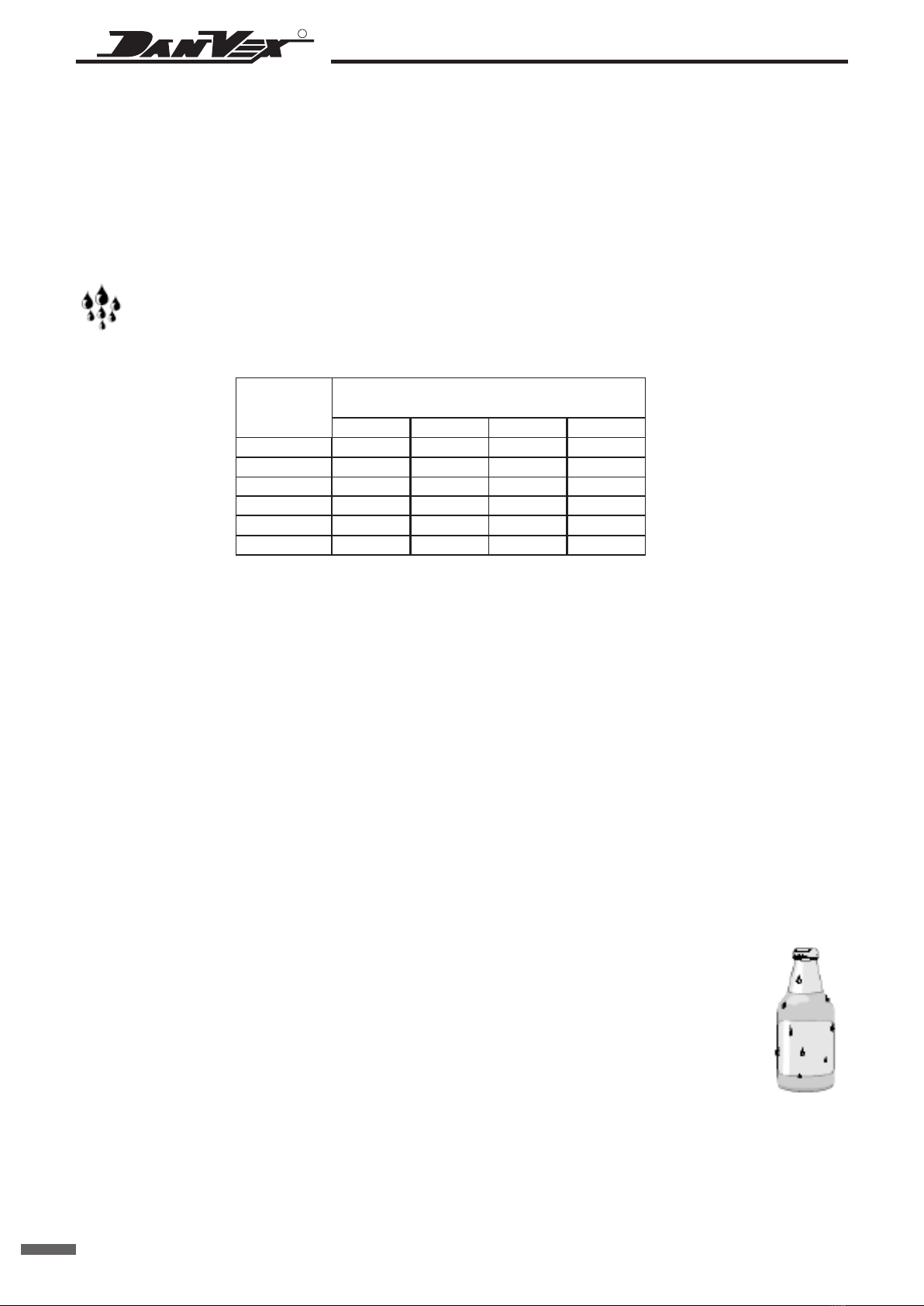
A misted window glass in winter or a misted bottle with a cold drink are common
examples of condensing.
The higher the relative air humidity the higher is the dew-point temperature,
and thus it is easier to fall below the dew-point temperature.
-5
+10
+15
+20
+25
+30
1,3
3,8
5,1
6,9
9,2
12,9
1,9
5,6
7,7
10,4
13,8
18,2
2,6
7,5
10,2
13,8
18,4
24,3
3,3
9,4
12,8
17,3
23,0
30,3
40% 60% 80% 100%
3
Water vapor content in g/m in the air at the
humidity of
Temp. °C
R
www.danvex.fi
Drying materials
Building materials/structures can absorb considerable amounts of water, e.g. bricks can
absorb 90-190 l/m3, heavy concrete can absorb 140-190 l/m3, sand-lime bricks can absorb
180-270 l/m3.
Wet materials such as masonry are dried as follows:
· The moisture contained in the material moves from within the material to the
wall surface.
· Evaporation takes place on the surface, i.e. water vapor is absorbed by the
ambient air.
· The air enriched with water vapor continuously circulates through the aie dehumidifier.
It is dehumidified and leaves the unit being slightly heated to absorb the moisture
again.
· In this way, the moisture content in the material
is continuously reduced and the material dries.
Diagram of the air condition during its circulation through the dehumidifier
The air flow is cooled on the way through the "evaporator-condenser" system till its
temperature is below the dew point. Water vapor condenses, it is collected in a condensate
trap inside the unit. The collected moisture is discharged in the form of water.
5
Heat of condensation
The energy transferred from the condenser to the air consists of:
· The heat earlier transferred from the evaporator.
· Useful electrical power
· The heat of condensation released through the condensation of water vapor.
When liquid turns into a gaseous state, the energy should flow in reverse i.e. from liquid to
gas. This energy is called the heat of evaporation. It does not cause any rise of temperature,
it is only necessary for the change from a liquid to a gaseous state. Vice versa, the energy is
released when gas turns into liquid, such energy is called heat of condensation.
The heat generated at condensation and evaporation and is identical.
Evaporator Condenser
Air
temperature
Dry air
Humidity
time
R
www.danvex.fi 6
For water this is 2250kJ/kg (4.18kJ = 1kcal)
This shows that a relatively large amount of energy is released in the process of water vapor
condensation.
If the moisture to be condensed is not generated at evaporation in the room but is introduced
from outside, e.g. via ventilation, the heat of condensation released in the process will be
used for the room heating.
If it is required to dry materials or rooms the heat energy circulates, i.e. it is consumed during
evaporation and is released during condensation. A large amount of heat energy is generated
at the supplied air dehumidification process, which results in a rise of temperature.
The time necessary for drying of building structures does not depend on the dehumidifying
unit capacity, but is determined by the rate at which the material or the building elements
release the moisture they contain.
Safety Instructions
Prior to delivery the units are subject to comprehensive testing of their materials, functional
capabilities and quality.
However hazards can arise if the unit is operated by untrained persons unfamiliar with its
operation principles or in case the unit is not used for the intended purpose.
The following safety instructions must be observed:
· It is prohibited to install or operate the units in the locations subject to explosion
hazard.
· It is prohibited to install or operate the units in the locations with oil, sulphur, chlorine or
salt containing atmospheres.
· The units must be installed upright.
· It is prohibited to use a direct jet of water for the unit washing.
· It is prohibited to cover the air inlet and outlet holes.
· The intake side of the unit must be free of dirt and loose objects.
· It is prohibited to insert objects in the unit.
· It is prohibited to cover or transport the unit during operation.
· All electric cables outside the unit must be protected against damage (e.g. from
animals etc.).
· It is necessary to insure that all cables meet the requirements for capacity, length and
purpose.
· The unit must only be transported in vertical condition. The condensate containers
must be drained prior to each transportation of the unit.
· It is prohibited to use the unit for purposes other than intended or not specified in this
operations instructions.
In case the requirements are not observed our company disclaims any liability and out
warranty becomes null and void.
Only authorized personnel is permitted to perform works on cooling and
electrical system!
R
www.danvex.fi
Unit description
The unit is designed for automated, versatile and trouble-free air dehumidification.
The unit operates on condensation principle. It is equipped with a closed loop cooling system,
low noise and low maintenance fan and with a power cable with a plug.
The unit's control panel is equipped with a LCD display used for the system functional checks.
A fully automated unit control system, a trouble-free regulated humidistat, an integrated
overflow system as well as flexible hose connection for direct condensation discharge assure
fail safe and long-term operation of the unit.
The unit complies with the fundamental safety and health requirements of the existing EU
regulations.
The unit is easy and safe to operate.
Unit location
The unit is operated in the buildings where dry air is necessary to prevent significant financial
losses (for example, due to mould formation).
The unit is mainly used for drying and dehumidification of:
◊ Industrial buildings of various applications, storage rooms and cellar rooms.
It is also used for dry air maintenance in:
◊ Storage areas, archives, laboratories.
◊ Laundries, changing rooms etc.
Functions
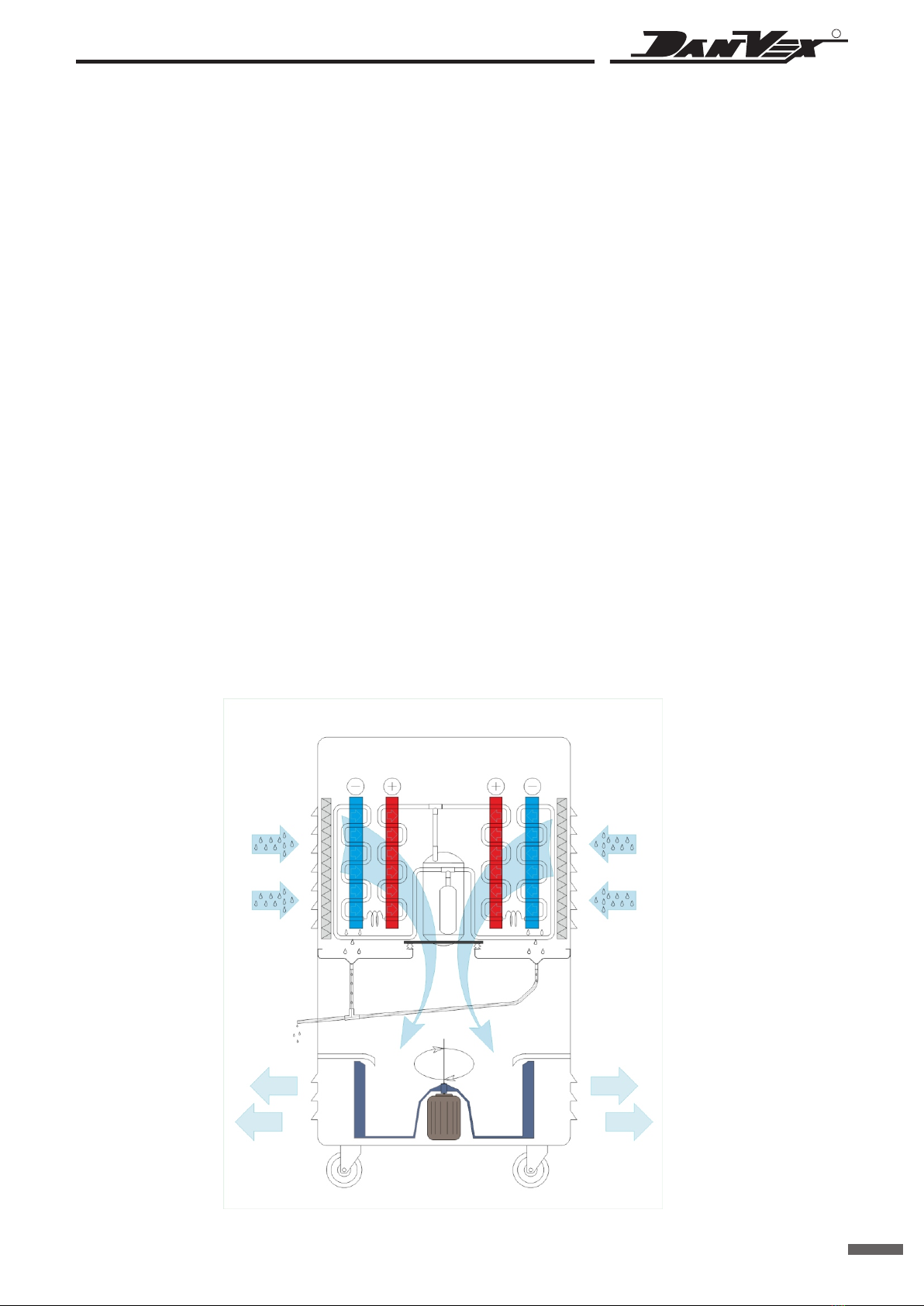
The unit operates on condensation principle.
The fan intakes moist surrounding air into the units rear side through the air filter, evaporator
and condenser located behind the evaporator.
Heat is extracted at the cold evaporator. The air is cooled to below the dew point. The water
vapor contained in the room air deposits as condensate or frost on the evaporator fins.
R
www.danvex.fi 8
Dried and cooled air is heated in the condenser (radiator) again. Then it is discharged to
outside, the air temperature is about 5 degrees higher than the room temperature.
The dried air is mixed with surrounding air again. The relative humidity gradually drops to the
required RH value due to continuous outside air circulation through the unit.
Depending on the room temperature and relative humidity the condensed water can drip
continuously or only during certain defrosting stages into a condensate tray with further
discharge to outside through integrated drain channels.
For uncontrolled continuous operation of the unit it is required to drain the condensate using
an external water hose.
Installation
For optimum, economical and safe unit operation the following instructions must be followed:
◊ The unit must be installed securely upright to ensure unhindered condensate discharge into
the condensate tray.
◊ If possible the unit must be installed in the centre of the room long wall so that optimal air
circulation is ensured.
◊ It must be ensured that the air is able to be sucked in freely at the front of the unit and to be
discharged through the side parts of the air throttle.
◊ It is prohibited to locate the unit in close proximity to radiators and other heat sources.
◊ The room to be dried or dehumidified must be closed to prevent the air entering from
neighbor rooms and from outside.
◊ Windows and doors must be closed to prevent free air exchange between the room and
ambient atmosphere.
◊ If the unit is used in dust-laden environments it is necessary to take appropriate
maintenance measures specially adapted to the particular operation conditions.
See the chapter «Maintenance and service».
Important information on electrical connections
◊ Electric wiring of the unit should be done in accordance with DIN VDE 0100, Part 704 for
electric current supply sources equipped with automatic circuit-breakers.
◊ If the unit is installed in humid premises such as laundries or cellars it should be equipped
with proper automatic circuit-breakers at the buyer's expense.
Commissioning
Prior to commissioning works or to comply with local requirements it is necessary to check air
intake openings and outlet openings to be sure that they are free from foreign matters. Intake
filters condition should be checked as well.
The following instructions are to be observed:
◊ Extension cables should be of proper cross-section.
◊ It is allowed to use extension cables if they are fully disentangled or stretched!
◊ It is not allowed to pull the unit by the power cord.
◊ Upon actuation the unit operates in fully-automatic mode.
◊ The unit is equipped with a protection device that prevents the compressor from switching
on at restart immediately after the unit switching off, thus preventing the compressor damage.
The compressor switches on after 3 minutes only.
We do not ensure the efficient operation of the unit if the room temperature is below 10
°C and if the relative humidity is below 40 %.

R
www.danvex.fi
9
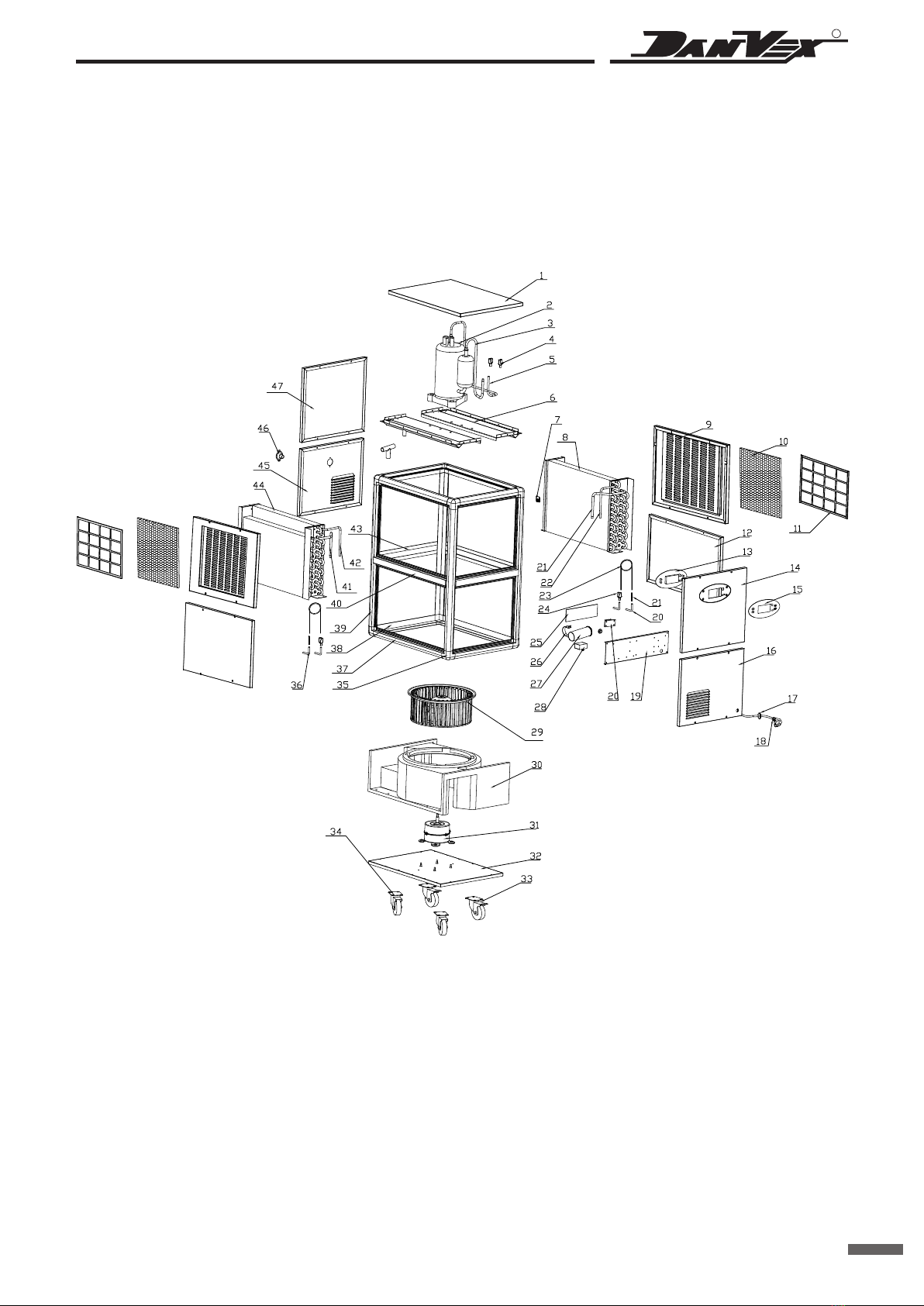
Explode drawing: