8 GB/IE
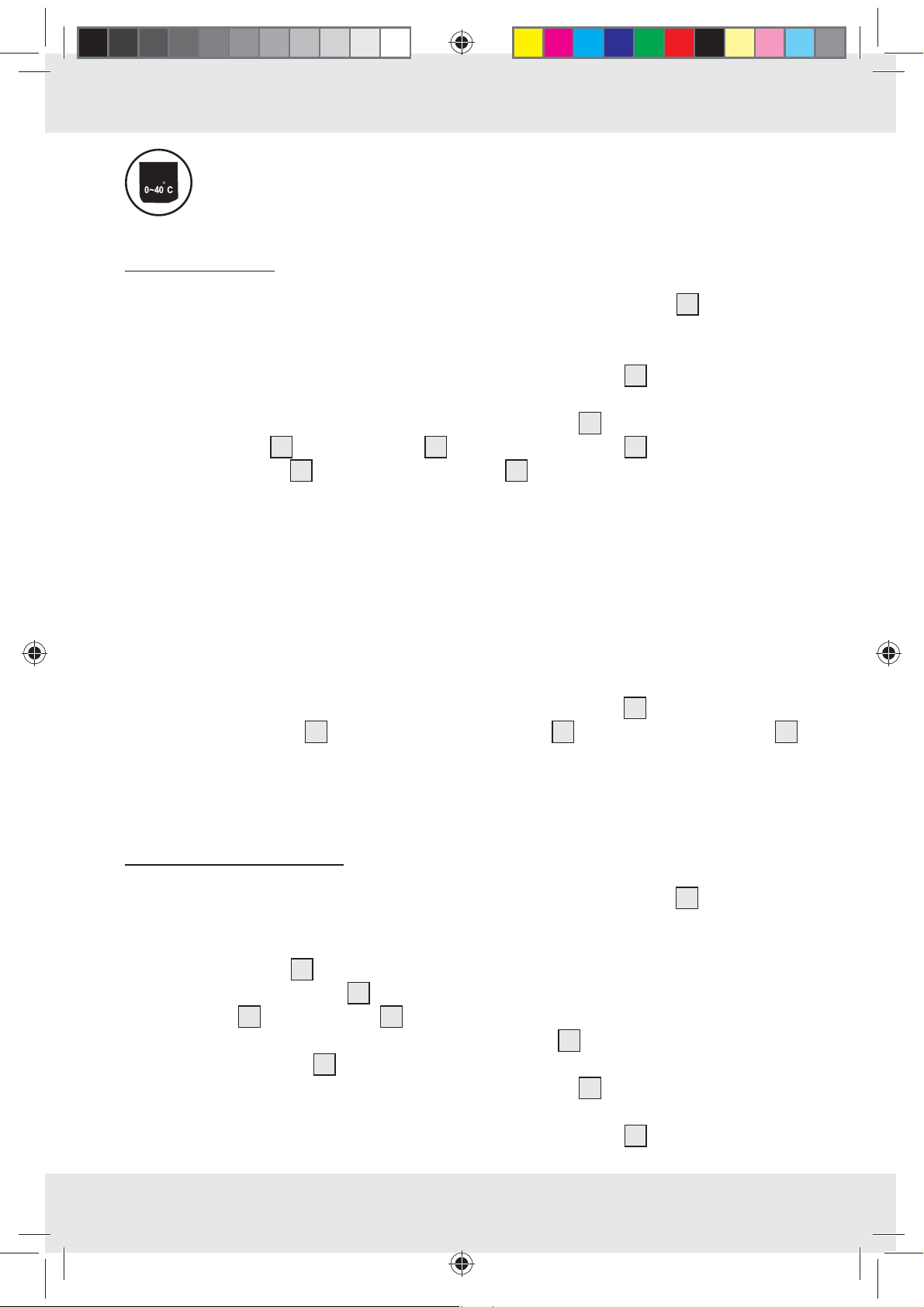
Fill the device only with liquids at
temperatures of 0 - 40 °C.
Before use
CAUTION! Check that the device is
functioning properly! Check the pressure
sprayer before each use to ensure that it
is free of visible damage and is func-
tioning safely. To do this, carry out the
following tests and inspections:
Check the tank 5, the suction hose 12
and the carry strap
6
for visible damage.
Check that the hose connections are fitted
tightly.
Check that the pipe connections are fitted
tightly.
Pump the empty pressure sprayer to
approx. 2bar.
The pressure must not fall more than ap-
prox. 0.5bar in a space of 30 minutes.
Pump the pressure sprayer to approx.
2bar.
Pull the safety valve 3up to the stop.
You must be able to hear the pressure
escaping.
Bringing into use
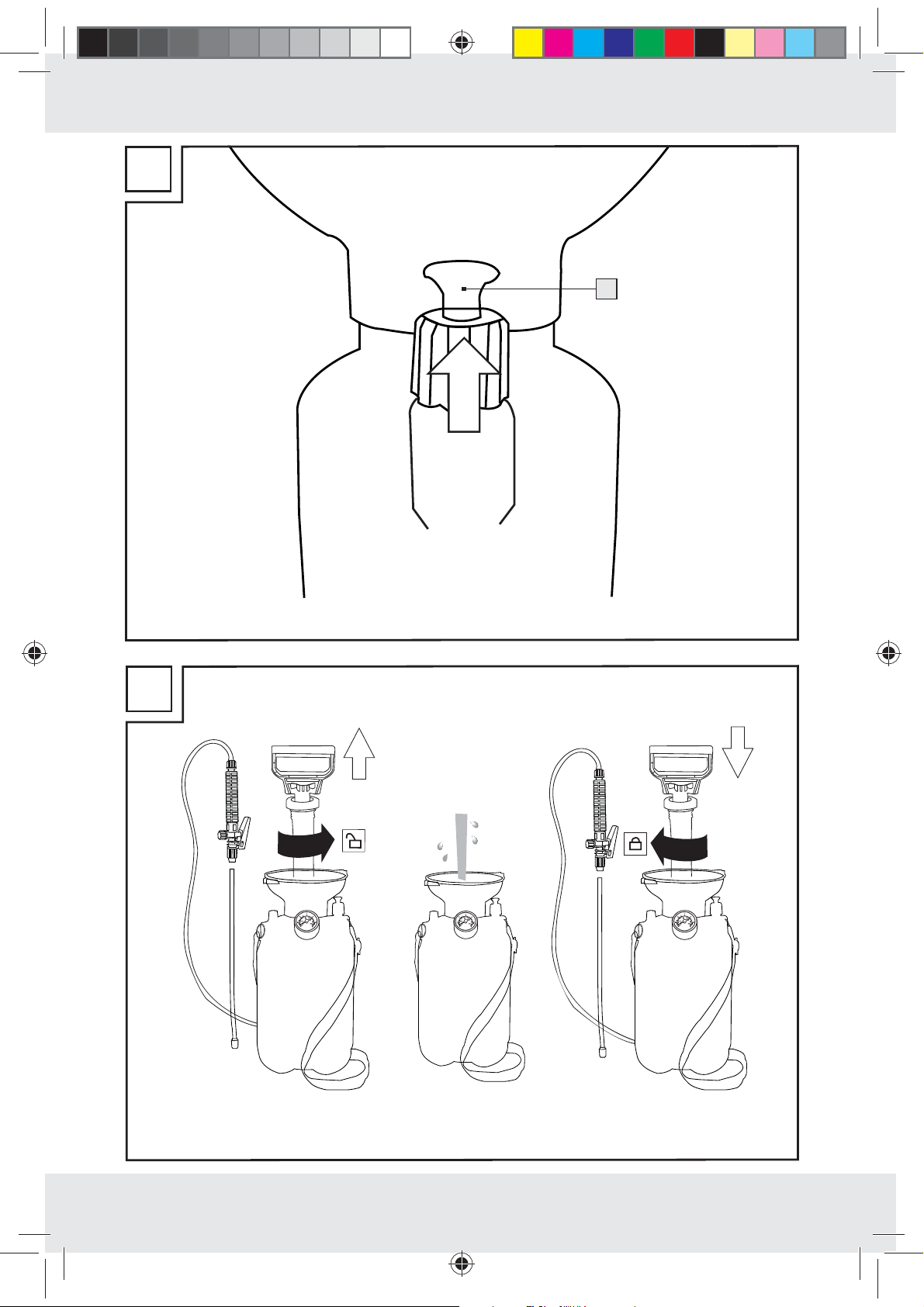
Attaching the spray tube
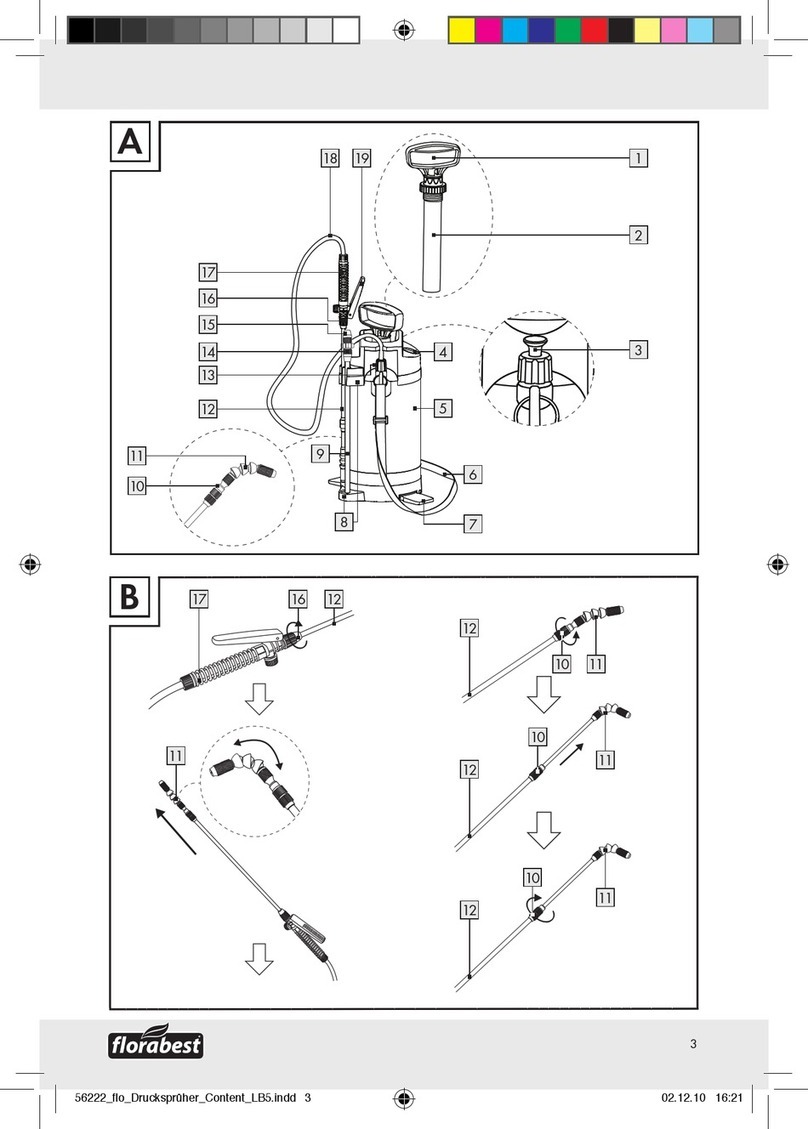
(Fig. B)
Turn the union nut 10 anticlockwise to
release it from the handle 11. Push the
spray tube 8into the handle 11 as
far as it will go.
Tighten the union nut 10 by turning it
clockwise.
Filling the pressure
sprayer tank (Fig. D)
Note: Before using the product, check to
see that it is in good condition and free of
defects.
Press the pump handle 1downwards
and turn it anticlockwise.
Note: Before you open the tank, pull
the safety valve 3upwards to release
any residual pressure still present in the
container 5.
Draw the pump 2out of the container
5.
Now fill the tank. Ensure that the use of
the pesticide, liquid fertiliser or cleaning
agent is permitted in your country and
that it is compatible with your pressure
sprayer.
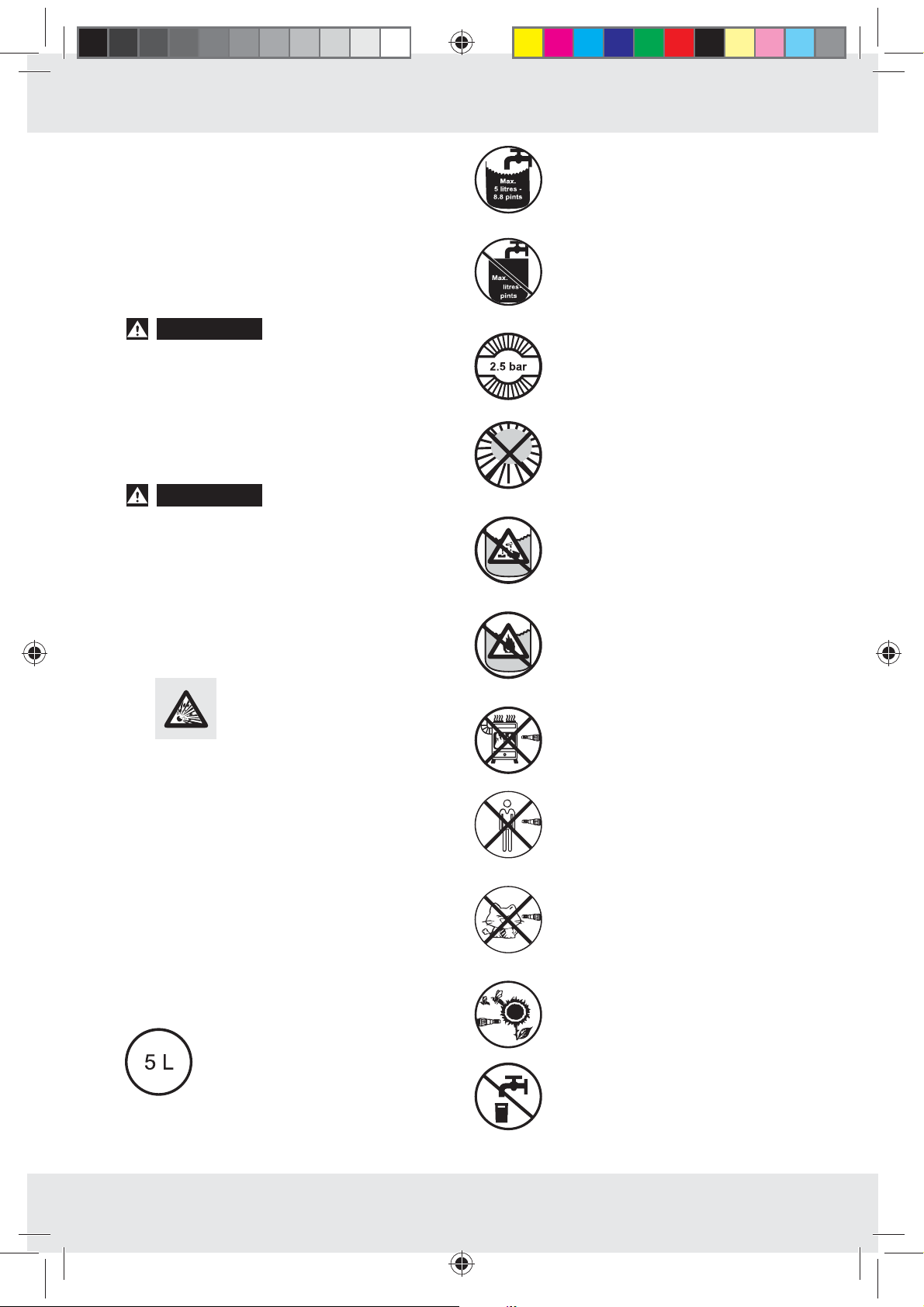
Note: Fill the tank with only the
amount of liquid that you actually need
for that particular spraying session (not
more than 5l).
Place the pump 2back into the con-
tainer 5and turn the pump handle 1
clockwise as far as it will go.
Building up the operating
pressure
Move the pump handle 1up and down
until the pressure sprayer has been
pumped up to a pressure not exceeding
the maximum permissible operating
pressure of 2.5 bar. To ensure this value
is not exceeded, monitor the pressure
gauge 4during the pumping process.
Note: If the pressure of the air in the
container 5exceeds 2.5bar, the pres-
sure is automatically released through
the safety valve 3.