5
©interCo GmbH, Eitorf, 11/2011 · BA AL stand 01 da · Ret til tekniske ændringer forbeholdes
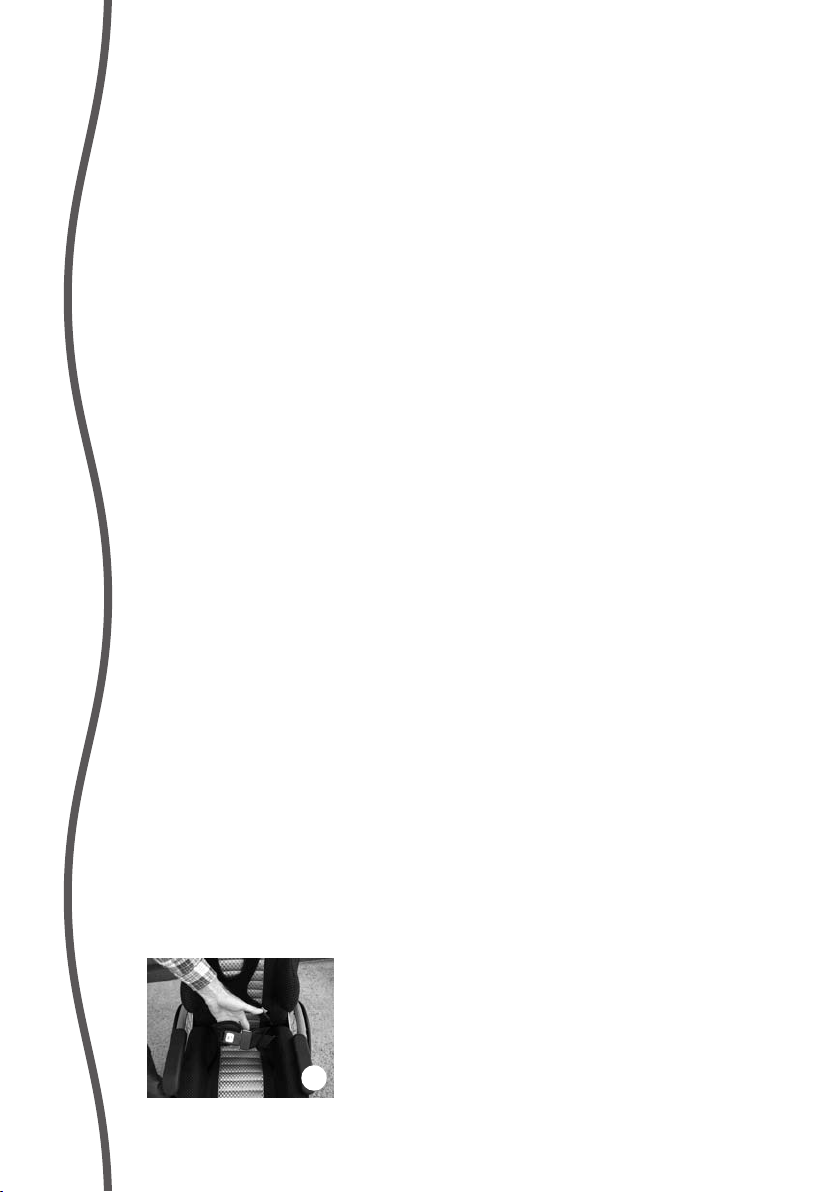
Hofteselen er som regel skruet fast sammen
med sædeskålen i højre side (set fra brugerens
synsvinkel). I venstre side (set fra brugerens
synsvinkel) sidder der et spænde, hvormed
det ønskede/tolererede tryk på bækkenet kan
indstilles.
Vær opmærksom på følgende, når hofteselen
anbringes:
Når hofteselen tages på, skal brugeren sidde
så lavt som muligt i skålen, dvs. bækkenet skal
have kontakt med sædeskålens ryg. For at sikre
dette kan det være hensigtsmæssigt, at tippe
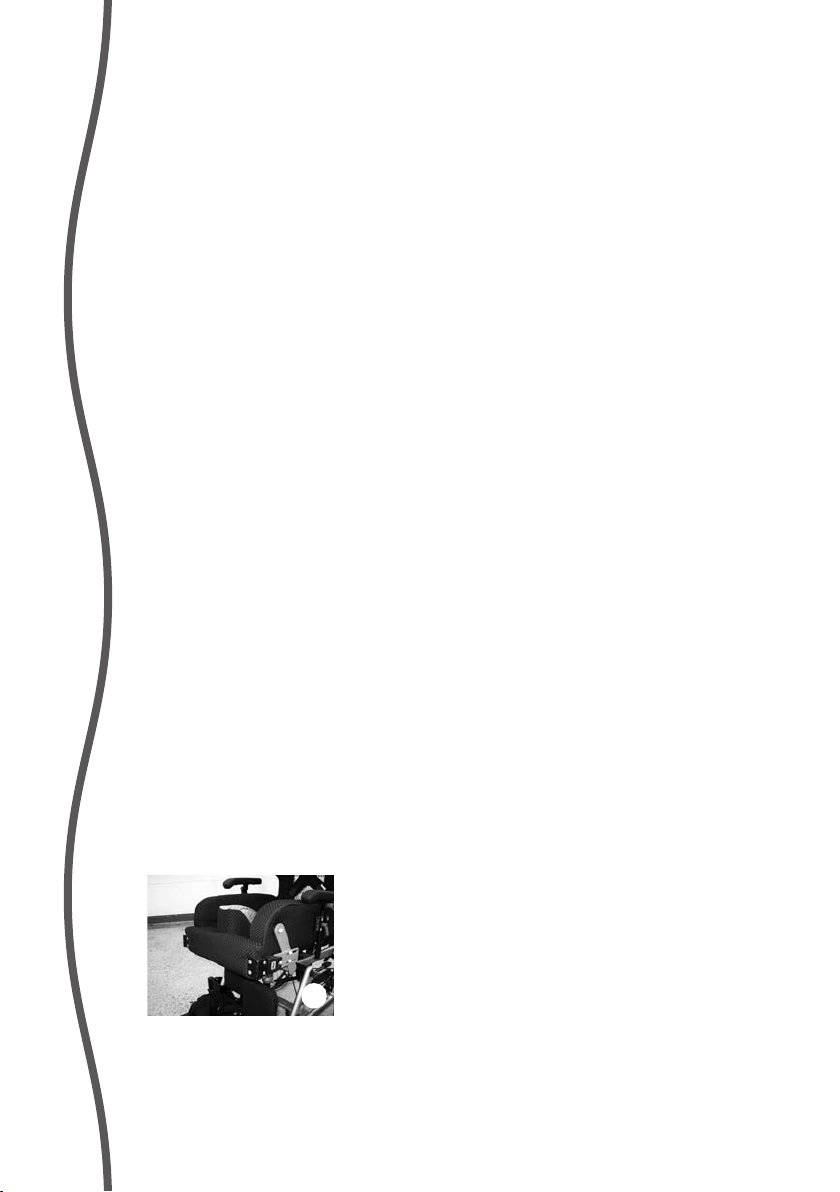
sædeskålen så meget, ved hjælp af understellets
sædevip (se kap. Sædevip), at brugeren glider
behageligt ned i den ønskede position.
Anvendes der hoftebøjle, skal du være opmærk-
som på følgende:
Hoftebøjlens trykpuder skal hvile på de to øverste,
forreste dele af hoftebenet. Sørg for, at hofte-
bøjlens trykpuder ikke trykker mod maven eller
andre områder med blødt væv!
Før fastspændingsselen igennem spændet på
hoftebøjlen og stram den, så brugeren bliver
siddende sikkert i den foreskrevne siddeposi-
tion (bækkenet flugter med sædeskålens ryg).
Hvis dette føles ubehageligt for brugeren, kan
du løsne hoftebøjlen lidt.
Vær dog opmærksom på, at skålen kun kan
åbne sig korrekt, hvis bækkenet hele ti-
den er i kontakt med hofteselen. Toleran-
cen over for den valgte fiksering kræver evt.
tilvænning, som opnås ved, at man i starten
undgår kraftige tryk, for derefter løbende at øge
trykket, indtil selen flugter korrekt.
4
The pelvic belt is secured to the shell on the right
side (from the patient’s perspective). On the left
side (from the patient’s perspective) is a buckle
which allows the desired or tolerated pressure
to be applied to the pelvic region.
When attaching the pelvic belt, please observe
the following instructions:
The patient must be sitting as deeply as possible
in the seat shell when attaching the belt. The
lower back should be in direct contact to the
back of the seating shell. This is most effec-
tively accomplished with the help of the seat tilt
mechanism (see Section 3.2.: Seat Tilt Mecha-
nism) whereby the undercarriage can be tilted to
the extent that the patient can be comfortably
directed into the desired position.
When using a pelvic brace, please take the fol-
lowing precautions:
The pressure pads of the pelvic brace must lie
on the two upper, front iliac spines. Be care-
ful that the pressure of the pelvic brace does
not exert pressure on the stomach or other soft
tissue areas!
Feed the safety belt through the buckle of the
pelvic brace and pull it tight enough that the pa-
tient sits firmly in the described sitting position
(with the lower back pressed against the seat
back). If this is uncomfortable for the patient,
the pelvic brace should be loosened.
Keep in mind that the seat shell can open more
easily when the pelvis is in continuous contact
with the pelvic brace. It may take time to work up
to tolerating the amount of pressure necessary
to fitting the belt properly. This is accomplished
by beginning with less pressure and gradually
increasing the pressure until the belt lies firmly
and correctly.