EnglishDeutsch
 logo
Brands
  1. Home
  2. •
  3. Brands
  4. •
  5. M-system
  6. •
  7. Transmitter
  8. •
  9. M-system B3FR User manual

M-system B3FR User manual

Other M-system Transmitter manuals

M-system 10SP User manual

M-system

M-system 10SP User manual

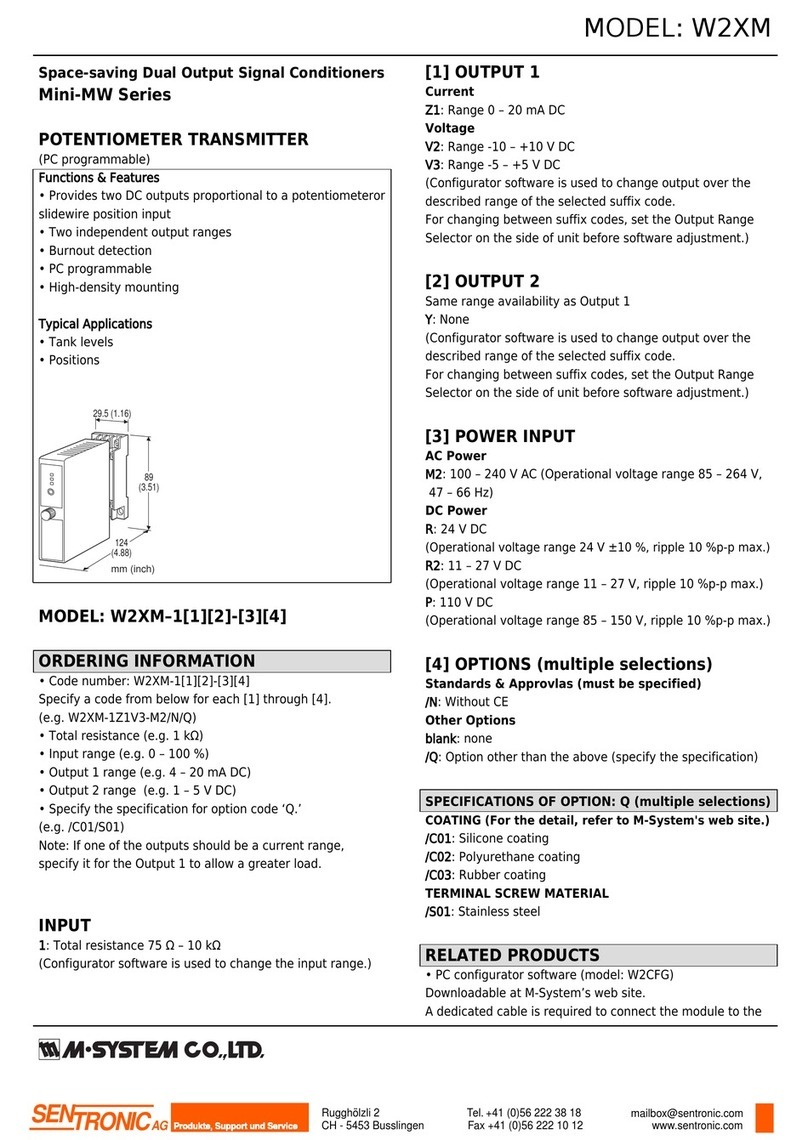
M-system W2PA User manual

M-system

M-system W2PA User manual

M-system 10JR User manual

M-system

M-system 10JR User manual

M-system F2MS User manual

M-system

M-system F2MS User manual

M-system M2EXV User manual

M-system

M-system M2EXV User manual

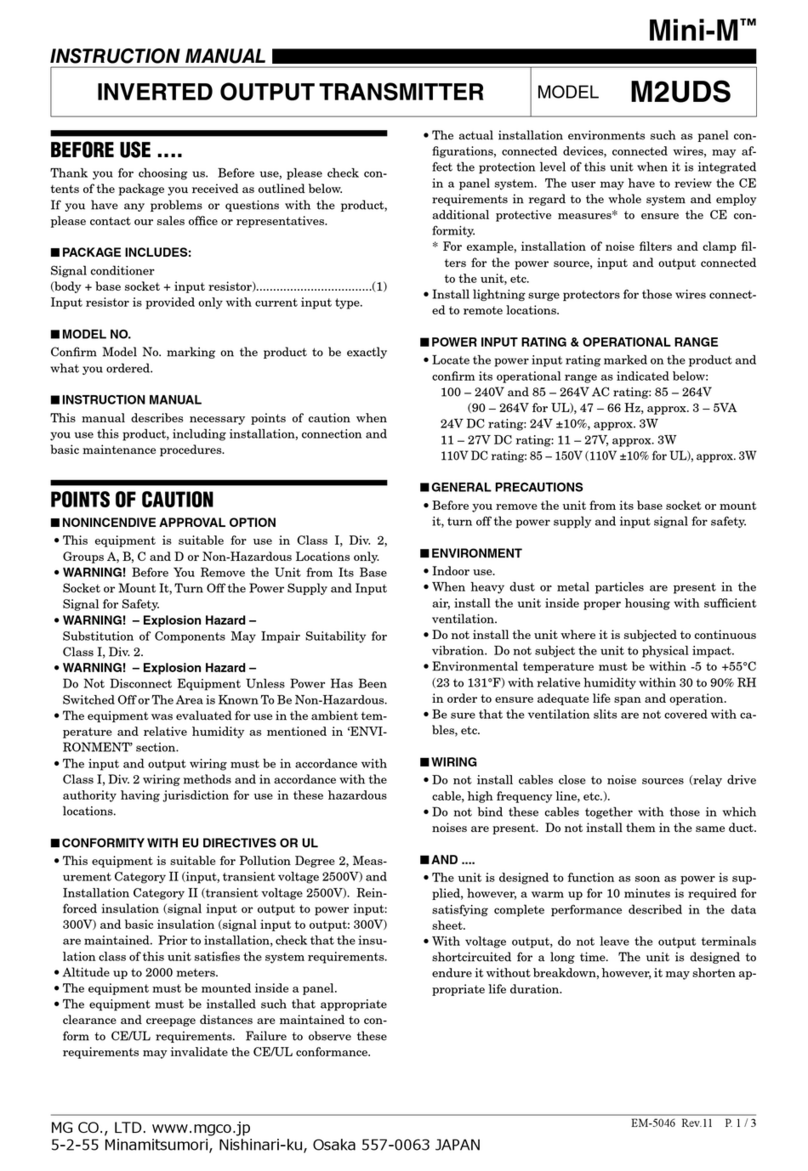
M-system Mini-M M2UDS User manual

M-system

M-system Mini-M M2UDS User manual

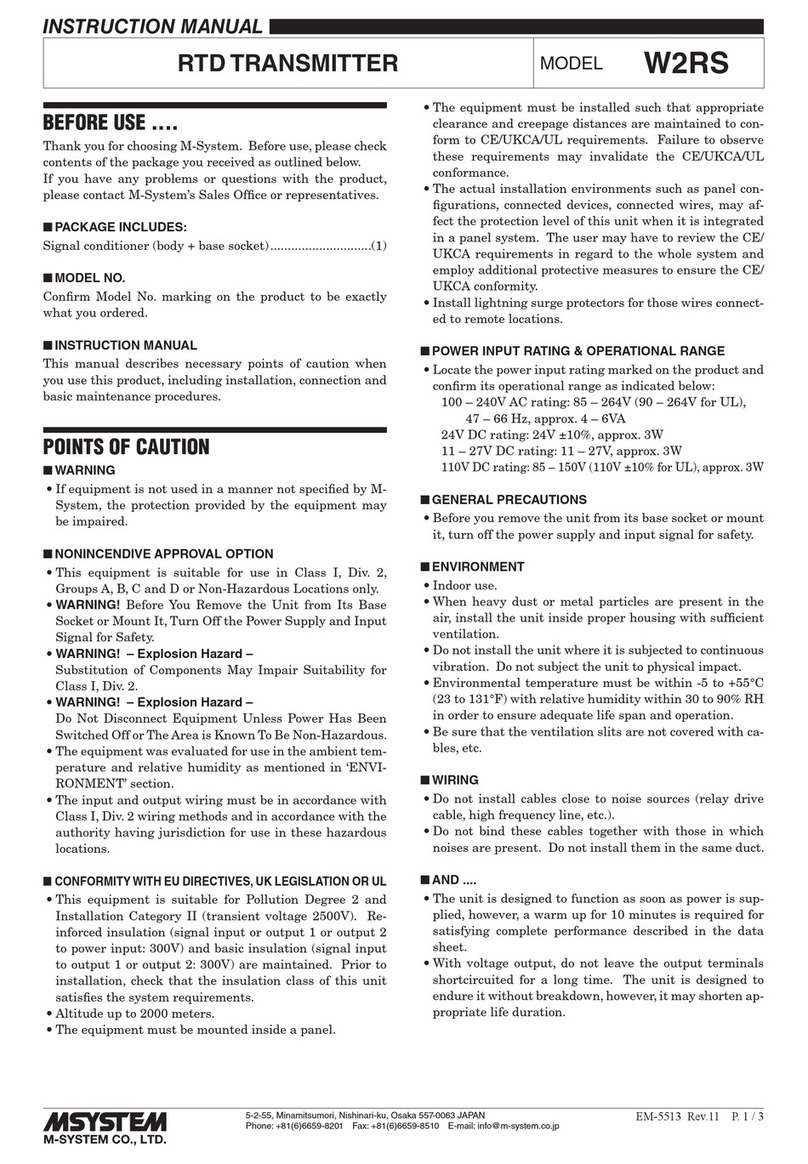
M-system W2RS User manual

M-system

M-system W2RS User manual

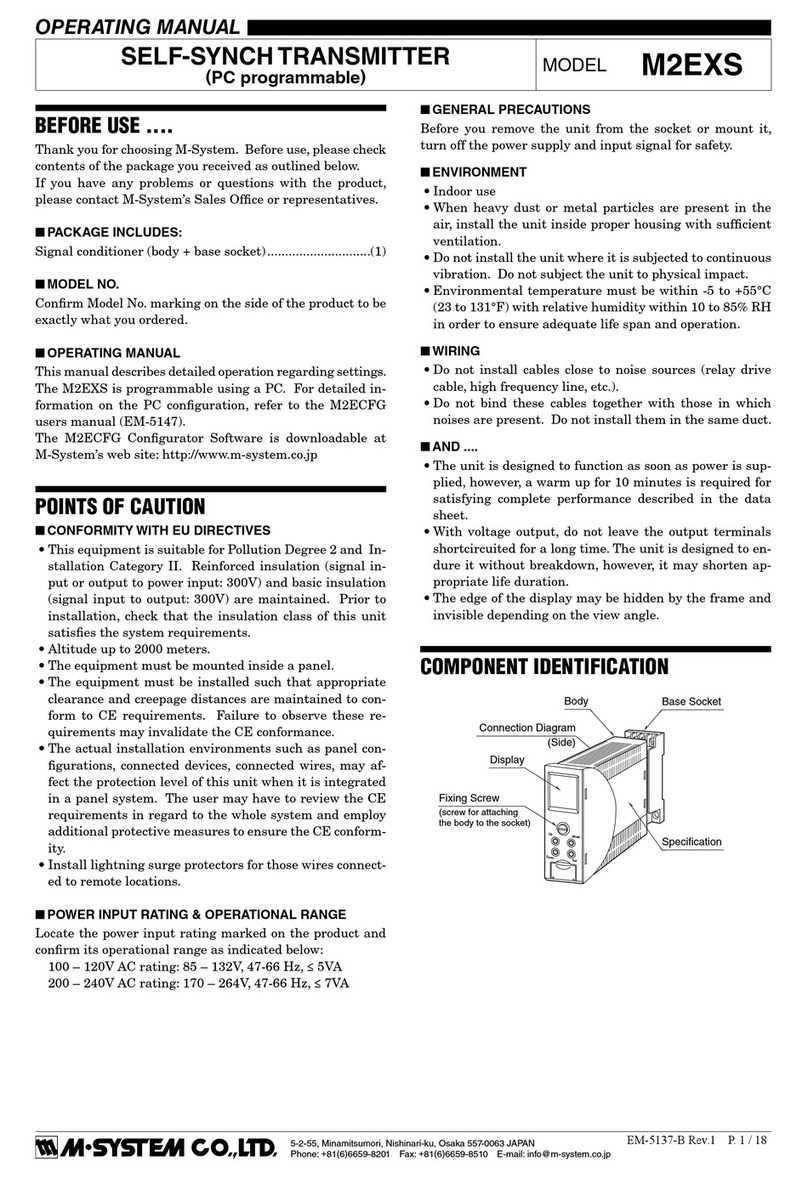
M-system M2EXS User manual

M-system

M-system M2EXS User manual

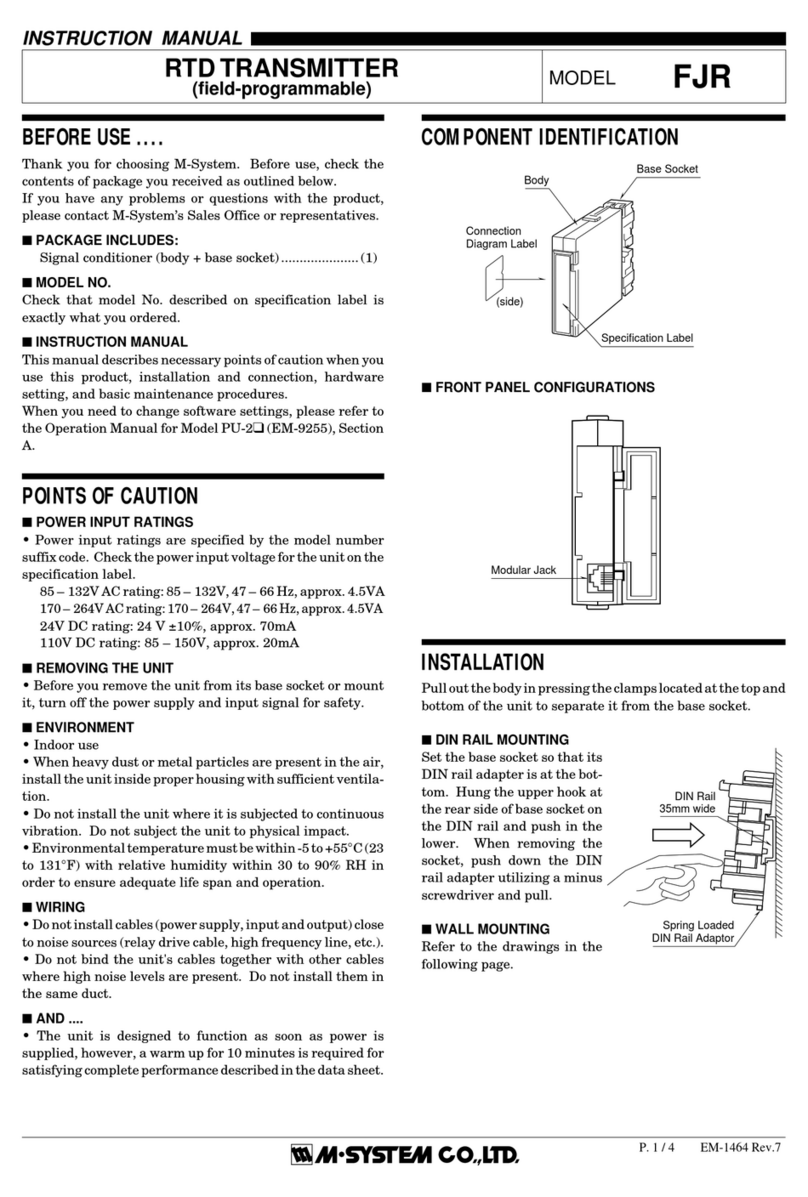
M-system FJR User manual

M-system

M-system FJR User manual

M-system MXS User manual

M-system

M-system MXS User manual

M-system W5FV User manual

M-system

M-system W5FV User manual

M-system 10JT User manual

M-system

M-system 10JT User manual

M-system 17PE User manual

M-system

M-system 17PE User manual

M-system M2EXV User manual

M-system

M-system M2EXV User manual

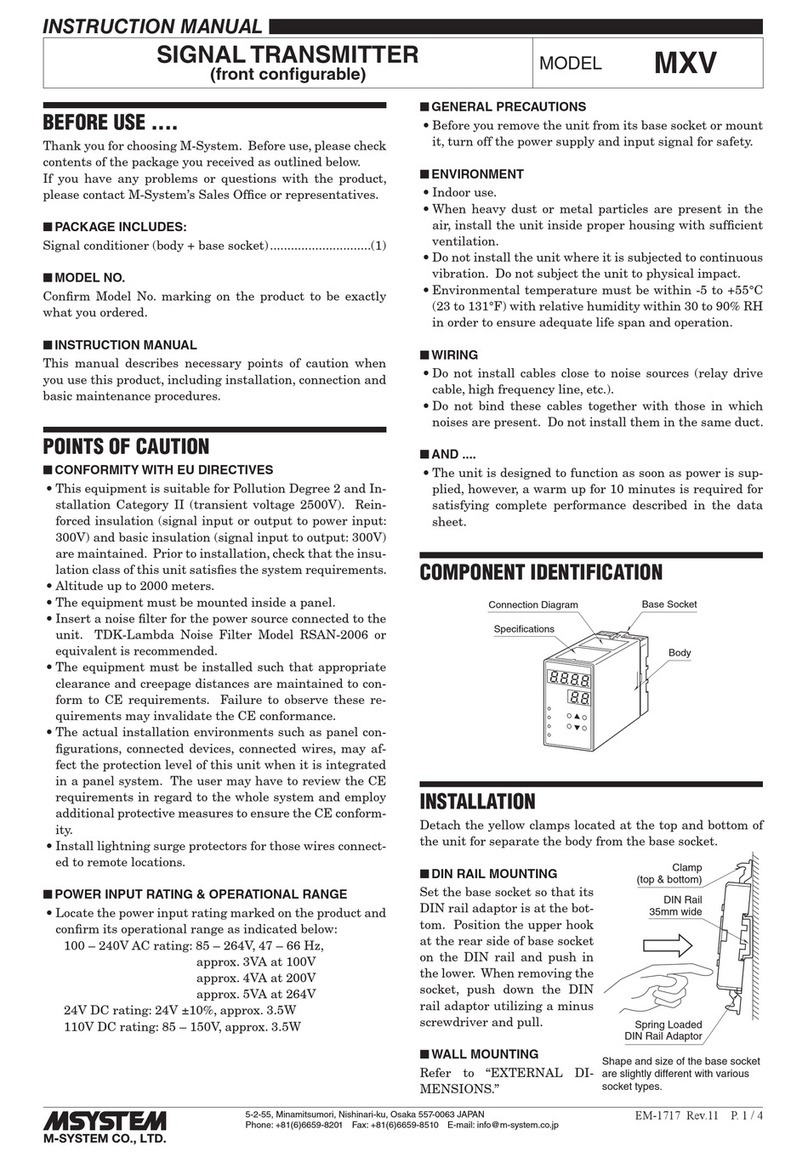
M-system MXV User manual

M-system

M-system MXV User manual

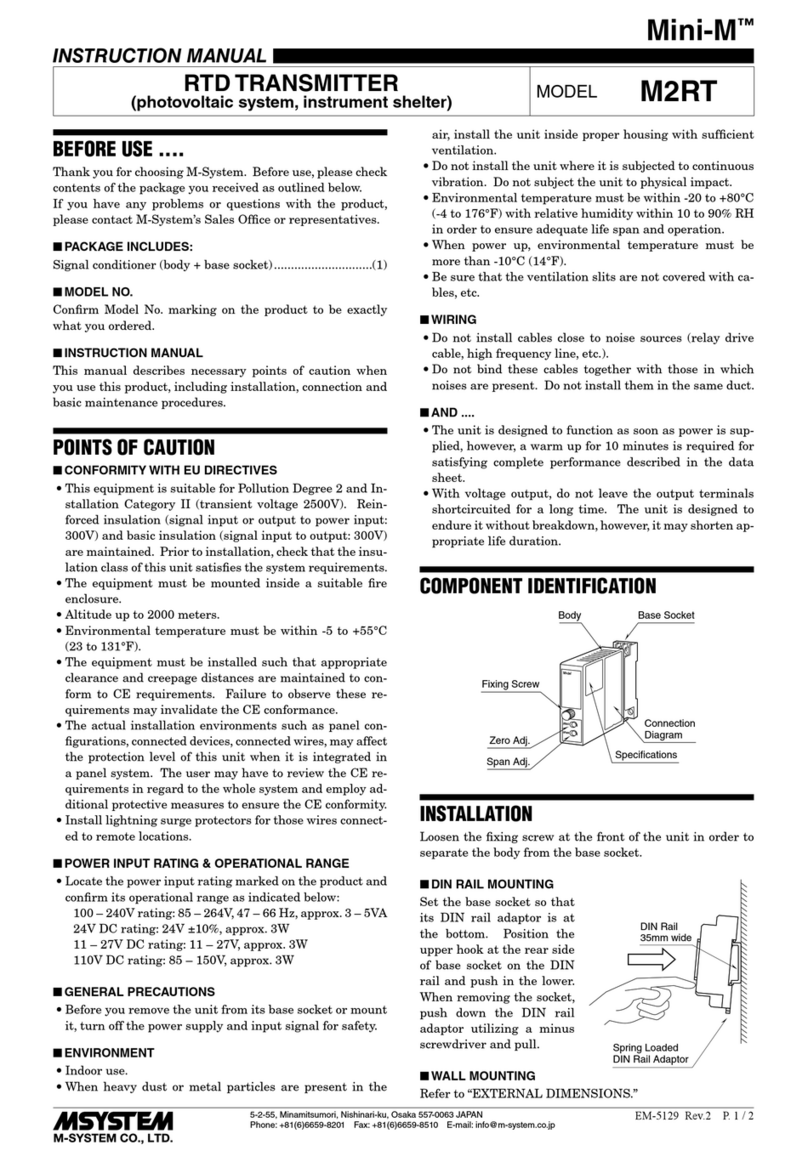
M-system Mini-M M2RT User manual

M-system

M-system Mini-M M2RT User manual

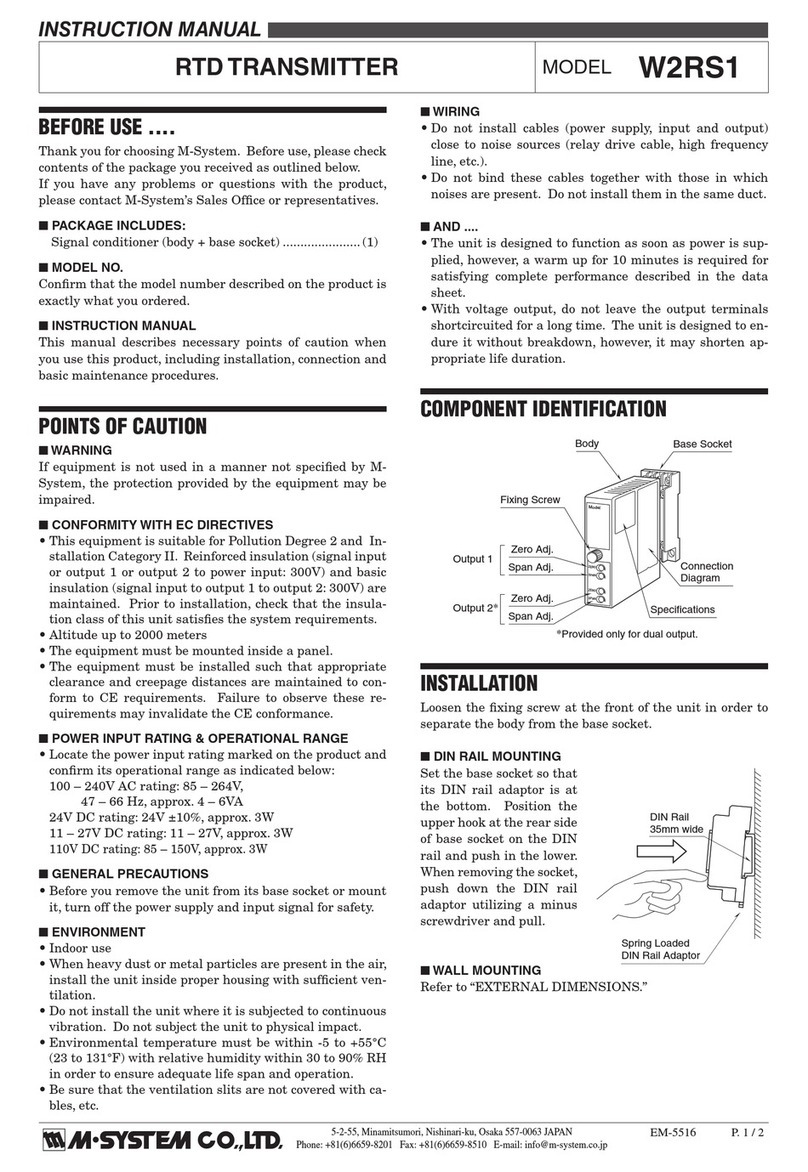
M-system W2RS1 User manual

M-system

M-system W2RS1 User manual

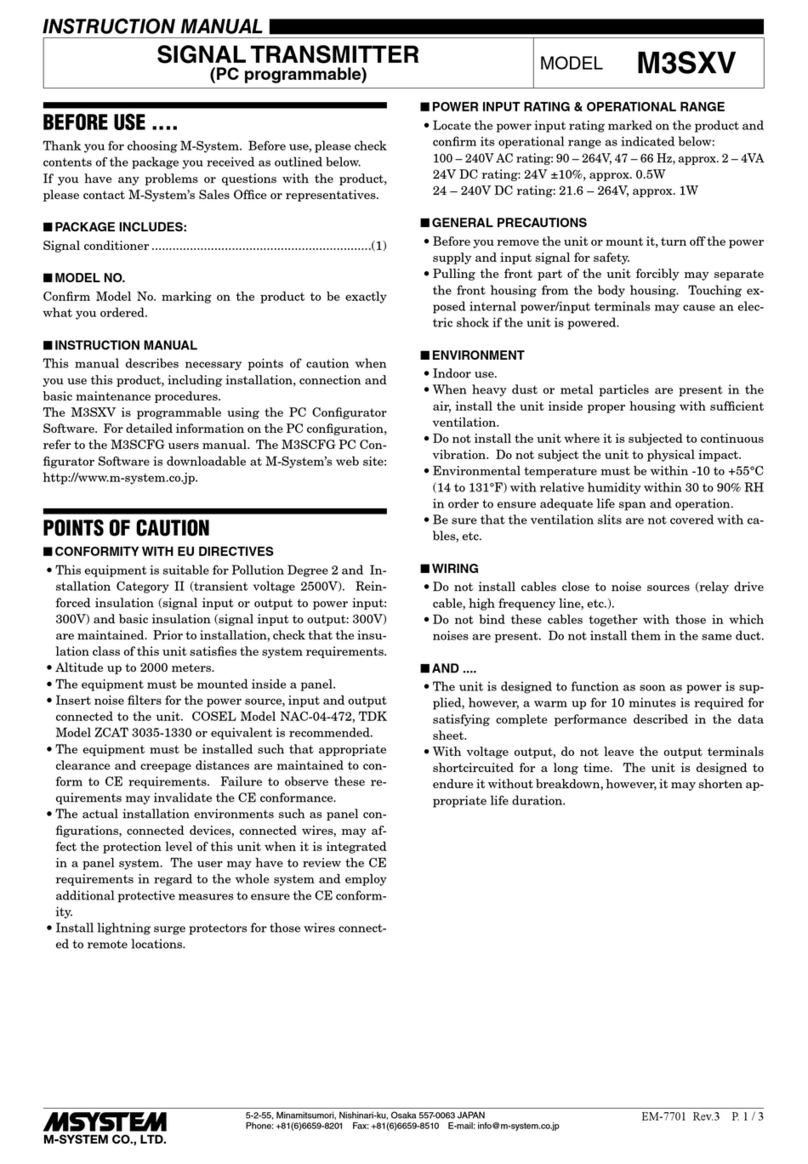
M-system M3SXV User manual

M-system

M-system M3SXV User manual

M-system W2CA User manual

M-system

M-system W2CA User manual

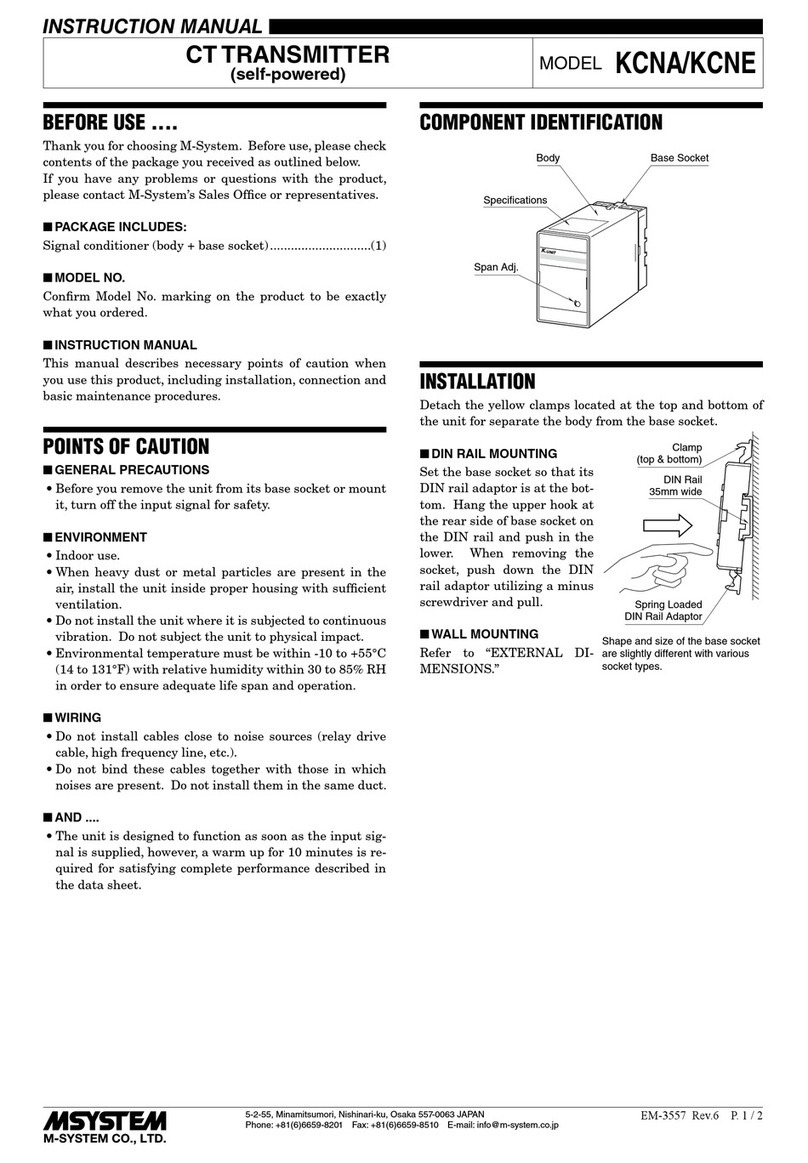
M-system KCNA User manual

M-system

M-system KCNA User manual

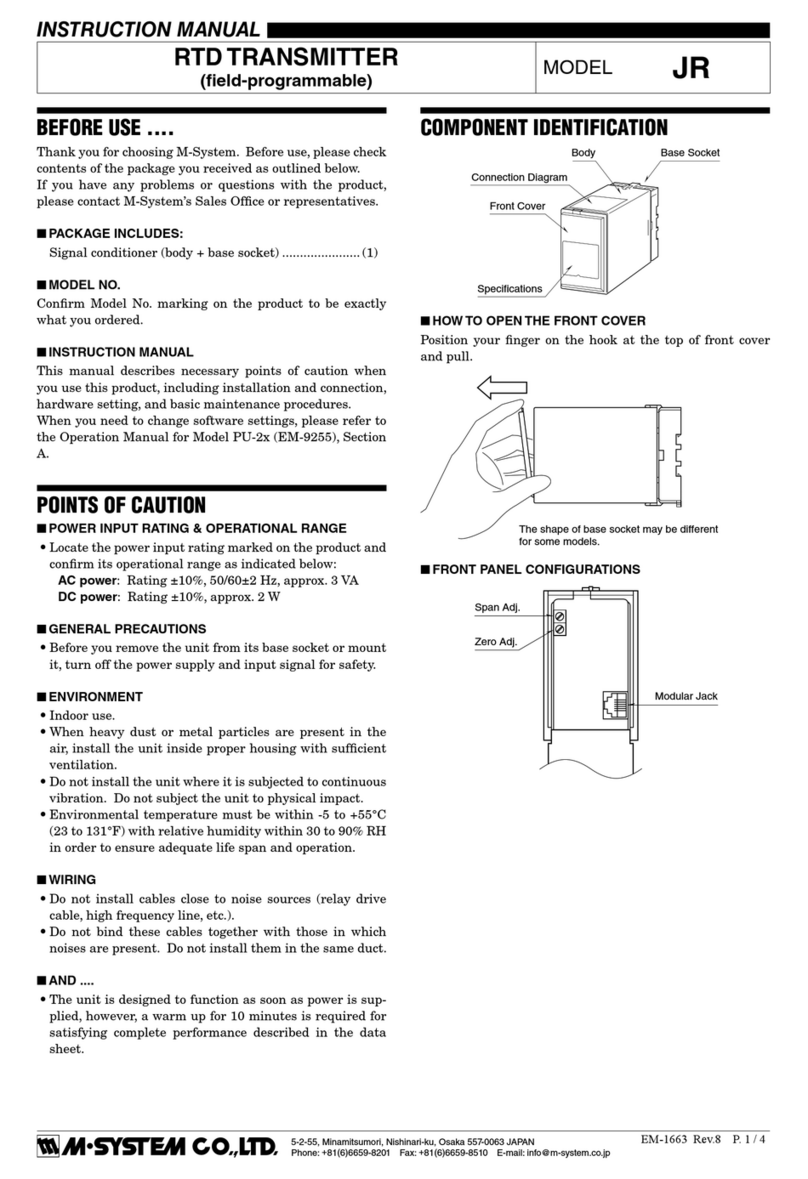
M-system JR User manual

M-system

M-system JR User manual

M-system M5XPA User manual

M-system

M-system M5XPA User manual

M-system W2CFG User manual

M-system

M-system W2CFG User manual

M-system M6SCTC User manual

M-system

M-system M6SCTC User manual

Popular Transmitter manuals by other brands

NIVELCO EasyTREK SCA-300 Series Programming manual

NIVELCO

NIVELCO EasyTREK SCA-300 Series Programming manual

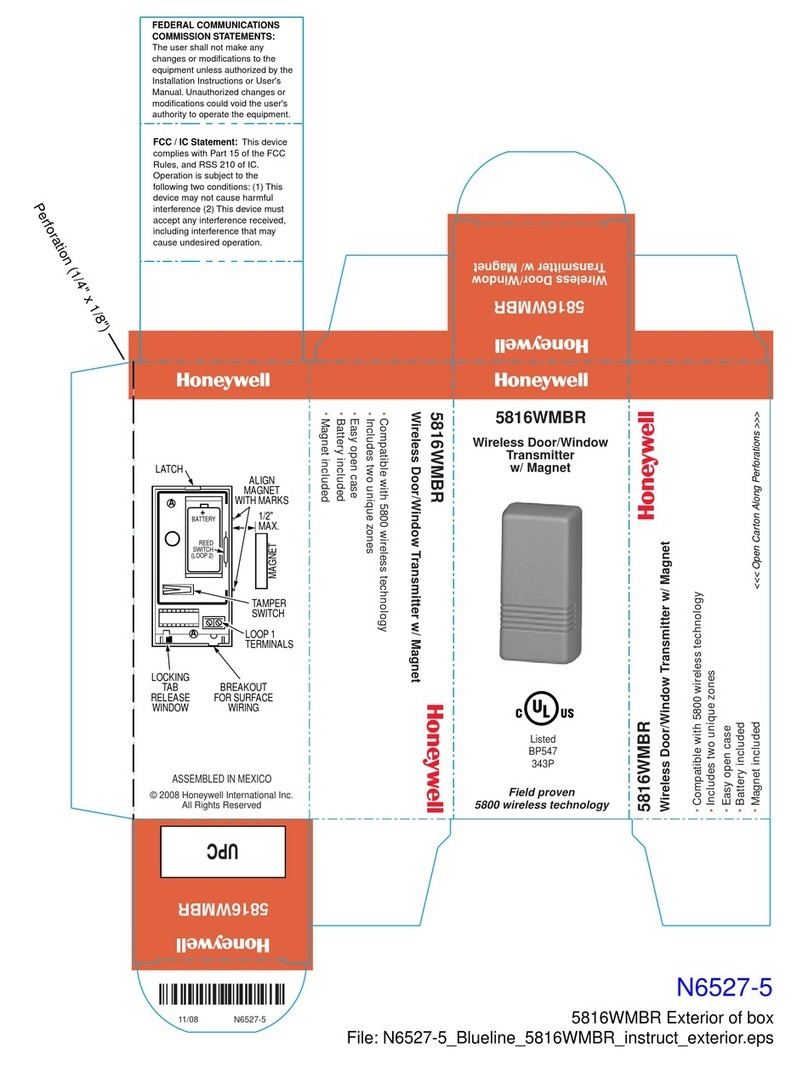
Honeywell 5816WMBR installation instructions

Honeywell

Honeywell 5816WMBR installation instructions

Kamstrup READy MTU Installation and operation guide

Kamstrup

Kamstrup READy MTU Installation and operation guide

Omega ZW Series user guide

Omega

Omega ZW Series user guide

ABB Field 264H Instructions for installation

ABB

ABB Field 264H Instructions for installation

Alinco DJ-V17T Service manual

Alinco

Alinco DJ-V17T Service manual

Dejero EnGo 3x manual

Dejero

Dejero EnGo 3x manual

Rosemount 4600 Reference manual

Rosemount

Rosemount 4600 Reference manual

Speaka Professional 2342740 operating instructions

Speaka Professional

Speaka Professional 2342740 operating instructions

trubomat GAB 1000 instruction manual

trubomat

trubomat GAB 1000 instruction manual

Teledyne Analytical Instruments LXT-380 instructions

Teledyne Analytical Instruments

Teledyne Analytical Instruments LXT-380 instructions

Rondish UT-11 quick start guide

Rondish

Rondish UT-11 quick start guide

MG 10JRE instruction manual

MG

MG 10JRE instruction manual

Burkert 8177 operating instructions

Burkert

Burkert 8177 operating instructions

Firetide HotPort 3203 Hardware installation guide

Firetide

Firetide HotPort 3203 Hardware installation guide

Tele Radio T9-02 User instructions

Tele Radio

Tele Radio T9-02 User instructions

Rotronic HygroFlex HF3 Series user guide

Rotronic

Rotronic HygroFlex HF3 Series user guide

Jamara FCX6 Pro Tel Instruction

Jamara

Jamara FCX6 Pro Tel Instruction

https://manuals.online logo
https://manuals.online logoBrands
  • About & Mission
  • Contact us
  • Privacy Policy
  • Terms and Conditions

Copyright 2026 Manuals.Online. All Rights Reserved.

B3FR
P. 1 / 4
EM-7514 Rev.6
5-2-55, Minamitsumori, Nishinari-ku, Osaka 557-0063 JAPAN
Phone: +81(6)6659-8201 Fax: +81(6)6659-8510 E-mail: info@m-system.co.jp
RTD TRANSMITTER
(eld-congurable) MODEL B3FR
INSTRUCTION MANUAL
BEFORE USE ....
Thank you for choosing M-System. Before use, please check
contents of the package you received as outlined below.
If you have any problems or questions with the product,
please contact M-System’s Sales Office or representatives.
■PACKAGE INCLUDES:
Signal conditioner......................................................... (1)
■MODEL NO.
Confirm Model No. marking on the product to be exactly
what you ordered.
■INSTRUCTION MANUAL
This manual describes necessary points of caution when
you use this product, including installation, connection and
basic maintenance procedures.
POINTS OF CAUTION
■CONFORMITY WITH UL
•ThisequipmentissuitableforuseinaPollutionDegree2
environment.
•DONOT connecttheRTDtocircuitsgreaterthan30V
rmsand42.4Vpeakor60VDC.
•Thisequipmentistobeusedwiththemaximumoperat-
ingvoltage30Vrmsand42.4Vpeakor60VDC.
•Theequipmentmustbemountedinsideasuitablereen-
closure.
•Operatingtemperature:-40to+55°C(-40to+131°F)
•Altitudeupto2000meters.
■CONFORMITY WITH EU DIRECTIVES
•Functionalinsulationismaintainedbetweensignalinput
and output.
•Theequipmentmustbemountedinsideapanel.
•Installlightningsurgeprotectorsforthosewiresconnected
to remote locations.
•Insertanoiselterforinputandoutputconnectedtothe
unit.TDKNoiseFilterModelZCAT3035-1330orequiva-
lent is recommended.
•The actual installation environments such as panel con-
figurations, connected devices, connected wires, may affect
the protection level of this unit when it is integrated in a
panel system. The user may have to review the CE require-
ments in regard to the whole system and employ additional
protective measures to ensure the CE conformity.
■SAFETY PRECAUTION
Before you remove the unit or mount it, turn off the power
supply and input signal for safety.
■ENVIRONMENT
•Indooruse
•Whenheavydustormetalparticlesarepresentintheair,
install the unit inside proper housing with sufficient ven-
tilation.
•Donotinstalltheunitwhereitissubjectedtocontinuous
vibration.Donotsubjecttheunittophysicalimpact.
•Environmentaltemperaturemustbewithin-40to+85°C
(-40to+185°F)withrelativehumiditywithin0to95%RH
in order to ensure adequate life span and operation.
•Besurethattheventilationslitsarenotcoveredwithca-
bles, etc.
■WIRING
•Do not install cables close to noise sources (relay drive
cable, high frequency line, etc.).
•Do not bind these cables together with those in which
noisesarepresent.Donotinstalltheminthesameduct.
■AND ....
The unit is designed to function as soon as power is sup-
plied,however,awarmupfor10minutesisrequiredforsat-
isfying complete performance described in the data sheet.
COMPONENT IDENTIFICATION
■HOW TO OPEN THE COVER WHEN SETTING DIP SW
Holdatthetopandbottomoftheunitasshownbelowand
slide the housing cover gently to open until it hits the latch-
ing inside the unit.
Body
SW Configuration
Zero Adj.
Span Adj.
Specifications
(side)
• Housing Cover Fully Opened
Caution: DO NOT PULL beyond where the housing cover is latched.
The plastic housing may be damaged.

B3FR
P. 2 / 4
EM-7514 Rev.6
5-2-55, Minamitsumori, Nishinari-ku, Osaka 557-0063 JAPAN
Phone: +81(6)6659-8201 Fax: +81(6)6659-8510 E-mail: info@m-system.co.jp
■HOW TO SEPARATE THE TERMINAL BLOCKS
When you need to separate the terminal blocks from the
transmitter body for wiring, insert a minus driver between
the terminal block and the housing body, pull up the driver
and pull out the terminal block.
INSTALLATION
■DIN RAIL MOUNTING
SettheunitsothatitsDINrailadaptorisatthebottom.
Positiontheupperhookattherearsideoftheunitonthe
DINrailandpushinthelower.Whenremovingtheunit,
push down the DIN rail adaptor utilizing a minus screw-
driver and pull.
DIN Rail
35mm wide
Spring Loaded
DIN Rail Adaptor
12
mA
MONITOR
–
+
–
LOAD
11
10
OUTPUT
24 V DC
4 – 20 mA DC
*
* DC ammeter’s internal resistance 10 ohms max.
6
5
4
B
B
A
RTD
EXTERNAL VIEWS
1
4
6
3
5
2
ON
1
SW2
SW3
2345678
Input Config. DIP SW
Input Config. Rotary SW
10 11 12
456
Zero Adj.
Span Adj.
■ FRONT VIEW ■ SIDE VIEW
SW1
TERMINAL CONNECTIONS
Connect the unit as in the diagram below.
■WIRING INSTRUCTIONS
 •Applicablewiresize
  Solid: 0.2to2.5mm2(0.55to1.75dia.)
  Stranded: 0.2to2.5mm2
Tinning wire ends may cause contact failure
and therefore is not recommended.
  Ferruled: 0.2to1.5mm2(0.55to1.35dia.)
    ThefollowingPhoenixContactterminalsare
   recommended:
    AI0,25-8YE 0.2to0.25mm2
    AI0,34-8TQ 0.25to0.34mm2
    AI0,5-8WH 0.34to0.5mm2
    AI0,75-8GY 0.5to0.75mm2
    AI1,0-8RD  0.75to1.0mm2
    AI1,5-8BK  1.0to1.5mm2
 •Exposewireconductorsby8mm(0.31”).
8 mm 8 mm
4 mm dia.
max.
4 mm dia.
max.
Wire exposure Recommended
ferruled wire
B3FR
P. 3 / 4
EM-7514 Rev.6
5-2-55, Minamitsumori, Nishinari-ku, Osaka 557-0063 JAPAN
Phone: +81(6)6659-8201 Fax: +81(6)6659-8510 E-mail: info@m-system.co.jp
■GENERAL PROCEDURE
FirstselectacoarserangeusingtheinternalDIPswitches(SW1,SW2andSW3)accordingtoTables1through4below.
Thenapplysimulated0%and100%inputsandne-tunetheoutputrangeto4mAand20mAusingthefrontzeroandspan
adjustments.
DIPSWsettingcanbechangedwhilethepowerisappliedtothetransmitter.Linearizationandzero/spanadjustmentswill
not perform correctly with inaccurate switch configuration but it will not damage the unit in anyway.
■ SELECTING DIP SW (coarse adjustment)
INPUT TYPE & RANGE
Choose the desired range (usable range = highest span selectable) according to Table 1. The minimum span requirements in
the table must be met when choosing the desired range.
Table 1 ■= ON
RTD USABLE RANGE MIN. SPAN SW1 SW2
12345678
Pt100(JIS‘97,IEC) -50to+750°C -58to+1382°F 300°C 540°F 1■ ■
-50to+350°C -58to+662°F 100°C 180°F 2 ■ ■
-50to+150°C -58to+302°F 50°C 90°F 3 ■ ■
Ni120 -50to+200°C -58to+392°F 100°C 180°F 4■ ■
-50to+100°C -58to+212°F 50°C 90°F 5 ■ ■
Cu10@25°C -50to+250°C -58to+482°F 100°C 180°F 6 ■ ■
BURNOUT
SeeTable2.
Table 2 ■= ON
BURNOUT SW3
5678
Upscale ■ ■
Downscale ■ ■
No burnout
GAIN
SeeTable3.
Thegainisdenedbythefollowingequation:
[Span of usable range]
 Gain=–––––––––––––––––––––––×100(%)
[Span of calibration range]
where
 [Spanofusablerange](°C)
   =[Max.valueofusablerange]–(-50*1)
 [Spanofcalibrationrange](°C)
   =[100%inputtemp.]–[0%inputtemp.]
*1.-58for°F
Table 3 ■= ON
GAIN SW2
123
267%<Gain≤400% ■
167%<Gain≤267% ■
100%≤Gain≤167% ■
OFFSET
See Table 4.
Theoffsetisdenedbythefollowingequation:
    [0%inputtemp.]–(-50*1)
 Offset=–––––––––––––––––––––––×100(%)  
[Span of calibration range]
*1.-58for°F
Table 4 ■= ON
OFFSET SW3-4
Factorydefaultsetting ■
Offset ≥ 26%*2 and when 0% output cannot be
calibratedwithzeroadjustment.*2.28%forNi120.
EXAMPLE
Pt100,0–90°C,Upscaleburnout
1) SensortypeandRange:AccordingtoTable1,choose‘Pt
100,-50–+150°C’range.
➠SetSW1to‘3,’SW2-1andSW2-6toON.
2) Burnout:AccordingtoTable2,choose‘Upscale.’
➠SetSW3-5andSW3-7toON.
3) Gain
[150–(-50)]
 –––––––––––×100=222(%)
 [90–0]
➠AccordingtoTable3,setSW3-2toON.
4) Offset
[0–(-50)]
 –––––––––––×100=25(%)
 [150–(-50)]
➠AccordingtoTable4,SW3-4remainsOFF.
■ ZERO & SPAN ADJUSTMENTS (ne adjustments)
Referring to ‘ADJUSTMENT PROCEDURE’ in the next
page,apply0%and100%inputsignalsandadjusttheZero
tohave4 mA output and Span tohave20 mA output re-
spectively.
ON ON
1
SW2
2345678
1
SW3
2345678
SW1
1
4
6
3
5
2
RANGE CONFIGURATION
B3FR
P. 4 / 4
EM-7514 Rev.6
5-2-55, Minamitsumori, Nishinari-ku, Osaka 557-0063 JAPAN
Phone: +81(6)6659-8201 Fax: +81(6)6659-8510 E-mail: info@m-system.co.jp
ADJUSTMENT PROCEDURE
This unit is calibrated at the factory to meet the ordered
specifications, therefore you usually do not need any cali-
bration.
Formatchingthesignaltoareceivinginstrumentorincase
ofregularcalibration,adjusttheoutputasexplainedinthe
following.
■HOW TO CALIBRATE THE OUTPUT SIGNAL
Use a signal source and measuring instruments of sufficient
accuracy level. Turn the power supply on and warm up for
morethan10minutes.
1) ZERO:Apply0%inputandadjustoutputto0%.
2) SPAN:Apply100%inputandadjustoutputto100%.
3) CheckZEROadjustmentagainwith0%input.
4) When ZERO value is changed, repeat the above proce-
dure1)–3).
MAINTENANCE
Regularcalibrationprocedureisexplainedbelow:
■CALIBRATION
Warmuptheunitforatleast10minutes.Apply0%,25%,
50%, 75% and 100% input signal.  Check that the output
signal for the respective input signal remains within accu-
racydescribedinthedatasheet.Whentheoutputisoutof
tolerance, recalibrate the unit according to the“ADJUST-
MENTPROCEDURE”explainedearlier.
CHECKING
1) Terminalwiring:Checkthatallcablesarecorrectlycon-
nected according to the connection diagram.
2)DIPSWsetting:Checkthattheswitchesaresettoap-
propriate positions.
3) Input:  Checkvoltageacrosstheterminal4–5witha
sensitive voltmeter.
 (With20°Cor68°F,approx.110mVwithPt100,approx.
140mVwithNi120,approx.10mVwithCu10.)
 IftheRTDoritsextensionwiresarebroken,theoutput
goes over 100% (below 0% with downscale protection)
due to burnout function. Check leadwires in such a case.
4) Output:  Check that the loadis within the permissible
limit including wiring resistance.
    SupplyVoltage(V)–12(V)
 LoadResistance(Ω)=––––––––––––––––––––––––
     0.02(A)
(including leadwire resistance)
5) Whenyouchecktheoutputsignal,connectanammeter
of which the internal resistance is of 10 Ω max. to the
monitor terminals.
EXTERNAL DIMENSIONS mm (inch)
10 11 12
456
106 (4.17)
18 (.71) 110.5 (4.35)
62 (2.44)
[5 (.20)]
DIN RAIL
35mm wide
• When mounting, no extra space is needed between units.