manuals.online logo
Brands
  1. Home
  2. •
  3. Brands
  4. •
  5. Paradox
  6. •
  7. Keypad
  8. •
  9. Paradox REM3 User manual

Paradox REM3 User manual

Other Paradox Keypad manuals

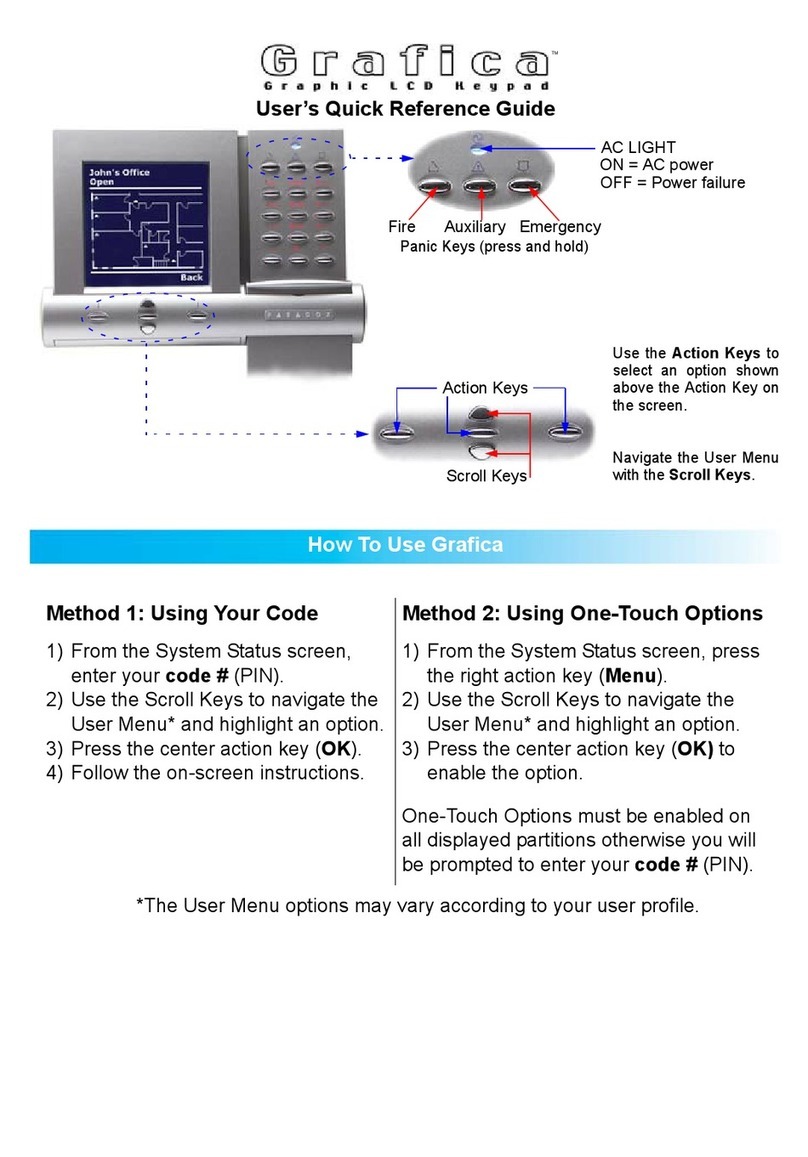
Paradox Grafica User manual

Paradox

Paradox Grafica User manual

Paradox Esprit User manual

Paradox

Paradox Esprit User manual

Paradox Digiplex EVO DGP2-641BL User manual

Paradox

Paradox Digiplex EVO DGP2-641BL User manual

Paradox Grafica User manual

Paradox

Paradox Grafica User manual

Paradox Grafica DNE-K07 Operating instructions

Paradox

Paradox Grafica DNE-K07 Operating instructions

Paradox TM50 Touch User manual

Paradox

Paradox TM50 Touch User manual

Paradox K656 Touch Sense User manual

Paradox

Paradox K656 Touch Sense User manual

Paradox 1686V User manual

Paradox

Paradox 1686V User manual

Paradox K641+ User manual

Paradox

Paradox K641+ User manual

Paradox K641+ User manual

Paradox

Paradox K641+ User manual

Paradox Digiplex DGP-641 User manual

Paradox

Paradox Digiplex DGP-641 User manual

Paradox Esprit 616 User manual

Paradox

Paradox Esprit 616 User manual

Paradox Digiplex EVO DGP2-641BL User manual

Paradox

Paradox Digiplex EVO DGP2-641BL User manual

Paradox Digiplex DGP2-648 User manual

Paradox

Paradox Digiplex DGP2-648 User manual

Paradox Imperial Digiplex Evo R915 User manual

Paradox

Paradox Imperial Digiplex Evo R915 User manual

Paradox TM50 Touch User manual

Paradox

Paradox TM50 Touch User manual

Paradox Paradox Digiplex DGP-610 User manual

Paradox

Paradox Paradox Digiplex DGP-610 User manual

Paradox K35 User manual

Paradox

Paradox K35 User manual

Paradox Paradox Esprit 616LED User manual

Paradox

Paradox Paradox Esprit 616LED User manual

Paradox Spectra 1641BL User manual

Paradox

Paradox Spectra 1641BL User manual

Paradox Digiplex DGP-641 User manual

Paradox

Paradox Digiplex DGP-641 User manual

Paradox Crimewatch TM50 User manual

Paradox

Paradox Crimewatch TM50 User manual

Paradox TM40 User manual

Paradox

Paradox TM40 User manual

Paradox DGP2-641 User guide

Paradox

Paradox DGP2-641 User guide

Popular Keypad manuals by other brands

AAA 6150RFAAA Installation and setup guide

AAA

AAA 6150RFAAA Installation and setup guide

Fermax MDS Installation and programming manual

Fermax

Fermax MDS Installation and programming manual

ACT ACT PRO 1030 manual

ACT

ACT ACT PRO 1030 manual

Cardin SSB Series manual

Cardin

Cardin SSB Series manual

Harman Kardon KP 1 Specifications

Harman Kardon

Harman Kardon KP 1 Specifications

CYP CR-KP1 Operation manual

CYP

CYP CR-KP1 Operation manual

Aeware k-35 Series Quick reference card

Aeware

Aeware k-35 Series Quick reference card

Aritech CS-175 Series user guide

Aritech

Aritech CS-175 Series user guide

Lenze AC Tech MC SERIES installation instructions

Lenze AC Tech

Lenze AC Tech MC SERIES installation instructions

Burg Wächter secuENTRY 7711 operating instructions

Burg Wächter

Burg Wächter secuENTRY 7711 operating instructions

Aeware in.k450 Tech book

Aeware

Aeware in.k450 Tech book

Lenze EPM-H410 operating instructions

Lenze

Lenze EPM-H410 operating instructions

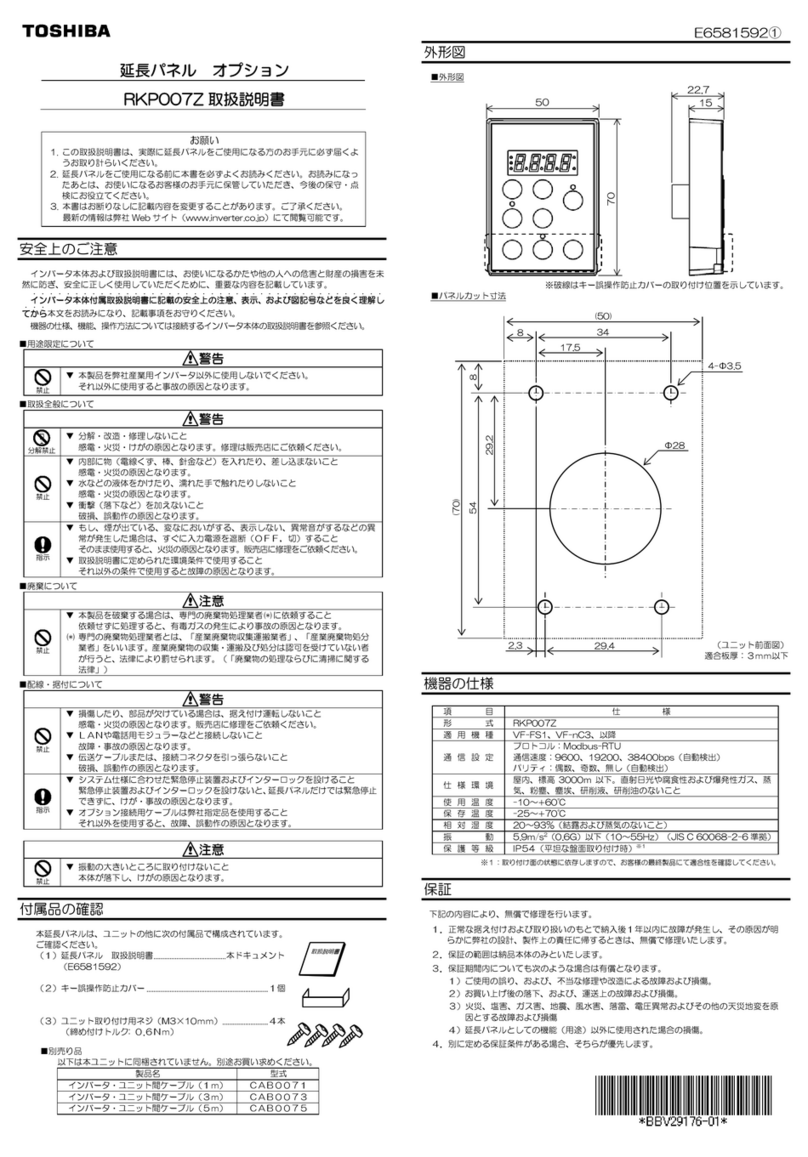
Toshiba RKP007Z user manual

Toshiba

Toshiba RKP007Z user manual

Elmes Electronic KB1 quick start guide

Elmes Electronic

Elmes Electronic KB1 quick start guide

Clare Controls ClareOne CLR-C1-PNC Installation sheet

Clare Controls

Clare Controls ClareOne CLR-C1-PNC Installation sheet

FM Electronics 4180 quick start guide

FM Electronics

FM Electronics 4180 quick start guide

AMX MIO-PRESTIGE-S Dimensional drawing

AMX

AMX MIO-PRESTIGE-S Dimensional drawing

why pro WHY-KP user manual

why pro

why pro WHY-KP user manual

manuals.online logo
manuals.online logoBrands
  • About & Mission
  • Contact us
  • Privacy Policy
  • Terms and Conditions

Copyright 2025 Manuals.Online. All Rights Reserved.

REM3-EI01 REM3
Hand-Held 2-Way Remote Keypad
V1.0
Instructions
Best
Good
Acceptable
Weak
RF Interference
High RF Activity
Low RF Activity
No RF Activity
Signal Strength Display
Press [i] in diagnostic mode to activate
the signal strength display. This shows
the quality of the signal received by the
control panel or MG-RTX3. It also allows
the evaluation of a site before the
installation of any wireless transmitter.
For example, place the REM3 where you
intend to install a wireless door contact to
see the quality of the signal strength.
RF Activity
This shows the amount of RF activity
found on the same frequency as the
REM3. If the four LEDs stay lit up, RF
interference has been detected. This can
be used to confirm the presence of RF
interference before installation.
Information Key
Action Keys
Refer to “Action / Combo Keys” on
page 2.
Diagnostic Mode
To access the signal strength and RF activity displays (LED indicators): Press and hold the Information key to unlock, then press and hold the following
three keys simultaneously: Information key ([i]), action key 1, and action key 2 (refer to “Action / Combo Keys” on page 2).
IMPORTANT: Repeated use of diagnostic mode will drain the battery.
Introduction
The REM3 combines the flexibility of a keypad with the convenience
and mobility of a remote control. Its 15 buttons allow for a greater level
of interaction with the system than regular remote controls, and the two-
way transceiver allows for accurate feedback for up to 2 partitions.
Assigning the REM3 to the Panel
Technical Specifications
RF frequency 433MHz or 868MHz
Battery type One 3V lithium battery (2032)
Battery life Battery life expectancy is a minimum of 1 year
Range (typical in a
residential environment) 45m (150ft)
Compatibility MG5000 / MG5050 V2.60 and higher /
Spectra SP Series V2.60 and higher in conjunction
with a MG-RTX3 V1.31 and higher.
IMPORTANT: The REM3 is not compatible with the
MG-RPT1 and will not benefit from the additional
range.
Dimensions 8cm x 3.4cm x 1.5cm (3.1in x 1.3in x 0.6in)
Step Action on Keypad Details
1[]+ [MASTER CODE]The []key will flash.
LED/key on = programmed user.
[PARTITION MASTER CODE]may also be used.
2[USER NUMBER]MG10LEDV/H / K636 = 1 digit: 1 to 0 (10)
MG32I / MG32LRF/ MG32LED / MG32LCD =
2 digits: 01 to 32
3[CODE]Enter 4- or 6-digit code.
4[CONFIRM CODE]Re-enter 4- or 6-digit code.
5[LEARN REMOTE]Press and hold the Information key ([i]) on
the designated remote.
See the MGSP User Guide for additional information.
Action Key Assignment
The REM3 provides multiple programmable action keys (refer to “Action /
Combo Keys” on page 2). See sections [610] to [642] in the panel to define
the six action keys and two combo keys:
Code Entry for Action Keys
The six action keys (PGM1 to PGM6) can be programmed to require a code
entry for use. See programming sections [360] to [376],options [1] and [5], in
the panel to determine if action keys 1 to 6 require code entry.
One-touch Action Keys
The REM3 offers the use of one-touch action keys. The use of one-touch
action keys must be enabled in section [703], options [1] to [3] in the panel.
RC# PGM1
[9] PGM2
[0] PGM3
[x] PGM4
[3]PGM5
[ ] PGM6
[] PGM
[x] + [3]PGM
[]+[]
Default: [B] [C] [D] [E] [5] [6] [SLEEP][SLEEP]
[610] ALL ___ ___ ___ ___ ___ ___ ___ ___
IMPORTANT: When section [610] is accessed, the panel will copy the saved value of that
section to all remotes.
[611] 1___ ___ ___ ___ ___ ___ ___ ___
___ ___ ___ ___ ___ ___ ___ ___
[642] 32 ___ ___ ___ ___ ___ ___ ___ ___
OFF ON
[360] [1] All odd-numbered REM3s N=Code entry N= One-touch action
[5] All even-numbered REM3s N=Code entry N= One-touch action
[361] [1] RC#1 N=Code entry N= One-touch action
[5] RC#2 N=Code entry N= One-touch action
[376] [1] RC#31 N=Code entry N= One-touch action
[5] RC#32 N=Code entry N= One-touch action
[703] Arming/Disarming Options 1
Option OFF ON
[1] One-touch regular arming NDisabled NEnabled
[2] One-touch stay arming NDisabled NEnabled
[3] One-touch sleep arming NDisabled NEnabled
[SLEEP]- Empty / Button disabled
[1] -Regular / Regular Force arming
[2] -Stay / Stay Force arming
[3] - N/A
[4] - Sleep / Sleep Force arming
[5] -PGM Activation (Event Group #22)
[6] - PGM Activation (Event Group #23)
[7] - N/A
[8] - Panic 1
[9] - Panic 2
[A] - Panic 3
[B] - PGM Activation (Event Group #8)
[C] - PGM Activation (Event Group #9)
[D] - PGM Activation (Event Group #10)
[E] - PGM Activation (Event Group #11)
[F] - Paramedic alarm
Action Key Definitions Table
PARADOX.COM
Printed in Canada 05/2008

User Instructions
Overview
1: Information Key and LED
Information Key:
Press and hold to unlock the remote. The
remote will beep once and the Arm LEDs will
display the system status. It will lock again after
5 seconds of inactivity.
2: Arm Keys and LEDs
3: Action / Combo Keys
Action key 1 to 6: These keys can be used to
trigger an action defined by the user. Press and
hold the Information key to unlock the remote,
then press and hold the desired action key to
trigger the programmed actions, such as
toggling a PGM. Depending on the settings in
sections [360] to [376], you may need to enter
a user code after you press the action key(s).
Refer to the control panel’s programming guide for details.
Combo Keys: Action keys 3 and 4 and keys 5 and 6 can be pressed both
at the same time to trigger an action without unlocking the remote or
entering a user code (commonly used as Panic keys). These combo keys
must be defined by the installer as they are empty by default.
Using the Remote
1. Press and hold the Information key to unlock the remote.
2. Press and hold the [ARM], [SLP], [STAY] or [OFF] key until the beep*.
3. Enter your code on the remote.
* Press and hold both keys simultaneously on both partitions to change
their status with one code entry.
One Touch Action Keys
If enabled (after the remote is unlocked), hold the [ARM], [SLP], [STAY] or
[OFF]key until the second beep to change the status of the system without
entering your user code.
This can only be done to change between Sleep and Stay arming or to
fully arm the system. You always need to enter your user code to disarm
the system or go from full arm to sleep or stay arm.
How to Replace the Battery
1. Remove the screws from the back of the remote control. Carefully
remove the back cover to avoid losing the two rubber cylindrical
buffers.
2. Pull the tab to remove the battery.
3. Insert the new battery by placing it in the battery holder. Make sure
the positive side of the battery is inserted face up.
4. Set the back cover in place, and fasten it with the screws.
Warranty
For complete warranty information on this product please refer to the Limited
Warranty Statement found on the website www.paradox.com/terms. Your use of the
Paradox product signifies your acceptance of all warranty terms and conditions.
© 2008 Paradox Security Systems Ltd. All rights reserved. Specifications may

change without prior notice. One or more of the following US patents may apply:
7046142, 6215399, 6111256, 6104319, 5920259, 5886632, 5721542, 5287111,
5119069, 5077549 and RE39406 and other pending patents may apply. Canadian
and international patents may also apply.
Magellan and Spectra SP Series are trademarks or registered trademarks of
Paradox Security Systems Ltd. or its affiliates in Canada, the United States and/or
other countries. For the latest information on products approvals, such as UL and
CE, please visit www.paradox.com.
LED feedback Details
Yellow REM3 unlocked
Green Waiting for code entry
Yellow flash Transmitting
Fast red flash with alarm beep Alarm in the system. Partition’s
Arm LED will also flash
Fast red flash with fail beep Communication with panel failure
Slow red blink Low battery indicator
Information Key and LED
Partition1 :
Arm Keys and
LEDs
Partition 2 :
Arm Keys and
Status LEDs
Action Keys:
PGM1 to PGM6 Combo Keys:
[x] + [3] and
[]+[]
Press an arm key to change the
status of a partition. When the Information
key is held (see above for more information),
these LEDs will display the status of the
system.
Key Pressed Result LED Feedback
[ARM] (red) Full arm ON = Partition armed
OFF = Partition disarmed
FLASH = Exit delay
FAST FLASH = Exit delay (final 10 sec.)
FAST FLASH + [i] = Partition in alarm
[SLP](yellow) Sleep arm
[STAY] (green) Stay arm
[OFF] (red*) Disarmortrigger
an exit delay in
StayD
* Some models feature a yellow LED instead of a red one.
Table 1: Auditory Feedback:
Status Feedback
System Arming Confirmation beep
Exit or Exit Delay Confirmation beep
Alarm Alarm Beep with fast red flash of
Information LED
Disarming Two beeps
Remote Unlock One beep
Entering or Exiting Diagnostic Mode Confirmation beep
Failure to communicate with panel Fail beep with fast red flash of
Information LED
Battery holder
Rubber cylindrical buffers