manuals.online logo
Brands
  1. Home
  2. •
  3. Brands
  4. •
  5. Samsung
  6. •
  7. Remote Control
  8. •
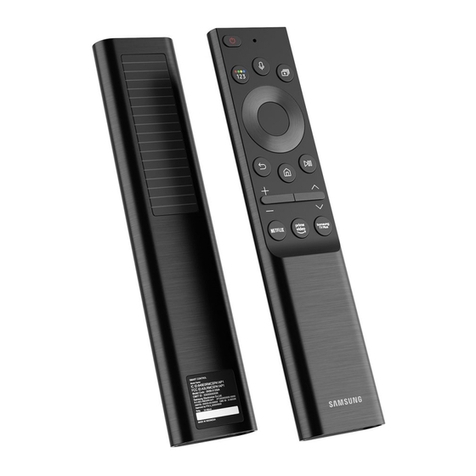
  9. Samsung SolarCell Remote User manual

Samsung SolarCell Remote User manual

Other manuals for SolarCell Remote

12

Other Samsung Remote Control manuals

Samsung SMART TV Guide

Samsung

Samsung SMART TV Guide

Samsung BN68-03092A-02 User manual

Samsung

Samsung BN68-03092A-02 User manual

Samsung SMART TV User manual

Samsung

Samsung SMART TV User manual

Samsung SolarCell Remote User manual

Samsung

Samsung SolarCell Remote User manual

Samsung SolarCell Remote User manual

Samsung

Samsung SolarCell Remote User manual

Samsung LED-C9000 RMC30C1 User manual

Samsung

Samsung LED-C9000 RMC30C1 User manual

Samsung MWR-AH01 User manual

Samsung

Samsung MWR-AH01 User manual

Samsung MWR-WE10 User manual

Samsung

Samsung MWR-WE10 User manual

Samsung RMC-QTD1 User manual

Samsung

Samsung RMC-QTD1 User manual

Samsung MWR-SH00 User manual

Samsung

Samsung MWR-SH00 User manual

Samsung RMCSPB1EP1 User manual

Samsung

Samsung RMCSPB1EP1 User manual

Samsung MWR-SH00 User manual

Samsung

Samsung MWR-SH00 User manual

Samsung SolarCell SE-GL-2002861 User manual

Samsung

Samsung SolarCell SE-GL-2002861 User manual

Samsung SRF2 User manual

Samsung

Samsung SRF2 User manual

Samsung MWR-WE10 User manual

Samsung

Samsung MWR-WE10 User manual

Samsung AR-KH03E User manual

Samsung

Samsung AR-KH03E User manual

Samsung MR-BH01 User manual

Samsung

Samsung MR-BH01 User manual

Samsung MWR-WE10N User manual

Samsung

Samsung MWR-WE10N User manual

Samsung ERV Guide

Samsung

Samsung ERV Guide

Samsung MWR-WH02 User manual

Samsung

Samsung MWR-WH02 User manual

Samsung MWR-WE13N User manual

Samsung

Samsung MWR-WE13N User manual

Samsung MWR-WE10N User manual

Samsung

Samsung MWR-WE10N User manual

Samsung C700 User manual

Samsung

Samsung C700 User manual

Samsung MWR-WE10 User manual

Samsung

Samsung MWR-WE10 User manual

Popular Remote Control manuals by other brands

Bircher Reglomat RC Duo 2 user guide

Bircher Reglomat

Bircher Reglomat RC Duo 2 user guide

Emerson RCBT100 owner's manual

Emerson

Emerson RCBT100 owner's manual

BILDA Element-6 user manual

BILDA

BILDA Element-6 user manual

Absima CR7P manual

Absima

Absima CR7P manual

Mitsubishi Electric PAR-32MAAG Instruction book

Mitsubishi Electric

Mitsubishi Electric PAR-32MAAG Instruction book

RCA RCRTBL08BE1 quick start guide

RCA

RCA RCRTBL08BE1 quick start guide

US Electronics NOVARI user guide

US Electronics

US Electronics NOVARI user guide

Panasonic EUR7622KB0 Operation guide

Panasonic

Panasonic EUR7622KB0 Operation guide

Bang & Olufsen Beo4 user manual

Bang & Olufsen

Bang & Olufsen Beo4 user manual

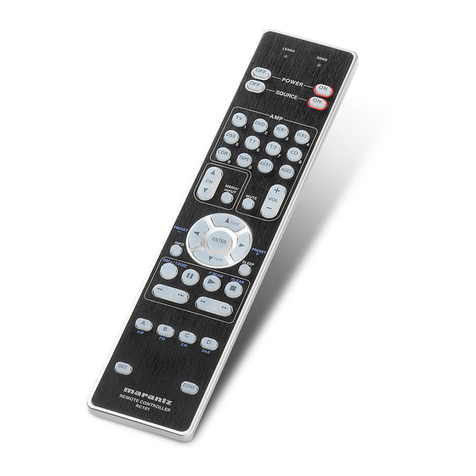
Marantz RC101 user guide

Marantz

Marantz RC101 user guide

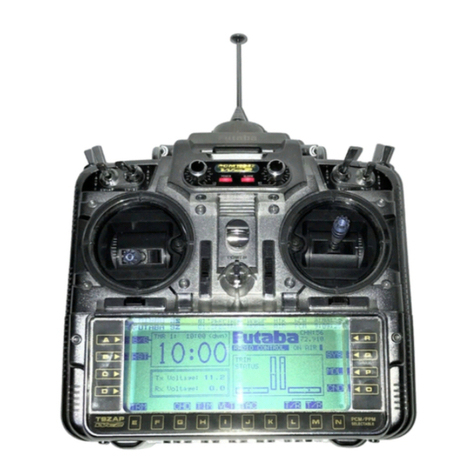
FUTABA 9ZAP - PART2 manual

FUTABA

FUTABA 9ZAP - PART2 manual

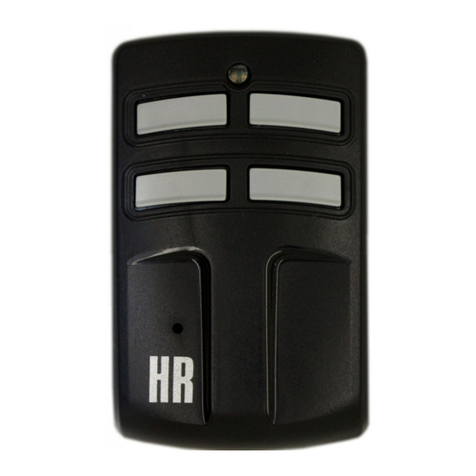
HR Matic HR MULTI 3 quick start guide

HR Matic

HR Matic HR MULTI 3 quick start guide

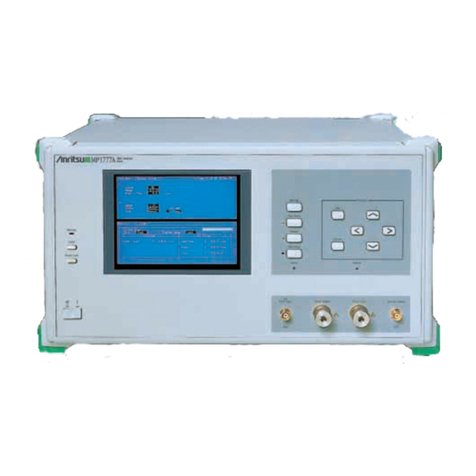
Anritsu MP1777A Operation manual

Anritsu

Anritsu MP1777A Operation manual

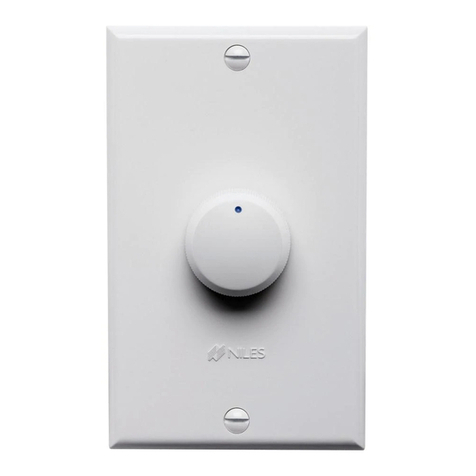
Niles WVC100 Installation & operating guide

Niles

Niles WVC100 Installation & operating guide

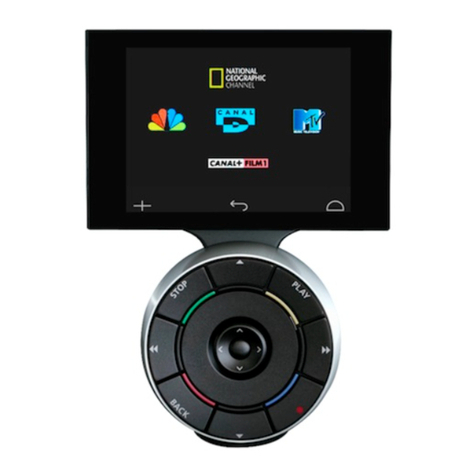
Bang & Olufsen BEO6 Getting started

Bang & Olufsen

Bang & Olufsen BEO6 Getting started

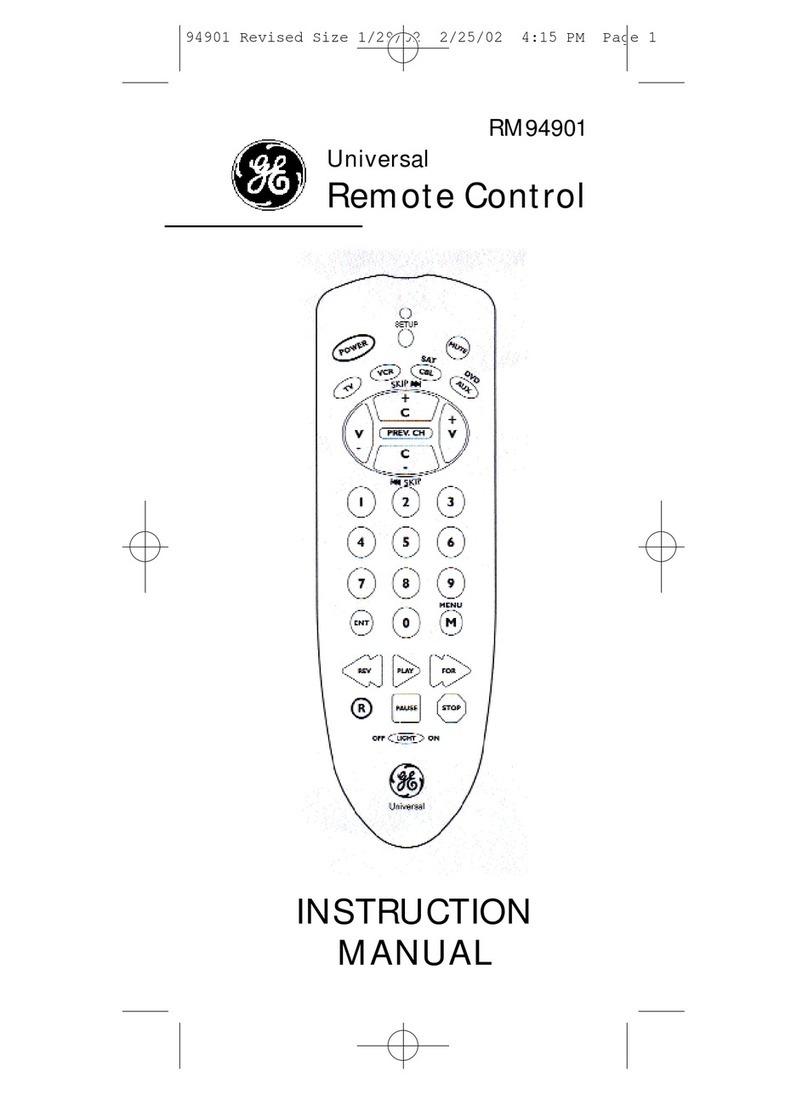
GE 94901 instruction manual

GE

GE 94901 instruction manual

FUTABA R7108SB Full manual

FUTABA

FUTABA R7108SB Full manual

Invacare G91S user manual

Invacare

Invacare G91S user manual

manuals.online logo
manuals.online logoBrands
  • About & Mission
  • Contact us
  • Privacy Policy
  • Terms and Conditions

Copyright 2025 Manuals.Online. All Rights Reserved.

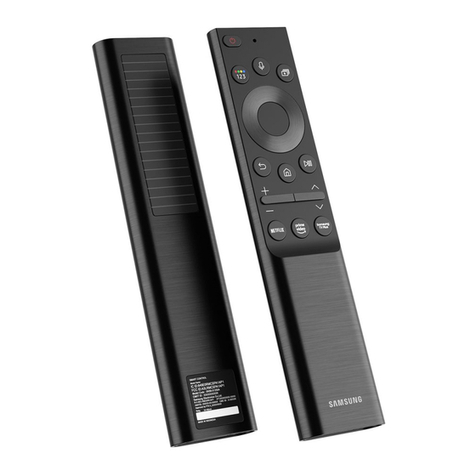
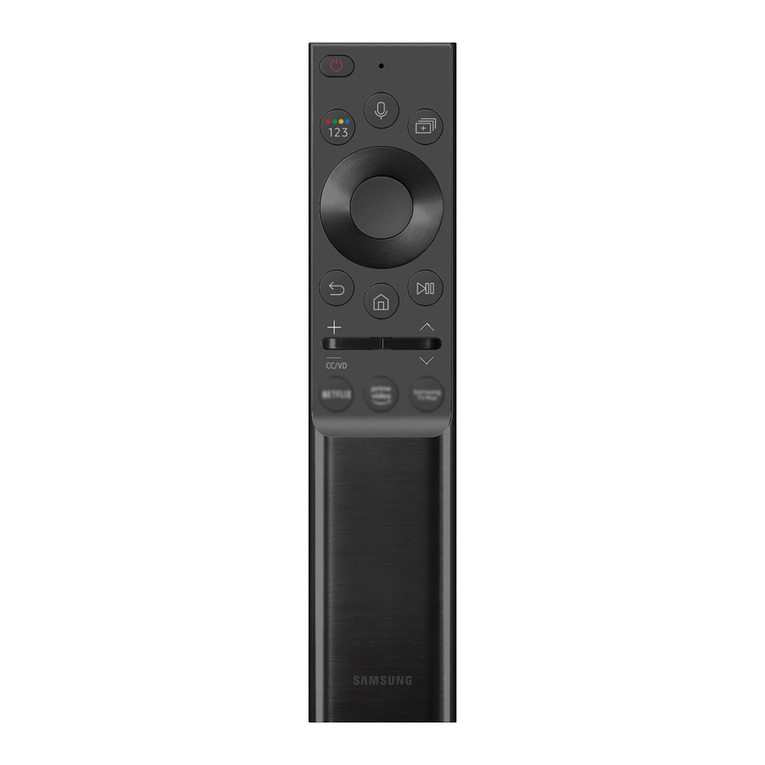
About the Samsung SolarCell Remote (Samsung Smart Remote)
SolarCell
Expose to light when the remote
is not in use. This will extend the
remote's operating time.
USB port (C-type) forcharging
Used forquick charging. The LED on the front will
light when charging. When the battery is fully
charged, the LED will turn off.
•The USB Cable is not provided.
2
3
1
4
|English |
Fire orexplosion may occur, resulting in damage to the remote
control orpersonal injury.
•Do not apply shock to the remote control.
•Be careful not to let foreign substances such as metal,
liquid, or dust come in contact with the charging terminal
of the remote control.
•When the remote control is damaged oryou smell smoke
or burning fumes, immediately stop operation and then
repairit at the Samsung service centre.
•Do not arbitrarily disassemble the remote control.
•Be careful not to let infants orpets suck or bite the
remote control. Fire or explosion may occur, resulting in
damage to the remote control or personal injury.


•  

•  

•   
 

•  
• 
   
 

   

 
 
  
 
  
 
• 
|English
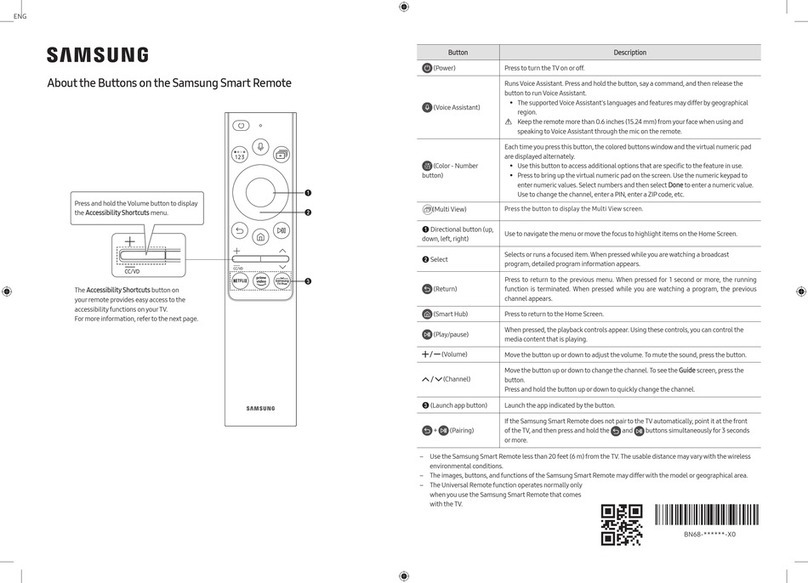
(Power)
Press to turn the TV on or off.
• Select whetherto switch the TV to Landscape Mode orPortrait Mode
before turning off orto turn off the TVwithout changing the orientation.
To change to the desired setting, navigate to PowerOff Mode ( >
Menu > Settings > All Settings > General & Privacy > Powerand
Energy Saving > PowerOff Mode) and change the setting.
1
MIC / LED
Used as MIC when using voice recognition with the remote control.
• Do not impact the MIC hole oruse a sharp object to poke into the hole.
(Voice Assistant)
Runs Voice Assistant. Press and hold the button, say a command, and
then release the button to run Voice Assistant.
• The supported Voice Assistant's languages and features may differby
geographical area.
(Settings / Number/ Colourbutton)
Each time you press this button, Settings menu / virtual numeric pad /
Option pad with Colour buttons are displayed alternately.
• Use this button to access additional options that are specific to the
feature in use.
• Press to bring up the virtual numeric pad on the screen. Use the
numeric keypad to enternumeric values. Select numbers and then
select Done or Enter Number to enter a numeric value. Use to change
the channel, enter a PIN, ZIP code and etc.
(Rotate)
Press the button to rotate the screen to Landscape Mode or Portrait Mode.
2
Directional button (up, down, left, right)
Moves the focus and changes the values seen on the TV's menu.
3
Select
Selects orruns a focused item. When pressed while you are watching a
broadcast programme, detailed programme information appears.
(Return)
Press to return to the previous menu. When pressed for1 second ormore,
the running function is terminated. When pressed while you are watching
a programme, the previous channel appears.
(Smart Hub)
Press to switch to the Media Home. From the Ambient Mode screen, press
to switch to the Ambient Mode Home.
(Play/pause)
When pressed, the playback controls appear. Using these controls, you
can control the media content that is playing.
To use Game Bar, press and hold the button in Game Mode.
• Game Bar may not be supported depending on the model or
geographical area.
(Volume)
Move the button up or down to adjust the volume. To mute the sound,
press the button. When pressed for 2 seconds or more, the Accessibility
Shortcuts appears.
(Channel)
Move the button up or down to change the channel. To see the Guide or
Channel List screen, press the button. (The Guide or Channel List screen
appears depending on the geographical area.)
• When pressed for1 second or more, the Channel List screen appears.
4
Launch app button
Press each button to run its function. (These buttons mayvary depending
on the geographical area.)
• Available apps may differ depending on the geographical area or
contents provider.
+ (Pairing)
If the Samsung Smart Remote does not pair to the TV automatically, point
it at the front of the TV, and then press and hold the and buttons
simultaneously for 3 seconds or more.
– Use the Samsung Smart Remote less than 6 m from the TV. The usable
distance mayvary with the wireless environmental conditions.
– The images, buttons, and functions of the Samsung Smart Remote may
differwith the model orgeographical area.
– The Universal Remote function operates normally onlywhen you use
the Samsung Smart Remote that comes with the TV.
– It is recommended to use an original Samsung charger. Otherwise, it
may cause performance degradation orfailure of the product. In this
case, thewarrantyservice is not applicable.
– When the remote control does not work due to low battery, charge it by
using the USB-C type port.
– When some apps are launched in Portrait Mode, theirmode can be
switched to Landscape depending on the app's policy.
-01
|
  

  

 
  
    ( >  >   >
   >    >  
  >  
1

 
  
 
     
 

 
     

 

   
  

  
   

   

 
 
  

    
2
 

3

 

 
 
   
 

     
 
 
 


 
    
 
 
     
 

  
   

    
4
 
  
  
  
   
+  
      
       
– 

 
   
– 

– 
 
–  
  
 
 
 
– 
   


–  
  
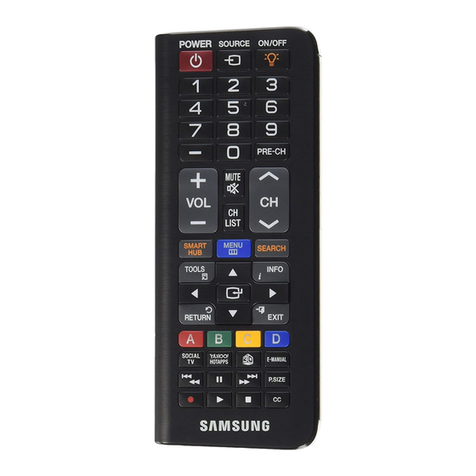
About the Buttons on the Standard Remote Control
|English
1P
(Power)
Turns the TV on and off.
2
Displays and selects available video sources.
3
Gives direct access to channels.
4
Alternately selects Teletext mode, Full TTX / Double TTX /
Mix / Live TV.
5
Returns to the previous channel.
6
Adjusts the volume.
7
Turns the sound on/off.
8
Changes the current channel.
9
Launches the Channel List.
0
Press to switch to the Media Home.
!
,
@
Press each button to run its function. (These buttons may
vary depending on the geographical area.)
• Available apps may differ depending on the geographical
area orcontents provider.
#
Moves the cursor, selects the on-screen menu items, and
changes the values seen on the TV's menu.
$E
(Select)
Selects orruns a focused item.
%
Returns to the previous menu orchannel.
^
Exits the menu.
&
Use these buttons according to the directions on the TV
screen.
*
SETTINGS
Displays the main on-screen menu.
INFO
Displays information about the current programme or
content.
AD/SUBT.
Displays the Accessibility Shortcuts.
(
Use these buttons with specific features. Use these buttons
according to the directions on the TV screen.
– The images, buttons, and functions of the Standard Remote
Control may differ depending on the model.
– This Standard Remote Control has Braille points on the Power,
Channel, Volume, and Select buttons and can be used by visually
impaired persons.
– If you use the Standard Remote Control that comes with your TV
to control anotherTV, some functions may not operate normally.
|
  
1P
(  )

2
 
 
3
  
 
4

  
5
 
6

7

8

9
 
0
   
!
,
@
  
  

  
   

#
 

$E
()
 

%
 
^

&
 
  
*

 

 

  
(
 
  
 
 
– 

–  , , 
 
 
 
–  
 
