2
M-640V/645V/647V
TABLE OF CONTENTS
1. GENERAL ................................................................... 3
2. DISASSEMBLY
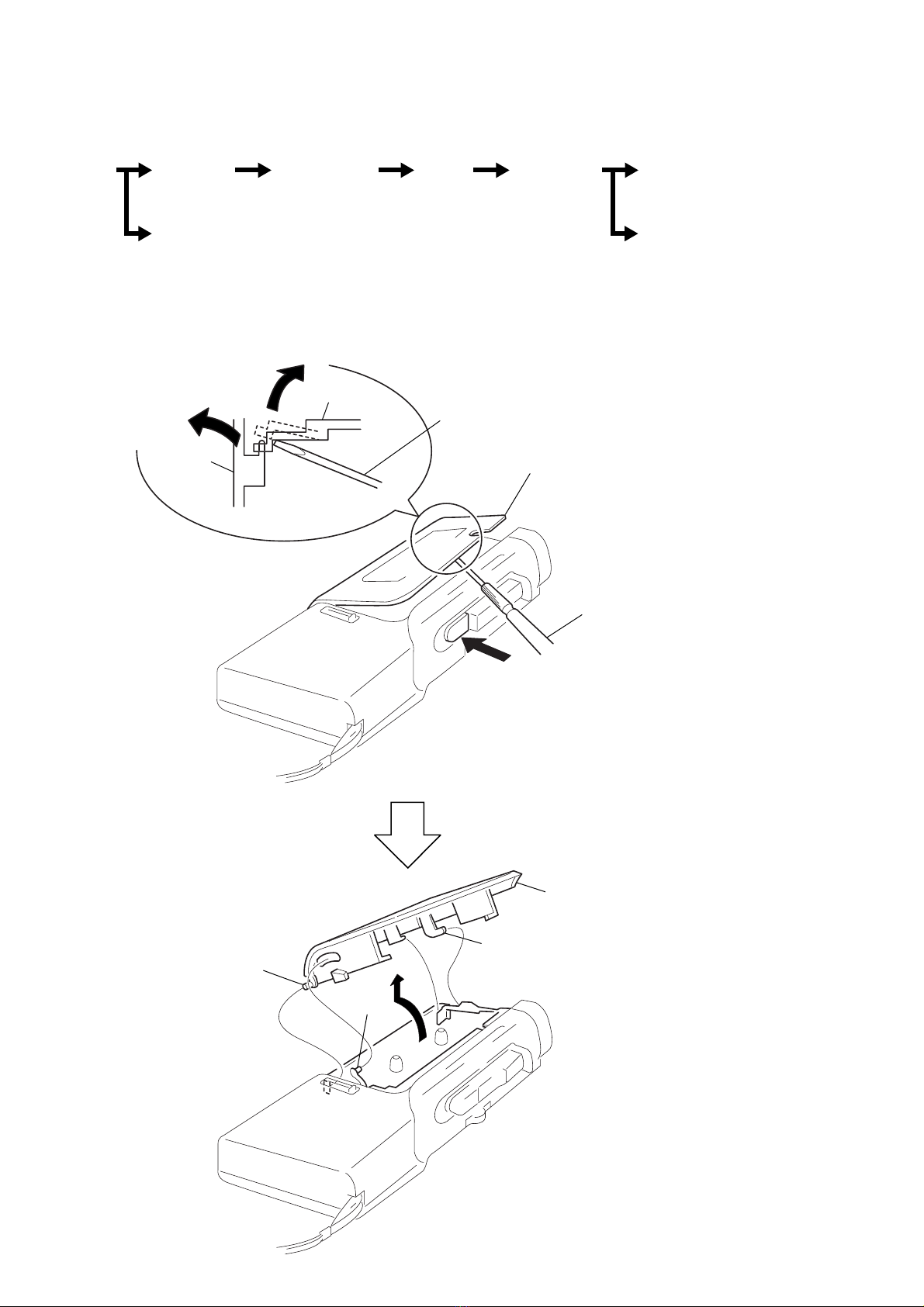
2-1. Disassembly Flow ........................................................... 4
2-2. Lid Assy, Cassette ........................................................... 4
2-3. Lid, Battery Case ............................................................ 5
2-4. Cabinet (Rear) Assy ........................................................ 5
2-5. MAIN Board ................................................................... 6
2-6. Mechanism Deck (MZ-530V-99) ................................... 6
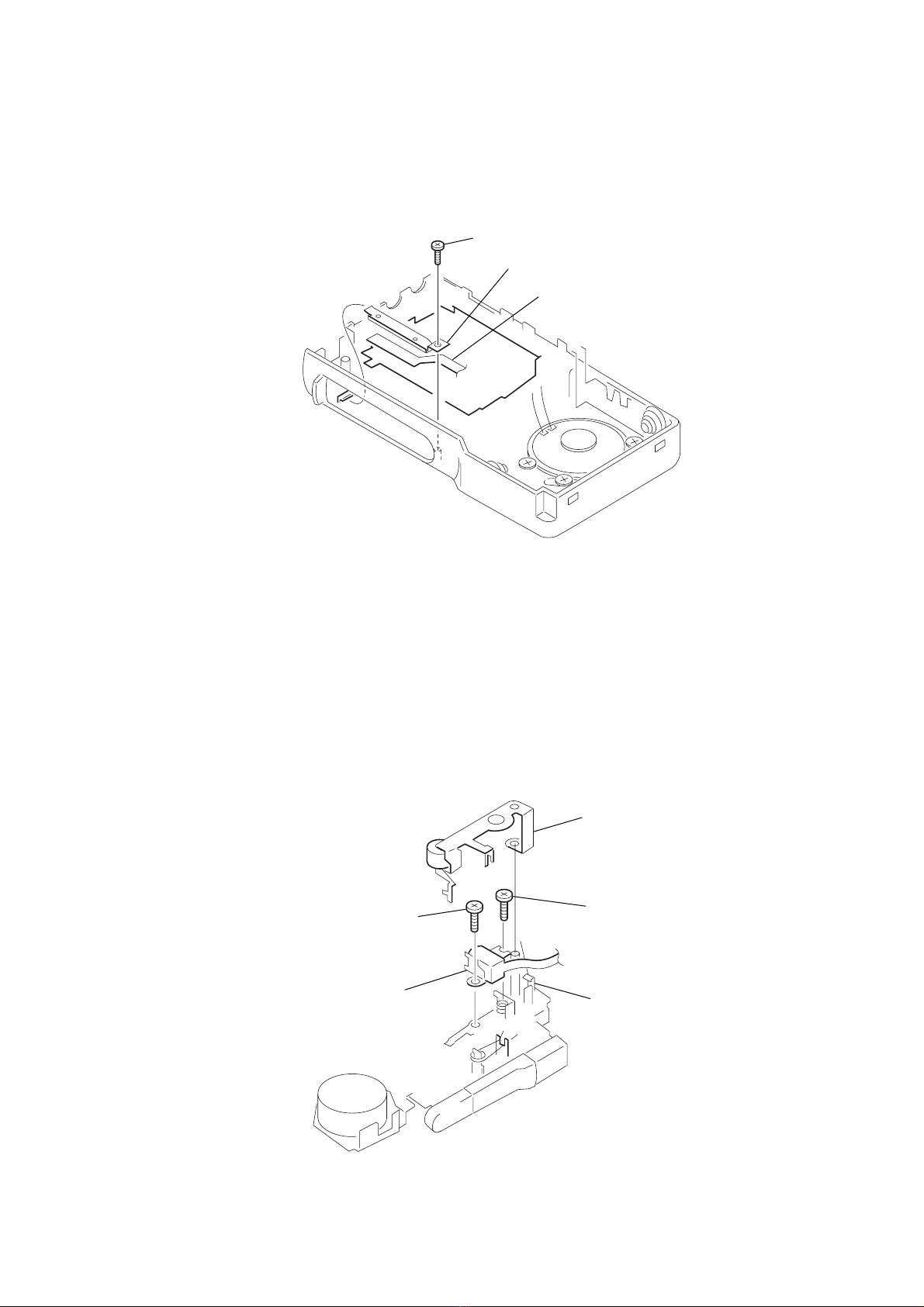
2-7. LED Unit ......................................................................... 7
2-8. Head, Ceramic (HRPE901)............................................. 7
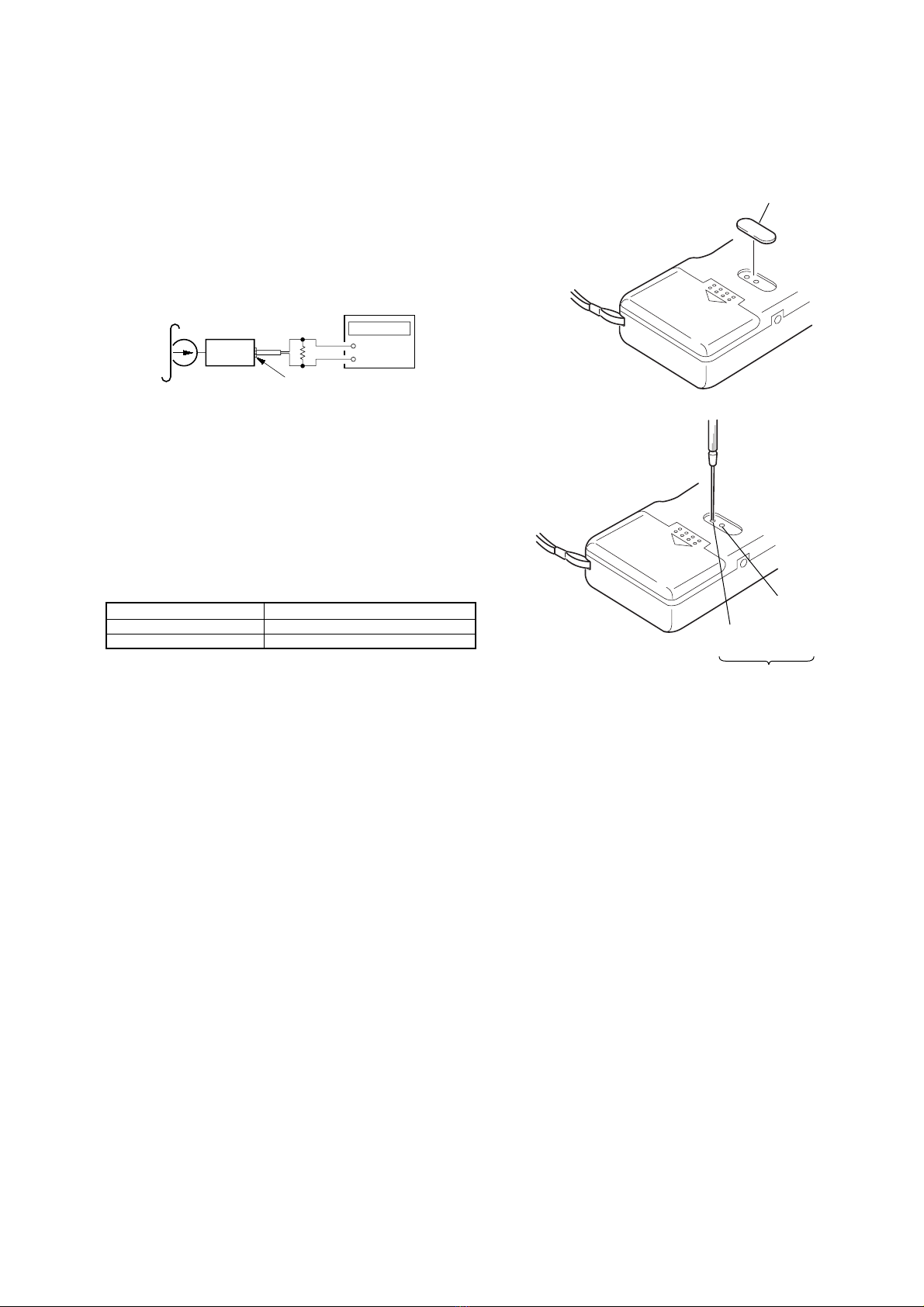
3. MECHANICAL ADJUSTMENTS ....................... 8
4. ELECTRICAL ADJUSTMENTS......................... 8
5. DIAGRAMS
5-1. Block Diagram ................................................................ 11
5-2. Printed Wiring Board ...................................................... 12
5-3. Schematic Diagram ......................................................... 13
6. EXPLODED VIEWS
6-1. Cabinet Section ............................................................... 14
6-2. Main Group Section ........................................................ 15
6-3. Mechanism Deck Section (MZ-530V-99) ...................... 16
7. ELECTRICAL PARTS LIST ............................... 17
SAFETY-RELATED COMPONENT WARNING!!
COMPONENTS IDENTIFIED BY MARK 0OR DOTTED
LINE WITH MARK 0ON THE SCHEMATIC DIAGRAMS
AND IN THE PARTS LIST ARE CRITICAL TO SAFE
OPERATION. REPLACE THESE COMPONENTS WITH
SONY PARTS WHOSE PART NUMBERS APPEAR AS
SHOWN IN THIS MANUAL OR IN SUPPLEMENTS PUB-
LISHED BY SONY.
Flexible Circuit Board Repairing
•Keep the temperature of the soldering iron around 270˚C dur-
ing repairing.
•Do not touch the soldering iron on the same conductor of the
circuit board (within 3 times).
•Be careful not to apply force on the conductor when soldering
or unsoldering.
Notes on Chip Component Replacement
•Never reuse a disconnected chip component.
•Notice that the minus side of a tantalum capacitor may be dam-
aged by heat.