7
EN
14528931.03 11/2023 EN/DE
Operating instructions, models F5301, F53C1, F5308, F53C8, F53S8
3. Safety
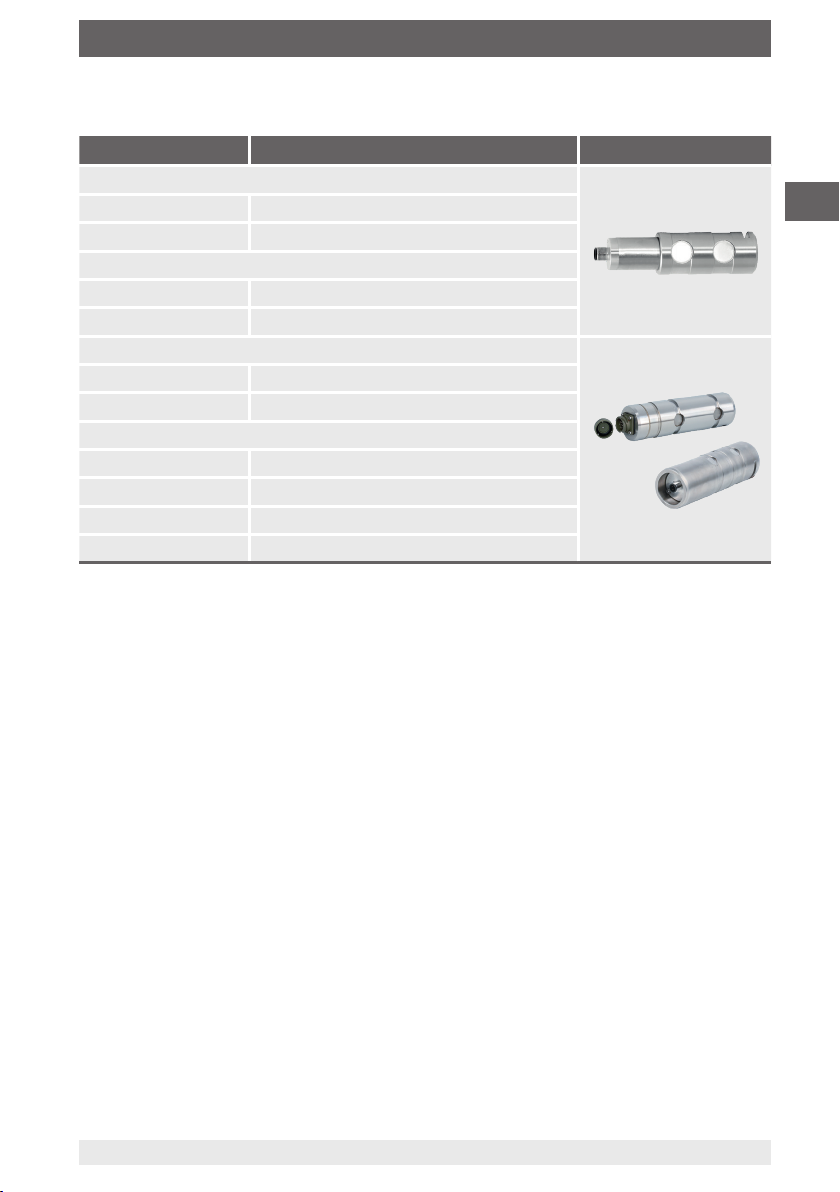
Model Version Design
F5301
Version 1 Basic version
Version 2 Basic version, with signal jump
F53C1
Version 1 Basic version, for Ex approvals EX ib1)
Version 2 Basic version, with UL approval
F5308
Version 1 Heavy-duty version, standard
Version 2 Heavy-duty version with signal jump
F53C8
Version 1 Heavy-duty version for Ex approvals EX ib1)
Version 2 Heavy-duty version for Ex approvals Ex d1)
Version 3 Heavy-duty version with UL approval
F53S8 Version for functional safety with ELMS1
1) Attention: For ATEX equipment, observe the additional operating instruction: 14537280 for Ex equipment.
ATEX equipment is labeled and certified under the brand tecsis.
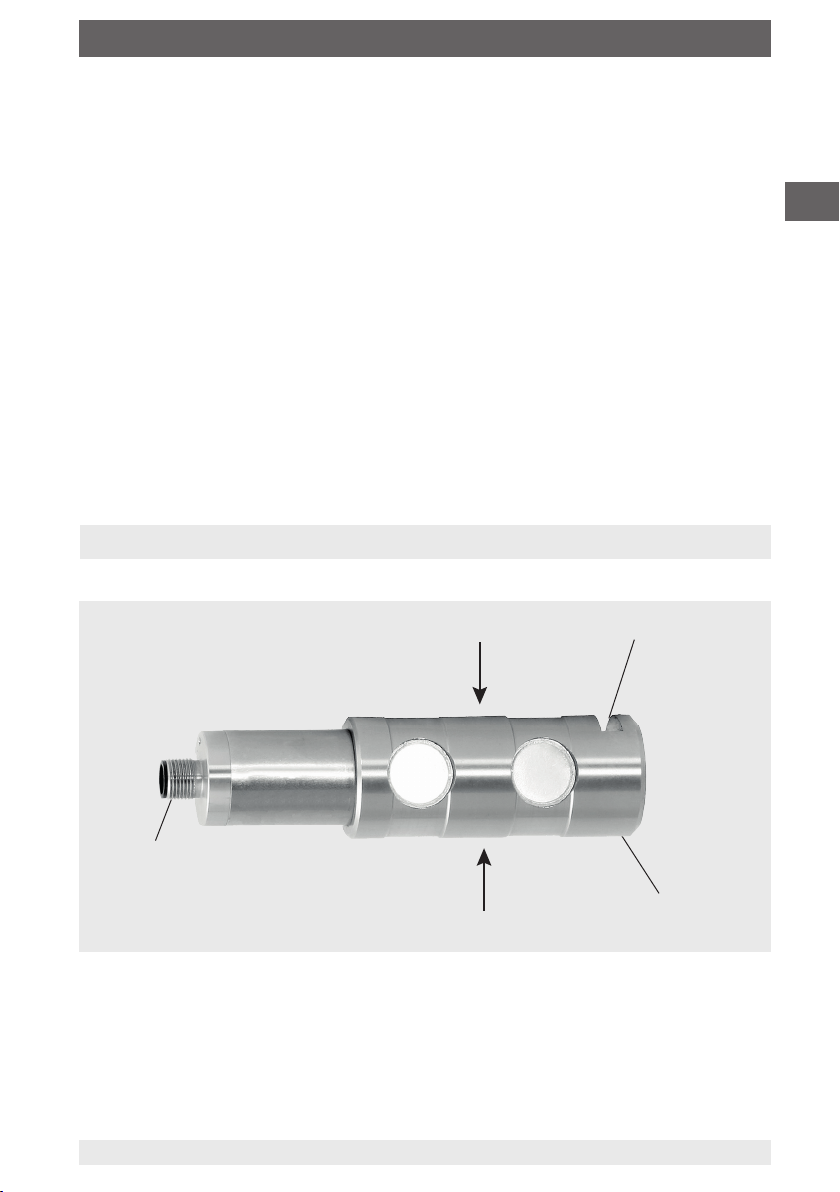
Force transducer for measuring tension or compression forces, for example in cranes.
The product is designed for use both outside and inside buildings.
Load pins can measure forces in both directions. The measured force is output as an
electrical signal.These devices are designed for operation in industrial environment.
In other environments, e.g. residential or commerical, they may interfere with other
equipment. In this case, the operator may be required to implement appropriate
measures.
Only use the load pins in applications that are within the technical performance limits
(e.g. max. ambient temperature, material compatibility, etc.). For performance limits, see
chapter 9 “Technical data”.
Only the load pins of models F53C1 and F53C8 are approved for use in hazardous
areas! For this, the additional operating instruction: 14537280 for Ex equipment must be
observed! For an overview, see table above.
The load pins are designed exclusively for the intended use which is described here and
may only be used accordingly. Claims of any kind due to improper use are excluded.
Handle electronic precision measuring instruments with the required care (protect from
humidity, impacts, strong magnetic fields, static electricity and extreme temperatures,
do not insert any objects into the instrument or its openings). Plugs and sockets must be
protected from contamination.
3.2 Intended use