10
inserted.
puncture shrinks to the appropriate diameter.
• Selecting shaft length
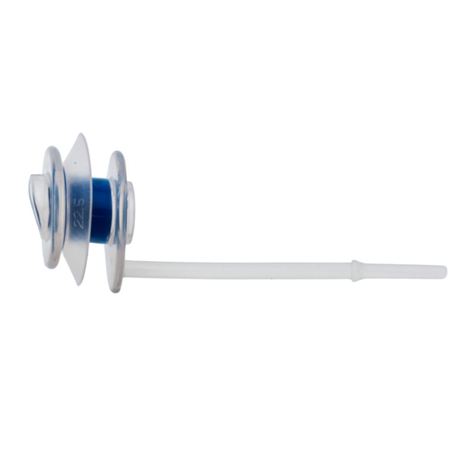
To select the correct length, you may use the current prosthesis as its own measuring
device.
Flange of the old prosthesis and the mucosal wall, a shorter prosthesis should be
2.2 Preparation
(Fig. 3-6)
Position voice prosthesis
attached, and with the tip of the pin positioned all the way into the blue ring of
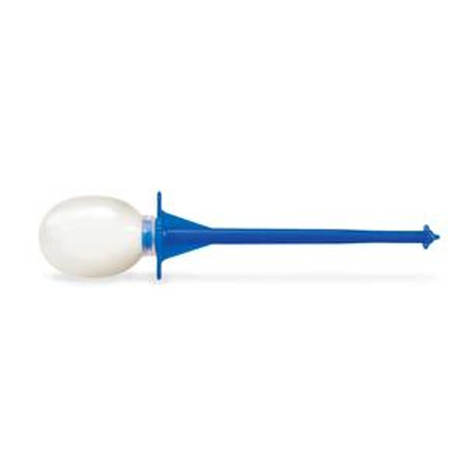
Pin shall be snapped into the Folding Tool).
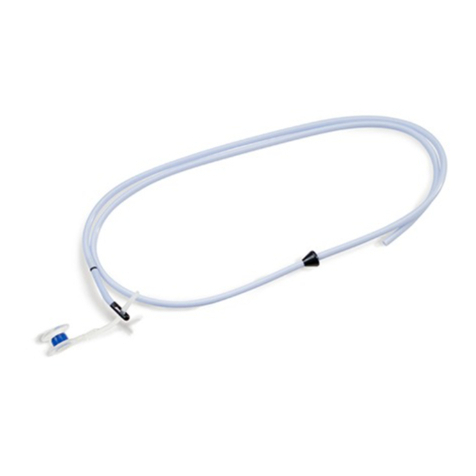
Loading Tube until it locks in place (Fig. 5).
Load
Remove the old voice prosthesis
prosthesis is then pushed into the esophagus for passage through the intestinal
before using this method.
Prepare the puncture (optional)
7. The puncture may be dilated to prepare for the insertion of the voice prosthesis.
This is usually not necessary but may facilitate insertion in patients with angled
or tight punctures that easily collapse.
2.3 Insertion, Anterograde replacement procedure
and then retracted to the intended position.
insertion.
2.3.1 Method 1: System Insertion
1. Enter the TE-puncture
resistance, dilatation and/or lubrication can ease the insertion.
2. Insert the voice prosthesis
prosthesis is entirely unfolded in the esophagus.
3. Release the voice prosthesis
Pull the Loading Tube and Folding Tool together straight out from the puncture.
The voice prosthesis remains in the puncture; still firmly attached to the
4. Finalize the procedure
2.3.2 Method 2: Tube Insertion
To enhance visibility, the Folding Tool can be removed once the prosthesis has been
pushed into the Loading Tube.
Note:
1. Remove the Folding Tool
Remove the Folding Tool by unlocking and disconnecting it from the Loading
Tube (Fig. 8).
2. Enter the TE-puncture
resistance, dilatation and/or lubrication can ease the insertion.