manuals.online logo
Brands
  1. Home
  2. •
  3. Brands
  4. •
  5. EVERSPRING
  6. •
  7. Control Unit
  8. •
  9. EVERSPRING AN179 User manual

EVERSPRING AN179 User manual

Other EVERSPRING Control Unit manuals

EVERSPRING AN145-2 User manual

EVERSPRING

EVERSPRING AN145-2 User manual

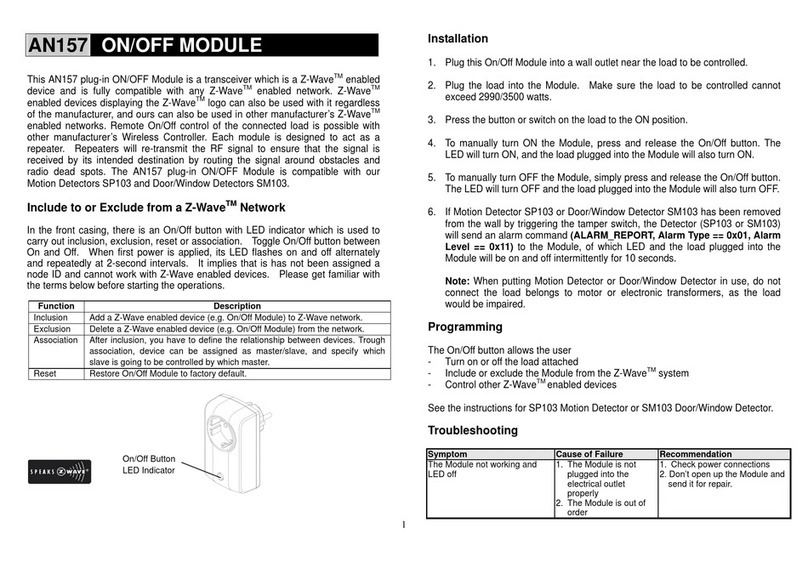
EVERSPRING AN157 User manual

EVERSPRING

EVERSPRING AN157 User manual

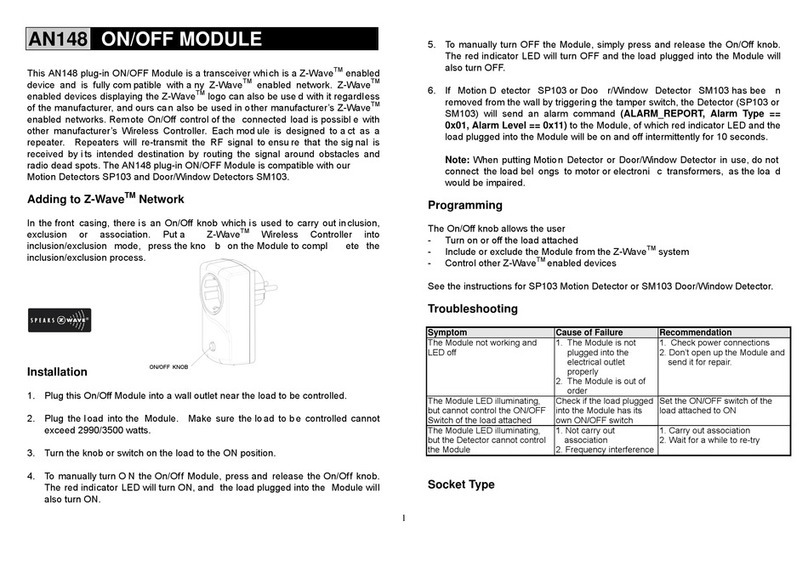
EVERSPRING AN148 User manual

EVERSPRING

EVERSPRING AN148 User manual

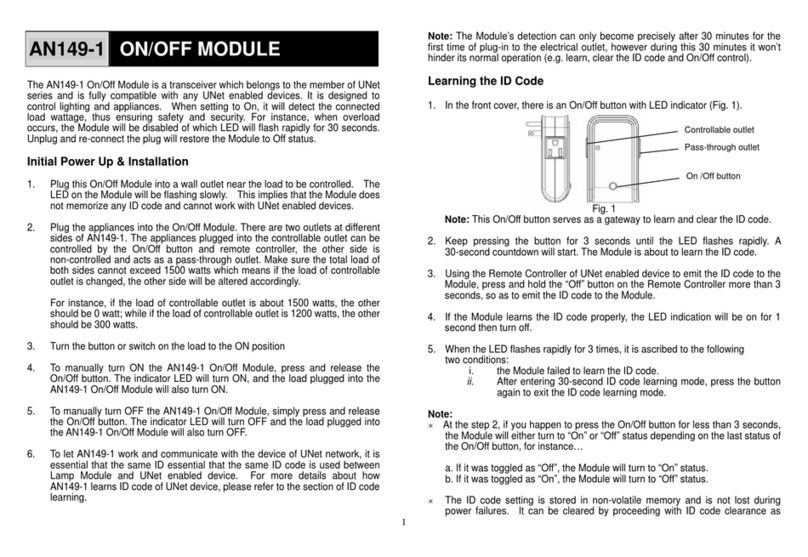
EVERSPRING AN149-1 User manual

EVERSPRING

EVERSPRING AN149-1 User manual

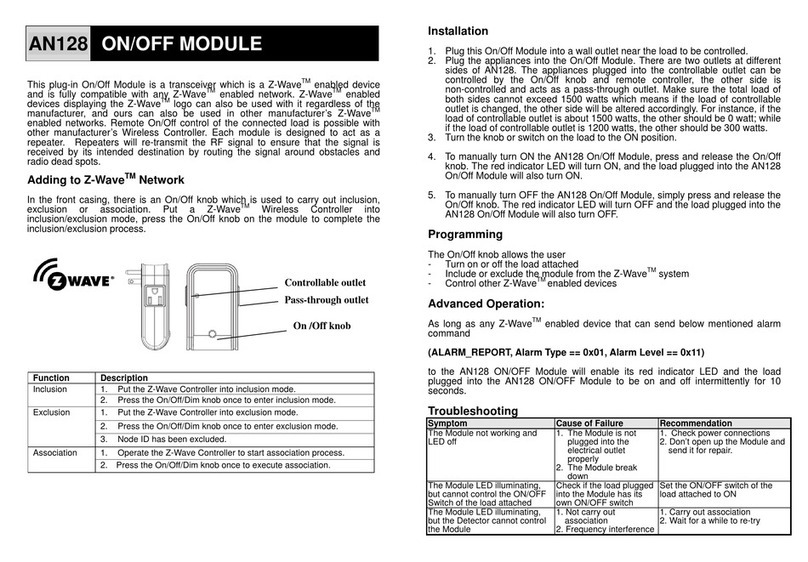
EVERSPRING AN128 User manual

EVERSPRING

EVERSPRING AN128 User manual

EVERSPRING AN163 User manual

EVERSPRING

EVERSPRING AN163 User manual

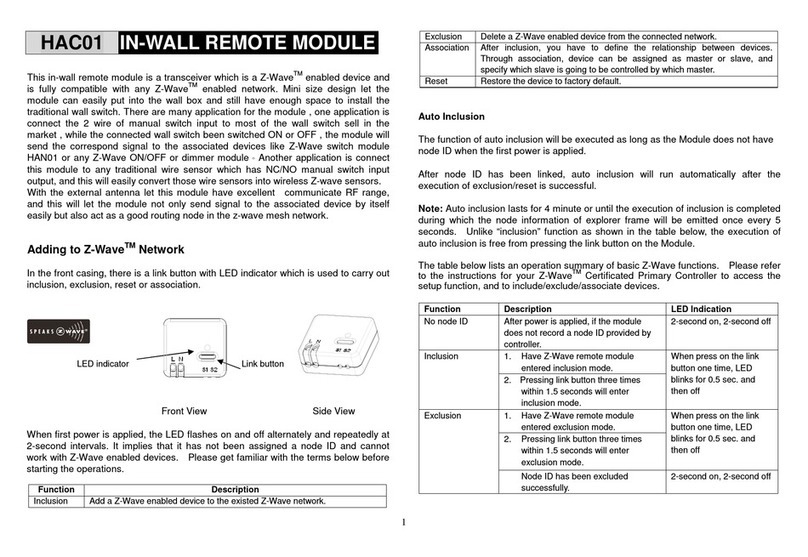
EVERSPRING HAC01 User manual

EVERSPRING

EVERSPRING HAC01 User manual

EVERSPRING AN145 User manual

EVERSPRING

EVERSPRING AN145 User manual

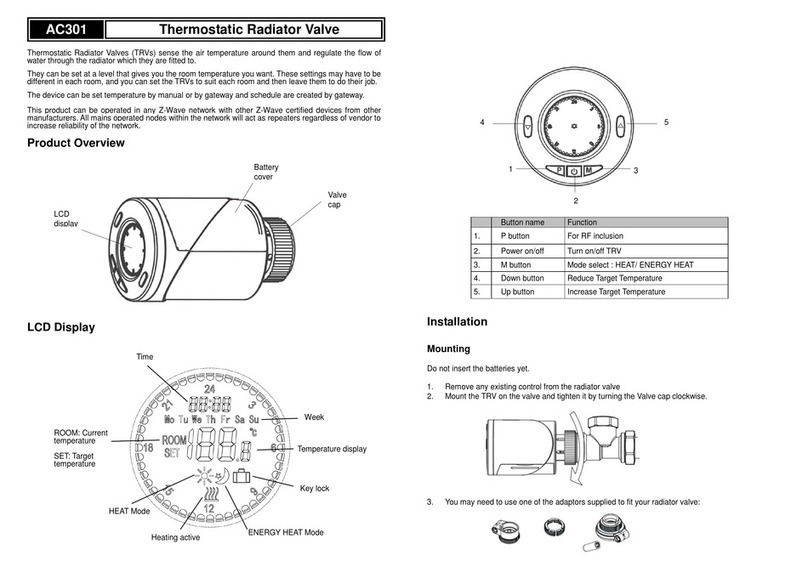
EVERSPRING AC301 User manual

EVERSPRING

EVERSPRING AC301 User manual

EVERSPRING AD142 User manual

EVERSPRING

EVERSPRING AD142 User manual

EVERSPRING AN144 User manual

EVERSPRING

EVERSPRING AN144 User manual

EVERSPRING AN196 User manual

EVERSPRING

EVERSPRING AN196 User manual

EVERSPRING AN158 User manual

EVERSPRING

EVERSPRING AN158 User manual

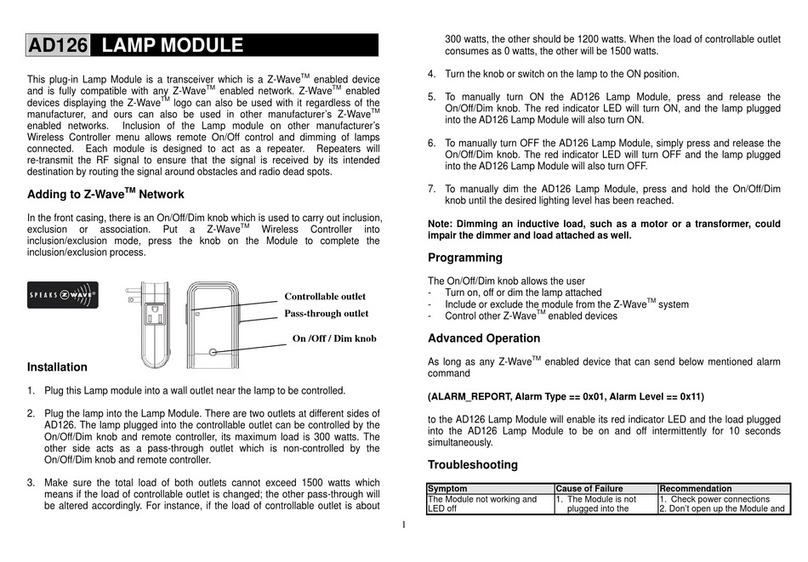
EVERSPRING AD126 User manual

EVERSPRING

EVERSPRING AD126 User manual

EVERSPRING AD132-1 User manual

EVERSPRING

EVERSPRING AD132-1 User manual

Popular Control Unit manuals by other brands

Seitz 14A80 user manual

Seitz

Seitz 14A80 user manual

Wilo RS485 Installation and operating instructions

Wilo

Wilo RS485 Installation and operating instructions

Becker CentralControl CC41 Commissioning Instruction

Becker

Becker CentralControl CC41 Commissioning Instruction

SICK CDB650 operating instructions

SICK

SICK CDB650 operating instructions

Panduit NetKey NKP5E88M Series installation instructions

Panduit

Panduit NetKey NKP5E88M Series installation instructions

MX Options Concentric Petite Fitting instructions

MX

MX Options Concentric Petite Fitting instructions

Clean Water Systems Fleck 2510 Installation & start?up guide

Clean Water Systems

Clean Water Systems Fleck 2510 Installation & start?up guide

Fairchild FSB44104A user guide

Fairchild

Fairchild FSB44104A user guide

LEGRAND Wattstopper LMIN-104 installation instructions

LEGRAND

LEGRAND Wattstopper LMIN-104 installation instructions

PMK ATT10BNCS instruction manual

PMK

PMK ATT10BNCS instruction manual

Tektronix TDS3FFT user manual

Tektronix

Tektronix TDS3FFT user manual

Woodward easYgen Technical manual

Woodward

Woodward easYgen Technical manual

Balluff BNI EIP-502-105-R015 user guide

Balluff

Balluff BNI EIP-502-105-R015 user guide

NXP Semiconductors TWR-LS1021A Getting started

NXP Semiconductors

NXP Semiconductors TWR-LS1021A Getting started

Advantech PCM-3117 Startup manual

Advantech

Advantech PCM-3117 Startup manual

Danfoss MCO 101 manual

Danfoss

Danfoss MCO 101 manual

Moons' Lin Engineering R701P user manual

Moons'

Moons' Lin Engineering R701P user manual

Aventics RV1 operating instructions

Aventics

Aventics RV1 operating instructions

manuals.online logo
manuals.online logoBrands
  • About & Mission
  • Contact us
  • Privacy Policy
  • Terms and Conditions

Copyright 2025 Manuals.Online. All Rights Reserved.

A
N
1
79
In
-
Wall
On/Off
The In-Wall On/Off Module is a Z-Wave
TM
enabled device which is fully compatible with any Z
enabled network. Z-Wave
TM
enabled devices displaying the Z-Wave
TM
logo can also be used with it
regardless of the manufacturer
, and ours can also be used in other manufacturer’s Z
networks. Inclusion of this unit
on other manufacturer’s Wireless Controller menu allows remote operation
of the unit and the connected load.
The In-Wall On/Off Module is designed to control the on/off status of
lighting and appliances
house. Two sets of dry contacts provide more wiring applications. F
or security, t
overheating and will turn off relay automatically to avoid damage.
At 230V voltage, t
up to 2500W resistive, 1200W incandescent, 700W motor, or 320W (40W*8)
fluorescent
Product Overview
Adding to Z-Wave
TM
Network
On the unit you can find
a link key which is used to carry out the function of inclusio
When power
is applied for the first time, the LED will flash on and off alternately and repeatedly, implying that
it has not yet been assigned a node ID and cannot work with other Z-
Wave enabled devices.
supports the Au
to Inclusion function when power is applied and no node ID is stored in the memory.
Auto Inclusion
The module may automatically execute the function of inclusion when...
1. The power
is applied for the first time and no node ID has been stored in the
2. The execution of reset is successful where the stored node ID is cleared.
Note: The duration for Auto Inclusion is about
4 minutes. Unlike the “inclusion” procedure shown in the
table below, the execution of Auto Inclusion is automatic without th
e necessity of pressing the link key.
Action/Status Description
No node ID
The Z
-
Wave Controller does not allocate a node ID to the
unit
.
Auto Inclusion
The power
is applied for the first time and no node ID has
been stored in the
module, or after executing reset.
Inclusion
1.
Put
the
Z
-
Wave Controller
into
inclusion mode.
2.
Press the link key three times within 1.5 seconds to
put the
unit
into inclusion mode
.
Exclusion
1.
Put
the
Z
-
Wave Controller
into
ex
clusion mode.
2.
Press the link key three times within 1.5 seconds to
put the
unit
into
ex
clusion mode
.
Reset
(This procedure
should only be used
when the network
1.
Press the link key three times within 1.5 secon
ds to
put the
unit
into
ex
clusion mode
.
2. Within 1 second
of step 1
,
press link key again and
hold until LED is off (about 5 sec
onds
)
.
LED Light
Link Key
Dry Contact
Wiring
Termin
als
RF Aerial
Module
enabled device which is fully compatible with any Z
-Wave
TM
logo can also be used with it
, and ours can also be used in other manufacturer’s Z
-Wave
TM
enabled
on other manufacturer’s Wireless Controller menu allows remote operation
lighting and appliances
load in your
or security, t
he unit can detect
At 230V voltage, t
his module can support
fluorescent
load.
a link key which is used to carry out the function of inclusio
n, exclusion, and reset.
is applied for the first time, the LED will flash on and off alternately and repeatedly, implying that
Wave enabled devices.
This unit
to Inclusion function when power is applied and no node ID is stored in the memory.
is applied for the first time and no node ID has been stored in the
module.
4 minutes. Unlike the “inclusion” procedure shown in the
e necessity of pressing the link key.
LED indication
Wave Controller does not allocate a node ID to the
2
-
second on,
2
-
second off
is applied for the first time and no node ID has
Press the link key three times within 1.5 seconds to
clusion mode.
Press the link key three times within 1.5 seconds to
ds to
press link key again and
primary controller is
inoperable.)
3.
N
ode ID is excluded
default state
and will be in auto
mi
nutes
.

Failed or successful results in including/excluding the ID can be viewed on the Z
Safety Precautions & Installation

Avoid installing the unit in storming or raining weather.

Be sure to isolate or switch off power source befor

DO ensure that the power supply circuit is pro
fuse.
IMPORTANT
Installation must be performed by skilled technicians who are informed about the standards and
technical
requirements of the appliance and its proper installation.
Check your local codes as they apply to your situation. If the house wiring is of aluminum, consult
with an electrician about proper wiring methods.
Before proceeding with the installation, TURN O
FF THE POWER TO THE LIGHTING CIRCUIT AT
THE CIRCUIT BREAKER OR FUSE BOX TO AVOID ELECTRICAL SHOCK.
The In-Wall On/Off Module supports
2 sets of dry contacts
wiring accordingly.
As illustrated in the above
diagram, S1 provides a wall switch connection to the dry contacts. By default
switch supports Single-Pole-Double-
Throw (SPDT
Gateway, S1 can be configured to support Toggle switches as well.
on/off status of the unit when toggled.
Operation
Under normal operation mode, press the button on
The LED indicator will
also turn on or off accordingly. The u
signals from the Z-Wave Controller.
The unit is able to remember the status of the relay when power is cut off (such as power black
power is supplied again, the unit will resume the last status o
Note: Pressing the button on the unit
for over 5
operation mode of the dry contacts. T
he LED will flash 3 times rapidly upon successful switch.
Programming
Z-Wave Group Support
The unit supports two association groups with 1
Grouping 2.
This has the effect that when the u
receive the relevant reports.
ode ID is excluded
.
T
he device reverts to factory
and will be in auto
-inclusion mode for 4
Failed or successful results in including/excluding the ID can be viewed on the Z
-Wave Controller.
Avoid installing the unit in storming or raining weather.
Be sure to isolate or switch off power source befor
e installing or maintenance.
rotected by a 16 amp circuit breaker or suitable equivalent
Installation must be performed by skilled technicians who are informed about the standards and
requirements of the appliance and its proper installation.
Check your local codes as they apply to your situation. If the house wiring is of aluminum, consult
FF THE POWER TO THE LIGHTING CIRCUIT AT
THE CIRCUIT BREAKER OR FUSE BOX TO AVOID ELECTRICAL SHOCK.
2 sets of dry contacts
. Study the following figure and implement the
diagram, S1 provides a wall switch connection to the dry contacts. By default
S1
T) type of binary switch. However, through the setting of
Gateway, S1 can be configured to support Toggle switches as well.
The S2 switch can also switch the
on the unit to control the on/off status of the connected load.
also turn on or off accordingly. The u
nit can also be controlled by receiving command
The unit is able to remember the status of the relay when power is cut off (such as power black
-out). When
power is supplied again, the unit will resume the last status o
f the relay (on or off) automatically.
r 5 seconds but no more than 8 seconds can switch the
he LED will flash 3 times rapidly upon successful switch.
1 node support for Grouping 1 and 4 nodes support for
unit is operating, all devices associated with the unit will
When the unit is powered up and was already a part of a Z-Wave network, the unit will send a
Notification Report to the node in Group 1.
When setting the unit or changing the unit’s status, the unit will send a Binary Switch Report to the node
of Group 1.
When performing Reset the unit will send Device Reset Locally Notification to the node of Group1.
The minimum interval time between two reports sent from this unit to the node of Group 1 is 3 seconds.
Refer to Configuration parameter 2 for more information.
When the button on the unit or the wall switch (S1) is pressed, the unit will send a Basic Set command to
the nodes of Group 2. When the unit is OFF, Basic Set Value = 0x00. When the unit is ON, Basic Set
Value = 0xFF.
Z-Wave Plus Info
Role Type Node Type Installer Icon User Icon
Slave Always On Z-Wave Plus node On/Off Power Switch On/Off Power Switch
Version
Protocol Library 3 (Slave_Enhance_232_Library)
Protocol Version 3.95 ( 6.51.02)
Manufacturer
Manufacturer ID Product Type Product ID
0x0060 0x0004 0x0008
AGI (Association Group Information) Table
Group Profile Command Class & Command (List) N bytes Group Name(UTF-8)
1 General:NA Binary Switch Report,
Notification Report,
Device Reset Locally Notification
Lifeline
2 Control:Key1 Basic Set On/Off control (Button1)
Basic
Basic Get: Inquire about the status of the device.
Basic Report: Report the status of the device.
Basic Set: Set the status of the device.
Notification
The device will send notifications (Notification Type =0x08, Event = 0x01) upon being powered on.
Configuration
The configurable values are as following:
Basic Set Command value:
Parameter Number Size Range Default
1 2 0~99 , 255(0xFF) 255 (0xFF)
The delaying time to report to Group 1:
Parameter Number Size Range Default
2 1 3 - 25 (seconds) 3
Remember the last status:
Parameter Number Size Range Default
3 1 1/0 1: remember (0: do not remember)
Switch 1 switching type:
Parameter Number Size Range Default
4 1 1/0 0: Single Pole Double Throw
(1: Toggle switch)
Command Classes
The module supports Command Classes including…
COMMAND_CLASS_ZWAVEPLUS_INFO_V2
COMMAND_CLASS_VERSION_V2
COMMAND_CLASS_MANUFACTURER_SPECIFIC_V2
COMMAND_CLASS_DEVICE_RESET_LOCALLY_V1
COMMAND_CLASS_ASSOCIATION_V2
COMMAND_CLASS_ASSOCIATION_GRP_INFO_V1
COMMAND_CLASS_POWERLEVEL_V1
COMMAND_CLASS_BASIC_V1
COMMAND_CLASS_NOTIFICATION_V4
COMMAND_CLASS_CONFIGURATION_V1
COMMAND_CLASS_SWITCH_BINARY_V1
COMMAND_CLASS_SWITCH_ALL_V1
COMMAND_CLASS_FIRMWARE_UPDATE_MD_V2
Additional Command Classes Supported
Power Level: For test purpose during product installation.
Binary Switch: Refer to Basic.
Switch All: The unit turns on when it receives “Switch All On”, and turns off upon receiving “Switch All Off”.
Firmware Update: For OTA function.
Troubleshooting
Symptom
Cause of Failure
Recommendation
Device not responding and
LED not displaying
The device is not wired to the
mains power correctly
Check if wiring is correct, or
voltage is too high or too low
Device malfunction Send the device to be repaired
LED displaying, but cannot
control On/Off status of
connected load
The connected load has its own
on/off switch
Turn the switch of the
connected load to On.
Can press button to control,
but cannot control by RF
RF interference is occurring.
Someone nearby might be
emitting RF signal of the same
frequency
Wait for a while and retry the
operation
Specification
Power Input 220-240V/50Hz
Maximum Power Load Resistive load Max.2500W, Incandescent load Max. 1200W, Fluorescent
load Max.320W
Transmission Range 30 meters (Indoor; Open space)
Working Temperature -10°C - 40°C
*Specifications are subject to change without notice
2013/08
Warning:
Do not dispose of electrical appliances as unsorted municipal waste, use separate collection facilities.
Contact your local government for information regarding the collection systems available.
If electrical appliances are disposed of in landfills or dumps, hazardous substances can leak into the
groundwater and get into the food chain, damaging your health and well-being.
When replacing old appliances with new ones, the retailer is legally obligated to take back your old appliance
for disposal at least for free of charge.
- 2 -