9
Celebrity X-6 www.pridemobility.com
136-159 kg/
21-25 stone
(300-350 lbs.)
8.7% (5˚)
68 kg/
11 stone
(150 lbs.)
14.1% (8˚)
90 kg/
14 stone
(200 lbs.)
12.3% (7˚)
113 kg/
18 stone
(250 lbs.)
10.5%(6˚)
II. SAFETY
When climbing an incline, try to keep your scooter moving. If you must stop, start up again slowly and then
acceleratecautiously.When driving downan incline, do so bysetting the speed adjustment dialto the slowest
settingand drivingin the forwarddirection only.If yourscooter starts tomove downthe incline fasterthan you
anticipatedor desired, allowit to come toa complete stopby releasing the throttlecontrol lever.Then push the
throttlecontrolleverforward slightlytoensureasafely controlleddescent.
WARNING! When climbing an incline, do not zigzag or drive at an angle up the face of the
incline. Drive your scooter straight up the incline. This greatly reduces the possibility of a
tip or a fall. Always exercise extreme caution when negotiating an incline.
WARNING! Do not drive your scooter across the side of an incline or diagonally up or down
an incline; do not stop, if possible, while driving up or down an incline.
WARNING! You should not travel up or down a potentially hazardous incline (i.e., areas
covered with snow, ice, cut grass or wet leaves).
WARNING! When on any sort of an incline or decline, never place the scooter in freewheel
mode while seated on it or standing next to it.
WARNING! Even though your scooter is capable of climbing slopes greater than those
illustrated in figures 1 and 1A, do not, under any circumstances, exceed the incline
guidelines or any other specifications presented in this manual. Doing so could cause
instability in your scooter, resulting in personal injury and/or damage to your scooter.
Handicap public access ramps are not subject to government regulation in all countries and therefore do not
necessarilysharethesamestandardpercent ofslope.Otherinclinesmaybe naturalor,ifman-made, notdesigned
specificallyfor scooters.Figures 1and 1Aillustrateyourscooter’sstabilityand itsability toclimb gradesunder
variousweightloadsandundercontrolledtestingconditions.
Thesetests wereconductedwith thescooter’sseat inthe highestposition andadjusted rearwardonthe seatbase
toitsfarthest rearwardposition. Usethisinformation asa guideline.Your scooter’sability totravel upinclinesis
affectedbyyour weight,your scooter’s speed, yourangle ofapproach tothe inclineand your scootersetup.
WARNING! Any attempt to climb or descend a slope steeper than what is shown in figures
1 and 1A may put your scooter in an unstable position and cause it to tip, resulting in
personal injury.
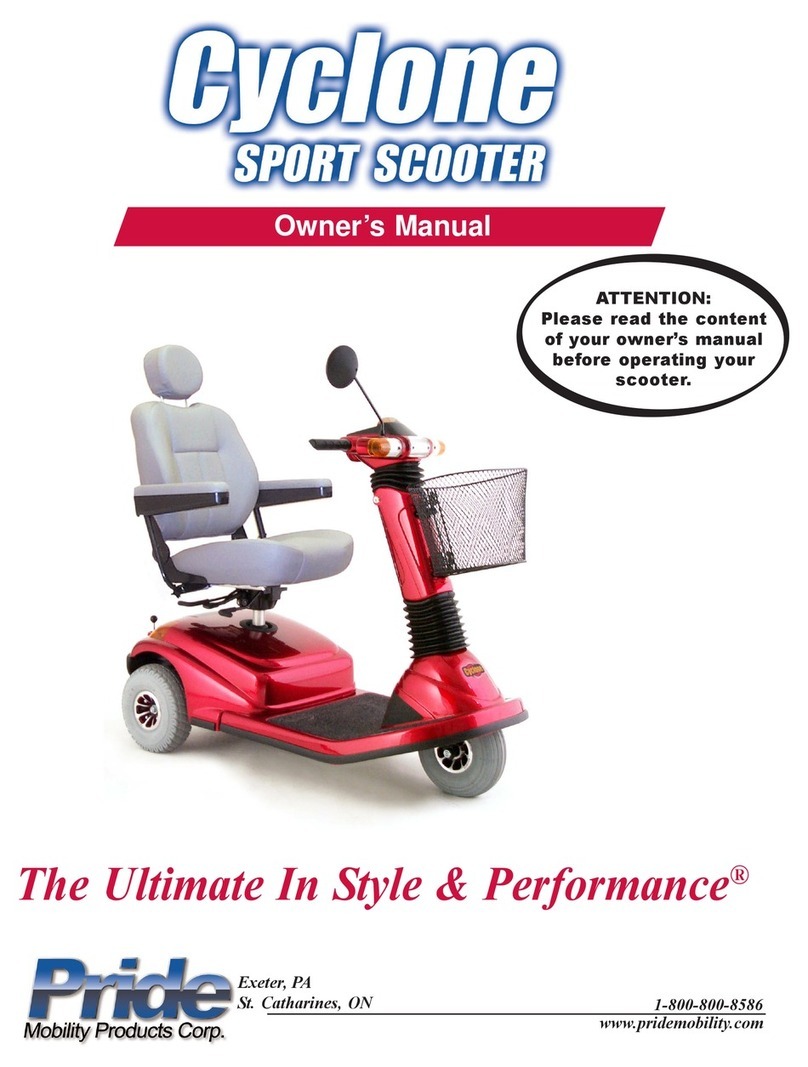
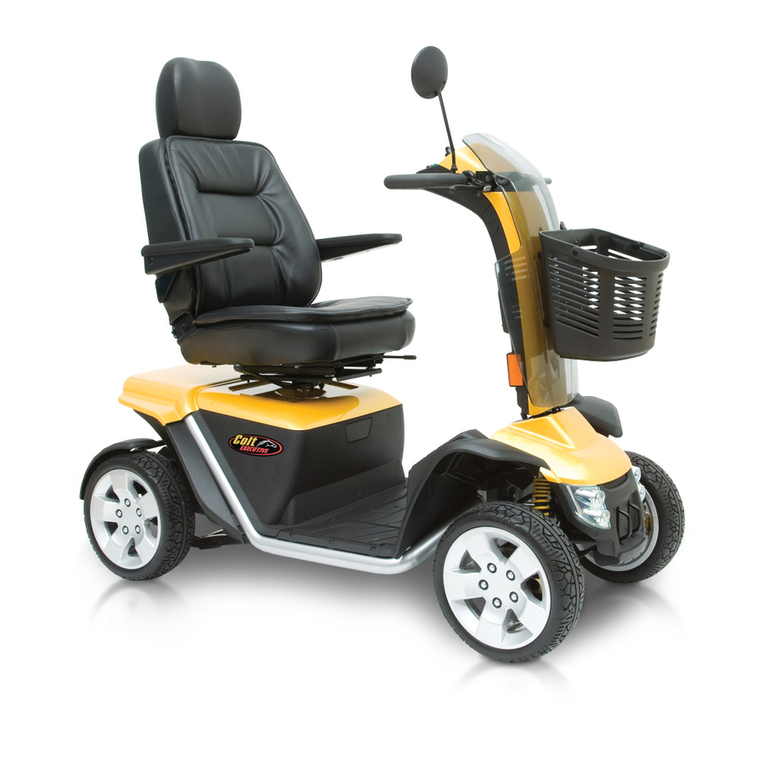
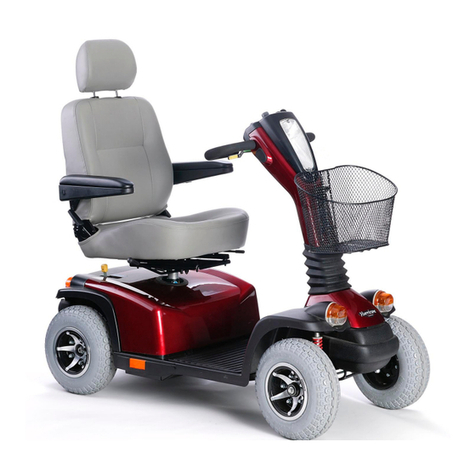
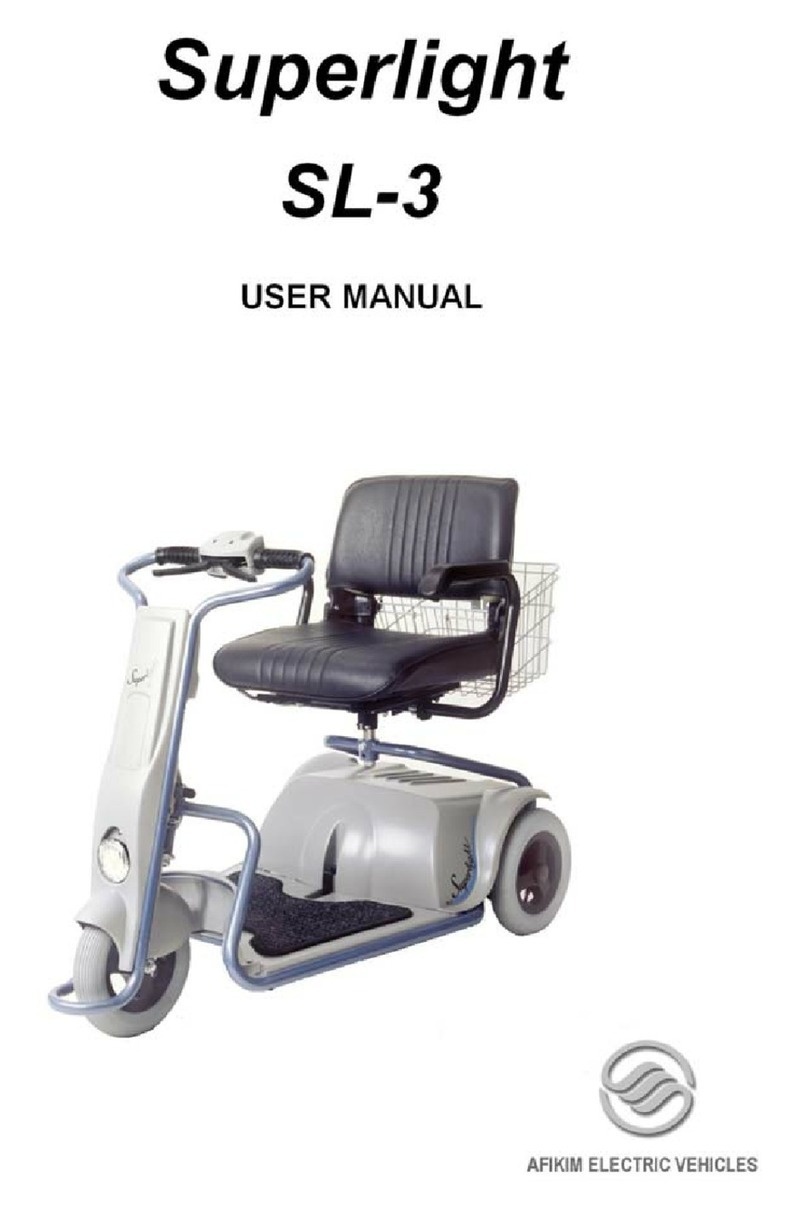
Figure 1. Maximum Recommended Incline
Angles (3-wheel) Figure 1A. Maximum Recommended Incline
Angles (4-wheel)
WARNING! Never carry an oxygen tank weighing more than 6 kg (13 lbs.) Never fill the
front or rear basket with contents exceeding 6 kg (13 lbs.).
68 kg/
11 stone
(150 lbs.)
15.8% (9˚)
90 kg/
14 stone
(200 lbs.)
14.1% (8˚)
113 kg/
18 stone
(250 lbs.)
12.3%(7˚)
136-159 kg/
21-25 stone
(300-350 lbs.)
10.5% (6˚)