Product Description
The T3NFP3 probe set comprises of a set of three magnetic eld probes (H) and an
electric eld probe (E) for radiated emissions pre-compliance tests of printed circuit
boards and other devices including components, connectors, wiring, power supplies,
etc.
The T3NFP3 probe set is used to measure the magnetic elds and electric elds in
the area of the device to determine the source and level of disturbance emissions.
The probes act similar as wide bandwidth antennas, picking up radiated emissions
from components, PCB traces, housing openings or gaps and from any other parts
that could be emitting RF.
Scanning the probe over the surface of a PCB assembly or housing quickly identies
locations which emit electromagnetic radiation. By changing to a probe with smaller
size, the origination of the emissions can be further narrowed down. Rotating the
probe over the device will enable the orientation of the magnetic elds to be
determined.
Additional applications are RF immunity tests by feeding a RF signal into the probe
and radiating it into potentially susceptible circuit sections. Furthermore the probes
can be used in the eld of repair or debugging to track down issues in RF signal
chains by contactless measurement of RF signal levels. One more application is non-
invasive measurement of RF building blocks such as modulators or oscillators.
Frequency, phase noise and spectral components can be measured in conjunction
with a low noise preamplier.
The passive near eld probes are connected to the 50 Ohm input of a spectrum
Analyzer such as the Teledyne Test Tools T3SA3200 or T3SA3100, or to the input of
a VNA such as the Teledyne Test Tools T3VNA1500 or T3VNA3200, or to the input of
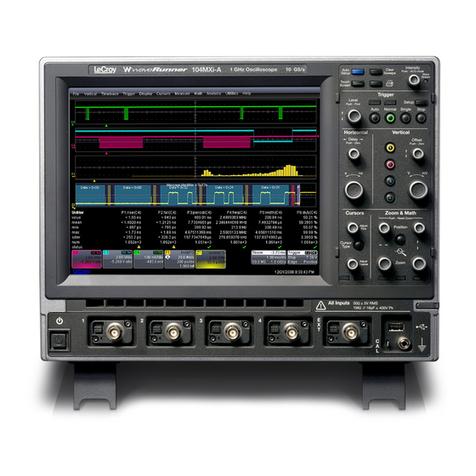
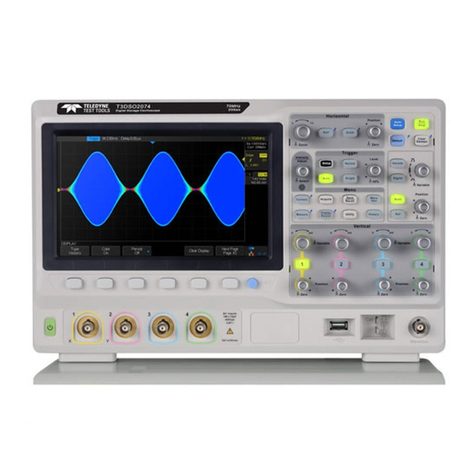
a high sensitivity oscilloscope such as the Teledyne LeCroy high denition 12 bit
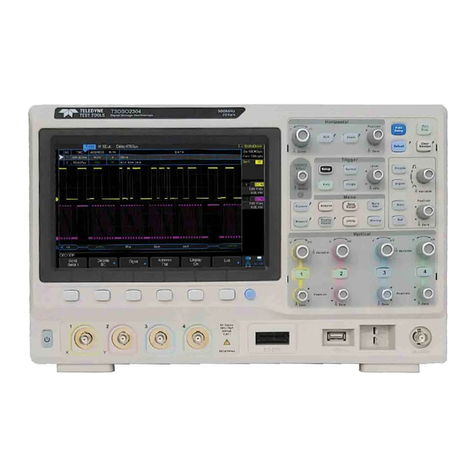
HDO and WavePro HD families, or to a regular oscilloscope such as the Teledyne
Test Tools T3DSO range. The probes can also be used with other brands of spectrum
Analyzer or oscilloscope.
The probes can then make comparative measurements of magnetic elds and
disturbance currents in the frequency range from 300 kHz to 3 GHz, though they can
be used well beyond 6 GHz.
3