manuals.online logo
Brands
  1. Home
  2. •
  3. Brands
  4. •
  5. Ambu
  6. •
  7. Medical Equipment
  8. •
  9. Ambu aScope 4 Broncho Series User manual

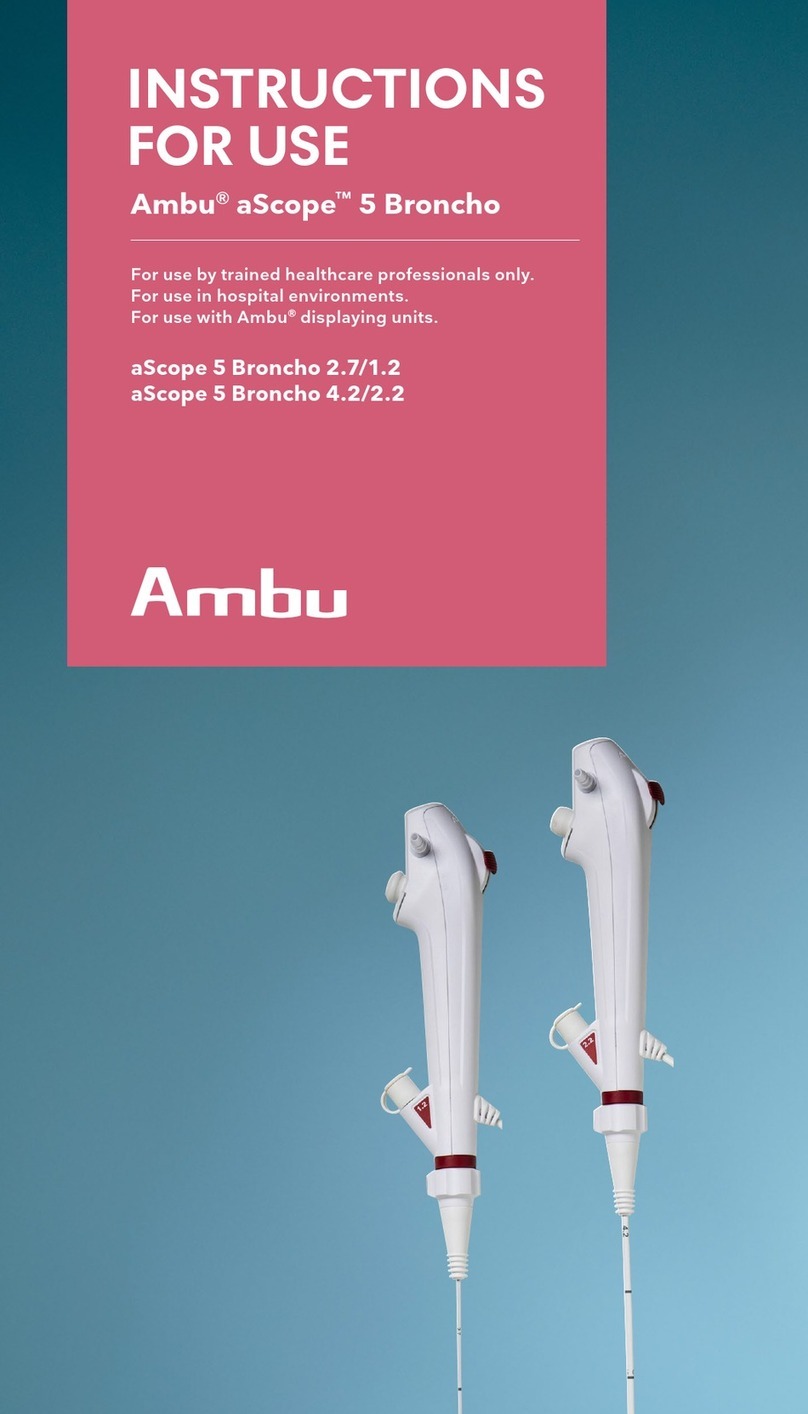
Ambu aScope 4 Broncho Series User manual

Other manuals for aScope 4 Broncho Series

2

This manual suits for next models

3

Other Ambu Medical Equipment manuals

Ambu AmbuMan Manual

Ambu

Ambu AmbuMan Manual

Ambu aBox 2 User manual

Ambu

Ambu aBox 2 User manual

Ambu Redi-ACE Adult User manual

Ambu

Ambu Redi-ACE Adult User manual

Ambu aScope 3 5.0/2.2 User manual

Ambu

Ambu aScope 3 5.0/2.2 User manual

Ambu Cuff Pressure Gauge User manual

Ambu

Ambu Cuff Pressure Gauge User manual

Ambu Mark IV Adult User manual

Ambu

Ambu Mark IV Adult User manual

Ambu AuraOnce User manual

Ambu

Ambu AuraOnce User manual

Ambu Airway Man Manual

Ambu

Ambu Airway Man Manual

Ambu AuraOnce Single Use Laryngeal Mask User manual

Ambu

Ambu AuraOnce Single Use Laryngeal Mask User manual

Ambu aView 2 Advance User manual

Ambu

Ambu aView 2 Advance User manual

Ambu Mini Perfit ACE User manual

Ambu

Ambu Mini Perfit ACE User manual

Ambu Mini Perfit ACE User manual

Ambu

Ambu Mini Perfit ACE User manual

Ambu VivaSight 2 DLT User manual

Ambu

Ambu VivaSight 2 DLT User manual

Ambu SPUR II User manual

Ambu

Ambu SPUR II User manual

Ambu VivaSight 2 SLT User manual

Ambu

Ambu VivaSight 2 SLT User manual

Ambu aScope 4 RhinoLaryngo Slim User manual

Ambu

Ambu aScope 4 RhinoLaryngo Slim User manual

Ambu AuraGain User manual

Ambu

Ambu AuraGain User manual

Ambu aScope 3 Regular User manual

Ambu

Ambu aScope 3 Regular User manual

Ambu AuraStraight User manual

Ambu

Ambu AuraStraight User manual

Ambu Perfit ACE Manual

Ambu

Ambu Perfit ACE Manual

Ambu BronchoSampler 60 User manual

Ambu

Ambu BronchoSampler 60 User manual

Ambu aBox 2 Operating and safety instructions

Ambu

Ambu aBox 2 Operating and safety instructions

Ambu aScope 3 User manual

Ambu

Ambu aScope 3 User manual

Ambu aScope BronchoSampler User manual

Ambu

Ambu aScope BronchoSampler User manual

Popular Medical Equipment manuals by other brands

Itamar Medical WatchPAT Operation manual

Itamar Medical

Itamar Medical WatchPAT Operation manual

PROTEOR 1P650 KNEE Assembling and adjustment instructions

PROTEOR

PROTEOR 1P650 KNEE Assembling and adjustment instructions

Liberate Medical VentFree user manual

Liberate Medical

Liberate Medical VentFree user manual

Dicarre DA20 user guide

Dicarre

Dicarre DA20 user guide

Stryker Medical M Series Operation manual

Stryker Medical

Stryker Medical M Series Operation manual

Invacare ScanBed 750 user manual

Invacare

Invacare ScanBed 750 user manual

Getinge Arjohuntleigh Nimbus 3 Professional Instructions for use

Getinge

Getinge Arjohuntleigh Nimbus 3 Professional Instructions for use

Mettler Electronics Sonicator 730 Maintenance manual

Mettler Electronics

Mettler Electronics Sonicator 730 Maintenance manual

Pressalit Care R1100 Mounting instruction

Pressalit Care

Pressalit Care R1100 Mounting instruction

Denas MS DENAS-T operating manual

Denas MS

Denas MS DENAS-T operating manual

bort medical ActiveColor quick guide

bort medical

bort medical ActiveColor quick guide

AccuVein AV400 user manual

AccuVein

AccuVein AV400 user manual

agiliti NP Trio user manual

agiliti

agiliti NP Trio user manual

Rocket Medical Rocket Digital Oocyte Aspiration Pump Service manual

Rocket Medical

Rocket Medical Rocket Digital Oocyte Aspiration Pump Service manual

Monteris Medical Neuroblate Instructions for use

Monteris Medical

Monteris Medical Neuroblate Instructions for use

Otto Block 8E33 7 manual

Otto Block

Otto Block 8E33 7 manual

ADVANCED HOME CARE Helios Guide

ADVANCED HOME CARE

ADVANCED HOME CARE Helios Guide

NeuLog NUL-208 Guide

NeuLog

NeuLog NUL-208 Guide

manuals.online logo
manuals.online logoBrands
  • About & Mission
  • Contact us
  • Privacy Policy
  • Terms and Conditions

Copyright 2025 Manuals.Online. All Rights Reserved.

For use by trained clinicians/physicians only.
For in-hospital use.
For use with Ambu® aViewTM monitor.
Ambu® aScope™ 4 Broncho Slim
Ambu® aScope™ 4 Broncho Regular
Ambu® aScope™ 4 Broncho Large
Instruction for Use
Ambu® aScope™ 4 Broncho Family
Ambu is a registered trademark and aScope and aView are trademarks of Ambu A/S.
Pat. Pending
Contents Page
English (Instruction for Use).....................................................................................................................4-13
Български (Указания за ползване).....................................................................................................14-25
Česky (Návod k použití).............................................................................................................................26-35
Dansk (Brugsanvisning) .............................................................................................................................36-45
Deutsch (Bedienungsanleitung)............................................................................................................46-57
Eλληvıĸά (δηγίες Xρήσεως) ......................................................................................................................58-69
Español (Manual de instrucciones) .......................................................................................................70-79
Eesti (Kasutusjuhised)................................................................................................................................. 80-89
Suomi (Käyttöohje)...................................................................................................................................... 90-99
Français (Mode d´emploi) .........................................................................................................................100-109
Hrvatski (Upute za uporabu) ...................................................................................................................110 -119
Magyar (Használati útmutató) ................................................................................................................120-129
Italiano (Manuale d’uso) ............................................................................................................................130-139
日本語 (使用法) ...................................................................................................................140-149
Lietuviškai (Naudojimo instrukcijos) ....................................................................................................150-159
Latviski (Lietošanas instrukcija)..............................................................................................................160-169
Nederlands (Gebruiksaanwijzing)......................................................................................................... 170-179
Norsk (Brukerveiledning) ..........................................................................................................................180-189
Polski (Instrukcja obsługi)......................................................................................................................... 190-201
Português (Manual de instruções).........................................................................................................202-211
Português–Brazil (Manual de instruções)...........................................................................................212-221
Română (Instrucţiuni de utilizare).........................................................................................................222-231
Pусский (Directions for use) ....................................................................................................................232-243
Slovenčina (Návod na použitie).............................................................................................................. 244-253
Slovenšcina (Navodila za uporabo).......................................................................................................254-263
Svenska (Instruktionshandbok)..............................................................................................................264-273
Türkçe (Kullanım talimatları)....................................................................................................................274-283
( ).............................................................................................................................................. 284-291
1. Important Information – Read Before Use
Read these safety instructions carefully before using the aScope 4 Broncho. The Instruction for
Use may be updated without further notice. Copies of the current version are available upon
request. Please be aware that these instructions do not explain or discuss clinical procedures.
They describe only the basic operation and precautions related to the operation of the aScope 4
Broncho. Before initial use of the aScope 4 Broncho, it is essential for operators to have received
sufficient training in clinical endoscopic techniques and to be familiar with the intended use,
warnings, cautions, indications and contraindications mentioned in these instructions.
There is no warranty on the aScope 4 Broncho.
In this document aScope 4 Broncho refers to instructions which applies to the scope only and
aScope 4 Broncho system refers to information relevant for the aScope 4 Broncho and the aView
monitor and accessories. Unless specified otherwise, aScope 4 Broncho refers to all aScope 4
Broncho variants.
1.1. Intended Use
The aScope 4 Broncho endoscopes have been designed to be used with the aView monitor,
endotherapy accessories and other ancillary equipment for endoscopy within the airways
and tracheobronchial tree.
1.2. Indications for Use
The aScope 4 Broncho is for use in a hospital environment. The aScope 4 Broncho is a single-use
device designed for use in adults. It has been evaluated for the following endotracheal tubes (ETT
),
double lumen tubes (DLT) and endoscopic accessories (EA) sizes:
Minimum ETT
inner diameter
Minimum
DLT size
EA minimum working
channel width
aScope 4 Broncho Slim 3.8/1.2 5.0 mm 35 Fr up to 1.2 mm
aScope 4 Broncho Regular 5.0/2.2 6.0 mm 41 Fr up to 2.0 mm
aScope 4 Broncho Large 5.8/2.8 7.0 mm -up to 2.6 mm
There is no guarantee that instruments selected solely using this minimum instrument channel width will be
compatible in combination.
1.3. Warnings and Cautions
Failure to observe these warnings and cautions may result in patient injury or damage to the
equipment. Ambu is not responsible for any damage to the system or patient injury
resulting from incorrect use.
WARNINGS
1. aScope 4 Broncho is a single-use device and must be handled in a manner consistent
with accepted medical practice for such devices in order to avoid contamination of the
aScope 4 Broncho prior to insertion.
2. aScope 4 Broncho images must not be used as an independent diagnostic of any
pathology. Physicians must interpret and substantiate any finding by other means and
in the light of the patient's clinical characteristics.
3. Do not use active endoscopic accessories such as laser probes and electrosurgical
equipment in conjunction with the aScope 4 Broncho, as this may result in patient injury
or damage to the aScope 4 Broncho.
4. Do not use the aScope 4 Broncho if it is damaged in any way or if any part of the
functional check (see section 4.1) fails.
5. Do not attempt to clean and reuse the aScope 4 Broncho as it is a single-use device.
Reuse of the product can cause contamination, leading to infections.
6. The aScope 4 Broncho is not to be used when delivering highly flammable anaesthetic
gases to the patient. This could potentially cause patient injury.
7. The aScope 4 Broncho is not to be used in a MRI environment.
8. Do not use the aScope 4 Broncho during defibrillation.
9. Only to be used by skilled physicians trained in clinical endoscopic techniques and procedures.
4
10. Do not use excessive force when advancing, operating or withdrawing the aScope 4 Broncho.
11. Patients should be adequately monitored at all times during use.
12.
Always watch the live endoscopic image on the aView when advancing or withdrawing the
aScope 4 Broncho, operating the bending section or suctioning. Failure to do so may harm
the patient.
13. Do not use aScope 4 Broncho if the product sterilisation barrier or its packaging is damaged.
14. The distal end of the endoscope may get warm due to heating from the light emission part.
Avoid long periods of contact between the tip of the device and the mucosal membrane as
long, sustained contact with the mucosal membrane may cause mucosal injury.
15. Always make sure that any tube connected to the suction connector is connected to a
suction device.
16. When withdrawing the endoscope, the distal tip must be in neutral and non-deflected
position. Do not operate the bending lever, as this may result in injury to the patient
and/or damage to the aScope 4 Broncho.
17. Do not advance or withdraw aScope 4 Broncho, or operate the bending section, while
endoscopic accessories are protruding from the distal end of the working channel, as
this may result in injury to the patient.
18. Always make sure that the bending section is in a straight position when inserting or
withdrawing an endoscopic accessory in the working channel. Do not operate the
bending lever and never use excessive force, as this may result in injury to the patient
and/or damage to the aScope 4 Broncho.
19. Always perform a visual check according to the instructions in this Instructions for Use
before placing the aScope 4 Broncho in a waste container.
20. Electronic equipment and the aScope 4 Broncho system may affect the normal function
of each other. If the aScope 4 Broncho system is used adjacent to or stacked with other
equipment, observe and verify normal operation of both the aScope 4 Broncho system
and the other electronic equipment prior to using it. It may be necessary to adopt
procedures for mitigation, such as reorientation or relocation of the equipment or
shielding of the room in which it is used.
21. The aScope 4 Broncho consists of parts supplied by Ambu. These parts must only be
replaced by Ambu authorised parts. Failure to comply with this may result in patient injury.
22. Be careful to check whether the image on the screen is a live image or a recorded image
and verify that the orientation of the image is as expected.
23. To avoid risk of electric shock, the aScope 4 Broncho system must only be connected to
a supply mains with protective earth. To disconnect the aScope 4 Broncho system from
mains remove the mains plug from the wall outlet.
24. Always check compatibility with endotracheal tubes and double lumen tubes.
25. If any malfunction should occur during the endoscopic procedure, stop the procedure
immediately and withdraw the endoscope.
CAUTIONS
1. Have a suitable backup system readily available for immediate use so the procedure can
be continued if a malfunction should occur.
2. Be careful not to damage the insertion cord or distal tip when using sharp devices such as
needles in combination with the aScope 4 Broncho.
3. Be careful when handling the distal tip of the insertion cord and do not allow it to strike
other objects, as this may result in damage to the equipment. The lens surface of the
distal tip is fragile and visual distortion may occur.
4. Do not exert excessive force on the bending section as this may result in damage to the
equipment. Examples of inappropriate handling of the bending section include:
– Manual twisting.
– Operating it inside an ETT or in any other case where resistance is felt.
– Inserting it into a preshaped tube or a tracheostomy tube with the bending direction
not aligned with the curve of the tube.
5. US federal law restricts these devices for sale only by, or on the order of, a physician.
6. Keep the aScope 4 Broncho handle dry during preparation, use and storage.
7. Do not use a knife or other sharp instrument to open the pouch or cardboard box.
8. Secure the tubing properly on the suction connector before suction is applied.
9. If needed remove secretion or blood from the airway before and during the procedure.
The suction function of any appropriate suction device can be used for this purpose.
10. Apply a vacuum of 85 kPa (638 mmHg) or less when suctioning. Applying too large a
vacuum may make it difficult to terminate suctioning.
EN
5

2. System Description
The aScope 4 Broncho can be connected to the aView monitor. For information about the
aView monitor, please refer to the aView Instruction for Use.
2.1. System Parts
Ambu® aScope™ 4 Broncho
- Single use device:
Part numbers:
478001000 aScope 4 Broncho Large 5.8/2.8
477001000 aScope 4 Broncho Regular 5.0/2.2
476001000 aScope 4 Broncho Slim 3.8/1.2
aScope 4 Broncho Slim, aScope 4 Broncho Regular and aScope 4 Broncho Large are not
available in all countries. Please contact your local sales office.
Product Name Colour Outer Diameter
[mm]
Inner Diameter
[mm]
aScope 4 Broncho Large 5.8/2.8
aScope 4 Broncho Regular 5.0/2.2
aScope 4 Broncho Slim 3.8/1.2
Orange
Green
Gray
min 5.8; max 6.3
min 5.0; max 5.5
min 3.8; max 4.2
min 2.6
min 2.0
min 1.2
Compatible devices: Ambu® aView™ Part numbers:
(Reusable)
405001000 Model no. JANUS-W08-R10
(SW versions v1.XX)*
405002000 Model no. JANUS2-W08-R10
(SW versions v2.XX)
For aView model no., please check the backside label on aView.
aView is not available in all countries. Please contact your local sales office.
* aScope 4 Broncho has limited image quality performance on aView model no. JANUS-W08-R10.
2.2. aScope 4 Broncho Parts
14
7
6
8
9
10
11
13
12 5

3412
6
No. Part Function Material
1Handle Suitable for left and right hand MABS
2Control lever Moves the distal tip up or down in
a single plane
POM
3Working
channel port
Allows for instillation of fluids and insertion of
endoscopic accessories
MABS +
Silicone
-Working
channel
Can be used for instillation of fluids, suction
and insertion of endoscopic accessories
PU
4Suction
connector
Allows for connection of suction tubing MABS
5Suction
button
Activates suction when pressed down MABS
6Tube
connection
Allows for fixation of tubes with standard
connector during procedure
TPE alloy
7Insertion cord Flexible airway insertion cord PU
8Bending
section
Manoeuvrable part PU
9Distal end Contains the camera, light source (two LEDs),
as well as the working channel exit
Epoxy
7-8-9 Insertion
portion
The ensemble of insertion cord, bending
section and distal end
See above
10 Connector on
aScope 4
Broncho cable
Connects to blue socket on aView PVC
11 aScope 4
Broncho cable
Transmits the image signal to aView PVC
12 Handle
protection
Protects the suction connector during
transport and storage. Remove before use.
PP
13 Protection
pipe
Protects the insertion cord during transport
and storage. Remove before use.
PP
14 Introducer To facilitate introduction of Luer Lock syringes
and soft endoscopic accessories through the
working channel
PC
-Packaging Sterile barrier Cardboard,
Tyvek
Abbreviations: MABS (Methyl Acrylonitrile Butadiene Styrene), PU (Polyurethane),
TPE (Thermoplastic Elastomer), PP (polypropylene), PC (Polycarbonate), POM (Polyoxymethylen).
EN
7
3. Explanation of Symbols Used
Symbols for the aScope 4
Broncho devices
Indication
Working length of the aScope 4 Broncho insertion cord.
Max OD Maximum insertion portion width (Maximum outer diameter).
Min ID Minimum working channel width (Minimum inner diameter).
Field of view.
Do not use if the product sterilisation barrier or
its packaging is damaged.
This product is not made with natural rubber latex.
10 oC
50
oF
40
o
C
10 4 oFTemperature limitation: between 10 °C (50 °F)
and 40 °C (104 °F) in operating environment.
%Humidity limitation: relative humidity between 30 and 85%
in operating environment.
Atmospheric pressure limitation: between 80 and 109 kPa
in operating environment.
Manufacturer.
Consult Instruction for Use.
CE mark. The product complies with the EU Council directive
concerning Medical Devices 93/42/EEC.
Electrical Safety Type BF Applied Part.
Use By, followed by YYYY-MM-DD.
Sterile Product, Sterilisation by ETO.
Single use product, do not reuse.
Reference Number.
Lot Number, Batch Code.
UL Recognized Component Mark for Canada
and the United States.
Warning.
8
4. Use of aScope 4 Broncho
Numbers in gray circles below refer to illustrations on page 2.
4.1. Preparation and Inspection of aScope 4 Broncho
Visual inspection of the aScope 4 Broncho 1
1. Check that the pouch seal is intact. 1a
2.
Make sure to remove the protective elements from the handle and from the insertion cord.
1b
3. Check that there are no impurities or damage on the product such as rough surfaces, sharp
edges or protrusions which may harm the patient. 1c
Refer to the aView Instruction for Use for preparation and inspection of the aView monitor
2
Inspection of the Image
1. Connect aScope 4 Broncho to the aView by plugging the white aScope 4 Broncho
connector with blue arrow into the corresponding blue female connector on the aView.
Please be careful to align the arrows when inserting the aScope 4 Broncho connector into
the aView monitor. 3
2. Verify that a live video image appears on the screen by pointing the distal end of aScope 4
Broncho towards an object, e.g. the palm of your hand. 4
3. Adjust the image preferences on the aView if necessary (please refer to the aView
Instruction for Use).
4. If the object cannot be seen clearly, wipe the lens at the distal end using a sterile cloth.
Preparation of aScope 4 Broncho
1. Carefully slide the bending control lever forwards and backwards to bend the bending section
as much as possible. Then slide the bending lever slowly to its neutral position. Confirm that
the bending section functions smoothly and correctly and returns to a neutral position. 5a
2. Using a syringe insert 2ml of sterile water into the working channel port (if applying a Luer
Lock syringe use the enclosed introducer). Press the plunger, ensure that there are no
leaks, and that water is emitted from the distal end. 5b
3. If applicable, prepare the suction equipment according to the supplier’s manual. 5c
Connect the suctioning tube to the suction connector and press the suction button to
check that suction is applied.
4. If applicable, verify that endoscopic accessory of appropriate size can be passed through
the working channel without resistance. The enclosed introducer can be used to facilitate
the insertion of soft accessories such as microbiology brushes. 5d
5. If applicable, verify that endotracheal tubes and double lumen tubes are compatible with
aScope 4 Broncho before starting the procedure.
4.2. Operating the aScope 4 Broncho
Holding the aScope 4 Broncho and manipulating the tip 6a
The handle of the aScope 4 Broncho can be held in either hand. The hand that is not holding the
aScope 4 Broncho can be used to advance the insertion cord into the patient’s mouth or nose.
Use the thumb to move the control lever and the index finger to operate the suction button.
The control lever is used to flex and extend the tip of the aScope 4 Broncho in the vertical plan.
Moving the control lever downward will make the tip bend anteriorly (flexion). Moving it
upward will make the tip bend posteriorly (extension). The insertion cord should be held as
straight as possible at all times in order to secure an optimal tip bending angle.
Tube connection 6b
The tube connection can be used to mount ETT and DLT with an ISO connector during intubation.
Insertion of the aScope 4 Broncho 7a
Lubricate the insertion cord with a medical grade lubricant when the aScope 4 Broncho is
inserted into the patient. If the camera image of the aScope 4 Broncho becomes unclear the tip
can be cleaned by gently rubbing the tip against the mucosal wall or remove the aScope 4
Broncho and clean the tip. When inserting the aScope 4 Broncho orally, it is recommended to
use a mouthpiece to protect the aScope 4 Broncho from being damaged.
EN
9
Instillation of fluids 7b
Fluids can be instilled through the working channel by inserting a syringe into the working
channel port at the top of the aScope 4 Broncho. When using a Luer Lock syringe, use the
included introducer. Insert the syringe completely into the working channel port or the
introducer and press the plunger to instill fluid. Make sure you do not apply suction during this
process, as this will direct the instilled fluids into the suction collection system. To ensure that
all fluid has left the channel, flush the channel with 2ml of air.
Aspiration 7c
When a suction system is connected to the suction connector, suction can be applied by
pressing the suction button with the index finger. If the introducer and/or an endoscopic
accessory is placed inside the working channel note that the suction capability will be
reduced. For optimal suction capability it is recommended to remove the introducer or syringe
entirely during suction.
Insertion of endoscopic accessories 7d
Always make sure to select the correct size endoscopic accessory for the aScope 4 Broncho
(See section 1.2). Inspect the endoscopic accessory before using it. If there is any irregularity in
its operation or external appearance, replace it. Insert the endoscopic accessory into the
working channel port and advance it carefully through the working channel until it can be
seen on the aView. The enclosed introducer can be used to facilitate the insertion of soft
accessories such as microbiology brushes.
Withdrawal of the aScope 4 Broncho 8
When withdrawing the aScope 4 Broncho, make sure that the control lever is in the neutral
position. Slowly withdraw the aScope 4 Broncho while watching the live image on aView.
4.3. After Use
Visual check 9
1. Are there any missing parts on the bending section, lens, or insertion cord? If yes, then
take corrective action to locate the missing part(s).
2. Is there any evidence of damage on the bending section, lens, or insertion cord? If yes,
then examine the integrity of the product and conclude if there are any missing parts.
3. Are there cuts, holes, sagging, swelling or other irregularities on the bending section, lens,
or insertion cord? If yes, then examine the product to conclude if there are any missing parts.
In case of corrective actions needed (step 1 to 3) act according to local hospital procedures.
The elements of the insertion cord are radio opaque.
Final steps
Disconnect the aScope 4 Broncho from the aView 10 . The aScope 4 Broncho is a single use
device. The aScope 4 Broncho is considered infected after use and must be disposed of in
accordance with local guidelines for collection of infected medical devices with electronic
components. Do not soak rinse, or sterilize this device as these procedures may leave harmful
residues or cause malfunction of the device. The design and material used are not compatible
with conventional cleaning and sterilization procedures.
10