9
en
8. Do not perform direct intubation through
AuraStraight as the endotracheal (ET) tube may get
stuck leading to insufficient ventilation.
9. In general, AuraStraight should only be used in
patients who are profoundly unconscious and will
not resist insertion.
10. The overall complication rate for laryngeal mask is
low, but the user must exercise professional
judgement when deciding whether the use of a
laryngeal mask will be appropriate. The following
patients are at higher risk of serious complications
including aspiration and inadequate ventilation:
• Patients with upper airway obstruction.
• Non-fasted patients (including those cases where
fasting cannot be confirmed).
• Patients suffering from upper gastrointestinal
issues (e.g., esophagectomy, hiatal hernia,
gastroesophageal reflux disease, morbid obesity,
pregnancy >10 weeks).
• Patients requiring high pressure ventilation.
• Patients who present with pharyngeal/laryngeal
pathology potentially complicating anatomical
fit of the mask (e.g., tumors, radiotherapy to the
neck involving the hypopharynx, severe
oropharyngeal trauma).
• Patients with inadequate mouth opening to
permit insertion.
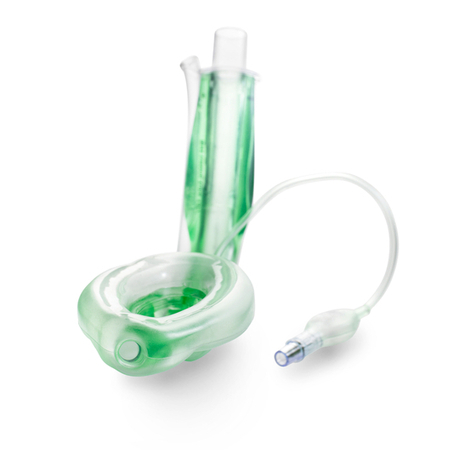
1.1. Intended use/Indication for use
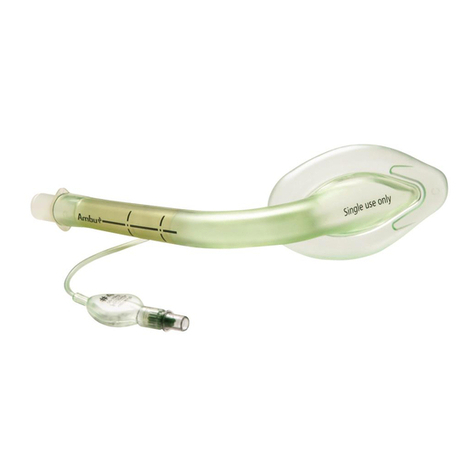
The Ambu AuraStraight is intended for use as an alternative
to the facemask for achieving and maintaining control of the
airway during routine and emergency anesthetic procedures
in fasted patients.
1.2. Intended users and use environment
Medical professionals trained in airway management.
AuraStraight is intended to be used in a hospital setting.
1.3. Intended patient population
Adult and pediatric patients from 2 kg and above
evaluated as eligible for a supraglottic airway.
1.4. Contraindications
None known.
1.5. Clinical benefits
Keeps the upper airway open to allow passage of gases.
1.6. Warnings and cautions
Before insertion, it is essential that all medical professionals
using Ambu AuraStraight are familiar with the warnings,
precautions, indications, and contraindications found in
Instruction for use.
WARNINGS
1. The product is intended to be used by medical
professionals trained in airway management only.
2. Always visually inspect the product and perform a
functional test after unpacking and prior to use
according to section 3.1 Preparation before use, as
defects and foreign matters can lead to no or
reduced ventilation, mucosal damage, or infection
of the patient. Do not use the product if any steps in
Preparation before use fails.
3. Do not re-use AuraStraight on another patient as it is
a single use device. Re-use of a contaminated
product can lead to infection.
4. AuraStraight does not protect the trachea or lungs
from the risk of aspiration.
5. Do not use excessive force when inserting
and removing AuraStraight as this can lead to
tissue trauma.
6. The cuff volume or pressure may change in the
presence of nitrous oxide, oxygen, or other medical
gases which can lead to tissue trauma. Ensure to
monitor cuff pressure continuously during the
surgical procedure.
7. Do not use AuraStraight in the presence of lasers
and electrocautery equipment as this could lead to
airway fire and tissue burns.