5
1. Introduction
1. Introduction
1.1 Indications
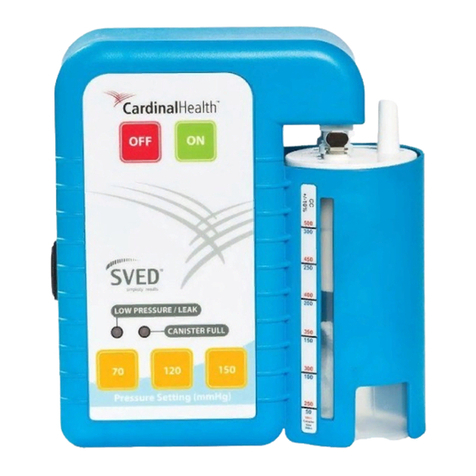
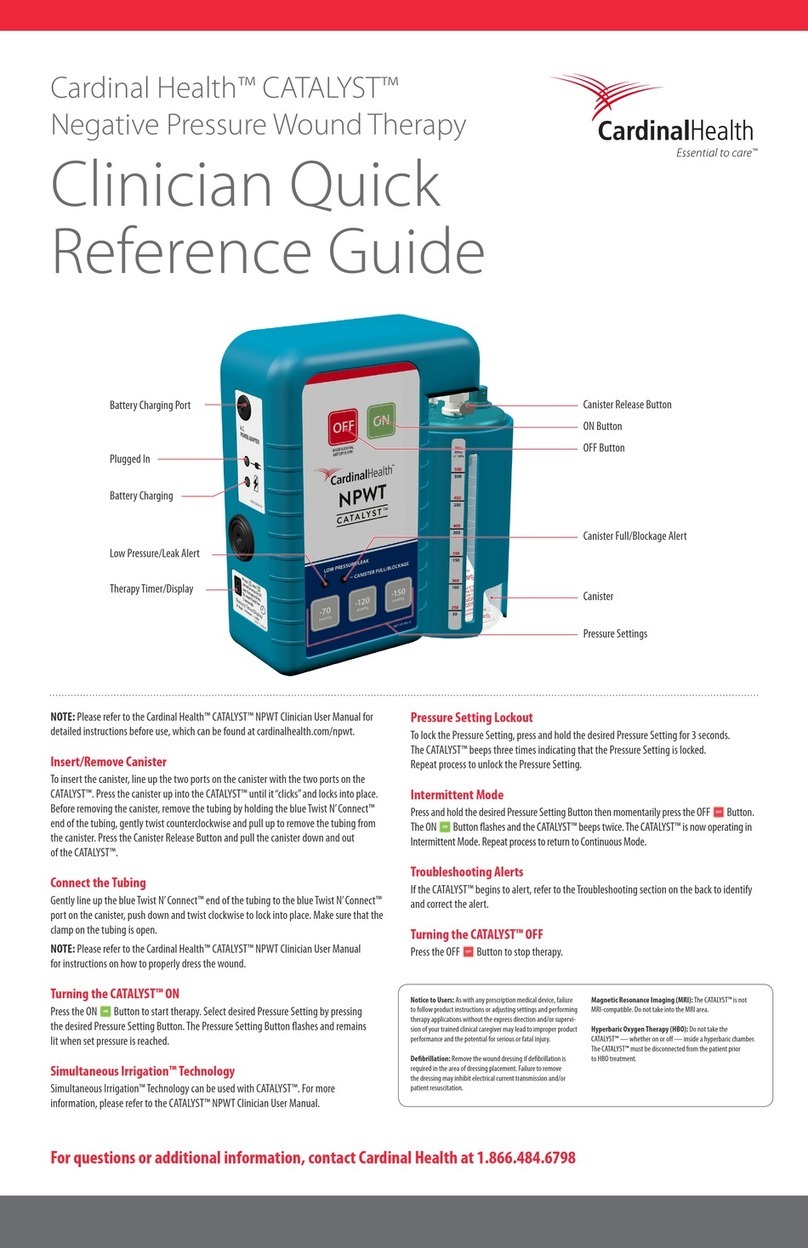
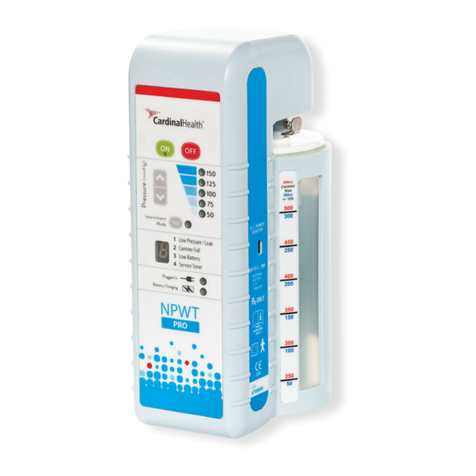
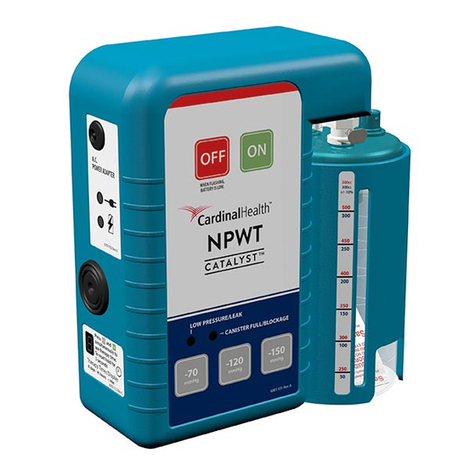
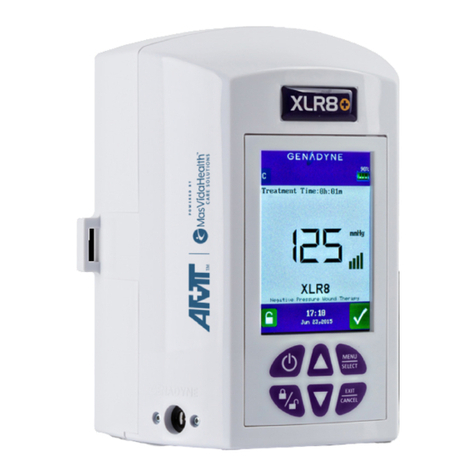
The CATALYST™ Negative PressureWound Therapy (NPWT) system is an integrated wound management system,
indicated for the application of continual or intermittent negative pressure wound therapy to the wound as the
CATALYST™ may promote wound healing by the removal of uids, including wound exudates, irrigation uids, body
uids and infectious materials.
When used with the Cardinal Health™ Occlusion Detection Dressing, the CATALYST™ NPWT system is intended for
patients with chronic, acute, traumatic, subacute and dehisced wounds, surgical incisions following sutured or stapled
closure, partial-thickness burns, ulcers (such as diabetic or pressure), aps and grafts.The CATALYST™ NPWT system is
intended for use in acute, extended and home care settings.
The Kendall™ NPWT Incision Management Dressing Kit, when used with Cardinal Health™ NPWT CATALYST™, is
intended to manage the environment of surgical incisions that continue to drain following sutured or stapled closure
by maintaining a closed environment and removing exudate via the application of negative pressure wound therapy.
The Cardinal Health™ NPWT CATALYST™ System is intended for use in acute, extended and home care settings.
1.2 Contraindications
The CATALYST™ is contraindicated for patients with malignancy in the wound, untreated osteomyelitis, non-enteric
and unexplored stulas, or necrotic tissue with eschar present. Do not place the Cardinal Health™ NPWT Occlusion
Detection Dressing or Kendall™ NPWT Incision Management Dressing over exposed blood vessels or organs.The
Cardinal Health™ NPWT Occlusion Detection Dressings and Kendall™ NPWT Incision Management Dressings are
also contraindicated for hydrogen peroxide and solutions which are alcohol based or contain alcohol. It is not
recommended to deliver uids to the thoracic cavity.
1.3 Precautions
Precautions should be taken for infected wounds, active bleeding, dicult wound hemostasis or if you are taking
anticoagulants.
• Debrillation: The NPWT Occlusion Detection Dressing or NPWT Incision Management Dressing must be
removed if debrillation is required in the area of dressing placement. Failure to remove the dressing may inhibit
electrical current transmission and/or patient resuscitation.
• Magnetic Resonance Imaging (MRI): The CATALYST™ is not MRI-compatible and cannot be used in the
presence of strong magnetic elds. Do not take the CATALYST™ into the MRI area or any area of high magnetic
elds.The CATALYST™ contains metal components that could cause unintended movement resulting in harm due
to falling objects or collisions.
• Hyperbaric Oxygen Therapy (HBO): Do not take CATALYST™ — whether on or o — into a hyperbaric
chamber. The CATALYST™ must be disconnected before HBO treatment.
• During negative pressure wound therapy, CATALYST™ and NPWT Occlusion Detection Dressing or NPWT Incision
Management Dressing are a closed system and are NOT vented to atmosphere.
• During negative pressure wound therapy, when the canister lls with uid, it should be replaced immediately.
Fluids are not removed from the dressing once the canister is full.