OPE ATING INST UCTIONS
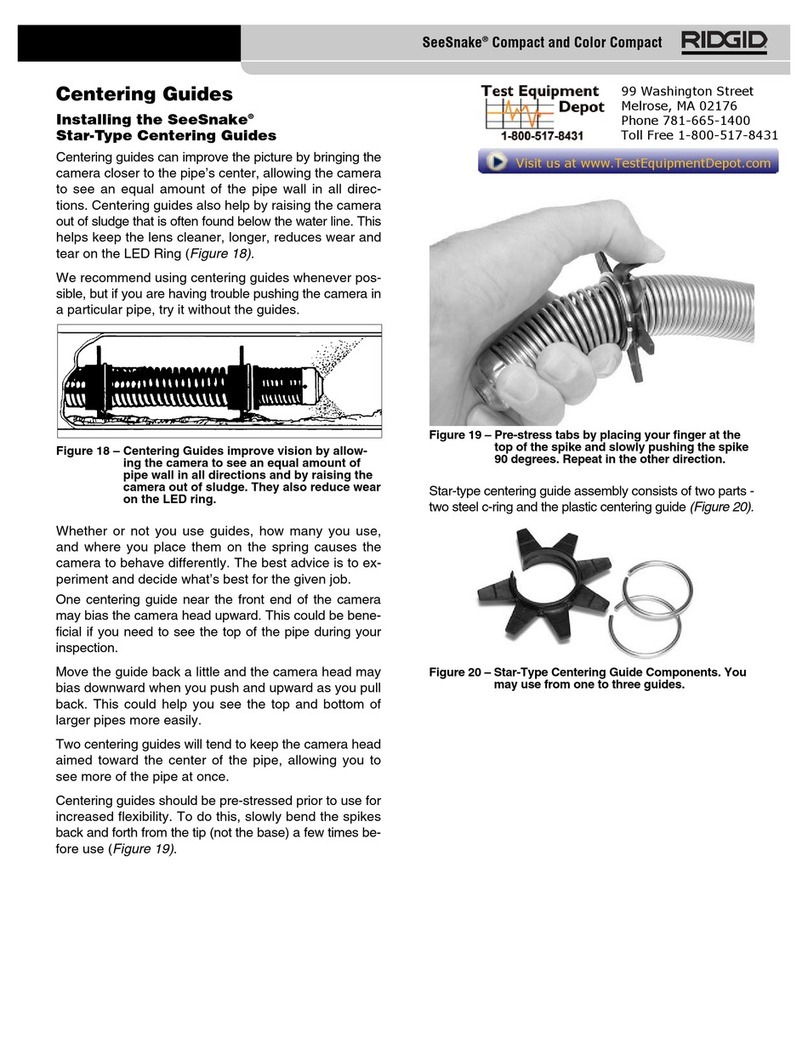
Before inspecting a pipe, determine its inner diameter. Then determine whether
that diameter matches the diameter of any of the three included probe-
centering accessories: 2, 4 or 6 inches. If your pipe is one of these three sizes,
attaching the correct accessory will keep the camera head in the center of the
pipe as you push the probe forward. A centered probe will be easier to push
forward and produce higher-quality videos and photos as well.
If the inner diameter of your pipe is not 2, 4 or 6 in., you can still use the probe
to good effect without the benefit of a probe-centering accessory. You may have
to exert a bit more effort to keep the camera head from getting hung up on the
pipe’s sidewalls as you push the probe forward. That is more likely if you use
the probe to inspect large pipes or rectangular ducts. In such situations, friction
will often cause the camera head to “tuck under” the probe as you push it
forward, producing a rear-facing dynamic view of the pipe’s interior. When you
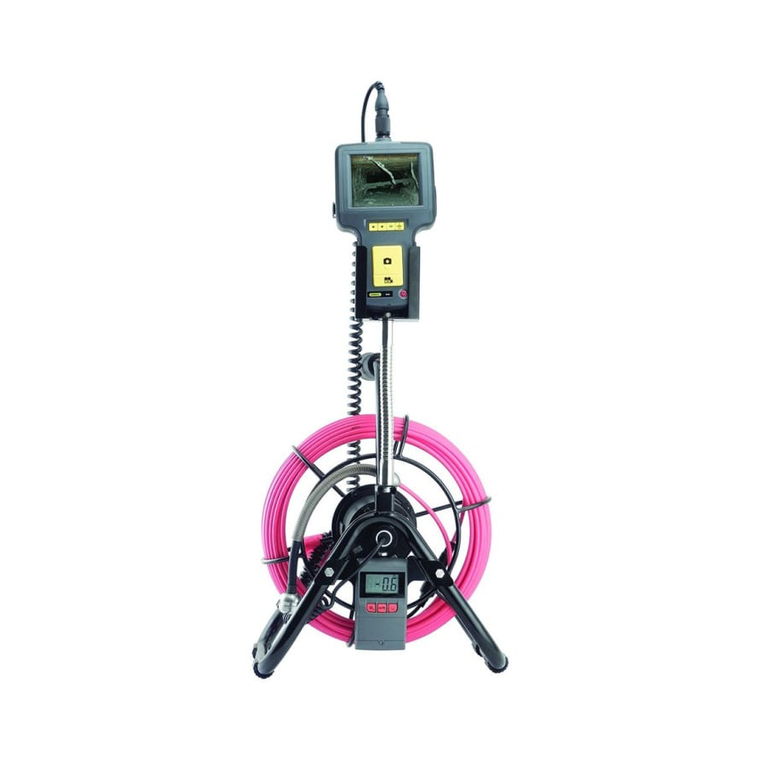
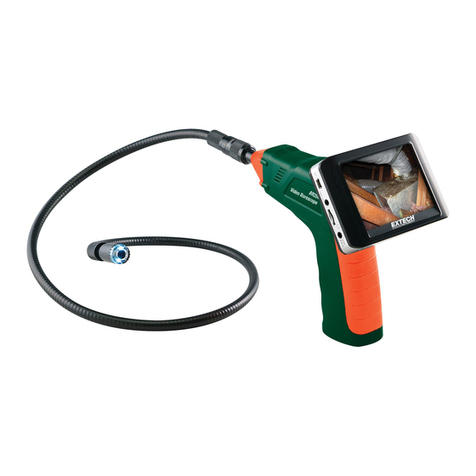
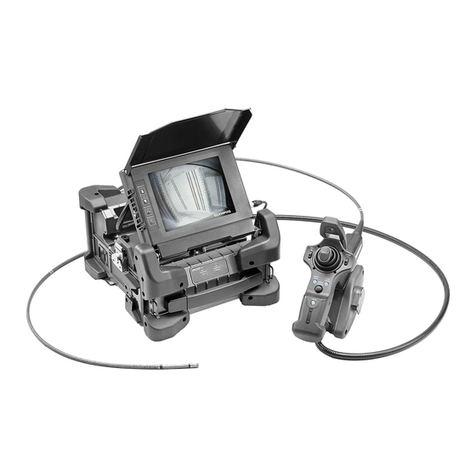
begin to reel in the probe, however, the metal coil spring sleeve (see Fig. 1) will
free the camera head and point it forward. Videos and photos captured during
this “return” trip can be just as valuable as forward-facing evidence.
ATTACHING AN ACCESSORY
Before attaching any of the three
probe-centering accessories to the
probe, “play out” a few feet of the
probe from the reel. To do so, first
“unlock” the reel by separating
(opening) the Velcro closure called
the Reel stopper (see Fig. 1 and
figure at right).
8