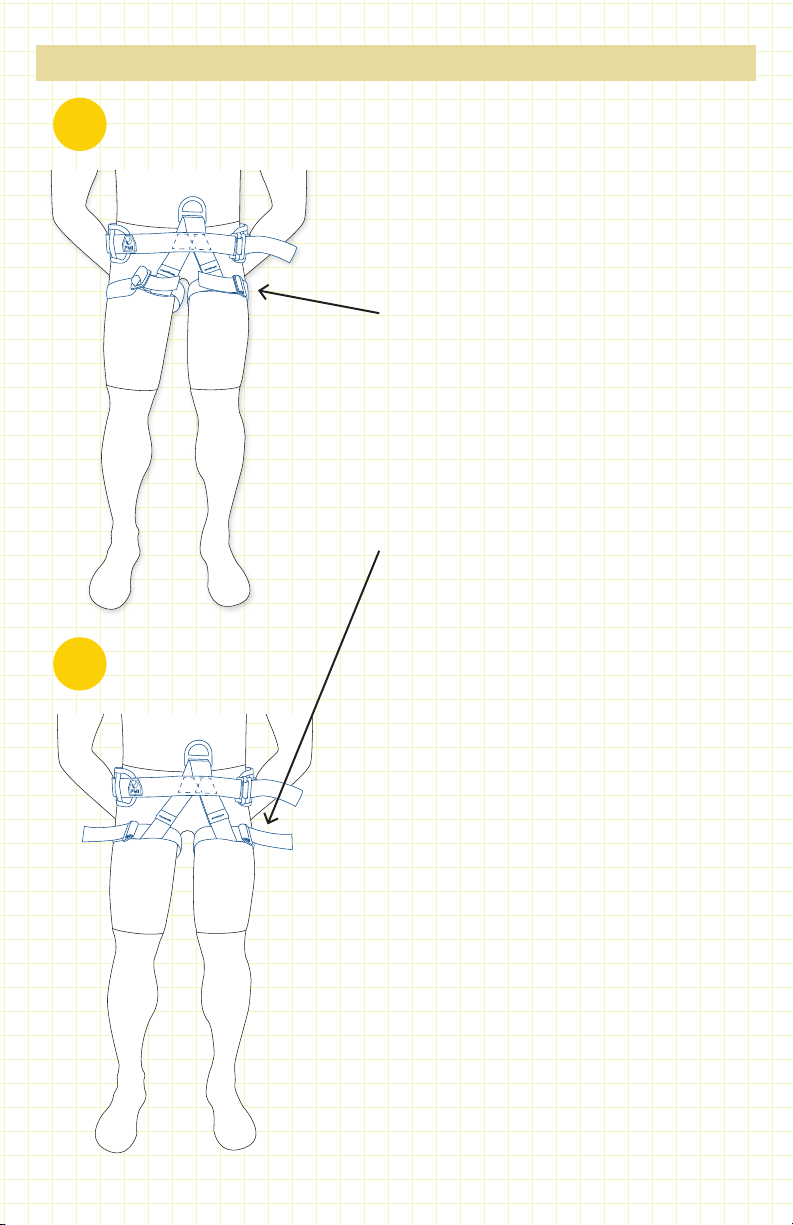
DO NOT:
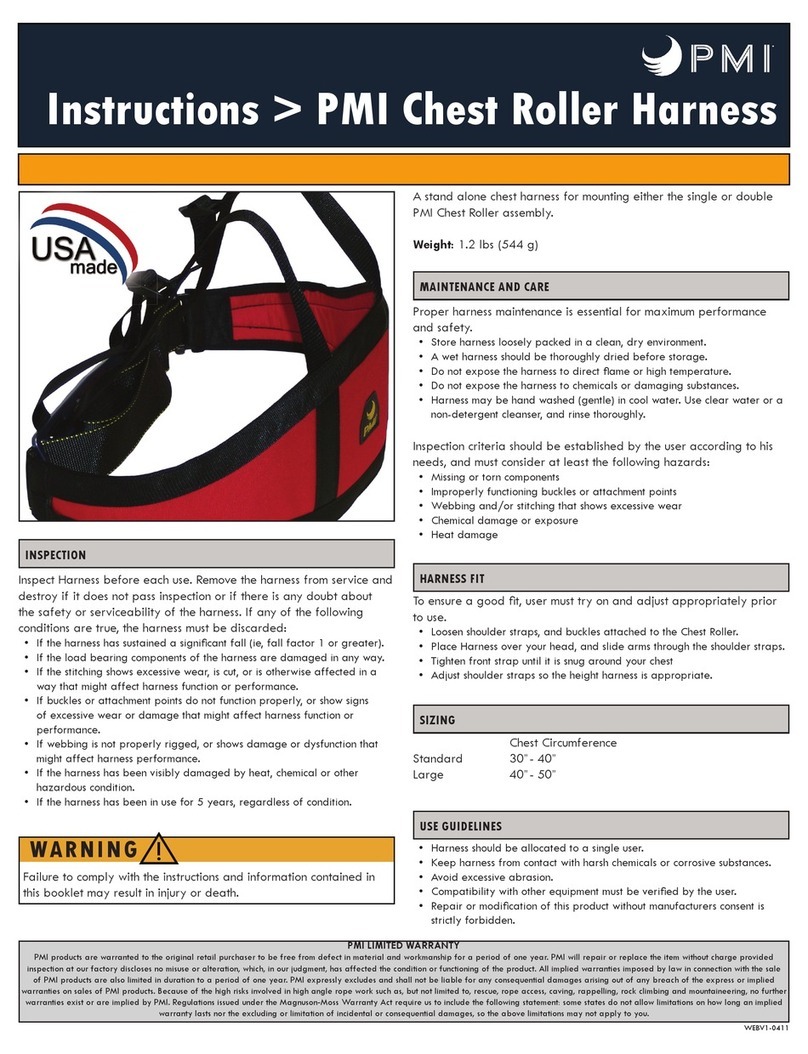
• DO NOT use top loading washing machines with agitators because
they tangle/damage the harness severely and can cause damage to the
machine.
• DO NOT use a commercial dryer to dry the harness.
• DO NOT leave a wet harness on a surface where contaminants may
leach (such as concrete).
• DO NOT expose the harness to exhaust fumes.
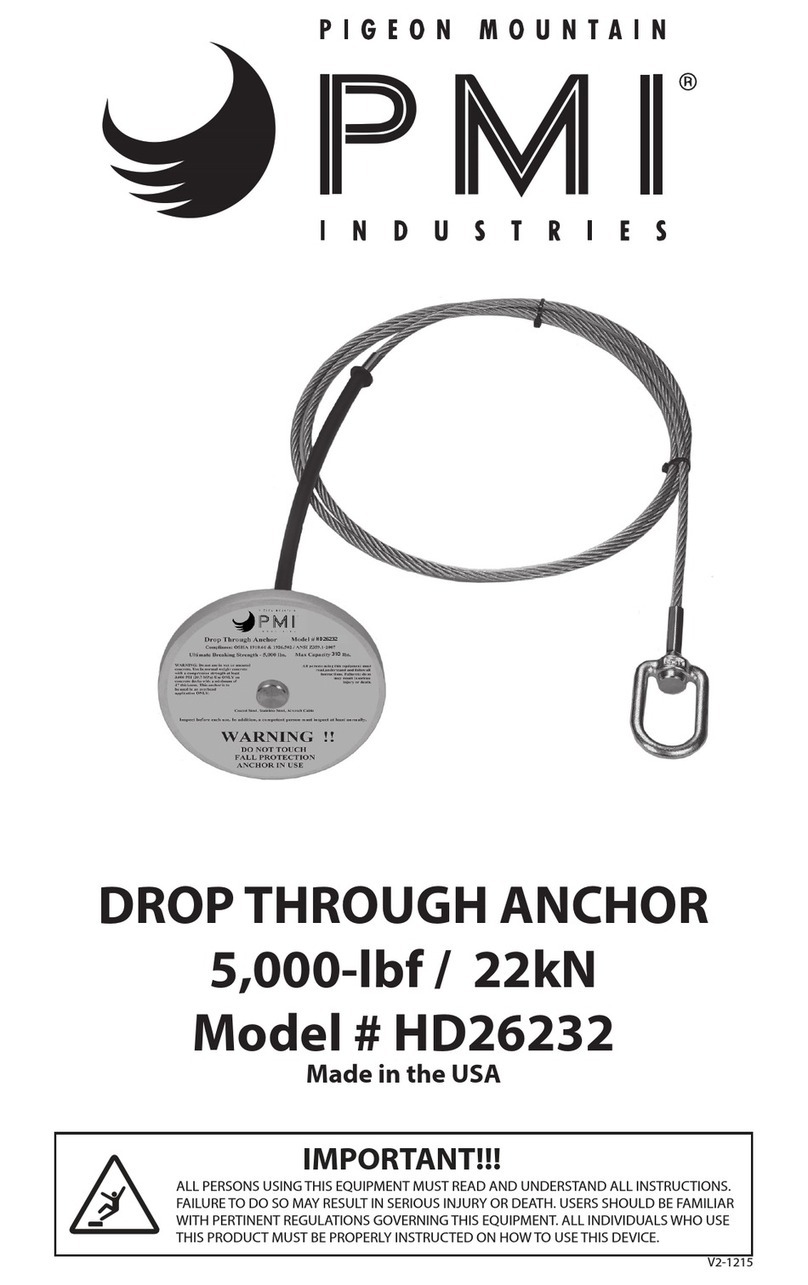
Disinfecting - Disinfection of a harness may occasionally become
necessary, such as when exposed to bloodborne pathogens. To disinfect
a harness from suspected bloodborne pathogens, PMI recommends
following the NFPA standard for cleaning rescue gear of bloodborne
pathogens. Keeping in mind that undiluted household bleach is known to
damage nylon, NFPA calls for using a diluted solution of household bleach
to clean rescue gear. Add 60 ml of household bleach per 4 liters of tap
water. That’s about one quarter (1/4) cup of bleach per gallon of water.
Be aware that some commercial bleach solutions are stronger than the
recommended 1.5% that is typical for household bleach. Soak the gear in
the diluted solution for ten minutes, then rinse thoroughly with tap water.
The rinsing cycle is critical to prevent any damage to the nylon from the
bleach. It is good to soak the gear in tap water for the same amount of
time it soaked in the bleach solution. Never store gear while it is wet.
WARNING!
The use of bleach over a long period of time, in repeated uses, can cause
damage to bers such as nylon. Disinfection of the harness using bleach
should be used sparingly and only when needed.
Drying - Dry your harness in a clean, dry area out of direct sunlight.
For best results, it should be hung up to air dry in a low-humidity
environment. DO NOT leave a wet harness on a surface where
contaminants may leach (such as concrete).
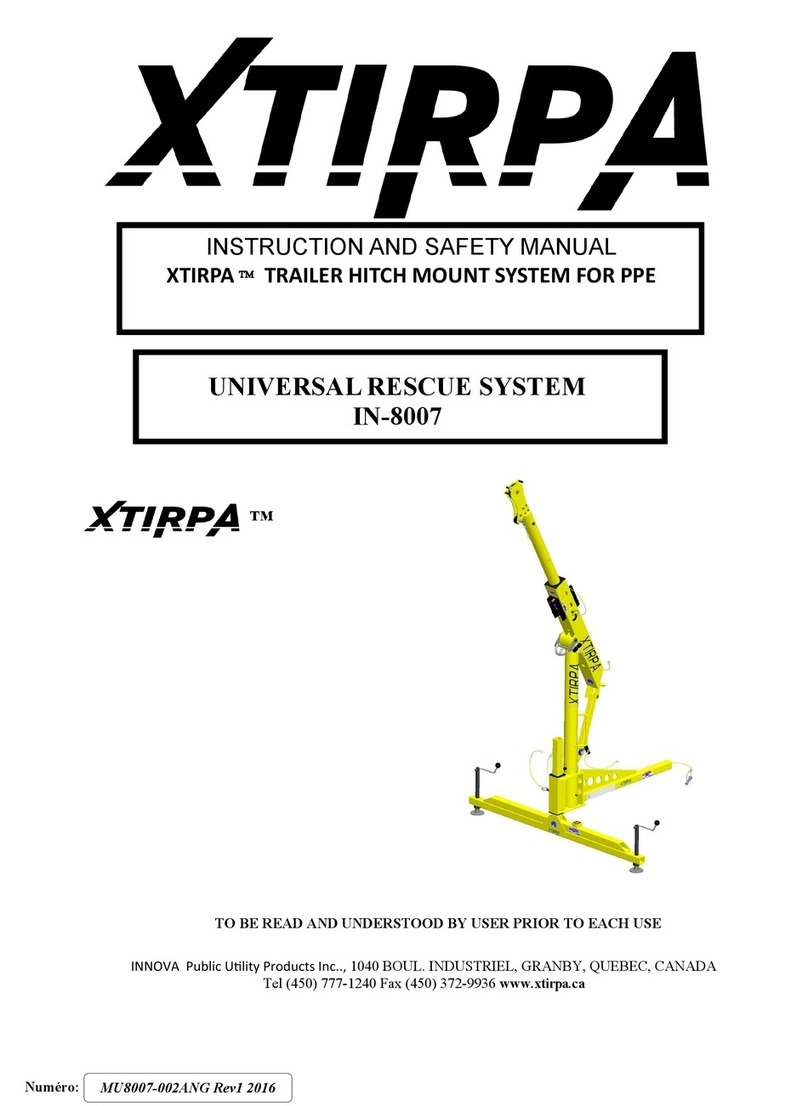
Write It Down - Remember to record the cleaning on the Equipment Log.
Keep It Clean - Store your harness in a clean, dark, dry environment, away
from exposure to acids, other harmful chemicals, noxious fumes or other
abuse.
RETIREMENT CRITIERIA
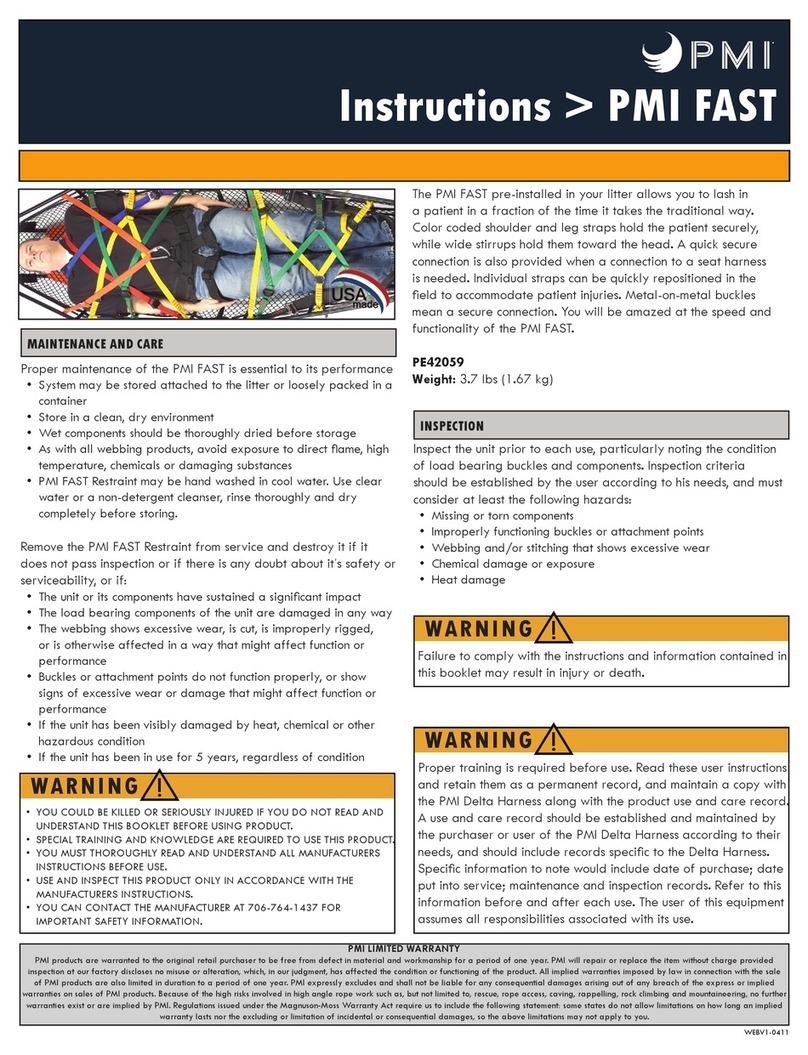
• RETIRE IMMEDIATELY any harness where the stitching is cut, torn,
excessively worn or visibly damaged.
• RETIRE IMMEDIATELY if harness has been in service for 5 years or
more, it must be retired even if a visual inspection reveals no concerns.
• RETIRE IMMEDIATELY any harness whose strength may have been
compromised during use.
• RETIRE IMMEDIATELY any harness which is subjected to a major fall or
uncontrolled or excessive loading.
• RETIRE IMMEDIATELY any harness with a manufacture date which is
greater than 10 years old, regardless of history and usage.
• RETIRE IMMEDIATELY any harness whose history and past usage you
INSPECTION, CARE & MAINTENANCE (continued)