manuals.online logo
Brands
  1. Home
  2. •
  3. Brands
  4. •
  5. TFA
  6. •
  7. Transmitter
  8. •
  9. TFA 30.3249 User manual

TFA 30.3249 User manual

This manual suits for next models

2

Other TFA Transmitter manuals

TFA 30.3196 User manual

TFA

TFA 30.3196 User manual

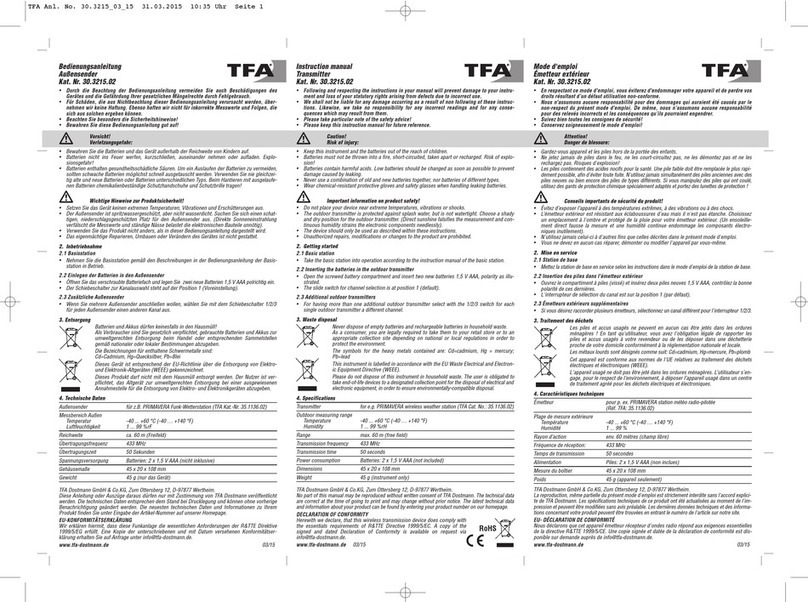
TFA 30.3215.02 User manual

TFA

TFA 30.3215.02 User manual

TFA 30.3126 User manual

TFA

TFA 30.3126 User manual

TFA 30.3215.02 User manual

TFA

TFA 30.3215.02 User manual

TFA VIEW 30.3803.02 User manual

TFA

TFA VIEW 30.3803.02 User manual

TFA 30.3145 User manual

TFA

TFA 30.3145 User manual

TFA 30.3111 User manual

TFA

TFA 30.3111 User manual

TFA 30.3114 User manual

TFA

TFA 30.3114 User manual

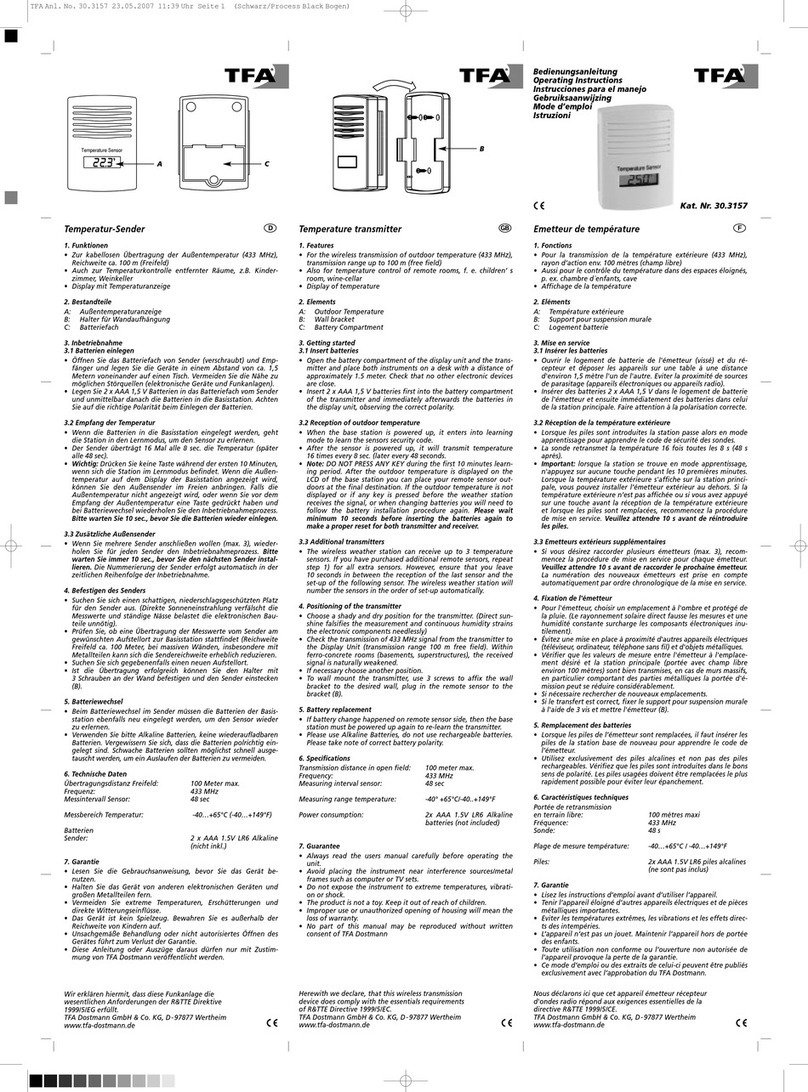
TFA 30.3157 User manual

TFA

TFA 30.3157 User manual

TFA 30.3126 User manual

TFA

TFA 30.3126 User manual

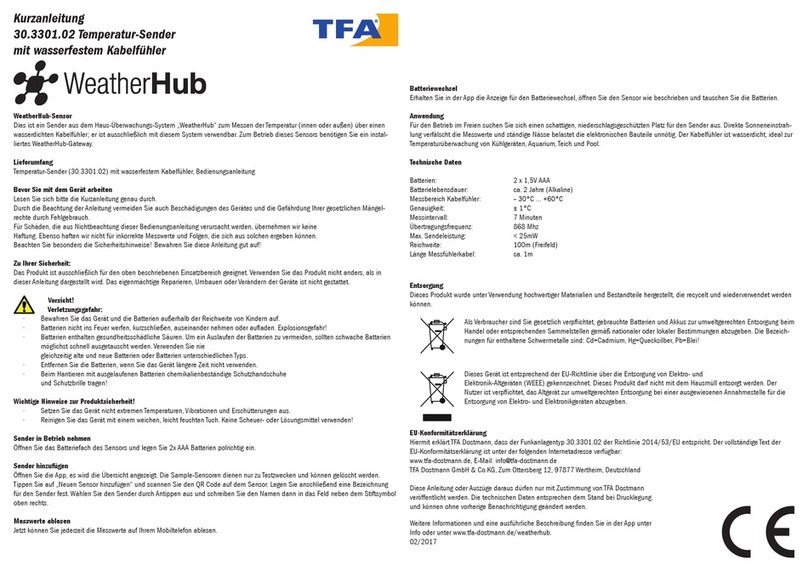
TFA WeatherHub 30.3301.02 User manual

TFA

TFA WeatherHub 30.3301.02 User manual

TFA VIEW User manual

TFA

TFA VIEW User manual

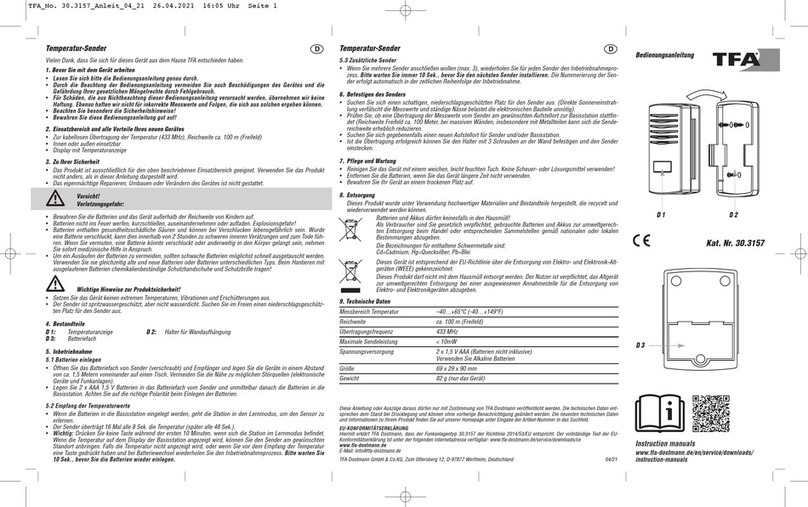
TFA 30.3157 User manual

TFA

TFA 30.3157 User manual

TFA 30.3110 User manual

TFA

TFA 30.3110 User manual

TFA 30.3163 User manual

TFA

TFA 30.3163 User manual

Popular Transmitter manuals by other brands

NIVELCO EasyTREK SCA-300 Series Programming manual

NIVELCO

NIVELCO EasyTREK SCA-300 Series Programming manual

Honeywell 5816WMBR installation instructions

Honeywell

Honeywell 5816WMBR installation instructions

Kamstrup READy MTU Installation and operation guide

Kamstrup

Kamstrup READy MTU Installation and operation guide

Omega ZW Series user guide

Omega

Omega ZW Series user guide

ABB Field 264H Instructions for installation

ABB

ABB Field 264H Instructions for installation

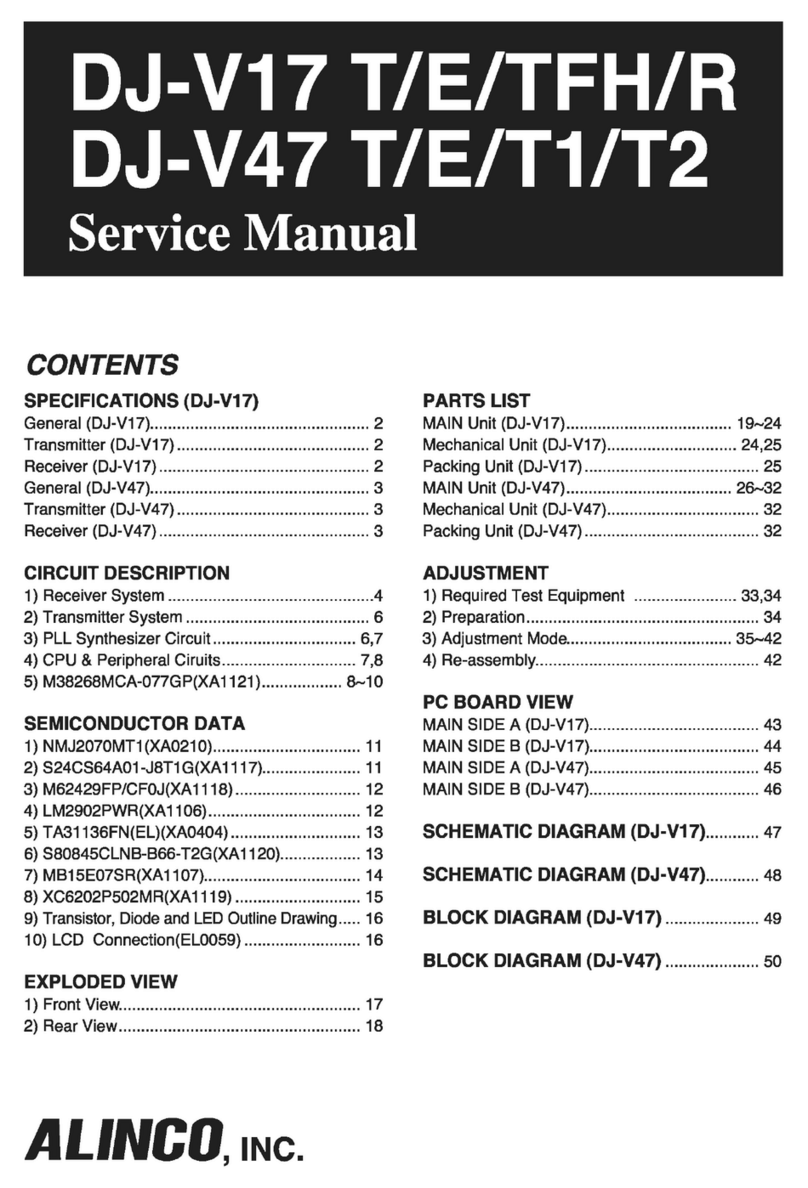
Alinco DJ-V17T Service manual

Alinco

Alinco DJ-V17T Service manual

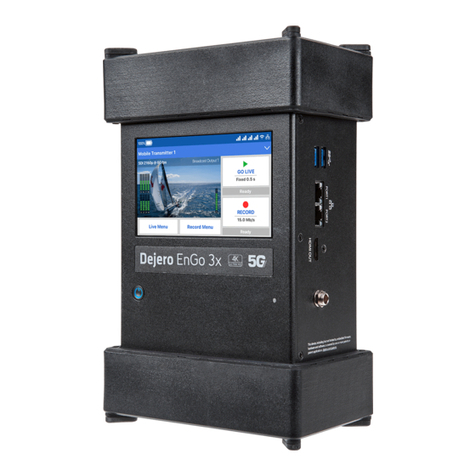
Dejero EnGo 3x manual

Dejero

Dejero EnGo 3x manual

Rosemount 4600 Reference manual

Rosemount

Rosemount 4600 Reference manual

Speaka Professional 2342740 operating instructions

Speaka Professional

Speaka Professional 2342740 operating instructions

trubomat GAB 1000 instruction manual

trubomat

trubomat GAB 1000 instruction manual

Teledyne Analytical Instruments LXT-380 instructions

Teledyne Analytical Instruments

Teledyne Analytical Instruments LXT-380 instructions

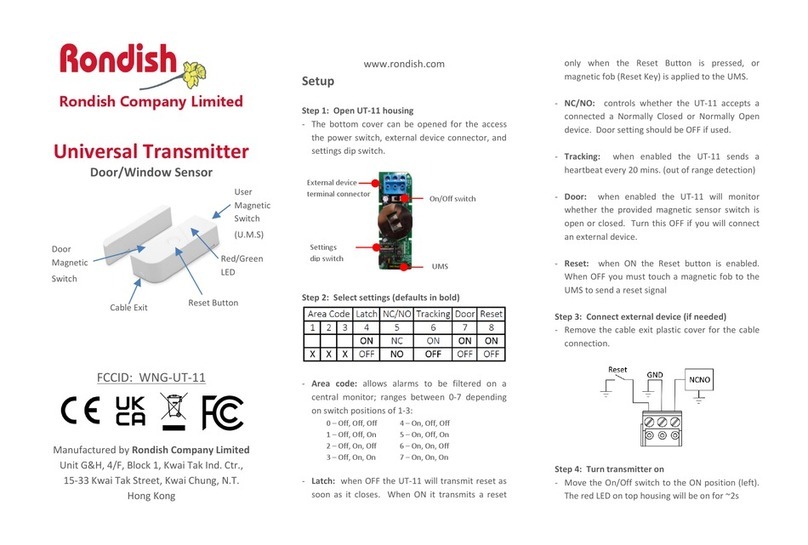
Rondish UT-11 quick start guide

Rondish

Rondish UT-11 quick start guide

MG 10JRE instruction manual

MG

MG 10JRE instruction manual

Burkert 8177 operating instructions

Burkert

Burkert 8177 operating instructions

Firetide HotPort 3203 Hardware installation guide

Firetide

Firetide HotPort 3203 Hardware installation guide

Tele Radio T9-02 User instructions

Tele Radio

Tele Radio T9-02 User instructions

Rotronic HygroFlex HF3 Series user guide

Rotronic

Rotronic HygroFlex HF3 Series user guide

Jamara FCX6 Pro Tel Instruction

Jamara

Jamara FCX6 Pro Tel Instruction

manuals.online logo
manuals.online logoBrands
  • About & Mission
  • Contact us
  • Privacy Policy
  • Terms and Conditions

Copyright 2025 Manuals.Online. All Rights Reserved.

Bedienungsanleitung
Instruction manual
Mode d’emploi
Istruzioni per l’uso
Gebruiksaanwijzing
Instrucciones de uso
Kat.Nr.: 30.3249.02
Vielen Dank, dass Sie sich für dieses Gerät
aus dem Hause TFA entschieden haben.
Bevor Sie mit dem Gerät arbeiten: Lesen Sie sich bitte
die Bedienungsanleitung genau durch.
Die Bedienungsanleitung liegt dem Gerät bei oder zum
Download unter
www.tfa-dostmann.de/service/downloads/anleitungen
Verwenden Sie das Gerät nicht anders, als in der An-
leitung dargestellt wird. Durch die Beachtung der
Bedienungsanleitung vermeiden Sie auch
Beschädigungen des Gerätes und die Gefährdung Ihrer
gesetzlichen Mängelrechte durch Fehlgebrauch.
Beachten Sie besonders die Sicherheitshinweise! Be-
wahren Sie die Bedienungsanleitung gut auf!
Thank you for choosing this instrument from TFA.
Before you use this product: Please make sure you
read the instruction manual carefully.
The operating instructions are enclosed with the device or
can be downloaded at
www.tfa-dostmann.de/en/service/downloads/instruc-
tion-manuals
This product should only be used as described
within these instructions. Following and respecting the
instructions in your manual will prevent damage to your
instrument and loss of your statutory rights arising from
defects due to incorrect use.
Please take particular note of the safety advice!
Please keep this instruction manual safe for future
reference.
Nous vous remercions d’avoir choisi l’appareil
de la société TFA.
Avant d’utiliser votre appareil : Veuillez lire attentive-
ment le mode d’emploi.
Le mode d’emploi est joint à l’appareil ou peut être
téléchargé à l’adresse suivante
www.tfa-dostmann.de/en/service/downloads/instruc-
tion-manuals
N’utilisez jamais l’appareil à d’autres ns que celles
décrites dans le présent mode d’emploi. En respectant
ce mode d’emploi, vous éviterez d’endommager votre
appareil et de perdre vos droits légaux en cas de défaut
si celui-ci résulte d’une utilisation non-conforme.
Suivez bien toutes les consignes de sécurité ! Conser-
vez soigneusement le mode d’emploi !
Bedienungsanleitung
Instruction manual
Mode d’emploi
Istruzioni per l’uso
Gebruiksaanwijzing
Instrucciones de uso
Bruksanvisning
Instrukcja obsługi
Návod k použití
Vi ringraziamo per aver scelto l’apparecchio
della TFA.
Prima di utilizzare l’apparecchio: Leggete attentamen-
te le istruzioni per l’uso.
Le istruzioni per l’uso sono allegate all’apparecchio o
possono essere scaricate da
www.tfa-dostmann.de/en/service/downloads/in-
struction-manuals
Non utilizzate il prodotto in maniera diversa da quanto
descritto in queste istruzioni.
Seguendo le istruzioni per l’uso, eviterete anche di
danneggiare il prodotto e di pregiudicare, a causa di un
utilizzo scorretto, i diritti del consumatore che vi spettano
per legge.
Prestate particolare attenzione alle misure di sicurez-
za! Conservate con cura le istruzioni per l’uso.
Hartelijk dank dat u voor dit apparaat van
de rma TFA hebt gekozen.
Voordat u met het apparaat gaat werken: Leest u
a.u.b. de
gebruiksaanwijzing aandachtig door.
De gebruiksaanwijzing is bij het apparaat gevoegd of kan
worden gedownload van
www.tfa-dostmann.de/en/service/downloads/instruc-
tion-manuals
Gebruik het product niet anders dan in deze handleiding
is aangegeven.
Door rekening te houden met wat er in de handleiding
staat, vermijdt u ook beschadigingen van het product en
riskeert u niet dat uw wettelijke rechten door verkeerd
gebruik niet meer gelden.
Volg in elk geval de veiligheidsinstructies op! De
gebruiksaanwijzing goed bewaren a.u.b.!
Muchas gracias por haber adquirido
este dispositivo de TFA.
Antes de utilizar el dispositivo: Lea detenidamente las
instrucciones de uso.
Las instrucciones de uso se adjuntan al dispositivo o
pueden descargarse de
www.tfa-dostmann.de/en/service/downloads/instruc-
tion-manuals
No emplee el dispositivo de modo distinto al especicado
en estas instrucciones.
Si sigue las instrucciones de uso, evitará que se
produzcan daños en el dispositivo y no comprometerá a
sus derechos por vicios, previstos legalmente debido a
un uso incorrecto.
Tenga en cuenta ante todo las advertencias de
seguridad.
Guarde las instrucciones de uso en un sitio seguro.
Tack för att du väljer detta instrument från TFA.
Innan du använder den här produkten: Var god se till
att du läser igenom bruksanvisningen noggrant.
Bruksanvisningen följer med enheten eller kan laddas
ner på
www.tfa-dostmann.de/en/service/downloads/instruc-
tion-manuals
Denna produkt ska endast användas enligt beskrivningen
inom dessa anvisningar.
Att följa och respektera anvisningarna i din manual kom-
mer att förhindra skador på ditt instrument och förlust
av dina lagstadgade rättigheter som uppstår på grund av
felaktig användning.
Vänligen ta särskild hänsyn till säkerhetsråden!
Vänligen förvara denna instruktionsbok säkert för
framtida referens!
Bedienungsanleitung
Instruction manual
Mode d’emploi
Istruzioni per l’uso
Gebruiksaanwijzing
Instrucciones de uso
Bruksanvisning
Instrukcja obsługi
Návod k použití
Děkujeme, že jste si vybrali výrobek značky TFA.
Před použitím: Následující instrukce k použití čtěte
velmi pozorně.
Návod k použití je přiložen u zařízení nebo je možné si ho
stáhnout z
www.tfa-dostmann.de/en/service/downloads/in-
struction-manuals
Tento produkt je možné používat pouze tak jak je popsáno
v návodu k použití.
Pozorným přečtením a dodržením instrukcí obsažených
v tomto manuálu předejdete poškození přístroje a ztrátě
práv vyplývající z poškození vlivem nesprávného použití.
Dbejte zvýšené pozornosti bezpečnostním pokynům.
Uchovejte si manuál pro případ budoucího použití.
Dziękujemy, że zdecydowali się Państwo
na to urządzenie fi rmy TFA.
Zanim zaczniecie Państwo użytkować to urządzenie:
prosimy zapoznać się dokładnie z instrukcją obsługi.
Instrukcja obsługi jest załączona do urządzenia lub może
zostać pobrana ze strony:
www.tfa-dostmann.de/en/service/downloads/instruc-
tion-manuals
Nie należy używać urządzenia inaczej, niż zostało to
przedstawione w instrukcji. Przestrzegając instrukcji
unikniecie Państwo uszkodzeń urządzenia oraz zagrożenia
utraty swoich ustawowych praw konsumenckich poprzez
nieprawidłowe użytkowanie.
Przestrzegajcie szczególnie zasad bezpieczeństwa !
Zachowujcie instrukcję obsługi w dobrym stanie!
Fig. 1
Fig. 2
A
A B
B
C
C
D
E
Bedienungsanleitung
Instruction manual
Mode d’emploi
Istruzioni per l’uso
Gebruiksaanwijzing
Instrucciones de uso
Bruksanvisning
Instrukcja obsługi
Návod k použití
D
Deutsch
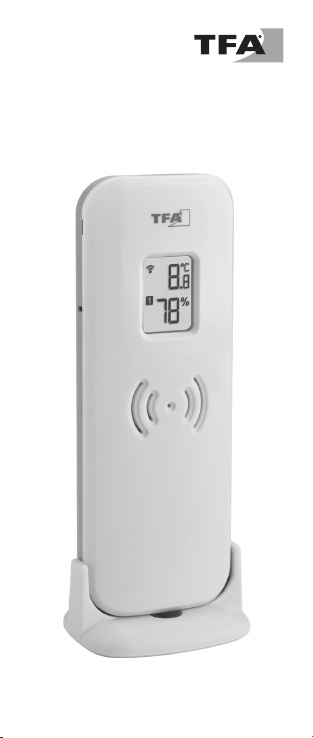
Sender für Temperatur
und Luftfeuchtigkeit
Kat.-Nr. 30.3249.02
Lieferumfang:
Sender
Bedienungsanleitung
Einsatzbereich und alle Vorteile Ihres neuen
Gerätes auf einen Blick:
Sender für den Betrieb mit TFA Funkstationen:
z.B. 30.3057.01, 30.3058.01, 35.1129.01,
35.1139.01, 35.1140.01, 35.1150.01,
35.1160.01, 35.1161.01, 35.1162.54
Ersetzt die Sender 30.3221.02 und 30.3206.02
Zur kabellosen Übertragung der Temperatur und
Luftfeuchtigkeit (433 MHz),
Reichweite ca. 100 m (Freifeld)
Innen oder außen einsetzbar
Temperatur- und Luftfeuchtigkeitsanzeige
Sicherheitshinweise:
Das Produkt ist ausschließlich für den oben
beschriebenen Einsatzbereich geeignet.
Verwenden Sie das Produkt nicht anders, als in
dieser Bedienungsanleitung dargestellt wird.
WARNUNG
Halten Sie das Gerät und die Batterien außerhalb
der Reichweite von Kindern.
Kleinteile können von Kindern (unter drei Jahren)
verschluckt werden.
Batterien enthalten gesundheitsschädliche Säu-
ren und können bei Verschlucken lebensgefährlich
sein. Wurde eine Batterie verschluckt, kann dies
innerhalb von 2 Stunden zu schweren inneren
Verätzungen und zum Tode führen. Wenn Sie
vermuten, eine Batterie könnte verschluckt oder
anderweitig in den Körper gelangt sein, nehmen
Sie sofort medizinische Hilfe in Anspruch.
Batterien nicht ins Feuer werfen, kurzschließen,
auseinandernehmen oder au aden. Explosions-
gefahr!
Um ein Auslaufen der Batterien zu vermeiden,
sollten schwache Batterien möglichst schnell
ausgetauscht werden. Achten Sie auf die
richtige Polarität beim Einlegen der Batterien.
Verwenden Sie nie gleichzeitig alte und neue
Batterien oder Batterien unterschiedlichen Typs.
Entfernen Sie die Batterien, wenn Sie das Gerät
längere Zeit nicht verwenden. Beim Hantieren mit
ausgelaufenen Batterien chemikalienbeständige
Schutzhandschuhe und Schutzbrille tragen!
ACHTUNG
Das eigenmächtige Reparieren, Umbauen oder
Verändern des Gerätes ist nicht gestattet.
Setzen Sie das Gerät keinen extremen Temperatu-
ren, Vibrationen und Erschütterungen aus.
Reinigen Sie das Gerät mit einem weichen, leicht
feuchten Tuch. Keine Scheuer- oder Lösungsmittel
verwenden!
Der Sender ist spritzwassergeschützt, aber nicht
wasserdicht.
Bestandteile:
Sender
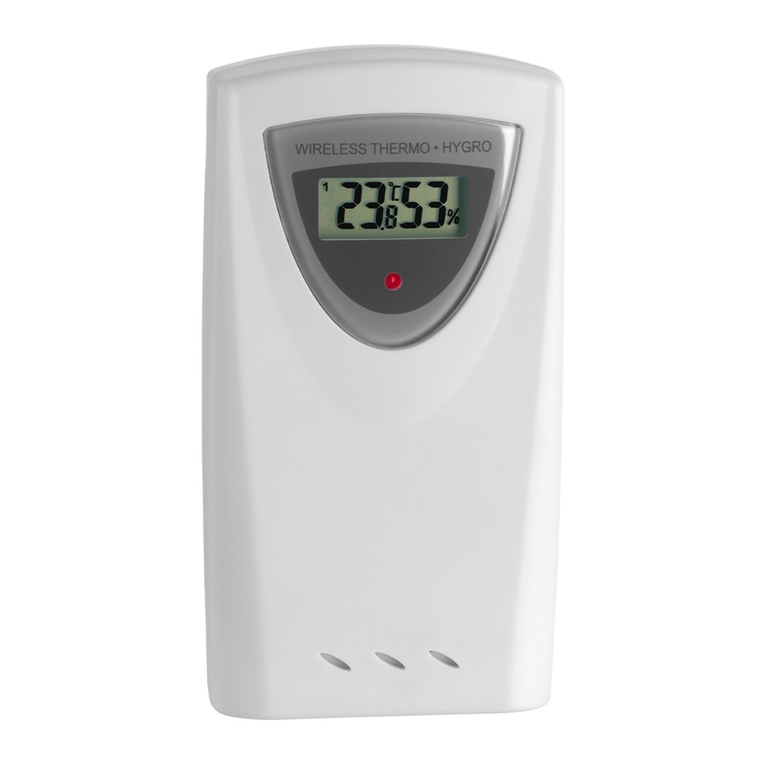
Display (Fig.1) Gehäuse (Fig.2)
A- Kanal 1/2/3 A- TX Taste
B- Übertragungssignal B- 123 Schiebeschalter
C- Temperatur zur Kanalauswahl
D- Luftfeuchtigkeit C- Batteriefach
E- Batteriesymbol für D- Ständer
den Sender (abnehmbar)
Inbetriebnahme
Nehmen Sie die Basisstation gemäß den Be-
schreibungen in der Bedienungsanleitung der
Basisstation in Betrieb.
Öffnen Sie das Batteriefach des Außensenders
und legen Sie zwei neue Batterien 1,5 V AA
polrichtig ein. Alle LCD-Segmente werden kurz
angezeigt. Die Temperatur und die Luftfeuchtigkeit
erscheinen auf dem Display. Die Übertragung der
Daten erfolgt sofort.
1 2
Wenn Sie mehrere Sender anschließen wollen,
wählen Sie mit dem 1/2/3 Schiebeschalter im
Batteriefach für jeden Sender einen anderen
Kanal aus.
Um die Funkübertragung manuell zu aktivieren,
drücken Sie die TX Taste.
Schließen Sie das Batteriefach wieder.
Montage
Suchen Sie im Freien einen schattigen, nieder-
schlagsgeschützten Platz für den Sender aus.
Direkte Sonneneinstrahlung verfälscht die
Messwerte und ständige Nässe belastet die
elektronischen Bauteile unnötig.
Stellen Sie vor der endgültigen Montage sicher,
dass eine Übertragung der Messwerte vom Sen-
der am gewünschten Aufstellort zum Basisgerät
im Wohnraum stattndet.
Vermeiden Sie die Nähe zu anderen elektrischen
Geräten (Fernseher, Computer, Funktelefone). Bei
massiven Wänden, insbesondere mit Metallteilen,
kann sich die Sendereichweite (max. 100 m)
erheblich reduzieren.
Batteriewechsel
Sobald das Batteriesymbol (Fig.1 E) im
Display erscheint, wechseln Sie bitte die Batterien
des Senders.
Achtung: Bei einem Batteriewechsel muss der
Kontakt zwischen Außensender und Basisstation
wiederhergestellt werden – also immer beide
Geräte neu in Betrieb nehmen oder manuelle
Außensendersuche starten.
Technische Daten
Sender
Spannungsversorgung: Batterien 2 x 1,5 V
AA (nicht inklusive)
Verwenden Sie Alkaline
Batterien
Messbereich Temperatur: -40°C …60°C
Genauigkeit: ±1°C bei 0°... 50°C,
ansonsten ± 1,5°C
Messbereich Luftfeuchtigkeit 10%...99%rH
Genauigkeit: +-5% @25°C,
31…84%rH
Reichweite: ca. 100 m (Freifeld)
Übertragungsfrequenz: 433 Mhz
3
Max. Sendeleistung: < 10 mW
Gehäusemaße: 48 (54) x 26 (44)
x 129 (135) mm
Gewicht: 62 g (nur das Gerät)
Entsorgung
Dieses Produkt wurde unter Verwendung hochwertiger
Materialien und Bestandteile hergestellt, die recycelt und
wiederverwendet werden können.
Batterien und Akkus dürfen keinesfalls
in den Hausmüll! Als Verbraucher sind
Sie gesetzlich verpichtet, gebrauchte
Batterien und Akkus zur umweltgerechten
Entsorgung beim Handel oder entsprechen
den Sammelstellen gemäß nationalen oder
lokalen Bestimmungen abzugeben. Die
Bezeichnungen für enthaltene
Schwermetalle sind: Cd=Cadmium,
Hg=Quecksilber, Pb=Blei
Dieses Gerät ist entsprechend der
EU-Richtlinie über die Entsorgung von
Elektro- und Elektronik-Altgeräten
(WEEE) gekennzeichnet. Dieses Produkt darf
nicht mit dem Hausmüll entsorgt werden. Der
Nutzer ist verpichtet, das Altgerät zur
umweltgerechten Entsorgung bei einer
ausgewiesenen Annahmestelle für die
Entsorgung von Elektro- und
Elektronikgeräten abzugeben.
EU-Konformitätserklärung
Hiermit erklärt TFA Dostmann, dass der Funkanlagentyp
30.3249.02 der Richtlinie 2014/53/EU entspricht. Der
vollständige Text der EU-Konformitätserklärung ist unter
der folgenden Internetadresse verfügbar:
www.tfa-dostmann.de/service/downloads/ce
Diese Anleitung oder Auszüge daraus dürfen nur mit
Zustimmung von TFA Dostmann veröffentlicht werden. Die
technischen Daten entsprechen dem Stand bei Druck-
legung und können ohne vorherige Benachrichtigung
geändert werden. Die neuesten technischen Daten und
Informationen zu Ihrem Produkt nden Sie auf unserer
Homepage unter Eingabe der Artikel-Nummer in das
Suchfeld.
www.tfa-dostmann.de [email protected]
TFA Dostmann GmbH & Co.KG
Zum Ottersberg 12 97877 Wertheim Deutschland
02/21 4
English
Transmitter for temperature
and humidity
Cat. No. 30.3249.02
Delivery contents:
Transmitter
Instruction manual
Range of application and all the bene ts of your new
instrument at a glance
Transmitter for TFA wireless stations: e.g. Cat.
No. 30.3057.01, 30.3058.01, 35.1129.01,
35.1139.01, 35.1140.01, 35.1150.01,
35.1160.01, 35.1161.01, 35.1162.54
Replacement transmitter for 30.3221.02 and
30.3206.02
Wireless transmission of temperature and
humidity (433 MHz), distance range
up to 100 m (open  eld)
For indoor or outdoor use
Display of temperature and humidity
For your safety:
This product is exclusively intended for the range
of application described above.
This product should only be used as described
within these instructions.
WARNING
Keep this device and the batteries out of reach
of children.
Small parts can be swallowed by children (under
three years old).
Batteries contain harmful acids and may be
hazardous if swallowed. If a battery is swallowed,
this can lead to serious internal burns and death
within two hours. If you suspect a battery could
have been swallowed or otherwise caught in the
body, seek medical help immediately.
Batteries must not be thrown into a  re,
short-circuited, taken apart or recharged. Risk
of explosion!
5 6
Low batteries should be changed as soon
as possible to prevent damage caused by
leaking. Make sure the polarities are correct.
Never use a combination of old and new batteries
together, nor batteries of different types. Remove
the batteries if the device will not be used for an
extended period of time. Wear chemical-resist-
ant protective gloves and safety glasses when
handling leaking batteries
CAUTION
Unauthorized repairs, alterations or changes to
the product are prohibited.
Do not expose the device to extreme temper-
atures,
vibrations or shocks.
Clean the instrument with a soft damp cloth. Do
not use solvents or scouring agents.
The transmitter is splashproof, but not watertight.
Elements:
Transmitter
Display (Fig.1) Housing (Fig.2)
A- Channel 1, 2, 3 A- TX button
B- Transmission signal B- 123 switch for
C- Temperature channel selection
D- Humidity C- Battery compartment
E- Battery symbol for D- Table stand
the transmitter (removable)
Getting started
Take the base station into operation according to
the instruction manual of the base station.
Open the battery compartment of the transmitter
and insert two new AA 1.5 V batteries, polarity as
illustrated. All LCD segments will be displayed for
a short moment. The display shows the temper-
ature and the humidity. The transmission of the
outdoor data takes place immediately.
To activate the transmission manually,
press the TX button.
For having more than one transmitter, select
different channels for each sensor with the 1/2/3
switch inside the battery compartment.
Close the battery compartment.
Installation
When placed outdoors, choose a shady and dry
place for the transmitter. Direct sunlight may
trigger incorrect measurement and continuous
humidity damages the electronic components
needlessly.
Before the nal installation, make sure that
the measured values are transmitted from the
transmitter at the desired installation site to the
base station in the living area.
Make sure to avoid the vicinity of any source of
interference such as computer screens, TV sets or
solid metal objects. Within solid walls, especially
ones with metal parts, the transmission range
(max. 100 m) can be reduced considerably.
Battery replacement
As soon as the battery symbol (Fig.1 E) ap-
pears in the display, please change the batteries
of the transmitter.
Please note: When the batteries are changed, the
contact between the outdoor transmitter and the
base station must be restored – so always restart
both devices or start a manual transmitter search.
Specications
Transmitter
Power consumption: 2 x AA 1,5 V batteries
(not included). Use
alkaline batteries only
Measuring range
temperature: -40°C …60°C
Precision: ± 1°C at 0°... 50°C,
otherwise ± 1.5°C
Measuring range - humidity: 10%...99%rH
Precision: ± 5% at 25°C,
31…84%rH
Transmission range: max. 100 m (open eld)
Transmission frequency: 433 Mhz
Maximum
radio-frequency power: < 10 mW
Housing dimension: 48 (54) x 26 (44)
x 129 (135) mm
Weight: 62 g (device only)
7 8
Waste disposal
This product has been manufactured using high-grade
materials and components which can be recycled and
reused.
Never dispose of empty batteries and
rechargeable batteries with ordinary
household waste. As a consumer, you are
required by law to take them to your retail
store or to an appropriate collection site
depending on national or local regulations in
order to protect the environment.
The symbols for the contained heavy metals
are: Cd = cadmium, Hg = mercury, Pb = lead
This product is labelled in accordance
with the EU Waste Electrical and Electronic
Equipment Directive (WEEE). Please do not
dispose of this product in ordinary house
hold waste. As a consumer, you are
required to take end-of-life devices to a
designated collection point for the disposal
of electrical and electronic equipment, in
order to ensure
environmentally-compatible disposal.
EU Declaration of conformity
Hereby, TFA Dostmann declares that the radio equipment
type 30.3249.02 is in compliance with Directive
2014/53/EU. The full text of the EU declaration of
conformity is available at the following internet address:
www.tfa-dostmann.de/service/downloads/ce
No part of this manual may be reproduced without written
consent of TFA Dostmann. The technical data are correct
at the time of going to print and may change without prior
notice. The latest technical data and information about
this product can be found in our homepage by simply
entering the product number in the search box.
www.tfa-dostmann.de
[email protected]
TFA Dostmann GmbH & Co.KG
Zum Ottersberg 12 97877 Wertheim
Germany
02/21
Français
Émetteur température
et humidité
N° d’art. 30.3249.02
Contenu de la livraison :
Émetteur
Mode d’emploi
Aperçu du domaine d’utilisation et de tous les avan-
tages de votre nouvel appareil :
Émetteur pour les stations radio-pilotée de
TFA : par ex. réf. 30.3057.01, 30.3058.01,
35.1129.01, 35.1139.01, 35.1140.01,
35.1150.01, 35.1160.01, 35.1161.01,
35.1162.54.
Émetteur de remplacement pour 30.3221.02
et 30.3206.02
Pour la transmission de la température et de
l’humidité (433 MHz), rayon d’action env. 100 m
(champ libre)
Pour l’usage à l’intérieur ou à l’extérieur
Af chage de la température et de l’humidité
Pour votre sécurité :
Le produit est destiné uniquement à l’utilisation
décrite ci-dessus.
N’utilisez jamais l’appareil à d’autres  ns que
celles décrites dans le présent mode d’emploi.
AVERTISSEMENT
Opérez votre appareil et les piles hors de la
portée des enfants.
Les petites pièces peuvent être avalées par les
enfants (moins de trois ans).
Les piles contiennent des acides nocifs pour
la santé et peuvent être mortelles dans le cas
d’une ingestion. Si une pile a été avalée, elle
peut entraîner des brûlures internes graves ainsi
que la mort dans l’espace de 2 heures. Si vous
craignez qu’une pile ait pu être avalée ou ingérée
d’une autre manière, quelle qu’elle soit, contactez
immédiatement un médecin d’urgence.
Ne jetez jamais de piles dans le feu, ne les
court-circuitez pas, ne les démontez pas et ne les
rechargez pas. Risque d’explosion !
Une pile faible doit être remplacée le plus rapi-
dement possible a n d’éviter toute fuite. Veillez
à la bonne polarité des piles. N’utilisez jamais
simultanément de piles anciennes avec des piles
neuves ou des piles de types différents. Retirez
les piles si vous n’utilisez pas votre appareil
pendant une durée prolongée. Pour manipuler
des piles qui ont coulé, utilisez des gants de
protection chimique spécialement adaptés et
portez des lunettes de protection !
ATTENTION
Vous ne devez en aucun cas réparer, démonter ou
modi er l’appareil par vous-même.
Évitez d’exposer l’appareil à des températures
extrêmes, à des vibrations ou à des chocs.
Pour le nettoyage de votre appareil, utilisez un
chiffon doux et humide. N’utilisez pas de solvants
ou d’agents abrasifs !
L’émetteur résiste aux éclaboussures d’eau mais
il n’est pas étanche.
9 10
Composants:
Émetteur
Afchage (Fig.1) Boîtier (Fig.2)
A- Canal 1/2/3 A- Touche TX
B- Signal de transmission B- Interrupteur 1/2/3
C- Température pour la sélection
D- Humidité du canal
E- Symbole de pile faible C- Compartiment à piles
pour l’émetteur D- Pied (rabattable)
Mise en service
Mettez la station de base en service selon les
instructions dans le mode d’emploi de la station
de base.
Ouvrez le compartiment à piles de l’émetteur et
insérez deux nouvelles piles de type 1,5 V AA
en respectant la polarité +/-. Tous les segments
s’allument brièvement. La température et l’hu-
midité apparaissent sur l’écran. Le transfert des
données est immédiat.
Si vous désirez raccorder plusieurs émetteurs,
sélectionnez un canal différent pour chaque
émetteur à l’aide de l’interrupteur 1/2/3 dans le
compartiment à piles.
Pour activer manuellement le transfert, appuyez
sur la touche TX.
Refermez le compartiment à piles.
Assemblage
Si vous installez l’émetteur à l’extérieur, choisis-
sez un emplacement à l’ombre et protégé de la
pluie. Un ensoleillement direct fausse la mesure
et une humidité continue use les composants
électroniques inutilement.
Avant l’installation nale, assurez-vous que les
valeurs mesurées sont transmises de l’émetteur
au lieu d’installation souhaité à la station de
base dans le salon.
Évitez de la placer à proximité d’autres appareils
électriques (téléviseur, ordinateur, téléphone sans
l). Si les murs sont massifs, en particulier s’ils
comportent des parties métalliques, la portée
d’émission (max. 100 m) peut se trouver réduite
considérablement.
11
Remplacement des piles
Dès que le symbole de la pile (Fig.1-E)
apparaît à l’écran, veuillez changer les piles de
l’émetteur.
Attention : il faut rétablir le contact entre l’émet-
teur et le récepteur après le remplacement des
piles - il faut donc toujours recommencer la mise
en service des deux appareils ou bien lancer la
recherche manuellement.
Caractéristiques techniques
Émetteur
Alimentation : Piles 2 x 1,5 V AA
(non incluses). Utilisez
des piles alcalines
Plage de mesure
température : -40°C …60°C
Précision : ±1°C à 0°... 50°C,
± 1.5°C en outre
Plage de mesure humidité : 10%...99%rH
Précision : ± 5% à 25°C,
31…84%rH
Rayon d’action : env. 100 mètres
(champ libre)
Fréquence de
transmission : 433 Mhz
Puissance de fréquence
radio maximale transmise : < 10 mW
Dimensions du boîtier : 48 (54) x 26 (44)
x 129 (135) mm
Poids : 62 g
(appareil seulement)
12