SiS5600 Pentium II AT MAINBOARD INTRODUCTION
1-1
1. INTRODUCTION
1.1 OVERVIEW
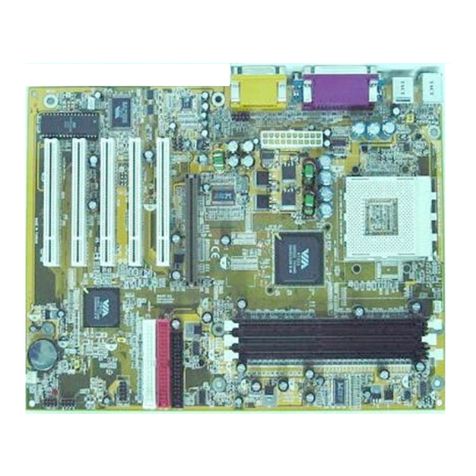
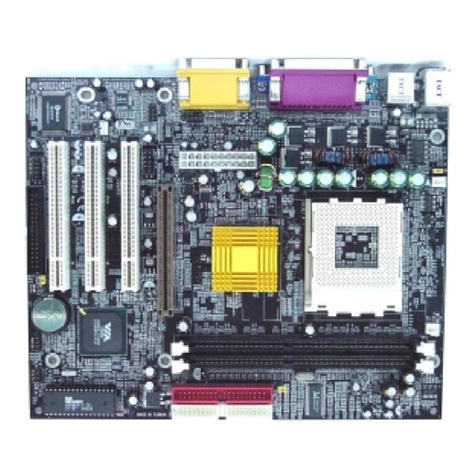
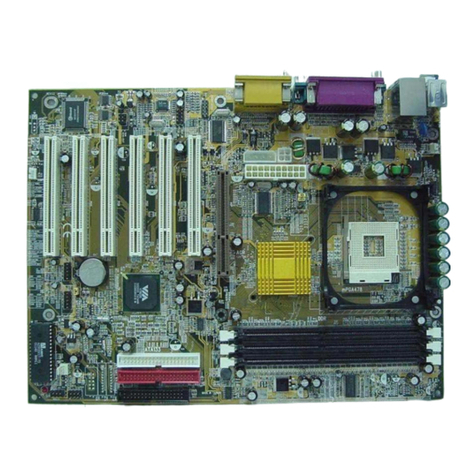
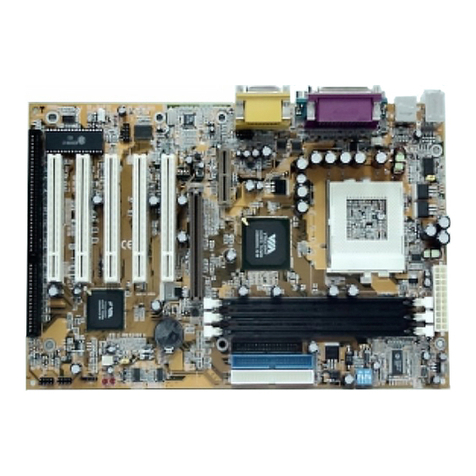
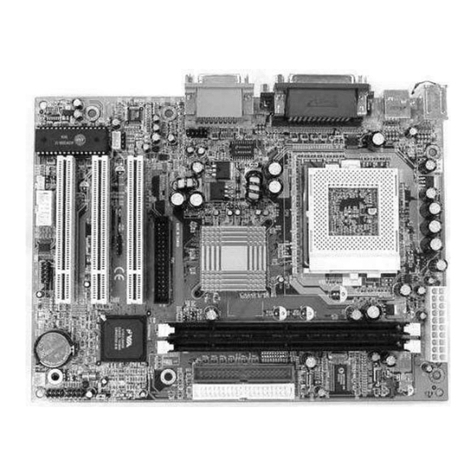
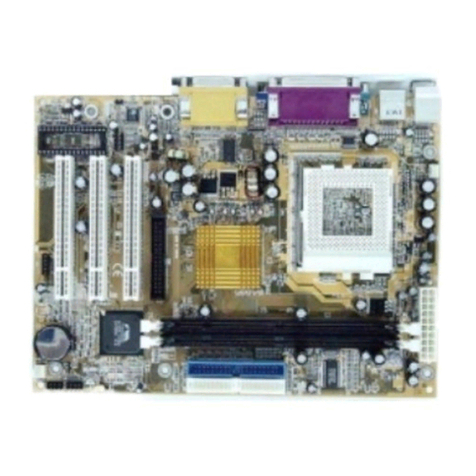
This mainboard is the AT form-factor with A.G.P. (Accelerated Graphics Port) and PCI
Local Bus on board, designed based on the SiS5600, SiS5595 system chipset. It is a
high performance Pentium™ II personal computer mainboard with 100MHz ultra high
Front Side Bus (FSB) frequency. It is designed for the high performance Pentium™ II
or Celeron™ processor 233 MHz, 266 MHz, 300 MHz, 333MHz, 366MHz, 400MHz,
450MHz and up to 500MHz. (The clock ratio selectable can be up to 8X on the board.)
The jumper-free feature is designed on the board and you don't have to make any
jumper or switch setting when installing the CPU. For example, when you are installing
the CPU onto the mainboard, the system board will detect the CPU type and decide the
proper Voltage. As for the CPU frequency, you can choose to have the system board
detect the CPU type and decide the frequency for you, or you may use the BIOS setup
program to select the CPU clock by yourself.
Two channels “PIO” and “Ultra DMA/33 Bus Master” mode PCI IDE ports, one
Floppy Disk control port, two high speed Serial ports (UARTs) and one multi-mode
Parallel port and supports PS/2™ mouse, IR and USB ports are built on the board..
The Pentium™ II and Celeron™ Processor are the 64-bit processors with RISC
technology, which offer several key features such as built-in 128/256KB/512KB L2
cache (some Celeron does not have L2 cache), 12-stage super-pipeline architecture, out
of order execution .... etc. In order to optimize of its performances, the 32-bit Operating
System (such as Windows® NT and OS/2™) and 32-bit applications are recommended.
The Accelerated Graphics Port (A.G.P.) on the mainboard is designed for AGP 3D
video display card. Unlike PCI-based display cards, the AGP technology provides
lightning data throughput to fully facilitate the 3-Dimensional and multimedia graphics
display. The data transfer rate on AGP can be up to 133Mhz and which is much faster
than the traditional 33MHz PCI VGA card.