2
OPERATION
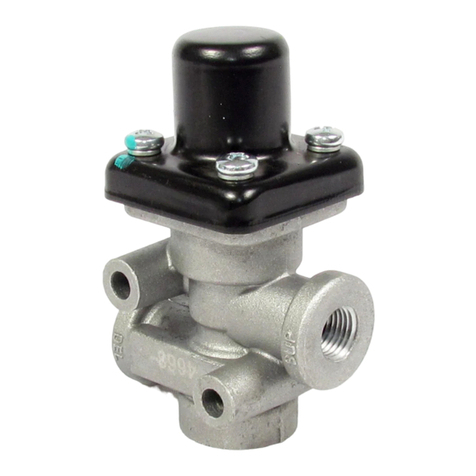
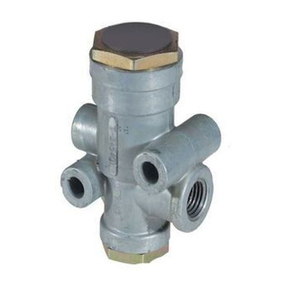
Air entering the supply port is blocked from flowing out the
deliveryportbytheinletvalve,which is normally heldclosed
by the pressure regulating spring above the piston. When
sufficientair pressurebuilds beneaththe piston,the piston
willmove,openingtheinlet valve and allowingairtoflowout
the delivery port.As long as air pressure at the supply port
remainsabovethespecifiedclosingpressure,theinletvalve
willremain open.
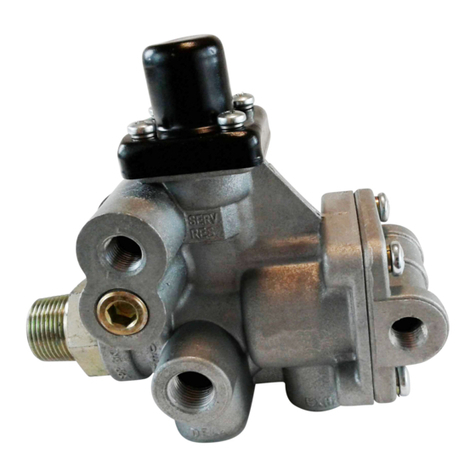
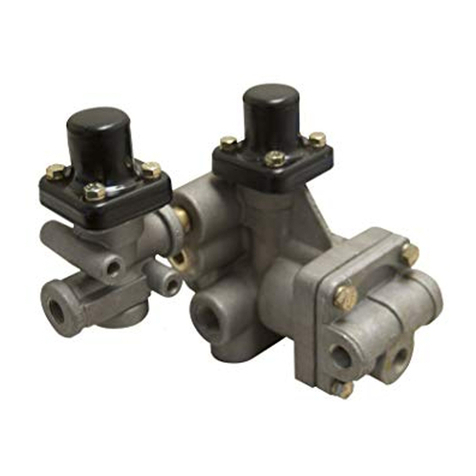
NOTE: The PR-2™and PR-4™valves closing pressure is
noted on the label affixed to the valve. Opening
pressures of the valves are higher than closing
pressures.Thepressure rangesarenoted below:
PR-2™valveOpeningpressure15-20psihigherthan
closingpressure.
PR-3™& PR-4™valves Opening pressure approx.
10 psi higher than closing pressure.
PR-3™valve Check valve will retain maximum
pressureindownstreamreservoir.
Ifsystemairpressuredecreasesbelowthespecifiedclosing
pressure,theregulatingspring will closetheinletvalve. The
remainingair pressureat either the supply or delivery side,
(depending on where the pressure drop occurs) will be
retained.
PREVENTIVE MAINTENANCE
Important: Review the Bendix Warranty Policy before
performinganyintrusivemaintenanceprocedures.Awarranty
maybevoided if intrusivemaintenance is performedduring
thewarrantyperiod.
No two vehicles operate under identical conditions, as a
result, maintenance intervals may vary. Experience is a
valuableguideindeterminingthe best maintenanceinterval
forairbrakesystemcomponents.Ataminimum,thePR valves
shouldbeinspectedevery6monthsor1500operatinghours,
whichevercomes first, for proper operation.Should thePR
valvesnotmeet theelementsof theoperationaltests noted
in this document, further investigation and service of the
valvemayberequired.
OPERATING AND LEAKAGE CHECKS
OPERATING CHECKS
1. Provide a pressuregauge anddrain valve atthe supply
side and delivery side of the pressure protection valve
being checked.
2. Charge the air system to full pressure and shut off the
engine.
3. Observingthegauges on the supply and delivery sides
of the valve, slowly exhaust pressure from the delivery
side.Notethatbothgauges will showpressurelossuntil
theclosing pressureof the pressure protection valve is
reached.
The pressure protection valve should close at
approximately (± 5 psi) the pressure indicated on the
valve’s label or in the vehicle handbook. The gauge on
the delivery side of the valve should continue to show
loss of pressure while the gauge on the supply side
should stop at the same pressure as the setting of the
valve.
4. (PR-3™valve only)Buildpressure upagainand shutoff
engine. Slowly exhaust air from the supply side of the
PR-3™valve.Thegaugeonthe delivery side of the valve
shouldremainatthehighestpressurepreviouslyattained.
LEAKAGECHECKS
1. Charge the air system to full pressure and shut off the
engine.
2. Apply a soap solution around the cap of the pressure
protection valve.A 1” bubble in 3 seconds or longer is
acceptable.PR-3™valve -No leakageis permissibleat
thebottom of thevalve.
3. Drain the air pressure from the delivery side of the
pressureprotection valveand disconnect the air line to
it.
4. Applyasoap solution tothe deliveryport.A1”bubble in
5 seconds or more is acceptable.
GENERAL
If the pressure protection valve does not function as
described,or leakageis excessive, it is recommendedthat
itbereplacedwith a neworremanufactured unit orrepaired
withgenuine Bendixparts availableat Bendixoutlets.
REMOVING AND INSTALLING
REMOVING
1. Blockorholdthevehiclebymeansotherthanairbrakes.
2. Drain all system reservoirs to 0 psi.
3. Disconnect and identify (supply and delivery) the air
linesleading toand fromthe pressure protection valve.
4. Remove the mounting bolts,ifany, that secure thevalve.
INSTALLING
1. Re-installthemountingboltsandsecurethereplacement
valvetothe vehicle.
2. Reconnect the supply delivery air lines to the proper
portsof the replacementvalve.