manuals.online logo
Brands
  1. Home
  2. •
  3. Brands
  4. •
  5. Carel
  6. •
  7. Control Unit
  8. •
  9. Carel PCOUMID200 User manual

Carel PCOUMID200 User manual

Other Carel Control Unit manuals

Carel WM00E-00 Series User manual

Carel

Carel WM00E-00 Series User manual

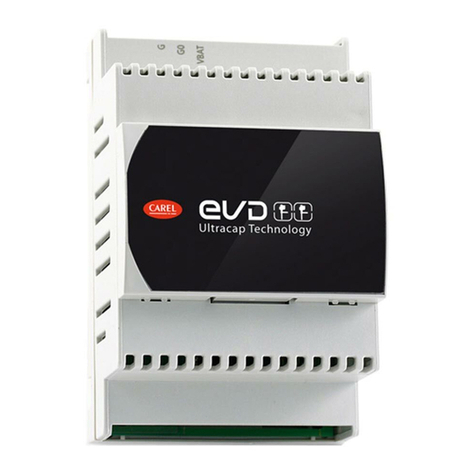
Carel EVD0000UC0 User manual

Carel

Carel EVD0000UC0 User manual

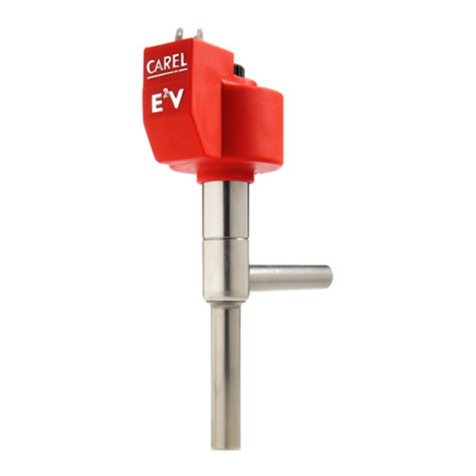
Carel E2V-U User manual

Carel

Carel E2V-U User manual

Carel E4V Series User manual

Carel

Carel E4V Series User manual

Carel Heosbox User manual

Carel

Carel Heosbox User manual

Carel MCH200TSV0 User manual

Carel

Carel MCH200TSV0 User manual

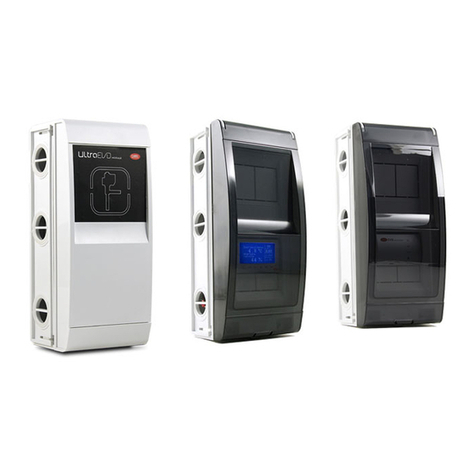
Carel UltraCella Quick start guide

Carel

Carel UltraCella Quick start guide

Carel UltraCella User manual

Carel

Carel UltraCella User manual

Carel PlantWatch User manual

Carel

Carel PlantWatch User manual

Carel PlantWatchPRO Instruction Manual

Carel

Carel PlantWatchPRO Instruction Manual

Carel E2V S0 Series User manual

Carel

Carel E2V S0 Series User manual

Carel ir33 DIN User manual

Carel

Carel ir33 DIN User manual

Carel E2V-Z Series User manual

Carel

Carel E2V-Z Series User manual

Carel PCOS00KX Series User manual

Carel

Carel PCOS00KX Series User manual

Carel E5V User manual

Carel

Carel E5V User manual

Carel Ultracap User manual

Carel

Carel Ultracap User manual

Carel uRack User manual

Carel

Carel uRack User manual

Carel EVD ice User manual

Carel

Carel EVD ice User manual

Carel E2V User manual

Carel

Carel E2V User manual

Carel E3V-C Series User manual

Carel

Carel E3V-C Series User manual

Carel E5V User manual

Carel

Carel E5V User manual

Carel uC2SE User manual

Carel

Carel uC2SE User manual

Carel EVD0000UC0 User manual

Carel

Carel EVD0000UC0 User manual

Carel E3V Series User manual

Carel

Carel E3V Series User manual

Popular Control Unit manuals by other brands

Festo Compact Performance CP-FB6-E Brief description

Festo

Festo Compact Performance CP-FB6-E Brief description

Elo TouchSystems DMS-SA19P-EXTME Quick installation guide

Elo TouchSystems

Elo TouchSystems DMS-SA19P-EXTME Quick installation guide

JS Automation MPC3034A user manual

JS Automation

JS Automation MPC3034A user manual

JAUDT SW GII 6406 Series Translation of the original operating instructions

JAUDT

JAUDT SW GII 6406 Series Translation of the original operating instructions

Spektrum Air Module System manual

Spektrum

Spektrum Air Module System manual

BOC Edwards Q Series instruction manual

BOC Edwards

BOC Edwards Q Series instruction manual

KHADAS BT Magic quick start

KHADAS

KHADAS BT Magic quick start

Etherma eNEXHO-IL Assembly and operating instructions

Etherma

Etherma eNEXHO-IL Assembly and operating instructions

PMFoundations Attenuverter Assembly guide

PMFoundations

PMFoundations Attenuverter Assembly guide

GEA VARIVENT Operating	 instruction

GEA

GEA VARIVENT Operating instruction

Walther Systemtechnik VMS-05 Assembly instructions

Walther Systemtechnik

Walther Systemtechnik VMS-05 Assembly instructions

Altronix LINQ8PD Installation and programming manual

Altronix

Altronix LINQ8PD Installation and programming manual

Eaton Powerware Series user guide

Eaton

Eaton Powerware Series user guide

WAGO 750-407/040-000 manual

WAGO

WAGO 750-407/040-000 manual

Sony CCU-590 Operation manual

Sony

Sony CCU-590 Operation manual

Graco 25D614 instructions

Graco

Graco 25D614 instructions

Task Force Tips YE-RF-900 Instructions for installation, safe operation and maintenance

Task Force Tips

Task Force Tips YE-RF-900 Instructions for installation, safe operation and maintenance

Shini SPV-U Series manual

Shini

Shini SPV-U Series manual

manuals.online logo
manuals.online logoBrands
  • About & Mission
  • Contact us
  • Privacy Policy
  • Terms and Conditions

Copyright 2025 Manuals.Online. All Rights Reserved.

cod. +050003210 rel. 1.1 - 25.09.2003
PCOUMID200 Scheda per gestione umidificatore OEM per pCO / OEM humidifier control board for pCO
Vi ringraziamo per la scelta fatta, sicuri che sarete soddisfatti del
vostro acquisto.
CARATTERISTICHE GENERALI
Il modulo PCOUMID200 è un'interfaccia dei controllori elettronici pCO. Permette
di controllare i parametri fondamentali degli umidificatori OEM prodotti da
CAREL (alto livello e conducibilità acqua di alimento nel cilindro, sensore TAM di
assorbimento corrente) direttamente dal regolatore elettronico a microprocessore
pCOB/pCO2/pCO1/pCOC.
I valori raccolti dagli appositi sensori vengono convertiti in segnali compatibili
dagli ingressi presenti nel pCO (per maggiori informazioni si rimanda al relativo
manuale utente del programma applicativo).
L’interfaccia PCOUMID200 rispetto all’interfaccia PCOUMID000 si differenzia per:
- maggior precisione e immunità ai disturbi sia per la misura di conducibilità
che per la misura del sensore di livello;
- il segnale di “alto livello acqua” può essere gestito sia con uscita digitale
che analogica.
Risulterà dunque possibile collegare al controllore sia la scheda pCOUMID000
che la scheda pCOUMID200, con l’unica accortezza di dover configurare un
opportuno parametro, in modo da permettere al software di utilizzare la corretta
curva di conducibilità.
CARATTERISTICHE TECNICHE
tensione d’ingresso: 24 Vac ± 15%
potenza assorbita: 3 W (5 VA);
morsettiere - sez. conduttori: min. 0,5 mm2, max. 2,5 mm2
condizioni di funzionamento: -10T60 °C; 90 % U.R. non condensante
condizioni di immagazzinamento: -20T70 °C; 90% U.R. non condensante
grado di inquinamento: normale
dimensioni (mm): 110,8 x 70,4 x 60
grado di protez. fornito dall’involucro: IP20
classificazione secondo la protezione contro le scosse elettriche: Classe II.
Tutte le uscite sono protette da cortocircuito.
INSTALLAZIONE
Il montaggio previsto è mediante fissaggio su guida omega (guida DIN
standard).
DICHIARAZIONI
• PTI dei materiali usati per l’isolamento: >250 V
• Periodo di sollecitazioni elettriche delle parti isolanti: Lungo
• Categoria di resistenza al calore e al fuoco: D
• Categoria (immunità contro le sovratensioni): 2
Thank you for choosing Carel. We are confident that you will be satisfied
with your purchase.
GENERAL CHARACTERISTICS
The PCOUMID200 module is an interface for the pCO series electronic
controllers. It is used to control the fundamental operating parameters of the
OEM humidifiers manufactured by CAREL (high water level, water conductivity in
the cylinder, and TAM current. sensor) directly from the pCOB/pCO2/pCO1/pCOC
electronic microprocessor controller.
The values read by the special sensors are converted into signals that are
compatible with the inputs on the pCO (for further information, refer to the
corresponding application software user manual).
The PCOUMID200 interface differs from the PCOUMID000 interface in the
following ways:
- greater precision and immunity to disturbances for both the conductivity and
the level sensor;
- the “high water level” signal can be managed either by a digital or analogue
output.
Consequently, both the pCOUMID000 and the pCOUMID200 boards can be
connected to the pCO, with the only requirement being that a special parameter
has to be set to allow the software to use the correct conductivity curve.
TECHNICAL SPECIFICATIONS
power supply: 24Vac ± 15%
power consumption: 3W (5VA);
terminal blocks - wire cross-section: min. 0.5 mm2, max. 2.5 mm2
operating conditions: -10T60°C; 90 % rH non-condensing
storage conditions: -20T70°C; 90% rH non-condensing
pollution: normal
dimensions (mm): 110.8 x 70.4 x 60
case index of protection: IP20
classification according to protection against electric shock: Class II.
All outputs are protected against short-circuits.
INSTALLATION
The device is installed by mounting on a standard DIN rail.
DECLARATIONS
• PTI of the insulation materials: >250V
• Period of electric stress across the insulating parts: Long
• Category of resistance to heat and fire: D
• Category (immunity against voltage surges): 2
Dimensioni 4 moduli DIN / Dimensions: 4 DIN modules

111
70 60
LEGGI E CONSERVA
QUESTE ISTRUZIONI
READ AND SAVE
THESE INSTRUCTIONS
Fig. 1
CAREL S.p.A.
Via dell’Industria, 11 - 35020 Brugine - Padova (Italy)
Tel. (+39) 0499716611 – Fax (+39) 0499716600
http: // www .carel .com – e-mail: carel @carel .com
Carel si riserva la possibilità di apportare modifiche o cambiamenti ai propri prodotti senza alcun preavviso.
Carel reserves the right to modify the features of its products without prior notice.
cod. +050003210 rel. 1.1 - 25.09.2003
COLLEGAMENTI
In generale, il collegamento tra un umidificatore e un pCO può essere
schematizzato come in Fig. 2.
Effettuare il collegamento rispettando le distanze massime riportate e
posizionando i cavi su canaline dedicate, separati dai cavi di potenza e fonti di
disturbo.
ALIMENTAZIONE
Rispettare le polarità G e G0 del PCOUMID200 e del controllo pCO quando
l’alimentazione è fornita da uno stesso trasformatore.
I sensori di rilevamento “livello acqua” o “conducibilità ” dell’umidificatore non
hanno polarità, quindi non necessitano di particolari attenzioni durante il
collegamento alla scheda.
Schema di collegamento
Morsetti Tipo Natura
G G 24 Vac
G0 G0 riferimento alimentazione
T1 input TAM TAM induttivo 0...2 Vac
T2
GND GND riferimento segnali
C1 input “conducibilità acqua” misura resistiva eseguita
C2 con 0...7 Vac, 5 KHz
L1 input “alto livello acqua” misura resistiva eseguita con
L2 0...7 Vac, 5 KHz
01 output “alto livello acqua” switch ON/OFF optoisolato
02 digitale
Level output “alto livello acqua”
analogico 0...1 Vdc 0-2000 µS/cm
Cond output “conducibilità acqua” 0...1 Vdc 0-2000 µS/cm
TAM output TAM 0...1 Vdc 0-400% corrente nominale
- non usato (n.c.)
-
Dip-Switch
Di default il PCOUMID200 è settato per lavorare con i pCO2, pCO1e pCOCe i
quattro dip-switch sono posizionati verso l’esterno.
Per il funzionamento con il pCOBi dip-switch vanno spostati tutti quattro verso
l’interno.
I dip-switch si trovano sotto lo sportellino inferiore; rimuoverlo con l’utilizzo di un
cacciavite.
CONNECTIONS
The connection diagram between the humidifier and the pCO is shown in Fig. 2.
Make the connection respecting the maximum distances recommended and
positioning the cables on dedicated channels, separately from the power cables
and disturbance sources.
POWER SUPPLY
The polarity of G and G0 on the PCOUMID200 and on the pCO controller must
be observed when the power is supplied by the same transformer.
The sensors measuring “water level” or “conductivity ” in the humidifier have no
polarity, and therefore no special attention is required when connecting these to
the board.
Connection diagram
Terminals Type Description
G G 24 Vac
G0 G0 power supply ground
T1 TAM input 0 to 2 Vac inductive
T2
GND GND ground
C1 “water conductivity” input resistive measurement made
C2 at 0 to 7 Vac, 5 kHz
L1 “high water level” input resistive measurement made
L2 at 0 to 7 Vac, 5 kHz
01 digital “high water level” ON/OFF switch, optically isolated
02 output
Level analogue “high water level”
output 0 to 1 Vdc 0-2000 µS/cm
Cond “water conductivity” output 0 to 1 Vdc 0-2000 µS/cm
TAM TAM output 0 to 1 Vdc 0-400% rated current
- not used (nc)
-
Dipswitch
As default the PCOUMID200 is set to work with the pCO2, pCO1and pCOC, and
the four dipswitches are positioned towards the outside.
For operation with the pCOB, all four dipswitches should be moved inwards.
The dipswitches are placed under the lower door; to open it put a screwdriver
under the edge and pry it open.
sonde umidità
humidity probes
cilindro
cylinder
interfaccia /
interface
pCOUMID200
controllore
controller
pCO1/pCO2/
pCOC
dist.max.vedi caratteristiche sonde
for max.distance refer to probe specifications
max.10 m max.20 m
Collegamenti / Connections
Schema di collegamento / Connection diagram
Esempio di schema elettrico / Example wiring diagram
G G0 GND TAM Level O2 - O1Cond
T2 T1 C2 C1 L2 - L1
input TAM humidifier input Levelinput Cond
24 Vac analog output pCO
Dig.output Leveldip switch
G
G
G0
G0 B BID IDC1B +Vdc GND GND
sonda umidità
humidity probe
(humidity input) (*)
(conduc input) (*)
(Level input) (*)
(TAM input) (*)
(*)= gli ingressi e le uscite utilizzati dipendono dal software applicativo
the inputs and outputs used depend on the application software
G G0 GND TAM Level O2 - O1Cond
T2 T1 C2 C1 L2 - L1
n.c.
Level
Cond
TAM
24 Vac
Fig. 2
Fig. 3
Fig. 4